



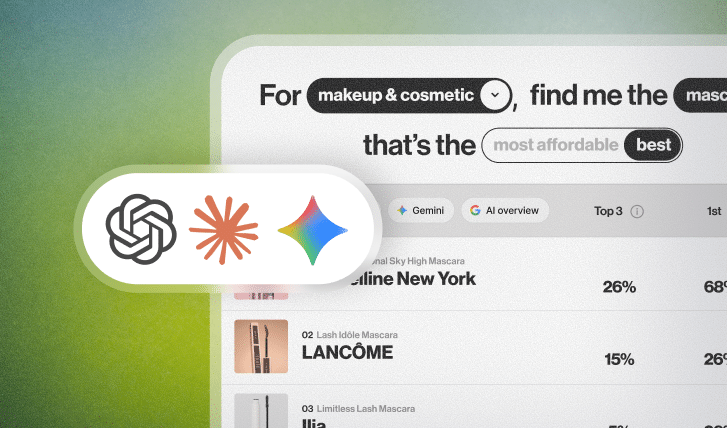










If you sell products online, the way shoppers find you is quietly changing. More buyers now open a chat window instead of a search bar, and they trust the answer that comes back. That single shift is the reason this guide exists, and it is worth your attention.
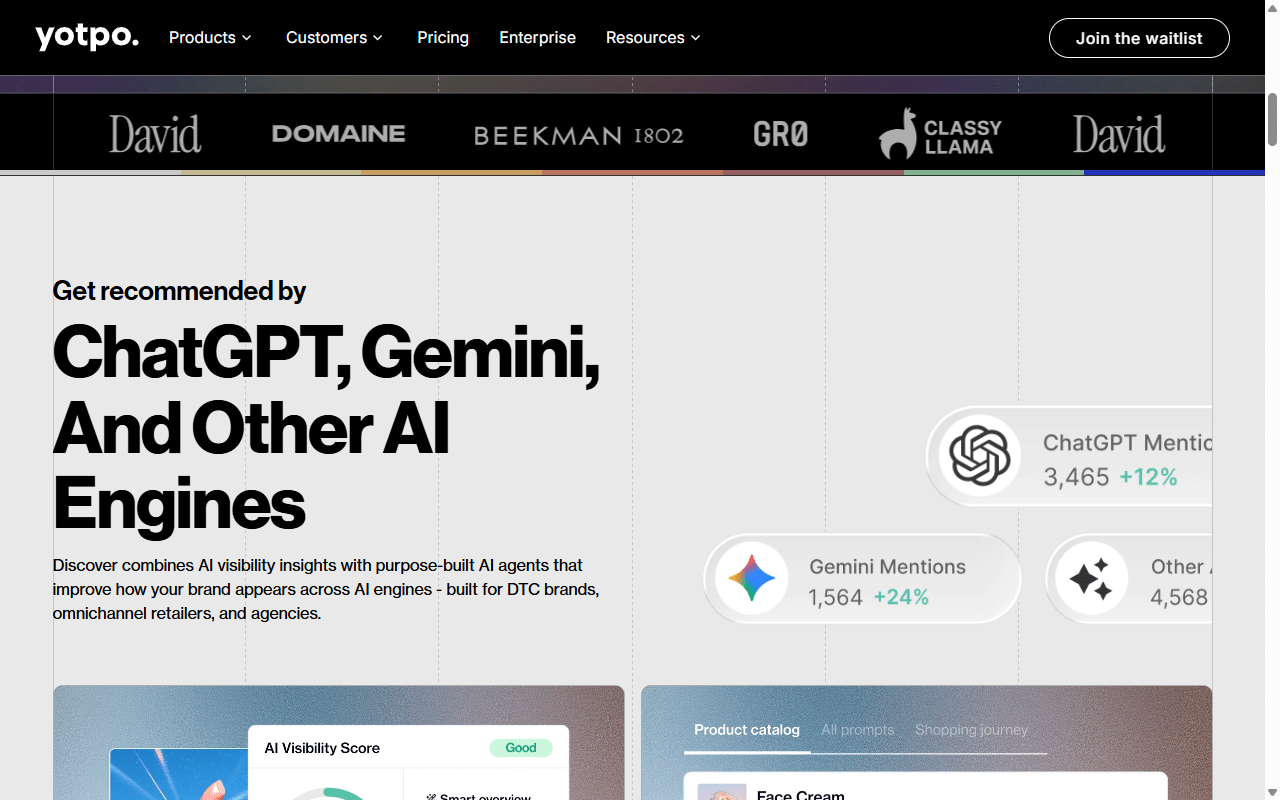
Key Takeaways
- Generative AI is reshaping discovery, with 57% of shoppers now using it to narrow their product choices.
- Weekly engagement with AI tools is now common, since 55% of consumers use them to research products at least weekly.
- AI search carries real economic weight: AI-driven traffic to U.S. retail sites jumped roughly 693% year-over-year during the 2025 holiday season
- Strong organic rankings do not guarantee AI citations, since only 16.7% of sources cited in Google AI Overviews overlap with the top organic results.
- Traffic from AI sources to US retail sites jumped 393% year-over-year in Q1 2026.
- Shopping habits are settling into a new pattern, and consumers are steadily leaning less on old-school search engines to find products.
Why Generative AI in Ecommerce Matters: The Industry Context
Picture a VP of E-Commerce at a growing consumer brand. It is 6:45 PM on a Tuesday, and she is looking at her analytics dashboard, where organic referrals from standard search have slipped for the third month running.
So she opens ChatGPT and asks for the best clean-ingredient moisturizers. Three of her direct competitors come back cited with live links, and her own brand is nowhere in the answer. That moment is what the move toward conversational discovery feels like up close.
This change in AI visibility is not a slow drift. It is a real shift in how people find products, and it runs deeper than most dashboards show. Where SEO worked on intent expressed in keywords, AI search works on intent expressed in conversation, so the surface area you can influence has grown.
Brands that built their visibility on keyword density now face a fair question. How do you show up well in an engine that paraphrases an answer instead of handing back a list of links? The honest answer is that the old playbook does not transfer cleanly. You will need new tools, new measurement, and a new kind of content surface.
We see the same pattern across retail verticals. Shoppers are trading plain blue-link queries for back-and-forth dialogue.
In one survey of US shoppers, 57% now use AI to narrow their choices, and 55% turn to these tools to research products at least once a week. When you add that many US shoppers now lean on AI tools during product research, the cost of being left out of the answer starts to come into focus. Standard search engines are no longer the only gatekeepers of e-commerce discovery.
Google AI Overviews now show up on 48% of all tracked queries as of early 2026. That means nearly half of all consumer searches get summarized by an AI model before anyone scrolls down to the organic listings. Whether AI ends up sending you a modest slice or the bulk of your traffic, sitting out of those citations slowly costs you market share. And the loss often goes unnoticed before it shows up cleanly in a report.
ChatGPT, Gemini, and Google AI Overviews now field a growing volume of product research each month, and shoppers increasingly act on the answers they return. For an e-commerce brand, earning a cited recommendation across these platforms is the modern version of ranking on page one of Google.
The Framework: Five Stages to Generative AI E-Commerce Visibility
Winning in this environment takes a clear process, not a one-off fix. Passive tracking is a fine starting point, but real visibility comes from acting on what you learn. This five-stage framework walks brands from a baseline audit all the way to running the work for you, so your store lines up with how AI engines read commerce data.
The path moves from technical cleanup to steady content creation, and it ends with rallying real customers off your site. When you treat AI optimization as a planned, layered discipline rather than a checkbox, you can steadily earn citation share of voice. The stages below show how to put this into practice across your team.
Stage 1: The AI Visibility Audit
What it involves
You cannot fix what you have not measured. The first move is to set a baseline AI visibility score across the major engines, like ChatGPT, Gemini, and Google AI Overviews. This audit goes well past tracking generic SKU-level data, because it looks at how your products actually show up in real, high-intent buying questions.
In practice, that means finding which of your core SKUs are missing from the recommendation engines that matter. You will want to study the conversational queries that lead shoppers to your category. Instead of typing “organic sunscreen,” a shopper today asks, “What’s the best mineral sunscreen for sensitive skin that doesn’t leave a white cast?” The audit tells you whether your products earn a mention in that answer, and which competitor is winning the click.
How to execute
Start by mapping your highest-priority SKUs and writing out 50 to 100 conversational questions your customers ask while they shop. From there you can pull a baseline AI visibility score with a purpose-built diagnostic tool, so you can see where your catalog gets cited and where it comes up short. That first read gives you the data you need to decide what to fix first.
Most brands discover they are missing from a large chunk of their priority queries once they run this baseline. Once you have those gaps in front of you, sort them by engine. ChatGPT, Claude, and Gemini pull information in slightly different ways, and knowing where you trail is the first real step toward closing the distance.
Common pitfalls
Plenty of marketing teams assume that strong SEO rankings carry straight over to AI visibility. That assumption costs them, because organic listings do not decide what a model chooses to cite. If you lean only on your old SEO reports, you stay blind to your true share of voice in chat-based search.
Stage 2: Technical Onsite Structural Alignment
How AI engines actually read your store
AI engines do not browse a site the way a human shopper does. They parse raw code and pull structured data straight from it. If your store is not fully machine-readable, the crawlers will pass right over your catalog. Onsite structural alignment makes sure those bots can cleanly pull your product details, specs, and stock levels.
This kind of clarity matters because models want precise, structured data to stand behind a recommendation. If an engine gets asked to suggest “dishwasher-safe water bottles under $30,” it needs to confirm those exact attributes in your catalog on the spot. When that detail is buried in an unusual layout, your product drops out of the answer.
How to execute
To get there, clean up your structured schema markup and tidy your internal linking. Make sure your SKU-level data is declared cleanly in your HTML metadata.
That includes the real specifics: dimensions, materials, pricing, and availability. This technical groundwork is exactly what the Onsite Agent in Yotpo Discover handles. It scans your store on an ongoing basis to clear up the structural issues that hurt AI visibility, like missing structured data and broken internal links.
Common pitfalls
A frequent slip is tucking key product specs inside image files or layered JavaScript accordions. If the crawler cannot read the text, the engine treats the data as missing, and that directly drags down your visibility. Keep your specs in plain, structured text that any bot can reach.
Stage 3: Dynamic Authentic Content Generation
Why authentic content earns the citation
Models tend to favor fresh, genuinely authentic source material when they decide what to cite. To earn share of voice, you need to keep producing high-quality, review-backed content that answers real customer questions. That content has to go past generic marketing copy and use the actual words your customers use to describe your products.
AI search models are getting good at spotting and skipping generic, machine-written filler (and that is the part most teams underestimate). They reward content that carries real proof points, verified buying signals, and detailed usage scenarios. To become a source a model trusts, your content needs to stay rooted in real customer experience.
How to execute
Rather than pushing out standard blog posts, use real shopper reviews and past transaction data to build genuinely useful buying guides. This is where Yotpo Discover works as a steady ally for your store. Its Content Agent creates AEO-ready content for your blog, drawing on real customer reviews and past order data to answer complex, chat-based questions.
For example, Yotpo Discover customers like Beekman 1802 and David Protein use these systems to line their content engines up with how people actually search, so their products get cited when shoppers ask detailed buying questions. The approach turns the customer feedback you already have into structured content that models trust and quote on their own.
Common pitfalls
Some brands try to scale content by flooding the blog with low-effort, fully synthetic text. Modern search engines and models are trained to catch and discount generic, thin writing. If your content lacks the texture of real human experience, it will not get cited, and the effort goes to waste.
Stage 4: Off-Site Validation and Verification
What it involves
AI engines do not rely on your website alone to shape a recommendation. They look for third-party proof from trusted outside platforms. They scan digital communities, forums, and social networks to check whether real people are actually talking about and recommending your products.
That off-site footprint reads as a trust signal. When an engine sees your brand spoken of well on Reddit, Quora, and niche retail marketplaces, it grows far more likely to recommend you. This outside validation is what gives a model the confidence to name your brand as a reliable pick.
How to execute
To build that trust, encourage genuine conversation about your products across the wider web. Point your most loyal customers and verified reviewers toward sharing their honest experiences on those external platforms. You can dig into how to capture these outside signals on the Yotpo blog, which covers modern customer engagement in more depth.
This is where Yotpo Discover offers a real edge through its Activation Agent. The platform pinpoints the exact forums and community threads that AI engines are already citing for your category. From there it nudges your verified reviewers and loyalty members to share honest experiences right where it counts, which builds a credible off-site footprint that models trust.
Common pitfalls
Trying to seed fake reviews or automated bot chatter on forums like Reddit tends to backfire. These platforms run careful moderation, and search engines are sharp at flagging unnatural referral patterns. Put your energy into mobilizing real customer voices instead, which earns durable trust over time.
Stage 5: Iterative Tracking and Closed-Loop Refinement
What it involves
AI algorithms keep shifting, so your visibility share can move from one week to the next. Holding onto visibility means moving from passive tracking to a steady loop of acting on what you see. You will want to keep studying why competitors earn citations and adjust your own approach in step.
This stage is about staying competitive in a fast-moving landscape. As new models ship and shopping behavior shifts, your plan has to move with it. Only by steadily refining your technical setup and your content can you protect and grow your citation share of voice.
How to execute
Build a weekly habit of checking which competitor SKUs are gaining citations for your target queries. Pure-play diagnostic tools give you solid visibility analysis.
Still, brands ultimately close the gap by making active onsite and off-site changes. The edge with Yotpo Discover is that it runs three agents, Onsite, Content, and Activation, that make these adjustments for you in real time. So you move past passive tracking into work that actually happens.
Common pitfalls
The biggest trap is treating AI improvement as a one-time setup. Just like SEO, AI visibility is an ongoing, competitive effort that needs steady attention. If you set it and forget it, competitors will quietly optimize their way into the citations you hold today.
Measuring Success: KPIs for Generative AI in Ecommerce
To judge your generative AI strategy in ecommerce, you have to look past plain organic traffic. The metrics below are the ones that show your real visibility in chat-based search, and they are worth tracking together.
- Citation Share of Voice. Tracks how often your brand or SKUs show up in chat-based answers for your target keyword clusters.
- Referral Traffic from AI Engines. Measures the direct click-through traffic coming from platforms like ChatGPT, Claude, and Perplexity.
- AI Overview Citation Overlap. Shows how often your brand appears in Google AI Overviews for your highest-value search terms.
- Attribute Extraction Rate. Tells you what share of your catalog gets correctly parsed and indexed by AI crawler bots.
- Off-Site Citation Frequency. Counts how often your brand gets cited from third-party community sources like Reddit or niche forums.
Reading these metrics together as one dataset is the surest way to protect your brand’s digital market share. A retail brand might hold steady organic rankings in Google, yet watch its direct referral traffic slide because AI Overviews are capturing the first click.
So how do you spot that disconnect before it touches seasonal revenue? The answer is to shift your measurement from keyword tracking to citation analysis.
Our work with growing consumer brands shows that teams who move to citation-based measurement tend to react noticeably faster to changes in the search landscape.
“Generative AI in ecommerce has completely changed the rules of customer discovery. Brands can no longer win simply by bidding on search keywords; they have to become the trusted answer that AI engines naturally reach for. To get there, you have to feed models the one asset they value most: structured, authentic consumer experiences.”
Ben Salomon, Growth Marketing Manager at Yotpo
Frequently Asked Questions
What is generative AI in ecommerce?
Generative AI in ecommerce is the use of AI models to create content, support customer service, and power chat-based search engines. In the context of discovery, it is how modern AI engines summarize product information and recommend brands straight to shoppers.
Is Answer Engine Optimization (AEO) a replacement for classic SEO?
No, AEO is a complementary layer that works alongside SEO. SEO focuses on keyword rankings and search results pages, while AEO shapes your brand’s data so it can be cleanly parsed, synthesized, and cited by chat-based AI engines.
Why do AI search engines prioritize customer reviews for citations?
AI engines prioritize reviews because they want authentic, real-world proof of product claims. Customer reviews give models unstructured but valuable semantic context, which helps them verify product attributes, quality, and real shopper sentiment.
What is Yotpo Discover?
Yotpo Discover is the first AI visibility platform built specifically for the complex reality of commerce. It helps brands track their share of voice across AI engines, study competitor citations, and run automated agents that improve their technical site structure and off-site footprint.
How do the Yotpo Discover automated agents work?
Yotpo Discover runs three agents. The Onsite Agent resolves technical structure issues, the Content Agent creates review-backed search content, and the Activation Agent prompts verified customers to discuss the brand on the key forums that AI engines cite.
How can brands track their visibility in AI search?
Brands can track visibility by measuring their citation share of voice across ChatGPT, Gemini, and Google AI Overviews. A dedicated platform helps automate this tracking across thousands of product-specific, chat-based queries.
Do traditional organic rankings guarantee appearing in Google AI Overviews?
No, organic rankings do not guarantee AI Overview citations. Only 16.7% of sources cited in Google AI Overviews actually rank in the top ten organic results, which is why a dedicated AEO strategy matters.
Are Beekman 1802 and David Protein using Yotpo Discover?
Yes, brands like Beekman 1802 and David Protein use Yotpo Discover to track and improve their AI visibility across chat-based search engines, so their products get cited when shoppers ask detailed buying questions.
Secure Your Brand’s Place in AI Search
The move toward chat-based discovery is already reshaping the e-commerce landscape. Brands that keep relying only on legacy search strategies risk fading from view for a growing group of shoppers who let AI engines guide their buying. To hold onto your market share, you have to actively manage how models see and cite your products.
Start by getting an honest read on where you stand in chat-based search today. You can get your free AI visibility score right away to surface your brand’s current citation gaps. Once you know your baseline, head over to the Yotpo Discover page to request a demo and see how our automated agents can help you protect your digital visibility.



 Join a free demo, personalized to fit your needs