



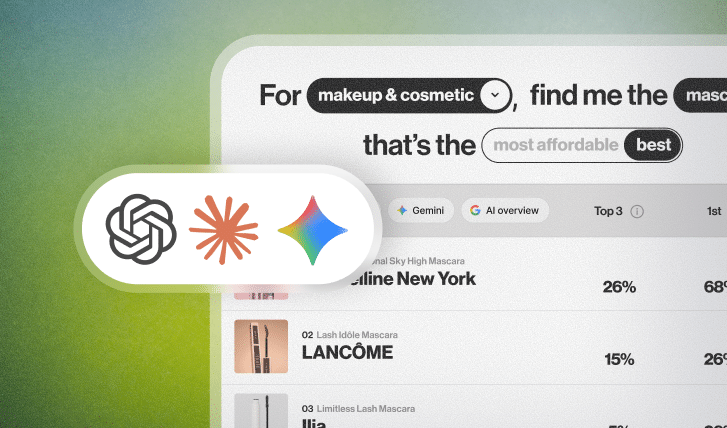









Search engines no longer just list links. Many now write answers, too. For ecommerce brands, a spot in those answers takes a fresh plan for product data, brand trust, and outside proof.
Here is a practical framework for ecommerce heads of SEO. It shows how to shape product entities, organize product details, and earn citations on ChatGPT, Gemini, and Google AI Mode. It reflects Yotpo’s point of view, and we treat it as a working model, not a published standard.
Key Takeaways
- Traffic from AI sources to online stores has been rising. That hints at a lasting shift in how people compare products.
- Structuring product data so machines can read it cleanly is the practical first step toward answer-engine visibility.
- Among consumers who use AI for online shopping, 79% say they feel more confident in a purchase after using an AI assistant, per Adobe.
- Digital Applied’s forecast model projects AI answers could take about 40% of organic clicks on informational queries between mid-2027 and mid-2028, though that is a single agency’s projection, not a consensus forecast. That makes Answer Engine Optimization (AEO) a useful partner to classic SEO.
- AI referral traffic to US retail sites converted 42% better and delivered 37% higher revenue per visit than non-AI traffic as of March 2026, per Adobe data reported by TechCrunch.
- In Yotpo’s view, getting cited also depends on real shopper voices and building proof on outside sources.
Why This Matters: The Structural Shift from Retrieval to Synthesis
Classic SEO rewarded keywords, crawl budget, and backlinks. AI tools can work in a different way. When ChatGPT, Gemini, or Google AI Mode answers a shopping question, it may blend loose text and structured feeds into one clear pick.
Category impressions can slip even when organic rankings look steady. One likely reason is that an AI answer may resolve the shopper’s question before any organic click happens.
Discovery now runs on two tracks. Classic SEO still handles shoppers who want to navigate or buy through search results pages. AI tools, in turn, can pull short facts from trusted sources to build full buying advice. The old playbook doesn’t carry over cleanly. Where classic search read page text, large language models tend to work with entities, product traits, and feedback from real buyers.
Brands can show up less often in AI answers than they could. One possible reason is that product detail pages (PDPs) don’t give a machine clear facts to check. Clear facts that match everywhere are a sensible place to start.
The Framework: 5 Stages to AI Search Citations
Earning citations usually takes progress on three fronts. They are technical markup, entity trust, and outside consensus. AEO builds on classic SEO and, in our view, adds a few signals of its own.
Yotpo’s framework, which we treat as a working model rather than a published standard, has five stages:
- Stage 1: Technical Schema and Machine-Readable Catalog Architecture: Exposing detailed SKU data in clean JSON-LD.
- Stage 2: Entity Grounding and Knowledge Graph Positioning: Making your brand one clear entity in public knowledge bases.
- Stage 3: Review Intelligence and Authentic Shopper Voice Signals: Supplying real feedback that models can use to compare products.
- Stage 4: Off-Site Validation and High-Authority Source Seeding: Earning trusted mentions on forums and niche editorial sites.
- Stage 5: Automated Execution and Continuous Visibility Tracking: Using automated workflows to track and act on citation gaps.
Stage 1: Technical Schema and Machine-Readable Catalog Architecture
What It Involves
AI tools may not read product pages the way shoppers do. Crawlers tend to read raw code and structured feeds. If your product data isn’t easy for machines to read, a model has a harder time confirming size, material, or use.
To earn citations, go beyond the basics. Organization markup and simple Product schema may not be enough in crowded retail searches.
How to Execute
Add full Product, Offer, and MerchantReturnPolicy schema to every live PDP. Price, stock status, and SKU are the baseline. Then add product specs that answer what shoppers really ask.
Expand your JSON-LD with additionalProperty arrays. If you sell shoes, list arch support levels, waterproof ratings, and heel-to-toe drop. Details like these can give AI tools solid facts to match against a specific prompt.
Use internal links to show how categories, sub-collections, and matching accessories relate. Flat catalogs can make a model’s job harder. Clear parent-child trees tend to make crawling easier.
Common Pitfalls
A common mistake is schema that loads only through client-side JavaScript. Classic crawlers may run those scripts in time, but AI retrieval tools can miss late-loading markup. To them, your store may look empty.
Stage 2: Entity Grounding and Knowledge Graph Positioning
What It Involves
Imagine an AI tool building a “best running shoes for flat feet” answer. It helps if the model sees your brand as one clear, known entity. Clear entity signals can close the gap between an unknown web store and a trusted shop.
Knowledge graphs sort facts into nodes and edges. They link brands to categories, founders, certifications, and product lines. If an AI tool can’t tell what your brand stands for, it may lean toward better-known names.
How to Execute
Claim your entity details across public records. Then check Wikidata, Wikipedia references, Google Business Profiles, and industry directories. Each one should match your site markup.
Add sameAs arrays to your brand schema. Point them to trusted corporate profiles, trademark records, and verified social accounts. That can give knowledge systems a clearer path to your brand name.
Publish a clear, factual About Us page. Spell out your market category, how you make your products, and your brand history. Skip the marketing fluff here, since plain facts are easier for extraction tools to read.
Common Pitfalls
Brands can end up with mixed addresses, different brand names, or old company IDs across older web pages. Gaps like these can add doubt. In turn, AI tools may skip your store for a rival with cleaner records.
Stage 3: Review Intelligence and Authentic Shopper Voice Signals
What It Involves
AI models tend to value real proof. They may discount a brand’s own claims. To judge whether a shoe runs true to size or holds up in rain, they can lean on shopper voices.
Customer reviews, verified Q&A, and user photos supply the raw feedback that AI models can draw on to compare products. Real shopper voices can shape the summaries these models write.
How to Execute
Collect reviews that cover specific points. Instead of asking only for star ratings, prompt buyers to describe fit, how long it lasts, texture, and real-world use.
Reviews you collect, for example with Yotpo Reviews, can be marked up with Review and AggregateRating schema. That keeps both the scores and the written comments easy for bots to read.
Reply to negative reviews with care on public product pages. A thoughtful reply shows shoppers how you handle problems. It may also send AI tools a useful signal about service.
Common Pitfalls
Reviews hidden behind logins or shown in iframes can keep crawlers from reading customer feedback. Place all reviews in the server-rendered DOM so they stay visible.
Stage 4: Off-Site Validation and High-Authority Source Seeding
What It Involves
AI tools may not rely on a brand’s own site alone when they build product picks. They can also draw on outside sources such as Reddit threads, fan forums, YouTube transcripts, and shopping roundups.
If your brand has no outside proof on these sites, an AI tool may struggle to back up your product claims. Earning the mention often means showing up where real product talk happens.
How to Execute
Find the outside sites that AI tools seem to cite again and again in your field. In many consumer niches, Reddit, niche forums, and top product blogs are good places to start.
Customers who have a great experience may post unprompted praise, which can start real brand conversation. Support forum threads by answering tough questions openly from verified brand accounts.
Team up with niche publishers so your products show up in fair, complete roundups. AI tools may look for brands that appear across many different sites when they judge who leads the market.
Common Pitfalls
Faking forum talk with made-up personas or scripted replies tends to backfire. Models may cross-check sentiment and can often spot fake patterns. Your domain could then be down-weighted in answer summaries.
Stage 5: Automated Execution and Continuous Visibility Tracking
What It Involves
Earning AI search citations isn’t a one-time tech audit. These tools can change how they answer at any time. Search habits shift, and new rivals may appear along the way.
Tracking is a useful starting point because it shows where you stand. The next step is an action layer that helps surface why an AI tool may have picked a rival. That layer can then guide updates to your tech and content assets in response.
The gap between knowing and improving often comes down to speed. In Yotpo’s view, teams that rely on manual work can spend weeks building spreadsheet reports. Meanwhile, rivals may gain chat-based search share. Answer tools may shift which sources they favor from week to week. A monthly report can leave you slow to respond.
How to Execute
Teams that want to automate this work can use a platform like Yotpo Discover. Discover pairs tracking with three automated agents built for the complex reality of commerce:
- The Onsite Agent: Continuously scans your online storefront to find and fix structural blockers. It spots missing schema, makes unclear product detail pages clearer, and fixes internal link gaps that can keep AI crawlers from reading product details.
- The Content Agent: Generates trusted, AEO-ready editorial content in your brand voice. It draws on real customer reviews and verified order data. From there, it builds review-backed buying guides and outreach briefs for third-party publishers that help close citation gaps.
- The Activation Agent: Finds the Reddit threads, online marketplaces, and forums that AI answers cite. It prompts verified reviewers and loyalty members to share real product experiences there, which helps build real third-party consensus.
Beekman 1802 and David Protein work with Yotpo Discover.
To see where you start in chat-based search, get a free AI visibility score at commerce-gpt.yotpo.com and review your store’s citation gaps.
Common Pitfalls
Treating AEO as a side experiment, apart from core SEO and merchandising, tends to split your process. Fold AI search tracking into your weekly marketing routine instead.
Measuring Success: KPIs for AI Search Citation Performance
In Yotpo’s view, tracking results across AI tools calls for metrics built around synthesis, not just click traffic. The five KPIs below are a working model rather than a published standard:
- AI Share of Voice (SoV): The share of chat queries in your category that name your brand across ChatGPT, Gemini, and Google AI Mode.
- Citation Frequency Rate: The count and share of generated answers that include a clickable link to your product pages or your domain.
- Attribute Citation Accuracy: How well models report your specs, pricing, and key product features in chat answers.
- Sentiment Polarity Score: The overall tone models use about your brand when they compare you with rivals.
- Referral Conversion Velocity: The rate at which chat-search visitors buy, compared with standard organic search traffic.
A fully optimized citation profile looks like a balanced footprint. Structured code, real shopper feedback, and trusted outside proof all back up the same core product truths.
“Winning citations in AI search isn’t about gaming an algorithm with more content. It requires feeding answer engines verified, structured product truths that machines can validate across multiple trusted touchpoints.”
Ben Salomon, Growth Marketing Manager at Yotpo
Frequently Asked Questions
How does AEO relate to classic ecommerce SEO?
AEO doesn’t replace SEO. It works alongside classic SEO as a partner layer. Classic SEO captures direct intent through search results pages, while AEO helps your products appear in chat answers and recommendations.
Why do AI engines cite competitor brands over mine?
AI tools may favor rivals that show clearer schema, richer shopper voices, and more consistent outside consensus on forums. If a tool can’t verify your product data with confidence, it may suggest another brand.
How do customer reviews impact AI search visibility?
Reviews can supply the feedback that large language models may weigh when they compare products. Rich reviews that mention fit, wear, and day-to-day performance can give AI tools more real proof to work with.
Which schema markup matters most for winning AI citations?
Beyond standard Product and Offer markup, brands should add detailed additionalProperty arrays, nested AggregateRating schema, and full MerchantReturnPolicy code. Exact specs can make your products easier for AI tools to judge.
How does the Activation Agent in Yotpo Discover work?
The Activation Agent tracks the forum talk, Reddit threads, and online platforms that AI answers cite. It then prompts your real customers and loyalty members to share authentic experiences on those channels.
Can smaller DTC brands compete with enterprise retailers in AI search?
Yes, smaller DTC brands can compete well in chat-based search. They need clean product data and strong community proof. AI tools may weigh product fit and real sentiment alongside domain age, or even ahead of it.
How quickly do updates to product schema influence AI citations?
Timing can vary a lot by tool, and none we know of posts a fixed schedule. In practice, changes tend to show up as AI tools recrawl your pages and product feeds. Track your citations over time instead of expecting an instant shift.
To keep learning about AI-era search, explore the insights on the Yotpo blog. You can also get a free AI visibility score to see where your brand stands today. Or request a demo and learn more about Yotpo Discover.




 Join a free demo, personalized to fit your needs
