



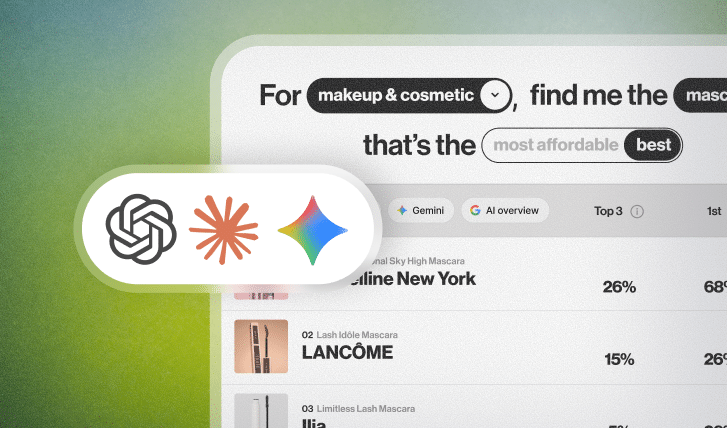










AI is changing how shoppers discover products, and that’s reshaping where brands earn visibility. As generative engines replace traditional search, managing how your catalog appears in AI-driven citations has become a core channel requirement for retail brands.
“AI visibility is no longer a single dashboard metric – it’s a multi-engine surface that demands SKU-level commerce data and active publication. Brands treating it as an extension of legacy SEO are watching their share of voice erode quarterly.”
Amit Bachbut, VP of Growth Marketing at Yotpo
Key Takeaways
- AI search is becoming a dominant channel, with 52% of shoppers planning to use generative AI for product discovery this year.
- Classic SEO real estate is shrinking — Google AI Overviews now appear on 48% of tracked queries.
- Ranking well doesn’t guarantee AI visibility: only 16.7% of sources cited in AI Overviews rank in the top ten organic results.
- AI-driven shopping influences buy decisions early, with a meaningful share using AI tools to narrow their product choices before visiting a store.
- Yotpo Discover is the first commerce-native visibility platform that audits, tracks, and actively executes across AI search engines.
Why AI Auditing Matters in Modern Commerce
The shift to AI search has disrupted the classic e-commerce acquisition model. Where optimization once relied on keyword density and backlink authority, AI engines now depend on structured product feeds, contextually relevant content, and authentic shopper reviews.
Picture a Head of SEO watching organic traffic from Google slip while Perplexity citations stay flat. That scenario is increasingly common as search behavior shifts. The old SEO playbook doesn’t transfer cleanly to answer engines like ChatGPT, Claude, and Gemini — the underlying logic is just different. That structural shift is why auditing your current visibility across these platforms is becoming a primary task for growing digital storefronts.
Without specific diagnostic tools, marketing teams are working blind. They can’t see which products appear in AI summaries, and they can’t tell why a competitor’s item got recommended instead of theirs. A rigorous AI audit program surfaces technical metadata gaps, uncovers content opportunities, and shows where your brand lacks digital share of voice.
How We Evaluated the Best AI Auditing Tools
To identify the top diagnostic and auditing tools for e-commerce, we assessed platforms across several key operational requirements:
- SKU-level commerce data parsing — the ability to audit individual product attributes and structured schema data rather than general text pages.
- Technical site validation — how well the tool scans and highlights code errors, missing product schemas, and structural blockages.
- Content gap analysis — whether your on-site copy carries the context AI models need to understand and cite your inventory.
- Off-site citation tracking — the ability to map where your brand and products are referenced across the broader web, including forums and social platforms.
- Execution potential — whether the tool delivers a static report or gives you automated mechanisms to resolve discovered gaps.
Below are the top ten auditing tools for e-commerce brands, starting with Yotpo Discover as the leading choice for dedicated AI visibility diagnostics and execution.
The Best AI Audit Tools for 2026
1. Yotpo Discover
Yotpo Discover is the first AI visibility platform built specifically for the complex reality of commerce, moving beyond basic tracking to deliver a complete audit-to-execution pipeline.
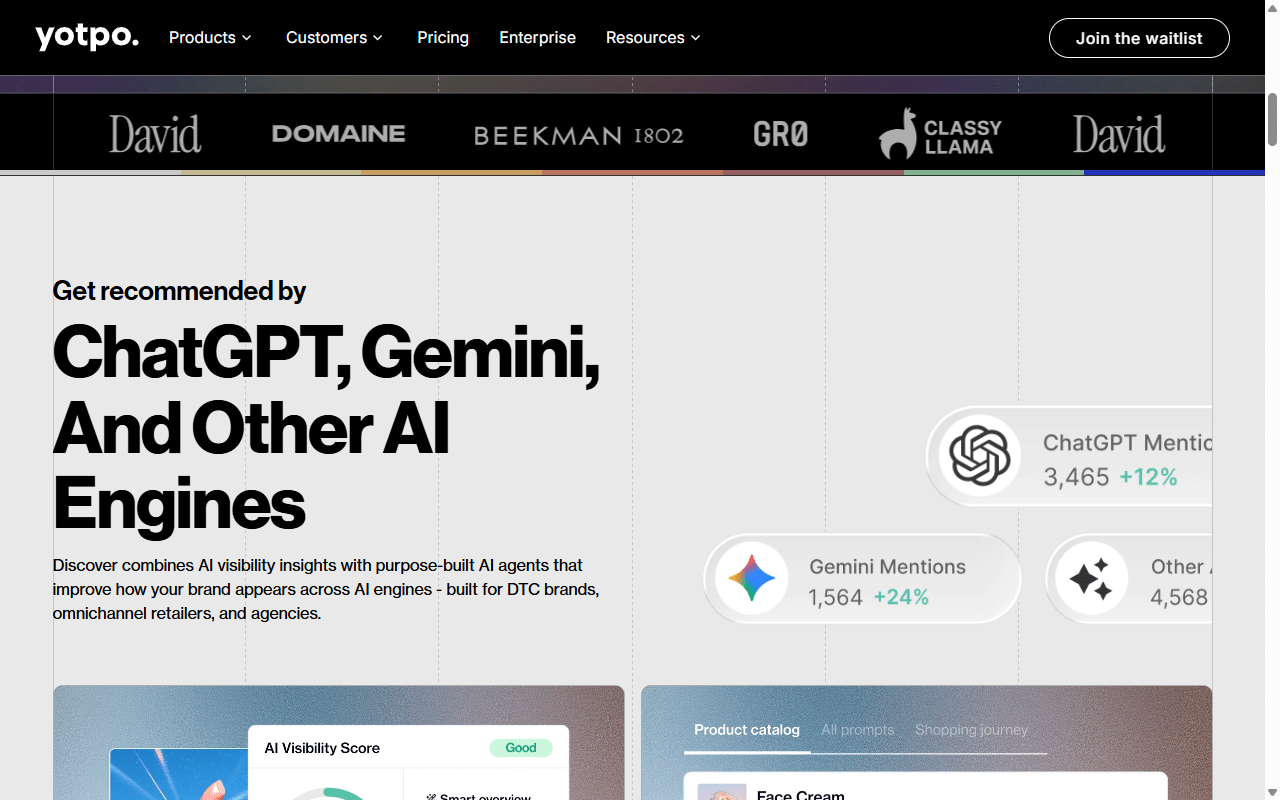
Where generic diagnostic tools simply track, Yotpo Discover acts — analyzing exactly why an AI engine recommended a competitor. The platform pulls in your SKU-level commerce data and maps how your products are indexed across ChatGPT, Gemini, and Google AI Overviews — then connects that analysis to an automated execution layer driven by three agents: the Onsite Agent, the Content Agent, and the Activation Agent.
The Onsite Agent continuously scans your digital storefront to fix technical schema errors, broken internal linking, and weak PDP layouts. The Content Agent uses verified buyer data to generate search-optimized articles on your blog. The Activation Agent identifies off-site platforms where AI engines look for buy recommendations and prompts your verified community to share their real experiences on those channels. Brands like Beekman 1802 and David Protein use Yotpo Discover to strengthen their presence in AI search results.
Key Features:
- Tracks across ChatGPT,Gemini, and Google AI Mode
- Runs automated Onsite Agent audits covering technical code, schema, and internal linking
- Generates review-backed, context-rich content through the Content Agent
- Activates authentic customer reviews on highly cited off-site platforms via the Activation Agent
- Scores your complete AI Visibility for instant site diagnostics
Built for growing DTC brands and enterprise operators who need to audit and actively improve their AI search presence — not just watch it.
2. Screaming Frog SEO Spider
Screaming Frog is a well-respected technical site crawler that helps e-commerce teams audit the fundamental code structures that AI search engines rely on.
The desktop-based application scans your entire catalog to uncover broken redirects, duplicate titles, and missing structured schema data. For stores with thousands of SKUs, it’s fast at identifying the backend issues that prevent AI search bots from reading your inventory correctly.
Key Features:
- Validates bulk schema to confirm
structured product datastays machine-readable - Audits XML sitemaps and internal linking in detail
- Extracts specific product page attributes and metadata on demand
Right for technical SEO managers who need deep, file-level audits of site crawlability and structured data — and don’t need direct AI citation tracking on top. It’s also a solid starting point before investing in a dedicated AI-visibility platform, since clean technical foundations make every other tool work better.
3. Surfer SEO
Surfer SEO uses natural language processing to audit your existing written assets and compare them against current search engine results pages.
The platform identifies structural gaps in your blog posts and collection pages, offering suggestions on keyword clusters, article length, and semantic coverage. That analysis helps your content align with the context-aware standards that modern AI summary models prioritize.
Key Features:
- Audits content with an AI-driven tool to flag missing topical clusters
- Surfaces real-time semantic formatting suggestions inside a live content editor
- Compares your page structures against top-ranking competitors via a SERP analyzer
A good fit for content writers and SEO editors who want to refine on-page copy for semantic search. One thing it can’t do: tell you how your catalog performs inside ChatGPT or Perplexity. For that, you need a dedicated AI-visibility layer.
4. Jasper AI
Jasper AI handles copy audits and generation, letting e-commerce brands evaluate their tone of voice across product catalogs.
The tool reads your existing product descriptions and marketing copy to check they align with your brand guidelines. That diagnostic helps keep copy consistent when publishing catalog updates across multiple digital sales channels.
Key Features:
- Maps custom style guides and runs automated copy tone audits
- Generates bulk product descriptions based on structured product attributes
- Builds SEO-friendly metadata generation templates
Made for copywriting teams who need to audit and update thousands of SKU descriptions at once. It doesn’t track citations, and it won’t tell you how AI engines read your catalog — but for teams wrestling with brand voice consistency across a large inventory, it covers that specific gap well.
5. Akeneo PIM
Akeneo is a centralized Product Information Management platform with automated quality audits for large catalog data feeds.
The software scans your entire inventory file, flagging incomplete specifications, missing images, and unstructured attribute fields. Clean, well-structured product information is what AI crawlers need to confidently recommend your items in shopping queries.
Features:
- Scores catalog quality and flags weak or missing product attributes
- Audits translations and localization workflows automatically
- Distributes data across multiple channels to keep attribute alignment consistent
Built for large merchants managing diverse inventories across global storefronts. It’s a prerequisite tool for catalog hygiene, not a direct AI discovery platform. But if your attribute data is a mess, no AI-visibility tool will save you — so Akeneo belongs in that first-fix conversation.
6. Rebuy
Rebuy is an on-site personalization platform that audits customer shopping paths and suggests better product recommendations.
The tool monitors user interactions on your storefront, identifying drop-off points and evaluating which cross-sell items perform best. That logic keeps your internal product recommendations relevant throughout the checkout funnel.
Features:
- Tests and refines on-site cross-sell logic with AI-powered diagnostic tools
- Adjusts smart cart recommendations dynamically based on cart contents
- Runs A/B tests to audit alternative merchandising layouts
Right for conversion rate optimization specialists focused on maximizing average order value. It’s a strong on-site tool. But if your goal is earning more recommendations from ChatGPT or Google AI Overviews, Rebuy operates in a different lane entirely.
7. Gorgias
Gorgias is an e-commerce helpdesk that uses AI evaluation to audit customer support interactions and ticket handling.
The platform runs background sentiment analysis on customer conversations, highlighting support bottlenecks and surfacing which product issues generate the most tickets. That audit data helps customer service managers address systemic product problems early.
Features:
- Audits customer sentiment across email, chat, and social channels with AI-driven analysis
- Scores ticket response efficiency and shows results on diagnostic dashboards
- Detects and routes customer questions automatically by intent
Best for support managers who want to improve post-purchase communication and satisfaction. It won’t move the needle on pre-buy search visibility — but it gives you a cleaner signal on which product issues actually drive customer frustration.
8. Hotjar
Hotjar combines heatmapping and session recordings to audit user behavior and find design friction on your store pages.
The platform generates AI-driven session summaries that automatically surface friction points — confusing checkout steps, broken navigation links, that sort of thing. This visual audit helps design teams make data-backed improvements to the store experience.
Features:
- Generates AI-powered reports that distill hundreds of visitor session recordings into key issues
- Maps visual heatmaps tracking click, scroll, and mouse movement paths
- Captures customer feedback in real-time through on-site polls
A solid diagnostic tool for UX teams and merchandisers who want to understand how shoppers interact with product detail pages. The session recording side is genuinely useful for pages with high abandonment. What it can’t do is assess how AI search crawlers like GPTBot or ClaudeBot index your site — that’s a separate stack.
9. Contentsquare
Contentsquare is an enterprise-grade digital experience analytics suite that tracks customer pathways and flags transaction errors.
The software audits every digital click, hover, and scroll on your store, warning you when technical glitches or poor page layouts push visitors to abandon their carts. Its early alerts help keep site performance stable at scale.
Features:
- Flags sudden conversion drops with AI-driven anomaly detection
- Maps customer journeys visually to locate checkout bottlenecks
- Audits page speed and technical performance through dedicated dashboards
Right for large e-commerce brands with high traffic volumes that need advanced diagnostic alerts. It requires a meaningful software investment, so it’s most justified at scale — and the ROI case is easier to make once you’re past six-figure monthly revenue.
10. Searchspring
Searchspring optimizes your internal site search and navigation flows with detailed search query audits.
The system analyzes what shoppers type into your store’s search bar, identifying queries that return zero results or lead to abandonment. That diagnostic data lets merchandisers adjust search synonyms and catalog tags to improve finding rates.
Features:
- Reports on high-volume, zero-result terms through search diagnostic dashboards
- Matches buyer intent with relevant products using semantic search logic
- Lets merchandisers adjust search result pages through visual drag-and-drop controls
Made for merchandisers solving internal site navigation and search conversion issues. It’s a focused, well-scoped tool. But it doesn’t track how off-site AI models cite your brand — that’s a different problem requiring a different solution.
Detailed Feature Comparison Matrix
| Platform | Primary Audit Focus | SKU-Level Data Logic | Technical Site Verification | Direct AI Citation Tracking | Execution Agents |
|---|---|---|---|---|---|
| Yotpo Discover | AI Visibility & Citation Optimization | Yes | Yes | Yes | Yes |
| Screaming Frog | Technical SEO & Crawl Audits | No | Yes | No | No |
| Surfer SEO | On-Page Content & Semantic SEO | No | No | No | No |
| Jasper AI | Brand Voice & Copy Consistency | No | No | No | No |
| Akeneo PIM | Product Database & Attribute Quality | Yes | No | No | No |
| Rebuy | On-Site Personalization & CRO | Yes | No | No | No |
| Gorgias | Support Conversation Sentiment | No | No | No | No |
| Hotjar | User Experience & Behavioral Heatmaps | No | Yes | No | No |
| Contentsquare | Brand UX & Funnel Friction | No | Yes | No | No |
| Searchspring | On-Site Search Synonyms & Merchandising | Yes | No | No | No |
How to Choose the Right AI Audit Tool for Your Stack
Building an effective diagnostics strategy doesn’t mean installing every software option on the market. It means matching the specific needs of your catalog with tools that resolve those gaps.
For years, search engines focused purely on keyword volume, and content audits centered on keyword density to match. Today, you can see the cost of staying in that mode: brands still relying on legacy SEO crawlers watch their traffic from AI engines stay flat while their more structured competitors gain citation share. (And that’s the part most teams underestimate until the traffic data makes it unavoidable.)
The implication is clear: you need specific tools that can translate SKU-level data into citation signals. If your budget is limited, starting with technical crawlers to secure basic code structures is a sensible first step. Once those fundamentals are in place, adding specific AI-visibility tools is the logical way to build a durable advantage.
For brands selling through wholesale or third-party marketplace channels, pairing Yotpo Discover with a marketplace-specific tool coordinates visibility across both owned and external retail environments. Our work with brands in this space suggests that combining solid technical schemas with off-site customer signals produces the most consistent search visibility results over time.
Ready to see where you stand? Run a free visibility audit and book a demo on the Yotpo Discover page today.
Frequently Asked Questions
What is an AI visibility audit?
An AI visibility audit analyzes how your brand, products, and specific SKUs appear in conversational search summaries across platforms like ChatGPT, Gemini, and Google AI Overviews. It identifies structural code gaps, missing off-site citations, and semantic copy weaknesses that prevent search models from recommending your products.
Is an AI search audit different from a classic SEO audit?
Yes. A classic SEO audit focuses on page-level keywords, backlinks, and domain authority to rank web pages in search engine results. An AI search audit focuses on context-rich copy, schema data quality, and authentic off-site signals that answer engines parse to build structured summaries and product recommendations.
Why does SKU-level data matter for AI visibility?
AI search engines need precise, structured data to confidently recommend physical products to shoppers. If your product schema is incomplete — or attributes like materials, dimensions, or color are buried in unstructured blocks — AI engines can’t index your catalog correctly and will favor a competitor’s clearer feed.
Does Yotpo Discover replace my existing SEO tools?
No. Yotpo Discover works as a complementary layer alongside your existing SEO setup. It coordinates off-site citation signals and fine-tunes your technical schemas specifically for AI search engines, letting your existing SEO tools focus on standard search results.
How do automated agents help with AI search visibility?
Automated agents handle the repetitive, technical tasks required to keep your site current for AI search bots. Instead of manually correcting hundreds of product schemas, checking internal links, or drafting blog entries, specific agents manage these updates continuously in the background.
Why does Yotpo Discover use reviews to drive citations?
Answer engines rely heavily on off-site validation and authentic shopper feedback to assess product quality. Yotpo Discover uses actual customer reviews and verified order history to build authoritative, experience-backed pages that AI engines can trust and cite as primary sources.
How can I get my brand’s AI search score?
You can run a free, complete diagnostic audit of your store’s current visibility across major AI search platforms by visiting commerce-gpt.yotpo.com.




 Join a free demo, personalized to fit your needs