



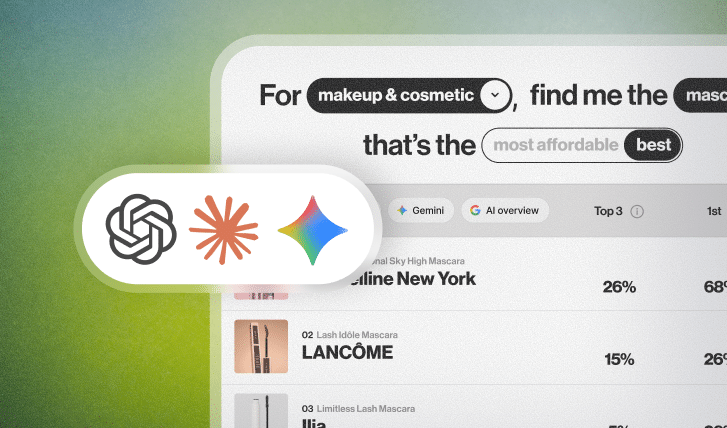









Search is changing, and you may already see it in your own data. Shoppers now ask full questions in plain words inside AI chat tools. One example is a request for a moisturizer that suits dry winter skin. For Heads of SEO and ecommerce leaders, that means a new task. Add Answer Engine Optimization (AEO) and Generative Engine Optimization (GEO) to your routine, right beside your keyword reports.
Our framework below prepares your store for AI search. It covers structured data and bot governance. It also covers review citation graphs and automated content execution.
Key Takeaways
- AEO adds a layer next to classic SEO. It does not replace it.
- A forecast from the agency Digital Applied suggests AI answers could take about 40% of organic search clicks around Q3 2027.
- Our framework starts with technical foundations. Clean structured data can help AI tools read each product detail, from sizes to stock status.
- Next comes entity authority. Your brand and SKUs should read the same way in trusted sources outside your site.
- The third stage sets crawler rules. The right AI bots can then reach your key pages without straining your servers.
- Stage four puts real shopper reviews to work. Detailed feedback can give AI tools proof to cite.
- The final stage closes gaps by publishing targeted content wherever AI answers leave your brand out.
Why AI Search Optimization Matters for Ecommerce
For two decades, ecommerce search followed a familiar rhythm. You found popular keywords and built category and product pages. You earned backlinks and tuned how bots crawl your site. That playbook still matters. It just no longer covers it all.
Large language models (LLMs) and AI search systems may work differently from the classic search spiders you know. A classic engine indexes a page to show a blue link. An AI engine can build an answer from many signals at once, such as structured data and page content.
Consider a merchandiser at an apparel brand whose organic rankings sit steadily on page one. Yet AI answers have stopped naming her products. What changed is that the search engine results page (SERP) is no longer the only path to a sale.
The gap between organic rankings and AI citations may come from how AI tools weigh trust. Classic search has long relied on link-based signals such as PageRank. AI systems may place more weight on clear entities and rich SKU data.
Facts that stay consistent across the web can help too. If an AI tool can’t read your return policy or exact sizes, it may pick a rival whose data is easier to read.
AEO works beside SEO on its own signal layer. Its focus is whether your products show up when an AI assistant gives direct buying advice.
AI search might drive 20% of your brand’s digital traffic, or it might drive 70%. Either way, being left out of AI recommendations is a risk worth planning for. Brands that update their data setup now give themselves more room to adapt as chat shopping grows.
Our 5-Stage Framework for AI Search Improvement
Getting an online store ready for AI search starts with a plan, not a shortcut. Keyword stuffing no longer works the way it once did. AI models may weigh context more than how often a word appears. Repeating a phrase like “waterproof hiking boots” again and again on a product page adds little. Many older tactics may fade the same way.
Our framework has five stages, and you can work through them in order.
- Stage 1: Building Machine-Readable Technical Foundations: Start by structuring your data so AI tools can read each detail fast, from sizes to stock status.
- Stage 2: Establishing Entity Authority and Brand Knowledge Graphs: From there, define your brand and SKUs in knowledge bases outside your site. AI tools can then confirm who you are.
- Stage 3: Managing AI Crawler Access and Bot Governance: The third job is access. AI search bots need to reach your key assets, and your servers should stay steady while they do.
- Stage 4: Activating Authentic Shopper Voices for Review Citation Graphs: Turn shopper feedback into the kind of proof AI tools may look for.
- Stage 5: Automated Content Execution and Gap Remediation: Spot gaps in AI answers and publish targeted replies across the web.
Stage 1: Building Machine-Readable Technical Foundations and Structured Data
What It Involves
AI search models can rely on structured data schemas to pull clean product details without digging through messy DOM structures. An extraction agent that hits an outdated price may skip that node rather than risk a wrong guess. A missing variant or a vague product description can have the same effect. So data quality comes first.
For technical teams in ecommerce, the job is clear. Add careful JSON-LD schemas to each Product Detail Page (PDP), collection page, and policy document. Treat your website as an open API for LLMs. It is not only a visual interface for people.
How to Execute
Begin by auditing the nested JSON-LD on each core product template. Then go beyond basic Product schema. Fill in the full specs.
- Product Schema: Include exact
gtin13,mpn,sku,brand,color,material, andpatternattributes, so each listing points to one real item. - Offer Schema handles the money side of the page. Define
price,priceCurrency,availability, anditemCondition, then add an exactpriceValidUntiltimestamp. - The next node,
MerchantReturnPolicy, should carry return windows, restocking fees, and return shipping fees right on the offer node. That can let AI tools check your buying terms. - Finish the commercial details with
OfferShippingDetails. It lists shipping rates, destinations, and expected delivery times for each region you serve. - AggregateRating: Add review counts and overall scores that match what shoppers see on your site.
Make sure client-side JavaScript doesn’t hide your schema. AI extractors can skip complex scripts to save compute. A shopper’s question about your product might then get answered from a rival’s cleaner page. Put your JSON-LD in server-rendered HTML. That gives crawlers the best shot at your full product specs on the first request.
Yotpo Discover is a purpose-built AI-visibility platform for ecommerce. It can help simplify this technical baseline. Its Onsite Agent continuously scans your ecommerce store. It finds and fixes structural issues that harm AI visibility. These include missing structured data, weak internal linking, and unclear Product Detail Pages.
Common Pitfalls
A frequent error is adding scattered schema bits from several tracking apps with no unified parent node. It is an easy one to miss. Each app adds its own markup. Imagine an AI tool landing on one PDP and finding three schema blocks that contradict each other. It may well trust the data less.
Price and stock values can also drift out of sync between the visible HTML and the hidden JSON-LD. Mismatches like that can lead AI to discount your data across search platforms.
Stage 2: Establishing Entity Authority and Brand Knowledge Graphs
What It Involves
Answer engines may treat your brand as more than a simple URL. They can read your business as an entity. An entity is a defined node inside a web of people, companies, topics, and attributes. That matters because an AI tool can more easily name a brand it identifies.
A shopper types “best mineral sunscreen for acne-prone skin” into an AI tool. The tool needs to connect your brand name with that product type. Without that link, your products may be left out of the answer. Trusted outside databases often help build entity authority. AI models may use those in pre-training and in live lookups.
How to Execute
Start by auditing how outside sources describe your brand. Then make your entity clear with structured data and outside references.
- Organization Schema with sameAs: Include links to your official Wikidata entry, Crunchbase profile, and Google Knowledge Graph ID. Add your verified social media profiles too.
- Wikidata and Wikipedia Presence: If your brand meets community notability rules, create and keep an accurate Wikidata entry. Give it clear product categories.
- Digital PR and Industry Publications matter here too. Aim for the trade publications and category roundups that AI tools may use as a source.
- Consistent Name, Address, and Phone (NAP) data should read the same in every directory and retail partner profile. Even the suite number and street spelling should match.
Keep these details identical everywhere you appear. Consistent entity data can give AI tools clearer signals about who you are and what you make.
Common Pitfalls
Try not to rely only on claims you publish yourself on your “About Us” page. AI models may look for outside agreement before they cite a brand. Independent sources that describe you the same way are worth building.
Names can also drift after subsidiaries or domain migrations. Suppose your organization schema lists three versions of your company name with no alternateName tags. AI may then split your entity authority across several unclear records.
Stage 3: Managing AI Crawler Access and Bot Governance
What It Involves
AI companies often publish their own crawler names or robots.txt tokens. You manage these separately from classic web indexers like Googlebot. Some crawlers gather content that may be used to train models. Others support search results or fetch pages when a user asks. The two types call for different rules.
Heads of SEO will want to manage these crawlers on purpose. Blocking all AI user-agents can cut you off from AI answers. Yet open access with no limits could strain origin servers with heavy lookups across non-canonical URLs.
How to Execute
Audit your robots.txt file and server access logs to see which bots crawl your storefront now. Then set clear permissions by bot type.
| User-Agent / Token | Primary Operator | Function | Recommended Directive |
|---|---|---|---|
| GPTBot | OpenAI | Crawls content that may be used to train OpenAI’s generative AI foundation models | Allow on public catalog; disallow on checkout/cart |
| OAI-SearchBot | OpenAI | Surfaces websites in ChatGPT’s search features | Allow on all public content and PDPs |
| Google-Extended | A robots.txt control token with no separate user-agent string; manages whether crawled content is used for Gemini training and grounding | Allow or configure per corporate IP policies; it does not affect inclusion in Google Search | |
| ClaudeBot | Anthropic | Collects web content that may contribute to model training | Allow on public catalog; disallow on internal search |
| Claude-SearchBot | Anthropic | Navigates the web to improve search result quality for users | Allow on all public content |
| PerplexityBot | Perplexity | Surfaces and links websites in Perplexity search results; not used to crawl content for AI foundation models | Allow on all public content |
Beyond robots.txt, watch your Edge and CDN rate-limiting rules. Live lookup bots may crawl many pages at once when they answer a shopper prompt that asks for many details. Set up your Web Application Firewall (WAF) to tell real AI search bots from malicious scrapers. That way, valid search sessions finish without a break.
Common Pitfalls
It’s easy to block live lookup agents by accident while trying to stop training crawlers. If you shut out the user-agents behind AI search, your brand may drop out of AI answers.
Faceted navigation and endless filter parameters can cause trouble too when AI bots can crawl them freely. That can waste crawl capacity on thin, duplicate views instead of your main product pages.
Stage 4: Activating Authentic Shopper Voices for Review Citation Graphs
What It Involves
Real shopper voices can matter a great deal in AI search. Boilerplate copy from marketing teams may carry far less weight than verified shopper reviews and real-world usage feedback.
AI models can look for agreement across real shopper voices. A runner with wide feet might ask an AI tool which shoes hold up best. The tool may draw on review text and forum threads to pull out specific details. If your pages lack rich shopper feedback, the tool has little to back up a suggestion.
How to Execute
Move your review collection past simple star ratings and toward rich proof about product details. To widen your footprint in AI lookups, plan your feedback collection with care.
- Attribute-Specific Review Prompts: Ask shoppers to describe sizing accuracy, how long materials last, skin-type reactions, or ease of setup.
- Customer Q&A Integration: Keep public Question and Answer widgets on your PDPs, with full schema markup. Then AI can pull out clear problem and solution pairs.
- Native Reviews Integration: Tools like Yotpo Reviews can collect authentic shopper voices, product feedback, and visual content. That content may support the signals AI search tools draw on.
- Structured Review Schema: Make sure each review has
reviewBody,author,datePublished, and clearreviewRatingvalues.
Hundreds of shoppers might say a jacket keeps hikers warm in freezing temperatures. An AI tool may cite that exact point when it suggests the jacket.
Proof from outside communities can sway AI systems too. Yotpo Discover includes an Activation Agent for this channel. It identifies the specific Reddit threads, retail marketplaces, and social platforms that AI engines cite. It then prompts verified reviewers to share authentic experiences on those exact platforms.
Brands that sell mainly through wholesale or marketplace channels may want to pair Discover with a tool built for marketplaces.
Common Pitfalls
Don’t hide reviews behind complex JavaScript tabs. Those tabs can block text from non-browser fetch agents. If a crawler can’t read the review text in the first response, those signals may never reach the AI tool.
The other big risk is posting fake reviews, or incentivized reviews with no clear disclosure. AI tools may spot the language patterns of fake feedback and cite the source less as a result.
Stage 5: Automated Content Execution and Continuous Gap Remediation
What It Involves
An audit of your current reach gives you a useful baseline. But diagnostics alone don’t win citations. Learning that your store is missing from AI answers only adds to the analyst’s to-do list. Your team also needs to close those gaps at scale.
Automated content execution bridges the gap between passive tracking and active work. It starts with checking, again and again, why an AI tool picks a rival brand. From there you find the gaps in your content footprint. Then you publish targeted content that meets user intent.
How to Execute
Move from manual quarterly content plans to a flexible loop built around answer engine queries.
- Competitive Citation Analysis comes first. Track the AI queries where rival brands earn citations and your brand is left out, such as searches for trail running shoes.
- For Information Gap Mapping, find out which source the AI tool relied on. It could be a third-party buying guide, a niche forum thread, or detailed onsite comparison charts.
- Targeted Content Deployment: Publish full buying guides, spec breakdowns, and comparison articles right on your own blog.
- Data-Backed Content Generation: Weave insights from past shopper reviews and verified order data into your articles. LLMs may then find them more useful as a source.
Manual content work often can’t keep pace with the sheer volume of niche product queries. That is where tools built for AI search can help. Within Yotpo Discover, three automated agents work in tandem. The Onsite Agent resolves structural issues on your own site. The Activation Agent prompts verified reviewers to share authentic experiences on the platforms AI engines cite. The Content Agent generates AEO-ready content for your owned brand blog and compiles outreach briefs to fill outside gaps.
This loop helps your store steadily produce the factual source material that AI search tools may look for. Ecommerce brands such as Beekman 1802 and David Protein work with Yotpo Discover.
Common Pitfalls
Don’t flood your own channels with low-effort, templated AI articles that lack unique data. AI models may favor original insight over repeat summaries of what’s already on the web. Verified purchase data and real shopper feedback give your content something new to offer.
It’s also easy to overlook outside gaps. An AI tool may lean on independent review hubs or editorial websites to build answers. Publishing only on your own domain may then fail to close the gap.
Measuring Success: KPIs for Ecommerce AI Visibility
Judging AI search progress takes different numbers than classic organic reports. Keyword rankings and standard organic impressions still help. But they don’t show how your brand performs inside AI chat tools. That blind spot in many standard reports makes AI visibility gaps easy to overlook.
The old playbook doesn’t carry over cleanly. Yotpo recommends that technical teams track these core metrics instead.
- AI Visibility Score: This score blends how often your brand and products appear in AI shopping prompts.
- Citation Frequency: Count the AI shopping queries in your category that link back to your domain. Track both the raw count and the percentage.
- Share of Voice: Compare your citation presence with direct category rivals. Do this for each AI engine you monitor, such as ChatGPT, Gemini, and Google AI Mode.
- To get your Attribute Completeness Rate, measure the share of your active SKUs that show verified, error-free schema attributes. Run live extraction audits to confirm what an AI agent can read from each page.
- Offsite Community Footprint is a count of the positive, verified mentions your SKUs earn. Look across the outside forums and review hubs that AI tools may query, from niche forum threads to shopping site reviews.
- Chat-based Referral Conversion Rate: Compare how well visitors from AI tools convert against organic search visitors.
Review these metrics every two weeks. The models and sources behind AI answers can change often. Watching trends over time can help you catch problems before they reach your revenue.
“Winning in AI search isn’t about manipulating algorithms with keyword density. It comes down to feeding engines pristine catalog data, backed by genuine shopper feedback that proves your product delivers on its promises.”
Ben Salomon, Growth Marketing Manager at Yotpo
Implementation Checklist for Technical Teams
Work through this checklist one item at a time to audit your ecommerce store and guide your work.
- Technical Schema: Audit nested JSON-LD on all PDPs. Confirm valid GTINs, offer availability, merchant return terms, and shipping details.
- Server Rendering: Keep key structured data in server-side HTML, not in client-side scripts.
- Crawler Directives: Update
robots.txtto allow real search bots, such as OAI-SearchBot and PerplexityBot. Keep sensitive checkout paths protected. - Knowledge Graphs: Add Organization schema with
sameAsarrays that link to known outside entities. - Review Feeds: Structure shopper reviews with detailed attribute tags. Add review schema markup in server-rendered HTML.
- Baseline Audit: Use commerce-gpt.yotpo.com to calculate your starting AI visibility score.
- Automated Execution: Use workflows to fix onsite structural defects. Publish comparison guides backed by reviews.
- Performance Tracking: Set up reporting dashboards and follow the Yotpo blog for news on AI commerce.
Frequently Asked Questions
What is the difference between SEO and AEO in ecommerce?
Classic SEO is about earning top spots on regular search engine results pages. It uses keywords, technical crawling, and backlink strength. Answer Engine Optimization (AEO) works at a different layer. It relies on structured data, brand credibility, and proof from real shoppers. Those signals can help AI models cite your products when they give direct buying advice.
Does optimizing for AI search change how you treat traditional SEO?
Traditional SEO still matters, because AEO adds a layer next to it rather than replacing it. Classic search continues to drive plenty of traffic. AI tools may also consult pages that rank well there during retrieval-augmented generation. Working on both channels at once makes for a stronger search plan.
Which AI search engines should ecommerce brands focus on?
Start with the AI assistants your shoppers already use for product questions. Examples include ChatGPT, Gemini, and Google AI Mode. Clear, matching product data can help any engine describe your catalog well. Google AI Overviews also belong to the wider GEO landscape. They’re worth watching as general context for your broader strategy.
How do customer reviews influence AI search visibility?
Real shopper voices may carry more weight with AI models than claims that brands make about themselves. AI tools can read review text that describes product performance, sizing accuracy, and build quality. Detailed reviews can supply facts that an LLM may draw on when it suggests a product.
What structured data markup is most important for AEO?
The key schemas are Product, Offer, MerchantReturnPolicy, OfferShippingDetails, and AggregateRating. Nest these deeply, with valid GTINs, accurate stock status, and consistent pricing. Extraction agents can then read your data without confusion.
Why is my store visible in Google search but missing from AI answers?
High classic rankings don’t guarantee AI citations. AI tools may weigh brand clarity, chat relevance, and facts that agree across sources. If your product pages lack structured data or outside proof, the model may cite rivals with clearer signals.
How can ecommerce teams track their brand presence across AI platforms?
Testing prompts by hand gets slow, and it doesn’t scale across a large catalog. Teams can use platforms built for this job. These track citations and compare reach against rivals across major answer engines. You can generate an initial evaluation with commerce-gpt.yotpo.com.
What role do automated agents play in AI visibility?
Automated agents move your plan from passive tracking to hands-on action. Yotpo Discover uses three of them. The Onsite Agent identifies defects on your site, while the Activation Agent puts shopper proof to work on outside platforms. The Content Agent generates content backed by reviews. That content can help close gaps step by step.
To see where your store stands in AI chat tools, you can learn more and request a demo of Yotpo Discover.



 Join a free demo, personalized to fit your needs
