












Shoppers expect instant answers, and they form opinions in seconds. On-site conversational tools help answer product questions, cut down support tickets, and walk visitors toward checkout. But as this technology matures, retail leaders need to look past their own digital storefronts.
External AI search engines are already shaping buying decisions long before a shopper ever lands on your site. So we’ll cover the best on-site AI chatbots, and we’ll also show you how to capture the growing traffic that now moves through external AI search channels (the part most teams overlook).
Key Takeaways
- On-site chat tools lift cart conversion, while external AI platforms catch shoppers earlier, when a meaningful share of buyers start their research with a question.
- Older customer service tools are shifting toward automated assistants to keep up with rising buyer expectations at scale.
- AI-driven retail traffic is climbing, with retail sites seeing a meaningful year-over-year increase.
- Standard SEO alone won’t hold your traffic in place, because only 16.7% of sources cited in Google AI Overviews also rank in the organic top ten.
- Handling both on-site dialogue and external AI visibility takes a coordinated, two-layer AI plan.
What Makes an Ecommerce AI Chatbot Worth Adopting in 2026?
The shift in how shoppers behave online isn’t a subtle trend. It’s a structural change in how people evaluate brands before they buy. When shoppers land on a site, they no longer want to click through nested menus or read flat FAQ pages. They expect direct, context-aware dialogue that feels like talking to a knowledgeable store associate. If your store doesn’t offer that kind of immediate response, the modern buyer simply moves on to a competitor who does.
That’s what makes chat-based AI a baseline expectation now, rather than a nice extra. The commercial takeaway is fairly simple. Brands need to close the distance between passive customer support and active, automated sales guidance, and the tools below are built to do exactly that.
Modern chatbots do far more than match keywords to canned answers. They read shopper history, parse intent, and recommend products on the fly. Our work with growing brands shows that swapping basic live chat for commerce-aware agents lines up closely with lower cart abandonment, and the effect tends to compound as the model learns your catalog.
But an on-site chatbot can only talk to the people who actually reach your store. So to protect your brand’s share of the market, you also need to think about how buyers find you in the first place.
How We Evaluated the Top Chatbots
We looked at the market’s leading platforms through five core lenses, so you can match the right fit to your tech stack:
- Contextual understanding. Reads complex, multi-part questions without forcing a handoff to a human agent.
- Commerce integration. Connects with platforms like Shopify and your core marketing apps, and how tightly it does so.
- Revenue generation. Recovers carts, personalizes cross-sells, and supports the checkout flow.
- Channel breadth. Handles web chat, SMS, Instagram, and WhatsApp from one place.
- Setup speed. Trains the AI model on your existing product catalog and help docs without a heavy lift.
Side-by-Side Comparison
| Platform | Primary Focus | Shopify Integration | Channels Supported | Setup Complexity |
|---|---|---|---|---|
| Gorgias | Customer Support Automation | Deep, native | Web, Email, SMS, Social | Low (Template-driven) |
| Tidio | Lead Gen & Support | Native app | Web, Messenger, Instagram | Low (Visual builder) |
| ManyChat | Social Commerce & Marketing | API-based | Instagram, Messenger, WhatsApp | Medium (Flow creator) |
| Octane AI | Product Quizzes & Personalization | Native app | Web, SMS, Opt-in channels | Medium (Quiz builder) |
| Ada | Enterprise Support Automation | Enterprise API | Omnichannel (Web, Mobile, SMS) | High (Custom training) |
| Zowie | Support to Sales Pipeline | Native integration | Web, Email, Social | Medium (ML auto-learn) |
| Linc | Post-Buy Experience | Native integration | Web, SMS, Voice, WhatsApp | Medium (Order tracking) |
| Rep AI | Active Chat-based Sales | Native app | Web, Mobile widgets | Medium (Sales-focused AI) |
| Kustomer | CRM-Driven Conversations | Enterprise API | Unified Omnichannel | High (Data-heavy) |
| Reamaze | Multi-brand Helpdesk | Deep, native | Web, Email, Social, SMS | Low (Unified inbox) |
The Best Ecommerce AI Chatbots for 2026
Each of these systems shines in a particular operating model. We’ve laid out their main focus, their strengths, and who they’re a good fit for below.
1. Gorgias
Gorgias is a helpdesk platform built natively for merchant teams who want their customer support tied directly to their store data. Its chat-based AI auto-responds to repetitive questions like order tracking and return policies, pulling the live details straight from Shopify.
What It Does:
- Pulls active Shopify order data right into the chat window for instant updates.
- Handles repetitive customer questions through intent detection and macro templates.
- Aggregates messages from email, social media, and chat into one shared inbox.
- Triggers targeted chat campaigns based on the value sitting in a shopper’s cart.
Right for Shopify brands that want to cut support ticket volume through deep CRM syncs. It’s an especially strong fit if you’re on Shopify and want to centralize your customer service in one tightly connected hub.
2. Tidio
Originally built for smaller storefronts, Tidio has grown into a flexible support tool powered by Lyro, its own chat engine. Lyro reads natural shopper phrasing to offer product help and resolve the common service requests that eat up an agent’s day.
Core Capabilities:
- Resolves customer questions automatically through the Lyro chat engine.
- Builds chat logic paths with a visual, drag-and-drop workflow creator.
- Qualifies web traffic and gathers shopper emails before passing them to a human agent.
- Shows live tracking of which pages visitors are browsing in real time.
Right for teams that need an affordable chat assistant they can deploy without heavy technical resources. It’s a balanced pick for mid-market merchants who care most about fast rollout and chat-based lead collection.
3. ManyChat
ManyChat is a social commerce platform for building interactive message sequences across Instagram, Facebook Messenger, and WhatsApp. It turns direct messages into conversion moments by sending automated coupon codes, answering product questions, and routing people to specific landing pages.
Core Strengths:
- Triggers automated chat flows when shoppers comment on your social posts.
- Sends product links and coupon codes right inside direct messaging channels.
- Connects social commerce activity with your email and SMS lists.
- Routes off-site ad traffic straight into chat-based conversion paths.
Made for brands with heavy social engagement and active creator partnerships. It’s the top pick for social-first brands where customer acquisition mostly happens on Instagram and Facebook.
4. Octane AI
Octane AI comes at chat-based commerce through the lens of interactive shopping quizzes. Its AI engine uses guided questions to learn shopper preferences, then recommends tailored product routines that nudge average order values higher.
Key Strengths:
- Builds interactive zero-party data quizzes that suggest the right cosmetic, fashion, or nutrition products.
- Captures shopper emails and opt-ins to segment lists inside your CRM apps.
- Personalizes on-site messaging based on a shopper’s earlier quiz answers.
- Connects natively with Shopify to suggest products that are actually in stock right now.
Right for brands with complex product catalogs, like skincare or supplements, where shoppers genuinely need guidance to choose. It’s hard to beat for zero-party data collection and catalog personalization through chat-based diagnostic flows.
5. Ada
Ada is an enterprise customer service platform built to automate complex service operations. It handles large transaction volumes and coordinates with multiple backend systems to do things like edit subscription billing cycles or issue partial refunds.
Primary Features:
- Connects with complex brand databases to run actions across several software layers.
- Translates chat dialogue across dozens of global languages on the spot.
- Builds personalized support paths using detailed customer profile modeling.
- Tracks and scores automation success across thousands of daily conversations.
- Keeps brand-grade security standards in place for financial and health data.
Right for high-volume brands with complex billing, shipping, or subscriber structures. It’s a strong, highly customizable corporate platform, and it’s at its best with complex, multi-system operational support.
6. Zowie
Zowie is built specifically to bridge the gap between customer service and sales. By reading past conversation history, it spots high-intent shoppers and prompts your support agents to step in with personalized buying suggestions.
What It Handles:
- Reads ongoing support tickets to spot potential upselling moments.
- Recommends specific cross-sell items based on what’s in the visitor’s cart.
- Handles typical e-commerce questions in multiple languages natively.
- Routes active buyers into custom sales queues that reach your top-performing agents.
Made for stores with dedicated support teams that want to turn a traditional cost center into a revenue driver. It’s a smart choice for growth brands that want their chat-based support to actively generate sales.
7. Linc
Linc focuses on post-purchase customer interactions, offering chat-based support for complex tracking, delivery notifications, and returns. It turns the post-purchase window into another chance to earn a repeat sale.
Notable Capabilities:
- Tracks complex shipping updates and coordinates delivery-delay messaging across SMS and web chat.
- Handles the exchange and return process through guided chat steps.
- Suggests relevant companion products during delivery status check-ins.
- Watches multi-carrier logistics from right inside the chat window.
Right for teams that want to clear shipping-related support backlogs and lift repeat purchase rates. It’s a focused option that’s great at solving the messy operational side of physical product shipping and returns.
8. Rep AI
Rep AI uses active behavioral tracking to act as a digital concierge on your site. It spots the moments where shoppers hesitate, like lingering on a checkout field, and steps in with a targeted conversation to clear the objection.
Key Features:
- Spots buyer hesitation points on product and checkout pages automatically.
- Opens a natural chat to explain product benefits or shipping options.
- Reads catalog attributes to answer nuanced, technical product questions.
- Tracks direct chat-driven sales inside a dedicated revenue dashboard.
Made for high-traffic storefronts that want better conversion at their key drop-off points. It’s an excellent conversion tool for turning passive browsers into buyers.
9. Kustomer
Kustomer is an omnichannel CRM and service engine that puts the customer’s full profile at the center of the workspace. Its automated agents draw on detailed history so chat responses fit each shopper’s lifecycle value.
Core Capabilities:
- Aggregates every brand touchpoint into one customer history timeline.
- Routes multi-system workflows automatically based on CRM profile attributes.
- Coordinates SMS, social, and web chat inside a single thread.
- Sends customer satisfaction surveys automatically after a chat is resolved.
Right for teams that need customer data platform capabilities alongside their chat-based service tools. It’s a highly capable CRM suite, and it earns its keep when customer profiles need to inform every interaction.
10. Reamaze
Reamaze is a collaborative support platform that blends chat, email, and social tracking into one team dashboard. It lets growing teams run several brand storefronts from a single workspace while automating the basic support work.
Primary Features:
- Manages support across multiple independent storefronts from one login.
- Triggers custom on-site cues based on specific browsing activity.
- Resolves simple order-status questions automatically through deep Shopify sync.
- Powers built-in voice and screen-sharing help.
Right for teams that run several web brands and want an affordable, unified chat setup. It’s reliable and easy to maintain, which makes it a favorite among multi-store operators.
Complementary Technology: The AI Visibility Layer for E-Commerce
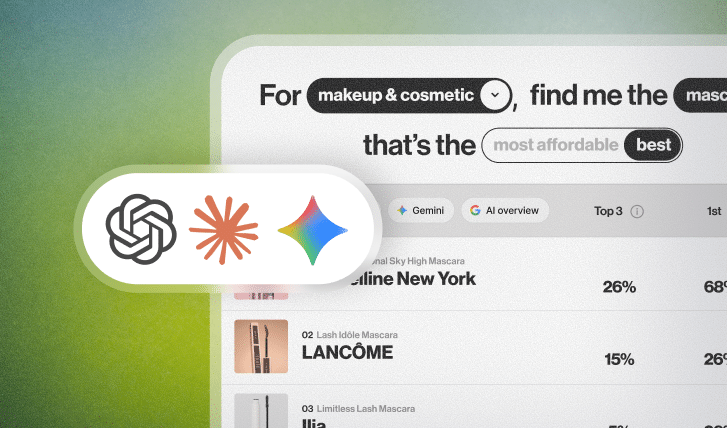
On-site chatbots are great at converting traffic that’s already on your pages. But how do you reach shoppers who start their research on external AI search engines? Discovery has moved off-site, with ChatGPT handling billions of queries and Perplexity reaching over 100 million active users. If your brand isn’t mentioned and cited inside these external AI engines, you’re losing high-intent shoppers before they ever reach your storefront.
That’s where Yotpo Discover comes in. Yotpo Discover isn’t an on-site chatbot. It’s a focused AI visibility platform built to shape how external AI models find, cite, and recommend your products. It helps your brand show up well in off-site search, acting as the visibility layer that feeds your on-site tools with high-intent traffic.
“On-site chatbots are excellent for catching the shopper at the 10-yard line, but you’ve to get them to the stadium first. Brands that invest heavily in on-site chat-based experiences while ignoring how ChatGPT and Google AI Overviews recommend their products are optimizing a funnel that’s rapidly losing its top-of-funnel volume.”
Ben Salomon, Growth Marketing Manager at Yotpo
Our data suggests that old-school backlink strategies don’t really translate into AI citations. AI engines don’t rank sites by domain authority. They parse, synthesize, and cite the sources that offer structured product details and genuine shopper validation, which is a different game entirely.
So to win these external recommendations, your digital footprint has to be structured in a way that AI crawlers can read and trust without friction. That means your product page schema, your review text, and your off-site community voices all need to line up and reinforce each other, since that combination is what the models actually learn from.
And if you ignore this external layer, your on-site chatbot ends up with very little traffic left to convert.
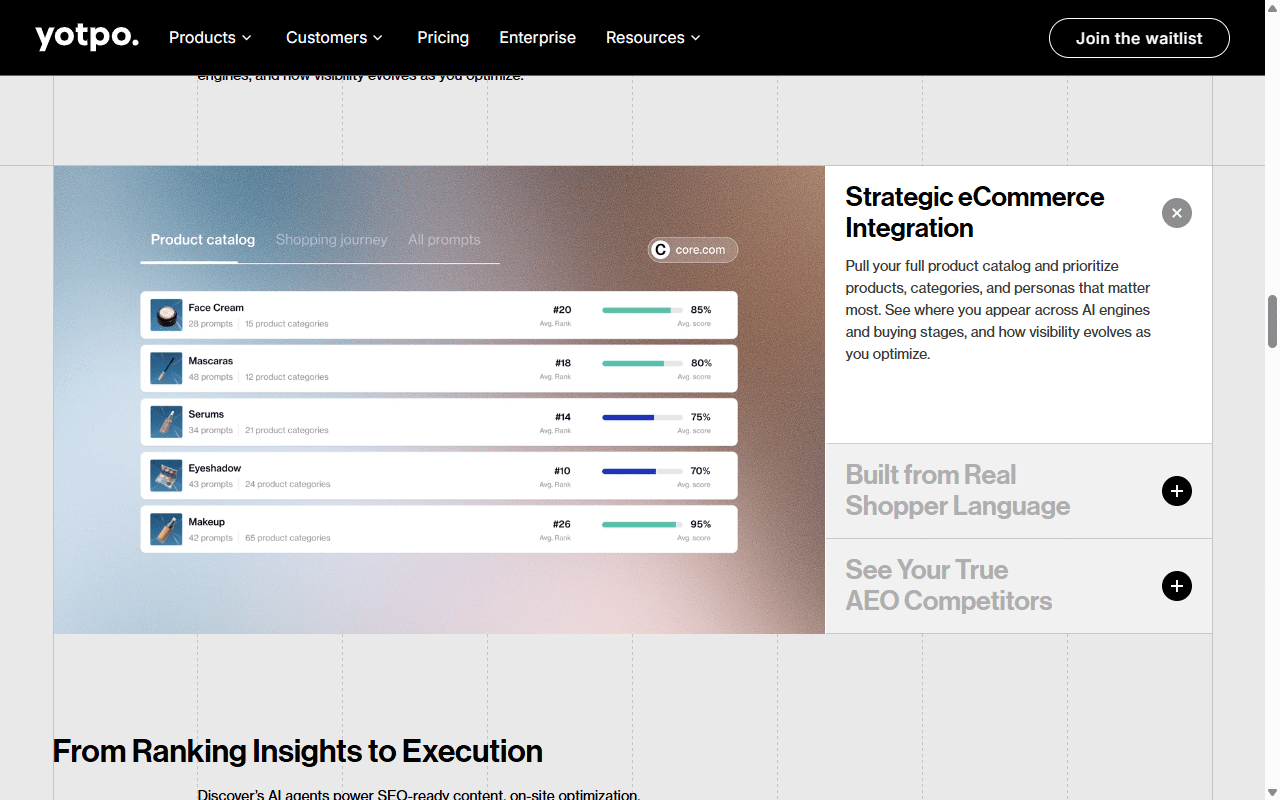
Yotpo Discover runs three automated agents that work together to secure your external AI visibility:
- The Onsite Agent. Scans your storefront continuously to fix schema errors, internal linking gaps, and product page weak spots, so AI engines can crawl your catalog cleanly.
- The Content Agent. Generates review-backed articles and buying guides in your brand voice, then builds outreach briefs to earn citation placements on third-party publisher sites.
- The Activation Agent. Finds where AI models are sourcing their recommendations, like Reddit or marketplaces, and rallies your verified reviewers and loyalty members to post real shopper voices on those exact platforms.
Brands like Beekman 1802 and David Protein use Yotpo Discover to track and act on how they show up across the major AI search surfaces. To see where your own brand stands in this new landscape, you can run a quick free audit and check your current AI Visibility Score.
How to Choose the Right AI Chatbot for Your Store
Picture a VP of e-commerce at a fast-growing cosmetics brand, sitting at their desk at 7:30 PM and staring at the analytics. They notice a big spike in referrals coming straight from ChatGPT, but their on-site chatbot was only set up to handle basic support tickets, so those well-informed buyers keep slipping away without a personalized path. To sidestep that common trap, pick your software based on your team’s main bottleneck:
- If your support team is buried in “Where is my order?” tickets, go with a helpdesk-native tool like Gorgias or Reamaze.
- If you run a product category that needs shopper education, lean toward a diagnostic, quiz-focused assistant like Octane AI.
- If you want to scale traffic acquisition at the same time, pair your on-site chatbot with an external AI visibility engine like Yotpo Discover.
The goal here is a balanced setup that covers both ends. Your on-site chat assistant should turn active visitors into buyers, while your AI visibility system helps those buyers find your brand in the first place.
Frequently Asked Questions
What is an ecommerce AI chatbot?
An e-commerce AI chatbot is an on-site chat assistant that uses natural language processing to answer support questions, recommend products, and guide shoppers toward checkout in real time.
How do on-site chatbots integrate with Shopify?
Leading platforms like Gorgias and Tidio offer deep native integrations that let the chat assistant pull real-time order tracking details and edit customer profile data right inside the store’s dashboard.
What is the difference between an on-site chatbot and an AI visibility platform?
An on-site chatbot talks to customers who are already browsing your online store. An AI visibility platform, like Yotpo Discover, works off-site to keep your products in the mix when shoppers search on external AI engines like ChatGPT, Gemini, and Google AI Overviews.
Can AI chatbots help increase my store’s conversion rate?
Yes. Chat assistants improve conversion by answering product questions instantly, clearing objections on the cart page, and guiding visitors through personalized diagnostic quizzes.
How does Yotpo Discover complement on-site chat-based tools?
While your chatbot converts existing traffic, Yotpo Discover secures early-stage visibility in external search systems, sending high-intent, pre-informed shoppers straight to your storefront where your chatbot can close the sale.
What are the three automated agents in Yotpo Discover?
Yotpo Discover works through the Onsite Agent to fix code structures, the Content Agent to publish review-backed guides, and the Activation Agent to drive genuine community signals on third-party forums.
Is traditional SEO still important if I use AI shopping engines?
Yes. AI visibility works as a complementary layer alongside standard SEO. Search still drives real volume, but chat-based platforms need their own optimizations to keep your products showing up in AI citations.
How can I check my brand’s current visibility in generative AI search?
You can run a free diagnostic check and get an AI visibility score using the audit tool at commerce-gpt.yotpo.com.




 Join a free demo, personalized to fit your needs