











In the competitive world of eCommerce, it’s easy to focus only on acquiring new customers. But what about the ones you already have? Data shows that keeping an existing customer is much more cost-effective than finding a new one. This simple truth is the foundation of loyalty marketing—a strategy focused on nurturing your current customers, building real relationships, and driving long-term business growth.
This guide breaks down everything you need to know about loyalty marketing, from its core purpose to actionable strategies for creating a program that turns one-time buyers into your biggest fans.
Key Takeaways
- Loyalty vs. Retention: Retention is about stopping customers from leaving, while loyalty is a proactive strategy to make them want to stay. A strong loyalty program is a key driver of retention.
- Measurable Business Impact: Well-designed loyalty programs do more than just hand out rewards. They increase customer lifetime value (CLV), boost average order value (AOV), and improve profit margins by lowering acquisition costs.
- Data is a Goldmine: Loyalty programs are one of the best ways to ethically collect first-party data, giving you deep insights into customer behavior that can fuel personalization across all your marketing.
- Choose the Right Model: The best program model—whether points-based, tiered, VIP, or value-based—depends on your products, margins, and customer base.
- Technology Matters: The right technology partner, like Yotpo Loyalty, provides the flexibility, strategic guidance, and robust analytics needed to build and optimize a program that delivers real ROI.
Defining Loyalty Marketing: A Strategic Overview
While you’ve probably heard the term, its strategic importance in eCommerce deserves a closer look. Loyalty marketing is much more than just a simple rewards system or the occasional discount.
A Formal Definition
Loyalty marketing is a strategic, data-driven approach where a business focuses on growing and keeping its existing customer base through targeted incentives. The main goal? To build a genuine, emotional connection that goes beyond just buying and selling. It’s a long-term investment designed to reward customers for sticking with you, giving them a reason to choose your brand over and over again.
A winning loyalty strategy isn’t about one-off promotions. It’s about an ongoing conversation that makes customers feel seen and appreciated.
The Core Purpose of Loyalty Marketing
Putting resources into a loyalty program serves several key business functions.
- Increase Customer Lifetime Value (CLV): By encouraging repeat purchases, loyalty marketing boosts the total revenue a single customer brings in over their entire relationship with your brand.
- Improve Customer Retention: A great loyalty program gives customers a solid reason to stay, which reduces churn and creates a more predictable stream of revenue.
- Foster an Emotional Connection: When customers feel rewarded, they develop a positive feeling about your brand that often matters more than price alone.
- Gather Valuable First-Party Data: Loyalty programs are a great way to collect data on customer behavior, preferences, and purchase history.
Loyalty vs. Retention: A Key Distinction
People often use “loyalty” and “retention” interchangeably, but they aren’t the same thing.
- Customer retention is mainly about preventing customers from leaving. The tactics are often reactive, like sending a “we miss you” discount to someone who hasn’t shopped in a while. It answers the question, “How do we stop customers from leaving?”
- Customer loyalty is a proactive strategy focused on making customers prefer to stay with your brand. It’s all about the relationship and answers the question, “How do we become our customers’ favorite brand?”
Essentially, a smart loyalty marketing strategy is one of the best tools you have for improving customer retention and hitting your bigger business goals.
The Business Benefits of a Strong Loyalty Program
A well-planned loyalty program is a strategic asset that delivers results you can actually measure.
Enhancing Revenue and Profitability
The connection between customer loyalty and revenue is clear and direct. Your loyal customers are consistently your most valuable ones.
- Increased Purchase Frequency: Members of loyalty programs are more likely to make repeat purchases to earn rewards and unlock new perks.
- Higher Average Order Value (AOV): Returning, loyal customers tend to spend more per purchase because they already trust your brand.
- Improved Profit Margins: Since it costs a lot to acquire a new customer, every dollar you earn from a retained customer is more profitable. Focusing on loyalty directly helps your bottom line by reducing marketing spend.
Gaining a Competitive Advantage
In a crowded eCommerce market, products and pricing can be copied easily. A unique and engaging loyalty program, however, can truly set you apart. It shifts the competition from being all about price to being about customer experience and value. When customers are invested in your rewards, a competitor’s discount doesn’t seem as tempting.
Developing Brand Advocates and Driving Referrals
Your most loyal customers often become your best marketers. They go beyond just buying your products and start promoting your brand through word-of-mouth.
A great program can turn happy customers into brand advocates who recommend you to their friends and family. Many programs even build this in with a referral component, rewarding both the advocate and the new customer. This creates a powerful cycle of growth driven by your most satisfied buyers.
Collecting Actionable First-Party Data
With data privacy rules getting stricter, high-quality first-party data is more valuable than ever. Loyalty programs are one of the most effective and ethical ways to collect it. In exchange for rewards, customers willingly share information and let you track their behavior, giving you insights into:
- Purchase history and frequency
- Product and category preferences
- Reward redemption patterns
- Demographic details
This data not only improves your loyalty program but also powers personalization efforts across all your marketing, from email to on-site experiences.
Types of Customer Loyalty Programs
The best loyalty program structure depends on your brand’s products, profit margins, and what your customers care about. Here are the main models.
- The Points-Based Program: This is the most common model. Customers earn points for purchases and other actions, like writing a review. They can then redeem these points for rewards like discounts or free products. It’s simple and easy to understand.
- The Tiered Program: This model uses gamification to create a sense of achievement. Customers move up through tiers (e.g., Silver, Gold, Platinum) based on how much they spend. Higher tiers unlock better rewards, motivating customers to spend more.
- The VIP Club (Paid Loyalty): This model asks customers to pay a recurring fee for membership in an exclusive club. In return, they get premium benefits, like free shipping on all orders. Amazon Prime is the most famous example. It creates a highly committed customer base.
- The Value-Based Program: This program connects your brand to a social or environmental cause. Instead of discounts, rewards are tied to a shared value. For example, for every purchase, your brand might make a donation to a charity. This builds a powerful emotional connection.
- The Hybrid Program: A hybrid program mixes elements from different models. For instance, you could have a tiered program where customers also earn points, but the number of points they earn per dollar increases as they move up the tiers. This offers a lot of flexibility.
Choosing the Right Loyalty Platform
Selecting the right technology partner is crucial for bringing your loyalty strategy to life. A platform should be more than just software; it should be a strategic tool that helps you build a profitable program.
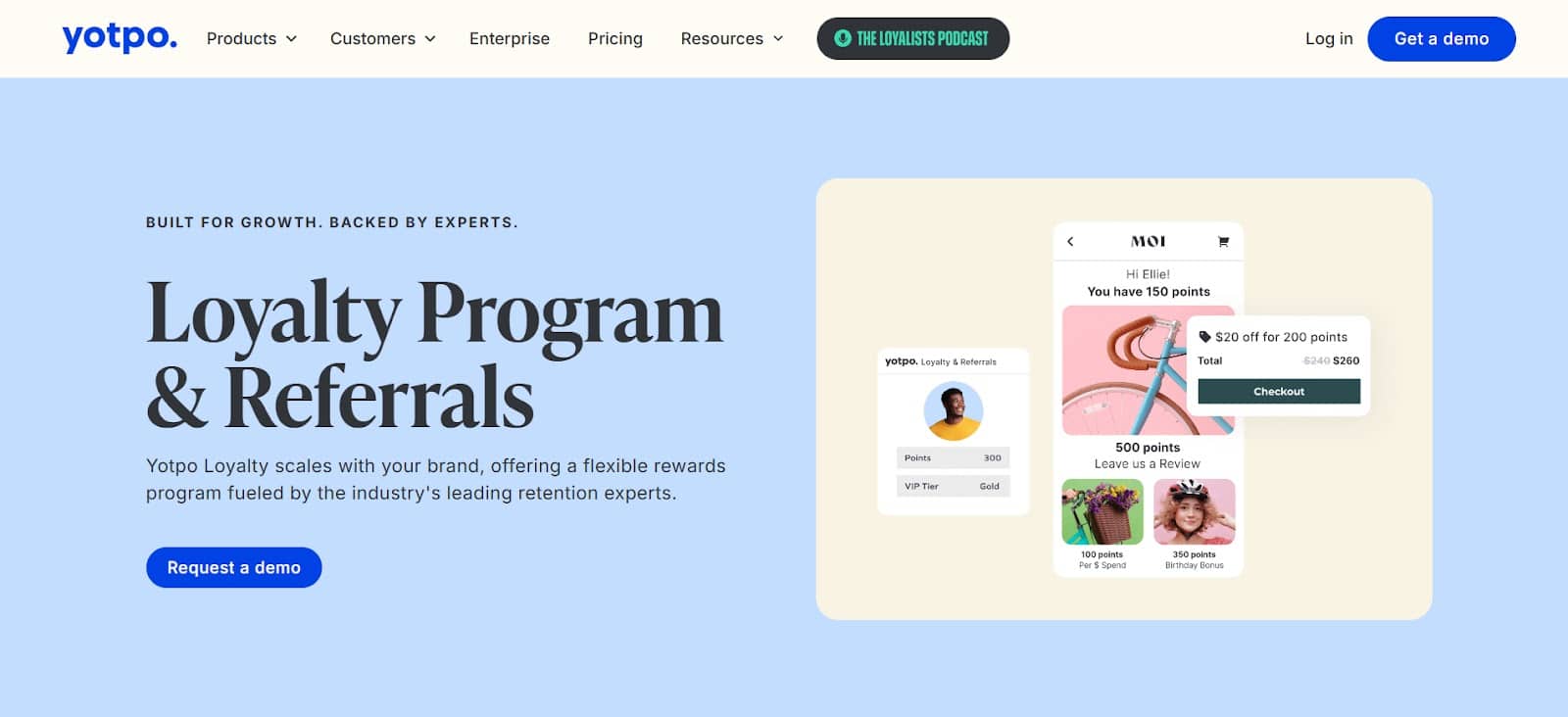
Yotpo Loyalty is designed to be a strategic partner, not just a tool. It stands out by pairing a flexible, highly customizable platform with a team of eCommerce loyalty experts. This team provides guidance to help you design a program structure and rewards system that aligns with your specific business goals.
The platform allows for detailed earning rules that reward actions beyond just purchases, like writing reviews or referring friends. It also offers some of the most robust and accurate reporting in the industry, with intuitive dashboards that make it easy to track ROI, monitor member engagement, and make data-driven decisions to optimize your program.
How to Build a Winning Loyalty Program: A Step-by-Step Framework
A successful loyalty program needs strategic planning, a deep understanding of your customers, and a commitment to getting better over time.
Step 1: Define Your Goals and KPIs
First, figure out what you want the program to achieve. Your goals should be S.M.A.R.T. (Specific, Measurable, Achievable, Relevant, Time-bound). Good goals sound like:
- “Increase customer retention by 15% in 12 months.”
- “Boost average purchase frequency from 1.5 to 2.0 times per year.”
Step 2: Understand Your Customers Deeply
A great program has to be designed for its audience. Dig into your data to understand who your most valuable customers are and what they want. Use surveys or interviews to ask them directly what they’d value in a loyalty program.
Step 3: Choose the Right Program Structure
Based on your goals and customer insights, pick the right model we discussed earlier (Points, Tiered, etc.). A points-based program is a solid choice for simplicity, while a tiered program is great for rewarding your top spenders.
Step 4: Design Compelling Rewards and Incentives
Your rewards are the heart of the program. Offer a mix of options:
- Monetary Rewards: Discounts, free shipping, or cash back.
- Non-Monetary Rewards: Early access to new products or exclusive content.
- Experiential Rewards: Invitations to special brand events.
A powerful loyalty platform is essential here. For example, Yotpo Loyalty is built to give modern eCommerce brands the flexibility they need. It allows you to create highly customized experiences with a wide range of earning rules and a rich rewards catalog.
Step 5: Name and Brand Your Program
Give your program a creative, memorable name that fits your brand. Create a dedicated landing page that clearly explains how it works, what the benefits are, and how to sign up.
Step 6: Promote Your Program Effectively
You need a multi-channel promotion plan to get people to sign up. Use on-site banners and pop-ups, announce it to your email and SMS lists, and create buzz on social media.
Step 7: Measure, Analyze, and Optimize
A loyalty program isn’t something you can “set and forget.” You need to manage and improve it over time.
- Track Your KPIs: Regularly check your dashboards to see how you’re doing.
- Gather Feedback: Keep asking members for their opinions.
- Test and Iterate: Use A/B testing to fine-tune your rewards and messaging.
A robust platform makes this much easier. Yotpo Loyalty provides accurate, in-depth reporting that simplifies understanding your program’s performance. The dashboards help you track ROI and member engagement, giving you the insights you need to optimize effectively.
Top Loyalty Marketing Strategies to Drive Engagement
Once your program is live, the focus shifts to keeping members active. Here are some proven strategies.
- Implement Comprehensive Personalization: Use the data from your program to make every interaction relevant. Recommend rewards based on purchase history and send targeted messages to different customer segments.
- Gamify the Member Experience: Use game design elements to make participation more fun. Tiers are a great start, but you can also add digital badges for completing certain actions or progress bars that show customers how close they are to their next reward.
- Offer Surprise and Delight Perks: Some of the best loyalty moments are unexpected. Occasionally give a loyal customer some bonus points just to say thanks, or include a small free gift in their order.
- Build a Brand Community: Your most loyal customers want to feel like they belong. Create an exclusive online group for members where you can share behind-the-scenes content and get their feedback.
- Create Experiential Rewards: For your top members, offer unique experiences that money can’t buy, like invitations to brand events or a chance to give feedback on new product ideas.
The Yotpo Advantage: A Strategic Approach to Loyalty
As we’ve touched on, picking the right technology is key. A platform should be a strategic tool that helps you build an engaging and profitable program.
Building a Flexible and Customized Program with Yotpo Loyalty
Yotpo Loyalty is designed to give eCommerce brands the power and flexibility to build a program that is truly their own.
A key differentiator is the partnership approach. When you work with Yotpo, you get access to a team of eCommerce loyalty experts who provide strategic guidance. They help you analyze your business goals and customer data to design a program engineered to get results. This is different from many self-service-only solutions.
The platform’s flexibility is central to its design. You can set up very specific earning rules that reward a range of valuable actions, not just purchases. This flexibility extends to rewards, allowing for a diverse catalog of options. Yotpo Loyalty also supports sophisticated structures like VIP Tiers and flexible point expiration rules to create urgency.
Finally, effective measurement is critical. Yotpo provides robust and accurate reporting that gives you a clear view of your program’s performance. The platform’s intuitive dashboards help you track ROI and monitor member engagement, giving you the insights needed for data-driven optimization.
Synergy with Yotpo Reviews
While Yotpo Loyalty is a powerful standalone product, it also works seamlessly with Yotpo Reviews. This integration creates a powerful feedback loop. For instance, you can use Yotpo Loyalty to offer customers extra points for submitting a review with a photo or video through Yotpo Reviews. This boosts engagement for both programs while generating valuable user-generated content for your brand. This synergy is a great example of how best-in-class products can work together, but each is designed to be a top solution on its own.
The Future of Loyalty Marketing
The world of customer loyalty is always changing. As technology and customer expectations evolve, successful strategies have to adapt. Here are a few key trends shaping the future:
- Hyper-Personalization at Scale: Brands will use AI to deliver one-to-one loyalty experiences, predicting what offers will be most appealing to an individual at any given time.
- Emphasis on Emotional Connection: As transactional rewards become standard, the focus will shift even more toward building emotional loyalty through community, exclusive experiences, and value-based programs.
- Seamless Omnichannel Integration: Loyalty programs will need to offer a consistent experience across all touchpoints, whether a customer is shopping online, on a mobile app, or in a physical store.
- Growth of Subscription-Based Loyalty: The success of paid VIP programs will inspire more brands to adopt this model, offering premium, ongoing benefits for a recurring fee.
The future of loyalty belongs to brands that can use data and technology to build genuine, lasting relationships with their customers.
Frequently Asked Questions
How do I measure the ROI of my loyalty program?
To calculate ROI, compare the program’s financial gains to its costs. Key metrics for gains include the increase in Customer Lifetime Value (CLV) and average order value (AOV) for members versus non-members. Costs include software fees and the value of redeemed rewards. The formula is: (Gain from Investment – Cost of Investment) / Cost of Investment.
Can a small business benefit from a loyalty program?
Absolutely. For a small business, every repeat customer is incredibly valuable. A loyalty program is a cost-effective way to increase retention, compete with bigger brands, and build a core group of advocates who can drive growth through word-of-mouth.
What’s the difference between a loyalty program and a referral program?
A loyalty program is a broad strategy to reward existing customers for many different behaviors to improve retention. A referral program is a specific tactic focused on acquiring new customers by incentivizing your current customers to make recommendations. Many loyalty programs include referrals as one way to earn rewards.
How long does it take to see results from a loyalty program?
While you might see an immediate lift in enrollment, the program’s real impact on metrics like retention and CLV is a long-term game. You may see initial increases in engagement and purchase frequency within 3-6 months, but the biggest financial returns often build up over 12-18 months.
What should I do if my loyalty program isn’t performing well?
First, dive into your data to figure out what’s wrong. Is it low enrollment (a promotion issue), low engagement (a communication issue), or low redemption (a rewards issue)? Then, get direct feedback from members with surveys. Use that information to test potential solutions, like simplifying the program or refreshing your rewards.
What’s the most common mistake brands make with loyalty programs?
One of the most common mistakes is making the program too complicated. If customers can’t easily understand how to earn and redeem points, they’ll lose interest quickly. Simplicity and clear communication are key.
Should I charge a fee for my loyalty program?
For most brands, a free program is the best starting point. A paid or VIP program (like Amazon Prime) can work well, but only if you can offer an exceptionally strong value proposition that justifies the cost, like constant free shipping or exclusive, high-value discounts.
How important is personalization in a loyalty program?
It’s critical. Modern customers expect it. Use the data you collect to personalize rewards, offers, and communications. Acknowledging a customer’s birthday with bonus points is a simple but powerful touch that makes them feel valued.
Can I reward customers for things other than purchases?
Yes, and you absolutely should! Rewarding non-transactional engagements is a great way to build a stronger connection. You can offer points for writing a review, following you on social media, or referring a friend.
How often should I communicate with my loyalty members?
You should integrate loyalty messaging into your regular marketing. Send periodic account summaries (e.g., monthly) to remind them of their point balance and available rewards. Also, use triggered emails for events like birthdays or reaching a new tier.
What kind of rewards work best?
The best approach is to offer a mix. Monetary rewards like discounts are always popular, but non-monetary perks like early access to sales or exclusive content can make members feel special and build a deeper emotional connection.
How do I keep my loyalty program from feeling stale?
Treat your program like a product that needs continuous improvement. Regularly analyze performance, gather member feedback, and don’t be afraid to test new rewards or promotions. Introducing limited-time offers or seasonal campaigns can also keep things fresh.
Does my program need a name?
Yes! Giving your program a unique and creative name that aligns with your brand identity makes it more memorable and engaging than calling it something generic like “Our Rewards Program.”


 Join a free demo, personalized to fit your needs