














Think about the last time you searched for something specific—maybe a product comparison or a technical fix. Ideally, you didn’t want a list of ten websites to open in new tabs. You wanted an answer.
That user preference is reshaping the internet. We are witnessing the “Disintermediation of the Web,” where search engines are evolving into Answer Engines. For marketers, the implication is stark: the goal is no longer just to drive traffic, but to provide the foundational facts that AI agents use to build their responses. To stay visible, your strategy must pivot from simply ranking to being cited.
Key Takeaways: What Is Answer Engine Optimization? And How to Do It
- The “60% Traffic Cliff”: Traditional organic click-through rates for informational queries are declining as AI Overviews satisfy user intent directly on the results page.
- The Citation Economy: The goal is no longer just ranking #1, but becoming the trusted source cited in the AI’s answer. Brands cited in these answers often see higher conversion intent.
- From Search to Synthesis: Engines have shifted from Information Retrieval (finding links) to Retrieval-Augmented Generation (creating answers), prioritizing facts over “fluff.”
- Data Structure is Critical: To be cited, content must be machine-readable using structured data, clear schema, and direct formatting that AI agents can easily parse.
From Information Retrieval to Knowledge Synthesis: The Structural Shift
To understand how to optimize for this new era, we must first understand the fundamental architectural change happening under the hood of engines like Google, Perplexity, and Bing. We are moving from a “Librarian” model to a “Professor” model—from fetching lists to synthesizing knowledge.
The Legacy Model: Information Retrieval (IR)
For the past 25 years, search engines operated on an Information Retrieval (IR) model. Think of this as a digital cartographer. The engine crawled the web, indexed pages based on keywords and backlinks, and presented a map (the Search Engine Results Page, or SERP) of where the user might find their answer.
Critically, the cognitive load was on the user. You had to click, read, filter, and synthesize the information from multiple tabs yourself.
The New Model: Retrieval-Augmented Generation (RAG)
Answer Engines operate on a Retrieval-Augmented Generation (RAG) model. This is a reasoning engine. When a user asks a question, the AI doesn’t just look for matching keywords; it:
- Understands Intent: Deciphers the nuance of the query.
- Retrieves Chunks: Pulls specific passages (not just whole pages) from its index.
- Synthesizes an Answer: Writes a completely new, unique response based on those facts.
In this model, the “link” is secondary. The “answer” is the product. This means your content is no longer the destination—it is the raw material the AI uses to build its response.
The Rise of “Zero-Click” Commerce
This structural shift has created a new user behavior: verification over exploration. Users are increasingly satisfied with the answer provided directly on the SERP.
Recent data paints a stark picture of this “Zero-Click” reality. Organic click-through rates (CTR) for informational queries triggering AI Overviews have plummeted by nearly 61% (dropping from ~1.76% to ~0.61%).
However, this isn’t a “death of SEO”—it’s a relocation of value. Brands who are cited within that AI answer see a 35% lift in organic CTR and a staggering 91% lift in paid performance. The traffic is lower volume, but significantly higher intent. The user clicking a citation isn’t looking for an answer; they are looking to verify the source or buy the product.
Defining the “Optimization Trinity”: SEO vs. AEO vs. GEO
In the past, “SEO” was a catch-all term. Today, we must view optimization as a trinity of disciplines. You cannot abandon traditional SEO, but you must layer two new strategies on top of it.
Traditional SEO (The Foundation)
Focus: Crawlability, Indexing, and Technical Health. Goal: To be found by the bot.
Traditional SEO remains the bedrock. If Google’s bot cannot crawl your site, or if your page speed is too slow, you will not be indexed. And if you aren’t indexed, you cannot be retrieved by the RAG system. Think of SEO as your “ticket to the game.” You can’t win the citation if you aren’t in the index.
What Is Answer Engine Optimization (AEO)?
Focus: Formatting, Structure, and Conciseness. Goal: To be cited in the “Answer Box” (e.g., Google AI Overviews, Featured Snippets).
AEO is the art of formatting your content so it is machine-readable. It’s about reducing friction for the AI. Answer Engines prefer content that is structured in direct, logical blocks—think “Inverted Pyramid” journalism where the answer comes first, followed by the context.
Strategies here include:
- Direct Answer Blocks: Answering the core question in the first 40-60 words.
- Schema Markup: Using JSON-LD to explicitly tell the engine “This is a Product,” “This is a Review,” or “This is a FAQ.”
- HTML Structure: Using clear H2s and H3s that act as signposts for the retrieval algorithms.
What Is Generative Engine Optimization (GEO)?
Focus: Brand Salience, Latent Space, and Training Data. Goal: To be “Known” and “Recommended” by LLMs (e.g., ChatGPT, Claude).
While AEO targets the real-time search results, GEO plays the long game. It targets the Large Language Model (LLM) itself. When a user asks ChatGPT, “What is the best loyalty program for a fashion brand?”, the AI relies on its training data and “weighted probabilities” to recommend a brand.
Ben Salomon, an e-commerce expert, frames the distinction clearly:
“Traditional SEO was about capturing demand—being found when someone looked for you. GEO is about generating demand—being so authoritative that the AI recommends you before the customer even knows who you are. It’s the shift from ‘Ranking’ to ‘Brand Salience’.”
The “Platform Fracture”
Why do you need both? Because the engines themselves are disagreeing.
There is currently a 62% disagreement rate between the recommendations given by Google’s AI Overviews and ChatGPT for identical queries. Google favors recent, indexable content (AEO), while ChatGPT leans heavily on established brand authority and historical data (GEO). To win in 2026, you cannot optimize for just one; you must build a strategy that covers the entire spectrum of machine understanding.
The Quantitative Landscape: Why This Matters Now
For many brands, “Optimization” has become a background task. However, the data suggests that ignoring the rise of Answer Engines creates a tangible risk to your bottom line. The shift isn’t just about visibility; it’s about the fundamental economics of traffic acquisition.
The “60% Cliff” Reality Check
The impact of AI Overviews (AIO) on traffic is no longer theoretical. Informational queries that trigger an AI Overview see a 61% drop in organic click-through rate compared to traditional results.
This is the “60% Cliff.” If your content strategy relies heavily on “Top of Funnel” (ToFu) blog posts—definitions, basic how-to guides, and general knowledge—you are likely seeing traffic erosion. The user intent is being satisfied on the SERP without a click.
However, it is critical to distinguish between volume and value. The traffic you are losing is largely “zero-intent” traffic—users who just wanted a quick answer and were never going to buy. The users who do click through the AI interface are demonstrating a much higher level of engagement.
The Emergence of the “Citation Economy”
In this new landscape, the “Citation” is the new currency. A citation is when the AI Overview references your brand or content as the source of its answer.
The value of a citation is disproportionately high. While overall clicks are down, brands that manage to secure a citation in the AI Overview see a 35% higher organic CTR than those who appear in the traditional results below it.
Even more compelling is the impact on paid media. When a brand is cited in the organic AI answer, their paid ads on the same page see a 91% lift in performance. This suggests a “Trust Signal” hypothesis: users view the AI’s citation as a third-party endorsement, making them more likely to trust the brand’s advertisements.
Decoding the Architecture of the “Big Three” Answer Engines
To optimize effectively, you cannot treat “AI” as a monolith. The three major players—Google, Perplexity, and ChatGPT—utilize different architectures and biases. Understanding these nuances allows you to tailor your content for maximum citation probability.
Google AI Overviews (The Conservative Hybrid)
Mechanism: A summarization layer built on top of traditional search. Bias: Informational intent and “How-To” queries.
Google’s AIO is fundamentally tethered to its traditional ranking algorithm. It rarely “invents” answers; it summarizes the top-ranking results. In fact, 99% of citations in AI Overviews come from URLs that already rank in the top 10 of organic search.
- Optimization Focus: You must still win at traditional SEO. If you aren’t on Page 1, you aren’t in the AIO.
- The Tether: Google is conservative. It prioritizes established domains with strong E-E-A-T (Experience, Expertise, Authoritativeness, Trustworthiness) scores to minimize the risk of “hallucinations.”
Perplexity (The Academic Researcher)
Mechanism: Real-time web discovery engine with a focus on data density. Bias: Statistics, whitepapers, and structured data.
Perplexity operates more like a research assistant than a search engine. It cares less about your domain authority and more about the information density of your content. It specifically hunts for data points, statistics, and verifiable claims.
- Optimization Focus: Create “Data Moats.” Publish original research, clearly formatted tables, and “State of the Industry” reports. Perplexity loves to cite the primary source of data, often skipping over the secondary articles that just reference it.
- The Footnote Economy: Perplexity makes citations the primary UI element (footnotes). Being cited here is critical for B2B and high-consideration purchases.
ChatGPT & SearchGPT (The Consensus Engine)
Mechanism: A dual-mode engine using “Training Memory” (historical data) and “Live Search” (Bing integration). Bias: Consensus seeking and “Average Truth.”
ChatGPT is an “average seeking” engine. When asked for a recommendation, it looks for the consensus view across the web. It is less likely to recommend a niche outlier and more likely to recommend the brand that appears on multiple “Best Of” lists from high-authority publishers.
- Optimization Focus: Digital PR and “Surround Sound” strategy. You need to appear on the “Seed Set” sites—the high-trust domains that ChatGPT uses to ground its truth (e.g., Wikipedia, Reddit, major news outlets, reputable review sites).
- Mode Switching: Be aware that ChatGPT switches modes. For “timeless” questions (“How do I build a loyalty program?”), it relies on training data (GEO). For “timely” questions (“What is the current stock price of Shopify?”), it triggers a live search (AEO).
Pillar 1: Content Engineering for Machines
To capture the “Answer,” you must change how you write. The days of long, meandering introductions and “fluff” content are over. AI agents are efficient; they do not browse, they extract. To facilitate this extraction, your content must be engineered for machine readability first and human readability second—though, ironically, this often makes it better for humans too.
The “Inverted Pyramid” of AEO
Journalists have used the “Inverted Pyramid” for a century, placing the most critical information at the very top. In AEO, this translates to the Direct Answer Block.
AI Overviews have a limited “context window” for generating summaries. To maximize your chances of being the primary citation, you should answer the core user query immediately, within the first 40 to 60 words of your section.
- Strategy: If your H2 is “How do loyalty points expire?”, the very first sentence should be: “Loyalty points typically expire after 12 months of inactivity, though this varies by program structure.”
- Why it works: This creates a clean “snippet” that an AI can lift directly without needing to parse complex paragraphs. Pages leading with direct, declarative answers are significantly more likely to trigger Featured Snippets and AI citations.
Question-Based Headers (QBH)
Your H2s and H3s are no longer just for styling; they are semantic signposts. Answer Engines use headers to map content to user intent. Vague headers like “The Situation” or “Deep Dive” are invisible to an AI looking for answers.
Instead, use Question-Based Headers (QBH). Frame your subheadings as the literal questions your audience is asking.
- Bad H2: Considerations for ROI.
- AEO H2: How Do You Calculate ROI for SMS Marketing?
This aligns your content structure with the Intent Resolution layer of the RAG system. When the user asks that specific question, your header acts as a perfect “key” for the engine’s “lock.”
The “Chunk and Conquer” Methodology
LLMs retrieve information in “chunks” or “passages,” not necessarily as whole pages. This means every section of your article needs to be self-contained.
This is the “Chunk and Conquer” methodology. Treat every H2 section as a mini-article that makes sense in isolation. Avoid dependent language like “As we mentioned above…” or “In the next section…” because the AI might only retrieve this specific paragraph to answer a user’s query. If the context relies on the rest of the page, the AI may discard it as incomplete.
Pillar 2: Technical AEO and Machine Readability
Content is only half the battle. If the AI bot cannot parse your page efficiently, your brilliant writing is invisible. Technical AEO focuses on the infrastructure that allows “Agentic” visitors to access and understand your data.
Rendering and Bot Access
In the era of modern JavaScript frameworks (React, Vue, Angular), how you render your website is a critical AEO factor. Many AI crawlers, including PerplexityBot and GPTBot, are not as sophisticated as Googlebot when it comes to executing JavaScript.
If your content relies on Client-Side Rendering (CSR)—where the browser builds the page after loading—an AI crawler might see a blank page.
- The Solution: Implement Server-Side Rendering (SSR) or Static Site Generation (SSG). This ensures that when the bot hits your URL, it receives the full, pre-rendered HTML text immediately.
- The “Block” Trap: A dangerous trend has emerged where brands are blocking AI bots via robots.txt to protect their IP. This is a strategic error. While 75% of news sites block CCBot, blocking these crawlers effectively removes you from the conversation. If you block GPTBot, you are voluntarily opting out of the ecosystem that 200 million weekly users rely on for discovery.
Structured Data as the “Knowledge Feed”
Schema markup (structured data) is the language of the Answer Engine. It allows you to bypass natural language processing and feed facts directly to the AI.
- FAQPage Schema: This is arguably the most powerful schema for AEO. By wrapping your Q&A pairs in FAQPage schema, you explicitly tell the engine, “Here is the question, and here is the definitive answer.” This increases the probability of your content being used to answer conversational queries.
- Product & Organization Schema: For e-commerce, Product schema provides the hard data (price, availability, SKU) that “Shopping Agents” need to verify your stock. Organization schema helps disambiguate your brand, ensuring the AI knows that “Yotpo” is an e-commerce platform, not a random entity.
Entity Salience and Disambiguation
Finally, you must establish Entity Salience. AI models view the world in terms of “Entities” (People, Places, Things, Concepts) and the relationships between them.
Use structured data to disambiguate your brand and products. Use the sameAs property in your Organization schema to link your website to your other verified profiles (LinkedIn, Wikipedia, Crunchbase). This connects the dots for the AI, building a “Knowledge Graph” that confirms your authority and identity across the web.
Pillar 3: Authority Building in the Hallucination Era
In traditional SEO, “Authority” was often a proxy for the number of backlinks you had. In AEO, authority is a proxy for trustworthiness. Because LLMs are prone to “hallucinations” (inventing facts), they are aggressively tuned to favor sources that appear in high-trust neighborhoods. This changes your Digital PR strategy from “link building” to “brand association.”
The “Co-Citation” Effect
Answer Engines determine the validity of a fact based on Semantic Proximity. They look at who else is mentioned alongside you. If your brand appears in sentences adjacent to established market leaders, the AI learns to associate your entity with that tier of quality.
- The Strategy: Focus on “Surround Sound” PR. Instead of just chasing a backlink, chase the context. Aim for listicles and articles where you are grouped with top-tier non-competitors (e.g., “Top platforms like Salesforce, HubSpot, and [Your Brand]”).
- Why it matters: Links from niche, industry-relevant domains carry significantly more weight in establishing this context than high-DA links from generic news sites.
Building “Data Moats”
The single most effective way to force an AI to cite you is to own the data it needs. LLMs are “prediction engines”—they predict the next word in a sentence. When they need a specific statistic, they look for the Primary Source.
- The Strategy: Publish “State of the Industry” reports or original surveys. Present this data in clear, simple HTML tables.
- The “Footnote” Win: Engines like Perplexity prioritize data density. They are far more likely to cite the original source of a statistic than a blog post that merely references it. By building a “Data Moat,” you become the citation source for the entire industry.
The Role of “Seed Sets” in GEO
For Generative Engine Optimization (targeting the LLM’s training data), you must understand the concept of “Seed Sets.” These are the highly trusted domains that foundational models (like GPT-4 and Claude) use to ground their truth.
Current analysis suggests that Wikipedia alone represents approximately 22% of major LLM training data. Other critical members of the Seed Set include Reddit (for human consensus) and major news outlets.
- The Shift: Your off-site strategy should pivot toward these trusted hubs. Having a neutral, factual presence on Wikipedia or genuine, high-upvote discussions on Reddit is now more valuable for GEO than a guest post on a random marketing blog.
The Role of Reviews and UGC in Answer Engine Optimization
User-Generated Content (UGC) is perhaps the most undervalued asset in AEO. While marketing copy is viewed by AI as biased “claims,” reviews are viewed as “verification.” In the absence of third-party proof, an AI is less likely to confidently recommend a product.
Validating Claims for the “Consensus Engine”
Answer Engines seek consensus. If your product page claims your shoes are “durable,” that is a marketing assertion. If 500 customers utilize the word “durable” in their reviews, that is a verified fact.
Recent studies found that Online Reviews account for roughly 16% of the weight in ChatGPT’s AI recommendation algorithm. The AI uses this data to confirm that the brand’s promises align with reality.
Mira Talisman, an e-commerce expert, notes:
“AI agents seek truth. Your product description is a claim; your reviews are the proof. In the Answer Economy, UGC is the bridge between a marketing promise and a verified fact. Without that layer of social proof, the AI perceives a ‘trust gap’ that makes it hesitant to recommend you.”
Feeding the “Freshness” Algorithm
LLMs and RAG systems crave recency. A static product page that hasn’t changed in six months signals a “dormant” entity. Reviews provide a constant stream of fresh, unique content that signals to the crawler that the page is alive and active.
This freshness is directly tied to conversion. Shoppers who see this fresh UGC convert 161% higher than those who don’t. For an AI, this fresh content provides new “tokens” (words) to index, ensuring your product remains relevant for queries about “current” or “trending” items.
Structured Data for Review Snippets
Finally, reviews are data. By using AggregateRating schema, you allow AI agents to “read” your reputation without parsing text.
- The Visual Win: Star ratings in search results (Rich Snippets) increase CTR.
- The Agentic Win: When a user asks an agent, “Find me a highly-rated coffee maker under $200,” the agent filters primarily by the structured data in the aggregateRating field. If your reviews are not marked up, you are invisible to this filter.
Preparing for “Agentic Commerce”
If 2024 was about AI reading content, 2026 is about AI taking action. We are entering the era of Agentic Commerce, where software agents (like those powered by OpenAI’s Operator or Salesforce’s Agentforce) don’t just find products—they buy them.
Forecasts suggest that by 2030, these “Agentic Shoppers” could drive up to $385 billion in U.S. e-commerce spending. To capture this revenue, you must optimize not for a human eye, but for a machine’s logic.
From Discovery to Execution
The fundamental shift here is from “Search” to “Execution.” A human shopper might browse five tabs to compare return policies. An AI agent simply queries your site’s data to verify if the policy meets the user’s criteria (e.g., “Must have free 30-day returns”).
If that data is locked in a PDF or an image, the agent hits a wall and moves to a competitor.
- The “Actionable” Data Layer: You must ensure your core operational data—real-time inventory, shipping costs, and return windows—is exposed via structured data or clear, semantic HTML tables.
- Mastercard’s Insight: Recent initiatives like Mastercard’s “Agent Pay” highlight the industry’s move toward verifying these autonomous transactions. As agents gain the ability to hold “wallets,” the brands that make the checkout path frictionless for bots (via clean APIs and fast server responses) will win the “Zero-Interaction” sale.
Documentation as Marketing
In an Agentic world, your “Help Center” and API documentation are no longer just support channels; they are acquisition funnels.
“Brand Agents” (AI bots tasked with researching products) read technical documentation to verify compatibility and specs. If you sell complex products (e.g., auto parts, electronics, B2B software), your documentation must be as SEO-optimized as your blog.
Ben Salomon suggests:
“We have moved past the age of simple segmentation into the era of the algorithmic merchant. If your technical specifications aren’t machine-readable, you are effectively telling the highest-intent buyers—the AI agents—that you are closed for business.”
How Yotpo Helps Brands Win the Answer Engine
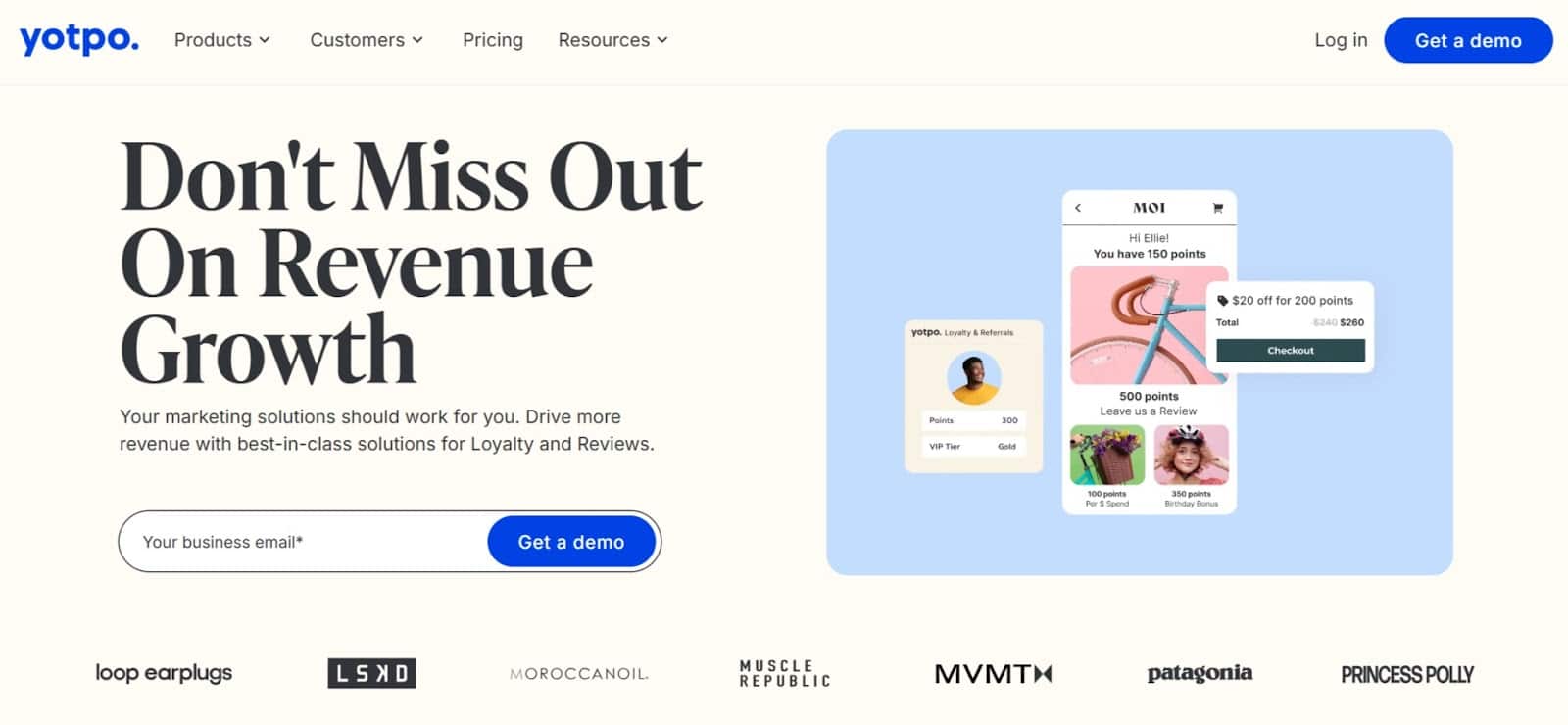
Success in the Answer Economy isn’t about gaming an algorithm; it’s about feeding it high-quality, structured verification signals. This is where Yotpo’s platform transitions from a “marketing tool” to a critical piece of AEO infrastructure.
The “Smart Prompt” Advantage for Fact Density
Generic reviews (“Great product, love it!”) provide little value to an AI looking for answers. Answer Engines crave specific details about fit, sizing, and use cases.
Yotpo’s Smart Prompts use AI to dynamically ask customers high-value questions based on the product type (e.g., asking about “battery life” for electronics or “fit” for denim). Using these prompts makes shoppers 4x more likely to mention these high-value topics in their reviews. This creates the “Fact Density” that engines like Perplexity prioritize when synthesizing an answer.
Syndication and Consensus Building
As noted, ChatGPT and Google look for “consensus” across the web. A review that lives only on your site is good; a review that appears across the Google Shopping ecosystem is powerful.
Through Yotpo’s partnership with Google, your review data is fed directly into Google Seller Ratings and the Shopping Graph. This doesn’t just improve ad performance (driving a 17% increase in CTR); it ensures that the “Training Memory” of the search engine associates your brand with a high volume of positive sentiment.
Loyalty Data as an Authority Signal
Finally, “Entity Salience” (how important your brand is) is often measured by user retention. A brand that people return to is, by definition, authoritative.
Yotpo Loyalty helps structure this data. By fostering a high repeat purchase rate and creating a community of advocates, you generate the “off-site” signals (social mentions, direct traffic, branded search volume) that LLMs use to verify that you are a legitimate market leader. When an AI asks, “What is the most popular loyalty program for cosmetics?”, it relies on the digital footprint created by your active, engaged loyalty members.
Measuring Success: Beyond the Click
As the mechanism of search changes, so must the metrics of success. In an ecosystem where 60% of traffic evaporates before it reaches your site, relying solely on “Sessions” and “Pageviews” will lead to a strategic blind spot. You need a new dashboard that measures visibility, not just visits.
Share of Intelligent Answer (SoIA)
The most critical new metric is Share of Intelligent Answer (SoIA). This measures the percentage of AI-generated responses where your brand is cited as a source for a specific set of keywords.
Unlike “Share of Voice,” which measures ad impressions, SoIA measures verification.
- How to Track: Tools like Profound AI and HubSpot’s AEO Grader have emerged to quantify this. They run thousands of prompts (e.g., “Best skincare for dry skin”) and calculate how often your brand appears in the synthesis versus your competitors source.
- The Benchmark: Competitive organizations in 2026 are allocating roughly 15% of their digital budgets specifically to improving this metric, understanding that being cited is the prerequisite for being bought.
Citation Velocity
If “backlinks” were the metric of 2010, Citation Velocity is the metric of 2026. This tracks the rate at which new, high-authority domains are referencing your content.
AI models are constantly updating their weights. A sudden spike in citations from “Seed Set” domains (like major news outlets or verified review platforms) signals to the algorithm that your brand is currently relevant.
- Why it Matters: A static citation count is insufficient. Engines look for momentum. A steady stream of fresh reviews and press mentions prevents your brand from drifting into the “stale data” category of the LLM’s training set.
The “Zero-Click” Value Correlation
Finally, you must stop viewing “Zero-Click” searches as failures. Instead, measure the Zero-Click Value Correlation.
Compare your Branded Search Volume and Direct Traffic against your AI Overview Visibility.
- The Pattern: You will likely observe that as your visibility in AI summaries increases, your direct traffic rises, even if organic clicks to blog posts drop. This confirms that users are finding the answer in the AI, trusting the citation, and then navigating directly to your site to purchase. This “Assist Value” is invisible in Google Analytics unless you correlate the data streams manually.
Conclusion
The shift to Answer Engines is not the end of SEO, but its evolution. By embracing machine-readable structures, prioritizing original data, and leveraging the verification power of reviews, brands can secure their place in the “Citation Economy.” The goal is no longer just traffic volume, but traffic value—capturing the high-intent users who rely on AI to verify their choices. As we move toward Agentic Commerce, the brands that speak the language of the machine will be the ones recommended by it. Start optimizing for the answer today to win the sale tomorrow.
FAQs: What Is Answer Engine Optimization? And How to Do It
What is the difference between SEO and AEO?
SEO (Search Engine Optimization) focuses on ranking links in search results to drive clicks. AEO (Answer Engine Optimization) focuses on formatting content to be cited in AI-generated summaries (like Google’s AI Overviews) to drive brand verification and high-intent traffic. SEO gets you indexed; AEO gets you cited.
Does AEO replace traditional SEO?
No. AEO relies on traditional SEO. If your site has poor technical health, slow load times, or is not indexed (traditional SEO), the AI cannot find your content to cite it. AEO is an additional layer of strategy, not a replacement.
How do I optimize content for Google’s AI Overviews?
Focus on structure and “Data Density.” Use a Direct Answer Block (answering the question in the first 40-60 words), use Question-Based Headers, and implement Schema Markup (especially FAQPage and Product schema). Avoid fluff and anecdotes; prioritize statistics and direct facts.
Why is my organic traffic dropping despite high rankings?
You are likely experiencing the “Zero-Click” phenomenon. For informational queries (e.g., “how to clean sneakers”), AI Overviews are answering the user’s question directly on the results page. While traffic volume drops, the users who do click often have higher purchase intent.
What is Generative Engine Optimization (GEO)?
GEO is the process of optimizing for Large Language Models (LLMs) like ChatGPT and Claude. Unlike AEO, which targets search results, GEO targets the AI’s training data. Strategies include Digital PR, appearing on “Seed Set” websites (Wikipedia, Reddit), and building brand authority so the AI “recommends” you.
How does User-Generated Content (UGC) impact AEO?
UGC provides the fresh, verified content that AI agents crave. Reviews act as “social proof” that validates your marketing claims. Without fresh reviews, AI engines may view your product data as stagnant or unverified, reducing the likelihood of a citation.
Should I block GPTBot in my robots.txt file?
Generally, no. Blocking AI crawlers (like GPTBot) prevents them from learning about your brand. If you block them, you remove your brand from the “Answer Economy,” effectively making you invisible to the millions of users using tools like ChatGPT for product research.
What is the best content format for Answer Engines?
The “Inverted Pyramid” style works best. Start with the direct answer, then follow with supporting data, and finally provide context. Use bullet points, HTML tables, and clear <h2> and <h3> tags to make the content easy for machines to parse.
How do citations in AI answers affect conversion rates?
Citations act as high-trust endorsements. Data shows that users who see a brand cited in an AI Overview have a 35% higher click-through rate and significantly higher conversion intent than those clicking standard search links.
Which tools can I use to track AEO performance?
New tools are emerging specifically for this. Profound AI, HubSpot’s AEO Grader, and SE Ranking’s AI Search Toolkit allow you to track how often your brand appears in AI responses, monitor your “Share of Intelligent Answer,” and analyze competitor visibility.



 Join a free demo, personalized to fit your needs