















In the modern digital marketplace, your brand is no longer defined by what you say it is. It is defined by what your customers say it is. Website review management has evolved from a simple administrative task into the single most critical factor influencing purchasing decisions. Managing these conversations is one of the highest-impact activities you can undertake for your business.
This guide provides an exhaustive framework for strategy and a breakdown of the technology needed to succeed. We will explore everything from collection and moderation to display and analysis, turning customer feedback from a simple star rating into your most powerful engine for sustainable revenue growth.
Key Takeaways: Tips for Website Review Management
- Trust is the New Currency: Website review management involves collecting, moderating, and displaying feedback. According to BrightLocal, 91% of consumers (aged 18-34) trust online reviews as much as personal recommendations.
- The 4-Pillar Strategy: Success relies on four distinct activities: Collection (asking effectively), Moderation (managing authenticity), Display (showcasing visually), and Analysis (learning from data).
- Visuals Drive Revenue: Reviews containing photos and videos drive a 137% lift in purchase likelihood. Your strategy must prioritize collecting this high-value content to answer specific shopper questions.
- Embrace the Negative: Data shows that 96% of consumers specifically look for negative reviews. A transparent response can win back customers and demonstrate integrity better than a perfect score.
- Tools Drive Growth: The best review software isn’t just a widget; it’s a conversion partner that uses AI to provide insights, deep customization, and syndication to channels like Google Shopping.
Why Website Review Management is No Longer Optional
In the early days of eCommerce, reviews were considered a “nice to have”—a digital version of a comment card. Today, they are the fundamental pillar of a successful online business. According to reports, 99.9% of customers research products online before purchasing. If you are not actively managing your reviews, you are not just missing an opportunity; you are actively losing market share to competitors who are.
The Impact on Consumer Trust and Social Proof
When a customer lands on a product page, their first instinct is often to scroll past the polished marketing copy and professional photography directly to the star rating. This is social proof in action—the psychological phenomenon where people assume the actions of others reflect the correct behavior for a given situation. In an anonymous digital environment where shoppers cannot touch or try on products, social proof acts as a proxy for physical inspection.
As Ben Salomon, Growth Marketing Manager at Yotpo, notes regarding customer relationships: “Retention is a tactic, but loyalty is a relationship. In a market saturated with options, reviews are the currency of that relationship. A brand that showcases authentic customer voices tells shoppers they have nothing to hide.”
Authenticity is the cornerstone of this relationship. Modern shoppers are incredibly savvy; they can spot fake, incentivized, or overly curated reviews from a mile away. A robust website review management strategy embraces transparency. It doesn’t hide flaws; it contextualizes them. A steady stream of recent reviews proves your brand is active, legitimate, and trusted by a real community of users.
Boosting Conversions and Driving Sales
The link between reviews and revenue is direct and measurable. Data consistently shows that shoppers who interact with reviews convert 161% higher than those who don’t. This isn’t just about having good reviews; it’s about having enough reviews to make the data statistically significant to the shopper’s brain.
Even a small volume of feedback can create a massive uplift. For example, moving from zero reviews to just 10 reviews on a product page can result in a 53% uplift in conversion. This “cold start” problem is why a proactive strategy is vital.
Furthermore, detailed feedback helps manage expectations and reduce return rates. When a review explicitly mentions that a shirt “runs small” or a moisturizer “feels heavy,” the next customer uses that data to make a better purchase decision. They order the correct size or the formula that suits their skin type, resulting in a satisfied customer rather than a costly return.
SEO, AI Overviews, and Generative Engine Optimization (GEO)
Search engines are evolving rapidly. With the rise of Google’s AI Overviews and the shift toward “Generative Engine Optimization” (GEO), the value of unique, fresh content is higher than ever. Static product descriptions rarely change, but a review section is dynamic.
- Fresh Content Signals: Every new review is a fresh piece of unique content, signaling to Google that your site is active and relevant.
- Long-Tail Keywords: Customers describe products using natural language that marketers often miss. While you might optimize for “ergonomic office chair,” a customer might write “best chair for lower back pain after surgery.” These long-tail phrases help you rank for high-intent niche searches.
- Rich Snippets: Implementing the right review schema allows search engines to display star ratings directly in search results. This visual differentiator is proven to increase click-through rates (CTR) significantly.
- Feeding the LLMs: Large Language Models (LLMs) that power AI search results rely on consensus data. A robust volume of reviews provides the data points these models need to recommend your product as the “best choice” in summary answers.
The 4 Pillars of a Successful Review Management Strategy
A great tool is only half the battle. To truly succeed, you need a strategy broken down into four key pillars: Collection, Moderation, Display, and Analysis.
Pillar 1: Collection – Asking for Reviews Effectively
You cannot manage reviews you do not have. A proactive collection strategy is the foundation of your program. Relying on organic reviews—waiting for customers to decide to write one on their own—will result in a low volume of feedback, often skewed toward the extremes of very happy or very angry customers. To get a representative sample, you must ask.
Timing Your Review Requests
Timing is critical. If you ask too early, the customer hasn’t received the product yet, leading to frustration. If you ask too late, the excitement of the “unboxing moment” has faded, and apathy sets in.
You need to find the “Golden Window,” which is typically 7 to 14 days after delivery (not purchase). However, this is not a one-size-fits-all metric.
- Fast-Moving Goods: For a t-shirt or a snack, the customer knows if they like it almost immediately. You can send a request 3-5 days after delivery.
- Results-Based Products: For skincare, supplements, or complex electronics, the customer needs time to see results. Asking for a review on an anti-aging cream two days after delivery will result in “I haven’t tried it yet” reviews. Set these flows for 21-30 days post-delivery.
Removing Friction with In-Mail Technology
The biggest barrier to collection is friction. Every click required is a chance for the customer to drop off. The industry best practice is to utilize In-Mail Review Forms.
This technology allows customers to leave a star rating and type their review body directly within the email itself. They do not need to click a link, wait for a landing page to load, and then log in. By embedding the form in the email, you meet the customer where they are. This single feature can drastically increase submission rates, ensuring you have the volume needed to drive social proof.
Leveraging Multiple Channels (Email & SMS)
While email remains the workhorse of review collection, SMS is the racehorse. In an age of overflowing inboxes, SMS offers immediate visibility.
By utilizing integrations with top-tier SMS providers (like Klaviyo or Attentive), you can trigger review requests via text message. Data shows that review requests sent via SMS convert 66% higher than email requests. A hybrid strategy often works best: send an initial request via email, and follow up with a nudge via SMS for those who haven’t opened the email.
Smart Prompts for Better Data
Don’t just ask “Did you like it?” Ask specific questions that help future shoppers. Advanced review management tools utilize AI-powered prompts to suggest topics based on the product type. For a dress, prompt for “Fit” and “Fabric Quality.” For a laptop, prompt for “Battery Life” and “Screen Brightness.” Smart Prompts are 4x more likely to capture these high-value topics, creating richer content that is more useful for SEO and conversion.
Pillar 2: Moderation – Managing Feedback Authentically
Once reviews start rolling in, you need a process to manage them. Moderation is often misunderstood as censorship. In reality, moderation is about quality control, brand protection, and community engagement.
The Case for Transparency and Imperfection
A perfect 5.0-star rating across hundreds of reviews can actually look suspicious. Shoppers know that nothing is perfect. A healthy, trustworthy profile includes a mix of 5-star raves, 4-star constructive feedback, and the occasional 3-star review regarding personal preference. This variance signals authenticity.
Manual vs. Automatic Moderation
For a growing brand, manually reading every review before publishing is impossible. This is where automation is essential.
- Auto-Publish: Set rules to automatically publish reviews with 4 or 5 stars that do not contain flagged keywords.
- Flag for Review: Configure your tool to hold back reviews that contain profanity, hate speech, or competitor names. These should be reviewed by a human to ensure they meet your Terms of Service.
- Negative Review Flows: Reviews with 1 or 2 stars should be flagged for immediate attention—not to be deleted, but to be addressed by your Customer Support team.
How to Respond to Negative Reviews
Ignoring negative feedback is a strategy for failure. Since 96% of consumers specifically look for negative reviews, your response is just as visible as the complaint itself. A professional response can neutralize the damage and actually build trust.
The Golden Rules of Response:
- Acknowledge and Apologize: Validate the customer’s frustration without admitting legal liability. A simple “We are so sorry to hear this wasn’t the experience you expected” goes a long way.
- Take it Offline: Do not try to solve complex shipping or product issues in the public forum. Provide a direct email address (e.g., support@brand.com) and invite them to connect.
- Don’t Get Defensive: Never argue, blame the customer, or get emotional. The goal of the response is not to win the argument with the reviewer; it is to show the next 1,000 shoppers that you are a reasonable, caring brand.
- Close the Loop: If you resolve the issue privately, you can ask the customer to update their review. Many customers are happy to change a 1-star to a 4-star if their problem was handled swiftly.
Pillar 3: Display – Showcasing Reviews for Maximum Impact
Collecting reviews is useless if nobody sees them. Your display strategy determines how much value you extract from your content. Reviews should not be hidden on a dedicated page that nobody visits; they should be woven into the fabric of your entire customer journey.
The Homepage: Building Immediate Trust
Your homepage is your digital storefront window. Use a “Top Rated” carousel or a badge showing your aggregate score (e.g., “4.8 Stars based on 5,000 reviews”) above the fold. This immediately signals to new visitors that this is a safe, verified place to shop.
The Product Page (PDP): The Decision Center
This is where the conversion happens. The display widget here needs to be robust.
- Review Highlights: Use AI to pull out the most common pros and cons at the top of the widget (e.g., “Pros: Soft fabric, Fast shipping. Cons: Runs slightly large”).
- Search and Filter: Allow users to filter reviews. A shopper who is 5’2″ wants to see reviews from other people who are 5’2″ to understand the fit. This relevance drives conversion.
- Q&A Integration: Allow customers to ask questions directly on the PDP, and let verified buyers or your team answer them. This reduces pre-purchase anxiety.
Visual UGC: The Power of “Real” Photos
Professional product photography is essential, but it is often viewed with skepticism. Shoppers want to see what the product looks like on a real person, in bad lighting, without Photoshop.
Creating galleries of customer photos and videos is one of the highest-impact moves you can make. As mentioned, visual UGC increases purchase likelihood by 137%. These galleries serve as a “visual sizing guide” for fashion brands or a “setup guide” for home goods. Ensure your review management tool allows you to tag products in these photos, making the gallery “shoppable”—allowing users to click a user’s photo and go straight to the product page.
Checkout and Cart Abandonment
Doubt creeps in at checkout. “Will this arrive on time?” “Is the return policy fair?” Display specific “Site Reviews” (reviews about the company, not just the product) near the “Place Order” button. Feedback praising fast shipping or helpful support can be the final nudge needed to reduce cart abandonment.
Pillar 4: Analysis & Syndication – Learning and Expanding Reach
The final pillar is where review management transforms from a marketing tactic into a business intelligence tool.
Using AI for Sentiment Analysis
You likely do not have the time to read 10,000 reviews to find patterns. AI does. Modern review platforms offer Sentiment Analysis, which scans the text of thousands of reviews to identify positive and negative trends.
- Product Development: If the AI flags “Zipper” as a negative sentiment in 40% of reviews for a specific jacket, you have actionable data to take to your manufacturing team. You can fix the flaw in the next production run, saving thousands in future returns.
- Marketing Optimization: If the AI finds that customers are obsessed with the “softness” of your sheets, but your marketing copy focuses on “durability,” you can pivot your messaging to align with what customers actually value.
Syndication to Google
Your reviews shouldn’t just live on your website. To maximize their value, you must syndicate them to the world’s largest advertising platform: Google.
- Google Shopping: By feeding your product reviews into Google Shopping, your product listings will display star ratings in search results. This visual cue differentiates you from competitors who lack ratings.
- Google Seller Ratings: These are the stars that appear in your text ads (Google Ads). To qualify, you generally need at least 100 verified site reviews from a specific country with a composite rating of 3.5 or higher. Ads with Seller Ratings see a 17% increase in CTR, lowering your cost-per-click and driving more qualified traffic.
To achieve this, your review management tool must be an official Google Partner. Without this partnership, the data pipeline to Google does not exist, and your reviews remain stuck on your site.
Best Practices for Choosing a Solution
The strategy outlined above is powerful, but it is difficult to execute manually. You cannot email every customer, manually organize photos, and code your own Google feed. You need a technology partner. When selecting a review management platform, prioritize these features:
- Official Google Partnership: This is non-negotiable for syndicating ratings to Google Ads and Search.
- AI-Powered Insights: Look for tools that offer sentiment analysis to turn text into data.
- Deep Customization: The widget should not look like a bolt-on; it should match your brand’s CSS, fonts, and aesthetic perfectly.
- Visual UGC Capabilities: The ability to easily collect, curate, and display customer photos/videos in shoppable galleries.
- Scalability: Can the platform handle it if you go from 100 orders a month to 100,000?
The Recommended Solution: Yotpo Reviews
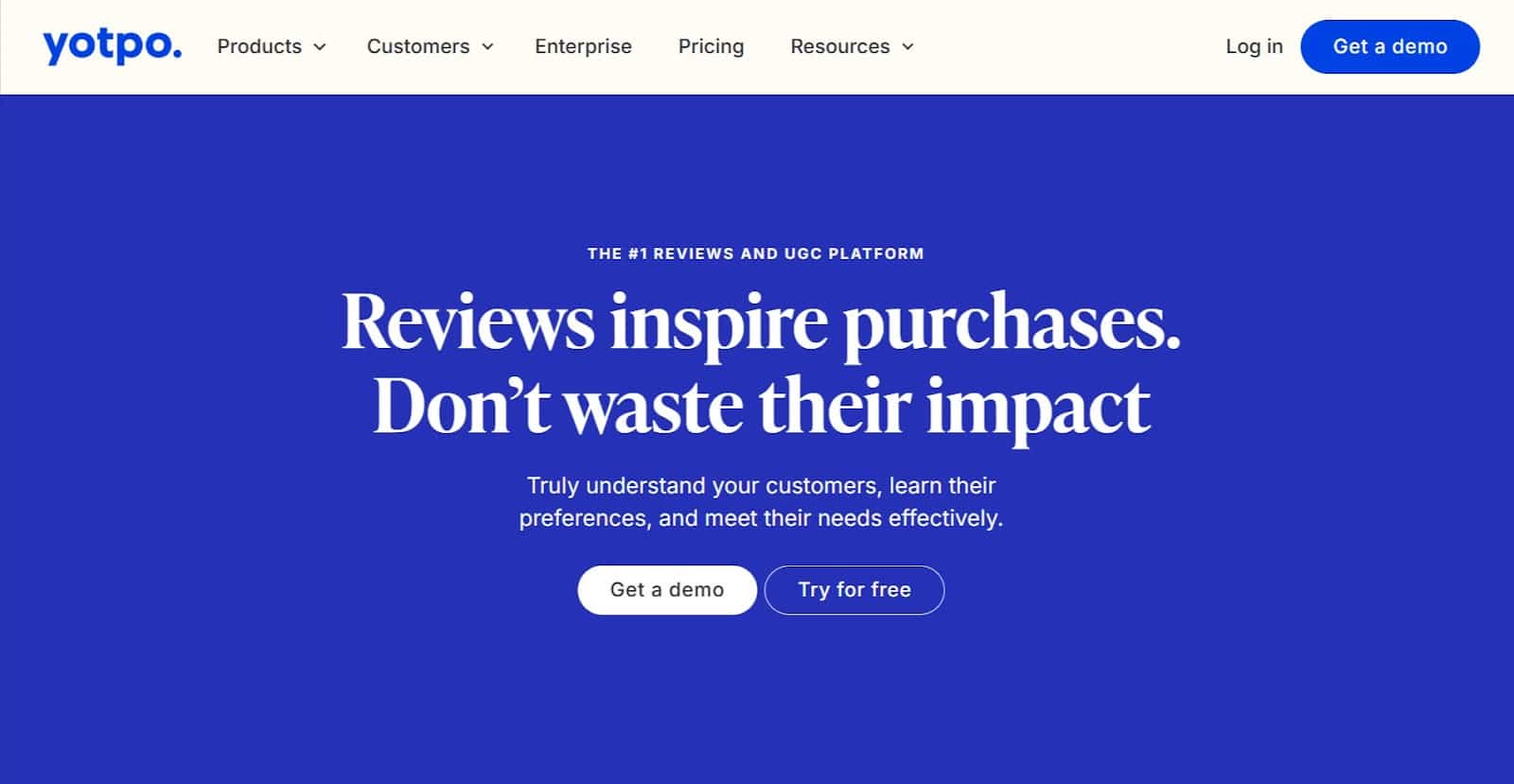
For brands serious about turning feedback into growth, Yotpo Reviews serves as a premier solution designed to drive conversions, not just collect text. By leveraging deep integrations with platforms like Shopify to send Smart Prompts, Yotpo helps you capture high-value topics 4x more often, while its AI engine surfaces “Smart Topics” to answer shopper questions instantly.
Furthermore, as a top-tier Google Partner, Yotpo ensures your hard-earned reviews are syndicated to Google Shopping, boosting your CTR; when combined with Yotpo Loyalty, you can incentivize high-quality content with points, creating a sustainable ecosystem of engagement.
Conclusion
Website review management is a core pillar of modern eCommerce. It is the bridge between your brand promise and the customer reality. By mastering the four pillars—collection, moderation, display, and analysis—you create a continuous feedback loop that builds social proof, improves your products, and lowers acquisition costs. While the strategy requires effort, the right tools simplify the process, turning customer voices into your most reliable engine for sustainable revenue growth. Start today, be consistent, and watch your customer trust soar.
FAQs: Tips for Website Review Management
1. Why are product reviews critical for eCommerce success in 2025?
Product reviews provide social proof, which alleviates purchasing anxiety in an anonymous digital environment. They offer real-world insights into product performance, boost SEO through fresh, user-generated content, and directly influence conversion rates. Additionally, they are now essential for “Generative Engine Optimization” (GEO), helping brands appear in AI-generated search summaries by providing the consensus data LLMs require.
2. What percentage of consumers actually read online reviews?
Research indicates that 99.9% of consumers research products online, with a vast majority reading reviews before making a purchase. Furthermore, BrightLocal found that for the 18-34 demographic, 91% trust these online reviews as much as a recommendation from a close friend, highlighting that reviews are now the primary driver of trust.
3. What is the difference between product reviews and site reviews?
Product reviews focus on a specific item’s attributes (e.g., fit, material quality, durability) and belong on product detail pages to help shoppers evaluate a specific SKU. Site reviews focus on the overall brand experience (e.g., shipping speed, customer service, packaging) and are best displayed on homepages or checkout pages to reassure customers about the legitimacy and reliability of the company itself.
4. How do visual reviews (photos/videos) impact sales compared to text?
Visual UGC is highly persuasive because it validates the product in a real-life context, acting as a “visual sizing guide” for other shoppers. Reviews with photos and videos lift purchase likelihood by 137%. Shoppers are significantly more likely to purchase when they can see unedited photos from other customers, as it builds authenticity and reduces the fear of the product looking different than the marketing photos.
5. How should I handle negative reviews to turn them into an opportunity?
Never delete negative reviews unless they violate terms of service (e.g., profanity). Instead, respond publicly and professionally. Acknowledge the issue, apologize, and offer to resolve it offline (e.g., “Please contact us at support@…”). Since 96% of consumers look for negative reviews, seeing a helpful response demonstrates excellent customer service and actually builds more trust than a perfect 5-star rating.
6. What is the “Golden Window” for sending a review request?
The “Golden Window” is the optimal time to ask for feedback, typically 7 to 14 days after delivery. This ensures the customer has had enough time to receive and actually use the product, but the excitement of the purchase is still fresh. Asking too early risks a review about shipping issues; asking too late risks low engagement because the customer has moved on.
7. Is it legal and ethical to incentivize customers to leave reviews?
Yes, but with strict caveats. You can incentivize the act of leaving a review (e.g., “Get 50 loyalty points for writing a review”), but you cannot incentivize the sentiment. You cannot say “Get 50 points for a 5-star review.” Transparency is key, and many platforms require you to badge these reviews as “Incentivized” to maintain compliance with FTC guidelines.
8. What is review syndication and why does it matter?
Syndication is the automated process of sharing your collected reviews with third-party platforms. For example, if you sell on your own site but also on Walmart.com, a tool like Yotpo can “syndicate” your reviews so they appear on Walmart’s product pages. Crucially, syndication to Google allows your Star Ratings to appear in Google Shopping ads, significantly increasing Click-Through Rate (CTR) and lowering ad costs.
9. How does AI help brands manage thousands of reviews?
AI tools streamline moderation by automatically filtering spam and profanity, freeing up human teams for complex issues. More importantly, AI-powered Sentiment Analysis can scan thousands of reviews to identify macro trends—such as realizing that 40% of customers mention “zipper issues”—allowing product teams to fix manufacturing flaws months faster than manual analysis would allow.
10. Why is an “Official Google Partner” status important for a review tool?
Only official Google Partners can feed review data directly into Google’s ecosystem via an API. This distinction is vital because it allows your Star Ratings to appear in Google Shopping ads, Google Organic Search, and Rich Snippets. Without a partner status tool, your reviews remain stuck on your website and do not contribute to your external SEO or ad performance, severely limiting your ROI.



 Join a free demo, personalized to fit your needs