














Distinguishing between transactional loyalty and genuine brand affinity is a critical exercise for any e-commerce business. For years, the prevailing model was simple: reward customers for spending more. In today’s competitive market, however, that transactional approach is no longer sufficient.
Customers increasingly seek connections with brands that reflect their personal beliefs and principles. This shift has given rise to value-based loyalty programs, which move beyond discounts to cultivate deeper, more meaningful customer relationships.
This guide provides a definitive look at these programs, why they are essential, and how to build one that fosters true brand advocacy.
What Exactly is a Value-Based Loyalty Program?
A value-based loyalty program is a customer retention strategy that rewards shoppers for behaviors aligned with a brand’s core values, extending beyond mere purchasing activity. This model evolves from the traditional transactional rewards cycle to foster a genuine, emotional connection between the brand and the customer.
Defining the Core Concept
Traditional loyalty programs are fundamentally transactional. A customer spends a certain amount and earns a corresponding number of points. While this exchange is straightforward, it rarely builds a lasting bond. The relationship remains vulnerable to competitors offering a more attractive discount.
A value-based program, conversely, cultivates a relationship built on a foundation of shared identity. It rewards customers for a wider spectrum of engagements that demonstrate brand affinity, such as:
- Writing an insightful product review.
- Sharing user-generated content (UGC) on social media.
- Referring a friend who shares similar interests.
- Participating in a brand-sponsored social or environmental initiative.
By rewarding these actions, you reinforce that your brand and its customers are part of a community united by common principles.
The Psychology Behind It: Why Shared Values Drive Loyalty
Humans have a fundamental need for connection and belonging. We naturally gravitate toward people and organizations—including brands—that reflect our own identity and beliefs. When a brand demonstrates a purpose beyond profit, it provides a powerful reason for customers to connect on an emotional level.
This psychological driver is the engine of a value-based program. By aligning your loyalty strategy with your customers’ core values, you engage powerful motivators:
- Identity Reinforcement: Customers derive satisfaction from supporting a brand that mirrors their values, whether those relate to sustainability, social justice, or quality craftsmanship.
- Community Building: The program acts as a hub for like-minded individuals, transforming customers from isolated buyers into members of a cohesive group.
- Emotional Resilience: An emotional connection is far more durable than a transactional one. A customer who feels aligned with your brand’s mission is significantly less likely to be swayed by a competitor’s discount.
Key Characteristics of a Value-Based Program
Value-based programs have several distinct characteristics that differentiate them from their purely transactional counterparts.
- Focus on Emotional Connection: The program’s messaging and rewards are designed to evoke positive sentiment and strengthen the customer-brand relationship. The primary objective is to make customers feel like valued members, not just entries in a database.
- Rewards for Non-Transactional Engagement: While purchases remain a key component, significant emphasis is placed on rewarding actions that build the brand and its community. This includes social shares, review submissions, and participation in community forums.
- Deep Personalization: The program leverages data to understand the motivations of each customer segment. Rewards and communications are tailored to reflect individual values and past interactions, moving beyond simple purchase history.
- A Sense of Shared Purpose: The program often incorporates a mission-driven element, such as charitable donations, support for local artisans, or promotion of sustainable practices. This gives members a compelling reason to participate beyond personal gain.
- Experiential Rewards: In addition to discounts, these programs offer unique rewards that are not easily purchased, such as early access to new products, invitations to exclusive events, or personal consultations.
In essence, a value-based program redefines a “loyal customer” as someone who demonstrates deep brand affinity through their actions, not just their spending.
The Tangible Business Benefits of Adopting a Value-Based Model
Adopting a value-based model is a strategic decision that delivers measurable business outcomes. By prioritizing stronger customer relationships, you build a more resilient and profitable enterprise.
Boosting Customer Lifetime Value (CLV)
Customer Lifetime Value (CLV) represents the total profit a business anticipates from a single customer account. Emotionally connected customers are inherently more valuable because they purchase more frequently and spend more per transaction. A customer who believes in your brand’s mission does not wait for a sale; they purchase from you as an act of support. This behavior increases repeat purchase rates and average order value (AOV), transforming casual shoppers into high-value, long-term brand patrons.
Enhancing Brand Differentiation and Identity
In a saturated e-commerce market, effective differentiation is paramount. Competing on price alone is an unsustainable strategy. A value-based program offers a more durable method of standing out.
It functions as a powerful declaration of your brand’s identity, communicating your mission, your principles, and your purpose beyond commerce. This narrative is compelling and difficult for competitors to replicate. While products and pricing can be matched, a brand’s authentic purpose cannot. This distinction makes your brand more memorable and gives customers a clear reason to choose you.
Fostering Authentic Brand Advocacy
There is a significant difference between a customer who shares a referral link for a discount and one who genuinely recommends a brand because they believe in it. The former is an incentivized action; the latter is authentic advocacy.
Value-based programs are designed to cultivate genuine advocates. When customers feel a strong connection to your brand’s mission, they become natural ambassadors. Their motivation extends beyond a referral bonus; they want their network to experience the same quality and community. This form of word-of-mouth marketing is exceptionally effective due to its authenticity and inherent trust.
Collecting Deeper, More Meaningful Customer Data
Traditional loyalty programs reveal what and when your customers buy. Value-based programs illuminate why. By tracking non-transactional engagements, you gain richer insights into your customers’ motivations, interests, and values.
For instance, you might discover that your most active advocates are those who engage with your sustainability-focused content, or that customers who submit photo reviews respond well to exclusive offers on visually appealing products. This level of data is invaluable. It can be used to:
- Refine marketing messages.
- Inform product development.
- Personalize the customer experience at a more sophisticated level.
By rewarding a broader range of interactions, you are not only building loyalty but also compiling a comprehensive dataset that enables you to serve your customers more effectively.
Designing Your Value-Based Loyalty Program: A Step-by-Step Framework
Building a loyalty program that resonates with customer values requires a strategic and thoughtful approach. It must be an authentic and integrated extension of your brand’s DNA. This five-step framework provides a clear path for designing such a program.
Step 1: Define Your Brand’s Core Values
Authenticity is the cornerstone of a successful value-based program. If it feels contrived, customers will recognize it. Before proceeding, articulate your brand’s core values with clarity.
Consider these guiding questions with your team:
- What is our mission beyond generating profit?
- What principles guide our business decisions, from sourcing to customer service?
- If our brand were a person, what would its core beliefs be?
- What positive impact do we aim to have on our customers or the wider world?
Your values—whether centered on sustainability, quality, innovation, or community—will form the foundation of your program.
Step 2: Understand Your Customers’ Values
With your brand values defined, the next step is to identify the intersection with what your customers care about. A successful program operates where your values and your customers’ values converge.
Effective methods for this research include:
- Surveys: Ask customers directly about the causes they support and what they seek in a brand.
- Social Media Listening: Monitor conversations your customers have online to understand their passions and interests.
- Review Analysis: Analyze product reviews for insights into customer priorities, such as praise for eco-friendly packaging or durable product quality.
The objective is to identify a shared purpose, which will enable you to connect with your audience on a more meaningful level.
Step 3: Structure Your Program Around Value-Driven Actions
Next, design the program’s mechanics by determining which behaviors to encourage and reward. While points for purchases can remain part of the structure, the focus should shift to non-transactional engagements that reflect your shared values.
Consider rewarding customers for actions such as:
- Writing detailed product reviews: This encourages community members to make informed decisions.
- Submitting high-quality UGC: This builds social proof and demonstrates authentic product satisfaction.
- Engaging on social media: Sharing mission-driven posts amplifies your brand’s message.
- Making a referral: This represents a powerful endorsement from a trusted source.
- Completing a detailed profile: This facilitates personalization and signals customer investment in the relationship.
- Donating points to a charity: This allows customers to direct their rewards toward a shared cause.
Step 4: Create a Mix of Transactional and Experiential Rewards
The rewards you offer must be as thoughtful as the actions required to earn them. An effective value-based program provides a blend of tangible and intangible benefits.
Transactional Rewards (The Foundation)
These are the familiar, expected rewards that provide a baseline of value.
- Points for every dollar spent.
- Discounts and dollar-off coupons.
- Free shipping or complementary products.
Experiential and Value-Aligned Rewards (The Differentiators)
These are the rewards that distinguish your program and reinforce your brand’s values. They create memorable moments and make your most loyal customers feel uniquely appreciated.
- Early access to new products or limited-edition collections.
- Exclusive content, such as behind-the-scenes footage or expert tutorials.
- The option to donate reward points to a partner charity.
- Personalized gifts that reflect a customer’s known preferences.
- VIP status with perks like a dedicated support line or invitations to exclusive events.
Step 5: Communicate Your Program’s Purpose Clearly
The success of your program hinges on effective communication. It is not enough to simply list the rules; you must tell a compelling story.
Explain the why behind the program. Create a dedicated landing page that clearly outlines your brand’s mission and how the loyalty program supports it. Use email, social media, and your website to communicate the shared values that inspired the program. When customers understand its purpose, they will be more motivated to participate, viewing it as a way to be part of something meaningful rather than just a method for obtaining discounts.
Putting It Into Practice: How Yotpo Loyalty Powers Value-Based Programs
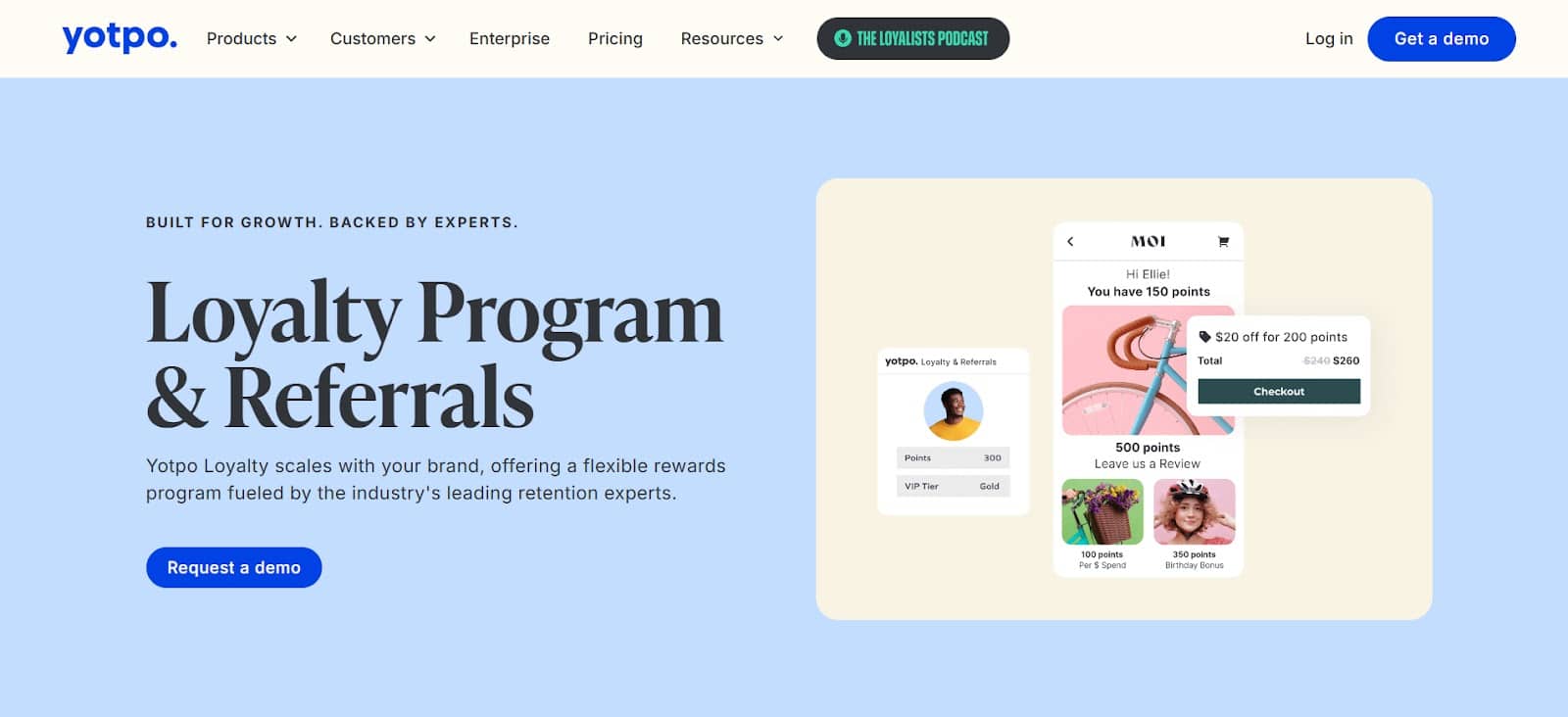
Designing a value-based program is a strategic exercise; implementing and managing it requires a powerful and flexible platform. The technology must be capable of handling the nuances of a modern loyalty strategy. This is the role Yotpo Loyalty is designed to fill.
Building a Flexible, Value-Driven Program with Yotpo
Yotpo Loyalty is engineered to empower e-commerce brands to create customized, engaging loyalty experiences that move beyond simplistic points-per-dollar systems. It provides the specific tools needed to build a program that authentically reflects your brand’s values.
Key features that enable a value-based model include:
- Customizable Earning Campaigns: Yotpo provides the flexibility to reward customers for a wide variety of non-transactional actions. You can easily configure campaigns to award points for writing reviews, following on social media, making referrals, and more. This adaptability allows you to incentivize the specific behaviors that support your brand’s community-building objectives.
- Flexible VIP Tiers: A sophisticated program should recognize and celebrate your most engaged members, not just your highest spenders. Yotpo’s highly customizable VIP Tiers allow you to structure your program based on engagement levels, points earned, or other custom criteria. This enables you to offer exclusive experiential rewards to customers who are true brand advocates.
- Strategic Support and Expertise: Building a successful loyalty program is a complex undertaking. Yotpo functions as a strategic partner, not just a software provider. Our team of e-commerce loyalty experts and dedicated Customer Success Managers (CSMs) collaborates with you to design and optimize a program aligned with your unique brand values and business goals.
While various platforms in the market, such as Loyalty Lion and Smile, provide foundational points and rewards systems, Yotpo is engineered for a deeper level of strategic implementation. Its architecture emphasizes deep customization, expert strategic guidance, and seamless platform integration, providing a robust foundation for brands aiming to build a truly value-driven community.
Creating Synergies: Integrating Loyalty with Your Marketing Stack
A value-based loyalty program becomes exponentially more powerful when it is integrated with the rest of your marketing ecosystem. The data and engagement from your loyalty program can fuel and enhance your other marketing channels.
Loyalty and Reviews: A Powerful Combination
One of the most valuable actions a customer can take is leaving an authentic, detailed product review. It builds trust and provides social proof. With Yotpo, you can seamlessly connect your loyalty and reviews programs.
By rewarding customers with loyalty points for submitting reviews—and even offering bonus points for including photos or videos—you can significantly increase the quantity and quality of your user-generated content. This creates a virtuous cycle where rewarded feedback helps convert new customers, who then join the loyalty program themselves.
Enhancing Communication with Loyalty Data
The insights gathered from your loyalty program are invaluable for personalization. Information on a customer’s VIP status, point balance, and engagement activities allows you to tailor communications for maximum impact. This data can be used to create highly targeted segments for your email and SMS campaigns, making customers feel recognized and strengthening their brand connection.
Measuring the Success of Your Value-Based Program
To validate the effectiveness of your value-based loyalty program, it is essential to track the right metrics. Success is measured not just by point redemption, but by deeper engagement and the strength of customer relationships.
Key Metrics to Track Beyond Redemption Rate
While redemption rate is a useful indicator, it does not provide a complete picture. Focus on these three categories for a comprehensive analysis of your program’s impact.
Engagement Metrics
These metrics indicate whether members are actively participating in the value-driven aspects of your program.
- Non-Transactional Earning Rate: Analyze the percentage of points earned from activities like writing reviews or social follows. A high rate signifies strong engagement beyond purchasing.
- Social Engagement Rate: Track the likes, shares, and comments generated by loyalty members on your social channels.
- UGC Submission Rate: Measure how many members submit photos and videos with their reviews as a strong indicator of brand affinity.
Retention Metrics
These metrics measure the program’s effectiveness in converting customers into loyal, repeat buyers.
- Repeat Purchase Rate (Members vs. Non-Members): Your loyalty members should have a significantly higher repeat purchase rate than non-members.
- Customer Lifetime Value (CLV) of Members: Track whether your members are spending more over time to see how the program impacts long-term value.
- Churn Rate of Members: A low rate of member inactivity suggests the program is providing continuous value.
Advocacy Metrics
These metrics demonstrate whether your program is successfully creating brand ambassadors.
- Referral Conversion Rate: Track how many referrals result in a new customer, not just how many links are shared.
- Reviews per Member: Engaged members should be your most prolific reviewers. Calculate the average number of reviews submitted by loyalty members.
Leveraging Analytics for Continuous Improvement
Data provides actionable insights for program optimization. A platform with robust reporting and analytics, like Yotpo Loyalty, is essential. Regularly analyze your dashboard to identify trends and opportunities.
Investigate questions such as:
- Which rewards are most frequently redeemed?
- Which non-transactional earning campaigns are most popular?
- Are members of the highest VIP tier generating the most referrals?
Use these insights to refine your strategy. If experiential rewards prove popular, consider adding more. If an earning campaign is underperforming, adjust its point value or increase its promotion. A value-based program should be a dynamic system that evolves based on what resonates most with your community.
Challenges and Considerations in Implementing a Value-Based Program
While value-based loyalty programs offer significant benefits, they also present unique challenges. A proactive awareness of these potential hurdles can help you build a program that is both authentic and effective.
Avoiding “Value-Washing”
“Value-washing” refers to the practice of claiming to uphold certain values without substantive action to support them. Today’s consumers are adept at identifying inauthenticity, which can lead to significant brand damage. The values you promote through your loyalty program must be reflected across your entire business operation. If your program champions sustainability while your products are sourced irresponsibly, the contradiction will erode customer trust. Authenticity is non-negotiable.
Complexity in Design and Management
It is important to acknowledge that a value-based program is more complex to design and manage than a simple points-per-purchase system. It requires deep strategic thinking, customer research, and the curation of compelling rewards.
The recommended approach is to start simple and iterate. You do not need to launch with a fully developed, multi-tiered system. Begin with a few core value-driven actions that are easy for customers to understand and for your team to manage, such as rewarding reviews and social media follows. You can then gradually add layers of sophistication based on customer feedback and performance data.
Communicating Value Effectively
A significant challenge lies in clearly communicating the program’s purpose and mechanics. If the structure is too confusing or the value proposition is not immediately clear, participation will be limited.
Your messaging must be direct and compelling. Use a dedicated landing page and clear FAQs to explain how the program works. Crucially, focus on the “why.” Instead of just stating that customers can earn points for sharing, explain that you are rewarding them for helping to build a vibrant community. When customers understand the mission, their motivation to engage will increase significantly.
Conclusion: The Future of Customer Loyalty is Value-Driven
The e-commerce paradigm has evolved. Customers now seek more than transactional relationships; they align with brands that understand them and share their worldview. The future of customer loyalty depends on building these deeper, value-driven connections.
Moving beyond a simple rewards model to one that recognizes engagement, advocacy, and a shared purpose is no longer a niche strategy—it is essential for long-term, sustainable growth. A well-executed value-based program differentiates your brand, fosters authentic advocacy, and builds a more resilient business. It transforms the customer relationship from a series of transactions into a meaningful, ongoing partnership, which is the most valuable asset any brand can possess.
FAQs
What is the main difference between a value-based and a points-based loyalty program?
The primary difference is the scope of rewarded behaviors. A traditional points-based program almost exclusively rewards financial transactions. A value-based program, in contrast, rewards a broader range of customer actions that align with brand values, such as writing reviews or sharing on social media. Its focus is on building an emotional connection and a strong community, not just incentivizing the next purchase.
Can a small e-commerce business implement a value-based loyalty program?
Yes. Small businesses are often well-positioned to create authentic, value-driven programs because their brand mission is typically clear and deeply integrated into their operations. An effective program does not require a large budget. Using a flexible platform, a small business can start by rewarding a few key actions and expand the program as the business grows.
How do I choose which values to build my loyalty program around?
The most resonant values exist at the intersection of your brand’s authentic principles and your target audience’s core beliefs. Begin by formally defining your brand’s mission. Next, use customer surveys, social media analysis, and feedback to understand your customers’ priorities. The strongest programs are built on values that are genuinely shared between the brand and its community.
What are some examples of effective non-transactional rewards?
Effective non-transactional rewards often provide a sense of exclusivity or a unique experience. Popular examples include:
- Early access to new products before their public release.
- Invitations to exclusive digital events, such as a Q&A with the founder or a product workshop.
- Exclusive content, such as style guides, advanced tutorials, or brand publications.
- The option to donate points to a partner charity, allowing customers to support a shared cause.


 Join a free demo, personalized to fit your needs