













In today’s competitive eCommerce landscape, acquiring a new customer is valuable, but retaining an existing one is profitable. Store loyalty programs are a cornerstone of modern retention marketing. They transform one-time buyers into repeat customers and, eventually, into passionate brand advocates. These programs are more than just a digital punch card; they are sophisticated systems for identifying, rewarding, and understanding your most valuable customers.
Key Takeaways
- Retention is Profitable: Loyalty programs are designed to increase customer lifetime value (LTV) and average order value (AOV) by encouraging repeat business.
- Structure Matters: The most common program types are points-based, tiered, paid (VIP), and value-based. Many brands find success using a hybrid model that combines elements from each.
- Beyond Transactions: Successful programs reward more than just purchases. They incentivize actions like writing reviews, following on social media, and referring friends to build a stronger community.
- Technology is Crucial: Executing a sophisticated loyalty program requires the right technology. A flexible platform like Yotpo Loyalty provides the tools, strategic guidance, and analytics needed to build and optimize a program that drives real results.
- Plan for Success: A structured approach to design, from setting clear goals to planning a promotional launch, is essential for building a program that customers will actually use and love.
This guide provides a comprehensive look at store loyalty programs. We’ll explore what they are, why they work, and the different types you can implement. We will also provide a step-by-step framework for designing a program that drives real business results for your brand.
What Are Store Loyalty Programs and Why Do They Matter?
Before diving into the mechanics, it’s essential to understand what a loyalty program is and the strategic value it brings to an eCommerce business.
Defining the Modern Store Loyalty Program
At its core, a store loyalty program is a marketing strategy designed to encourage customers to continue shopping with a brand. It formalizes the relationship by offering rewards, discounts, or exclusive benefits in return for their repeat business and engagement.
Modern programs, however, go far beyond simple transactional rewards. They have evolved into complex ecosystems that track customer behavior, personalize experiences, and create a sense of community. They are a direct line of communication with your best customers.
The Core Business Case: Moving Beyond Discounts
Investing in a loyalty program is a strategic business decision. A well-executed program isn’t a cost center; it’s a revenue driver.
- Increased Customer Lifetime Value (LTV): Loyal customers buy more often and spend more over time. A loyalty program gives them compelling reasons to choose your store over a competitor.
- Higher Average Order Value (AOV): When customers are close to a new reward, they are often motivated to add more items to their cart, directly increasing AOV.
- Reduced Customer Churn: Loyalty programs create “stickiness.” When customers have accumulated points or achieved a certain status, they are less likely to switch to another brand.
- Valuable Customer Data: These programs are a goldmine of zero-party data. They provide clear insights into who your best customers are, what they buy, and how often you can use this data to refine marketing strategies.
- Cost-Effective Marketing: Acquiring a new customer can be five times more expensive than retaining an existing one. Loyalty programs focus your marketing spend on the audience most likely to convert.
The Statistics Don’t Lie
The numbers consistently show that focusing on customer loyalty pays off. Consider these industry findings:
- The probability of selling to an existing customer is 60-70%, while the probability of selling to a new prospect is only 5-20%.
- Increasing customer retention rates by just 5% can increase profits by 25% to 95%.
- Loyalty program members, on average, spend 67% more than new customers.
These statistics paint a clear picture. Loyalty isn’t a “nice-to-have”; it’s a strategic imperative for sustainable growth.
The Anatomy of a Successful Loyalty Program
While loyalty programs can vary widely, most successful ones are built on a few core components that work together to create a compelling customer experience.
Earning Mechanisms: How Customers Accrue Value
This foundation defines what actions a customer must take to earn rewards. The most effective programs reward a range of value-driving behaviors, not just transactions.
- Points for Purchases: This is the most common earning rule. Customers typically earn a set number of points for every dollar they spend.
- Actions Beyond Purchases: This is where you can get creative and encourage deeper engagement. You can award points for:
- Creating a store account
- Signing up for your newsletter
- Following your brand on social media
- Writing a product review
- Referring a friend
- A birthday bonus
Redemption Mechanisms: How Customers Use Their Value
Earning points is only half the equation. The rewards themselves must be appealing and easy to redeem.
Common redemption options include:
- Dollar or Percentage Discounts: Customers can trade points for a coupon (e.g., 100 points = $10 off).
- Free Products: Allow customers to redeem points for specific items.
- Free Shipping: This is a highly valued reward that can remove a key friction point.
- Exclusive Access: Offer early access to new product launches or member-only sales.
Tiers and Status: Creating Aspiration
Tiered programs add a layer of gamification that encourages customers to increase their spending to unlock a higher status. Each tier comes with its own set of escalating benefits, creating a sense of achievement and exclusivity. For example, a “Gold” tier might offer all the benefits of lower tiers plus early access to sales and a dedicated customer service line.
Communication and Engagement: Keeping the Program Top-of-Mind
A loyalty program is useless if customers forget it exists. Consistent communication is essential. Brands must actively engage members through on-site messaging, email, and SMS to remind them of their point balances and available rewards.
Types of Store Loyalty Programs (With Examples)
There is no one-size-fits-all approach to loyalty. The right program for your brand depends on your products, customers, and business goals.
1. Points-Based Programs
This is the most straightforward type of loyalty program. Customers earn points for specific actions and redeem those points for rewards.
- Real-World Example: Sephora’s Beauty Insider is a classic example. Members earn one point for every dollar spent and can redeem these points for product samples or discounts. The simplicity of the model makes it easy to understand.
- Pros: Simple to understand, easy to implement, and provides a clear incentive for repeat purchases.
- Cons: Can become purely transactional if not paired with other forms of engagement.
2. Tiered Programs
Tiered programs segment customers based on their spending. As customers move up the tiers, they unlock more valuable and exclusive rewards.
- Real-World Example: Starbucks Rewards uses a tiered system effectively. Customers earn “Stars” to move from a basic level to Gold status, which unlocks benefits like free drink refills. The desire to maintain Gold status drives consistent purchasing.
- Pros: Encourages higher spending. Fosters a sense of exclusivity for top customers.
- Cons: Can feel discouraging to new customers who see top-tier benefits as unattainable.
3. Paid (VIP) Programs
Customers pay an upfront fee (monthly or annually) to join an exclusive club that offers instant, ongoing benefits.
- Real-World Example: Amazon Prime is the quintessential paid loyalty program. For an annual fee, members get a host of benefits, with free two-day shipping being the most prominent.
- Pros: Generates recurring revenue. Members are highly engaged and have a much higher LTV.
- Cons: The value proposition must be extremely strong to convince customers to pay.
4. Value-Based Programs
These programs align with customers’ values by connecting their purchases to a larger cause. The reward is a donation or action made by the brand on their behalf.
- Real-World Example: The TOMS business model is built on this principle. For every pair of shoes purchased, the company helps a person in need. This builds a deep, value-driven loyalty.
- Pros: Builds strong emotional connections with customers and creates a powerful brand identity.
- Cons: May not appeal to customers who are purely motivated by personal discounts.
5. Hybrid Programs
Many successful programs are hybrids, combining elements from two or more types. A program might use a points-based system as its foundation but add tiers to reward top spenders. The flexibility of a hybrid model allows you to create a program that is perfectly tailored to your customers.
Designing Your Store Loyalty Program: A Step-by-Step Framework
Launching a loyalty program requires careful planning. Following a structured framework will help you build a program that is effective and aligned with your brand.
- Step 1: Define Your Goals: What is the primary business objective? Be specific and measurable (e.g., “Increase repeat purchase rate by 15%”).
- Step 2: Understand Your Customers: Use data and surveys to understand what your customers value. Do they prefer discounts, free products, or exclusive access?
- Step 3: Choose the Right Program Structure: Based on your goals and customer research, select the program type (points, tiered, etc.) that makes the most sense.
- Step 4: Determine Your Earning and Redeeming Rules: Create a clear economic model. Decide on the earning rate (e.g., 10 points per $1 spent) and redemption value (e.g., 100 points = $1).
- Step 5: Name and Brand Your Program: Give your program a creative, memorable name that reflects your brand identity. “Loyalty Program” is functional, but something like Sephora’s “Beauty Insider” is much more compelling.
- Step 6: Plan Your Launch and Promotion Strategy: Build excitement before launch and promote it heavily across all channels. Offer a sign-up bonus to give new members instant value.
Choosing the Right Technology: A Look at Yotpo Loyalty
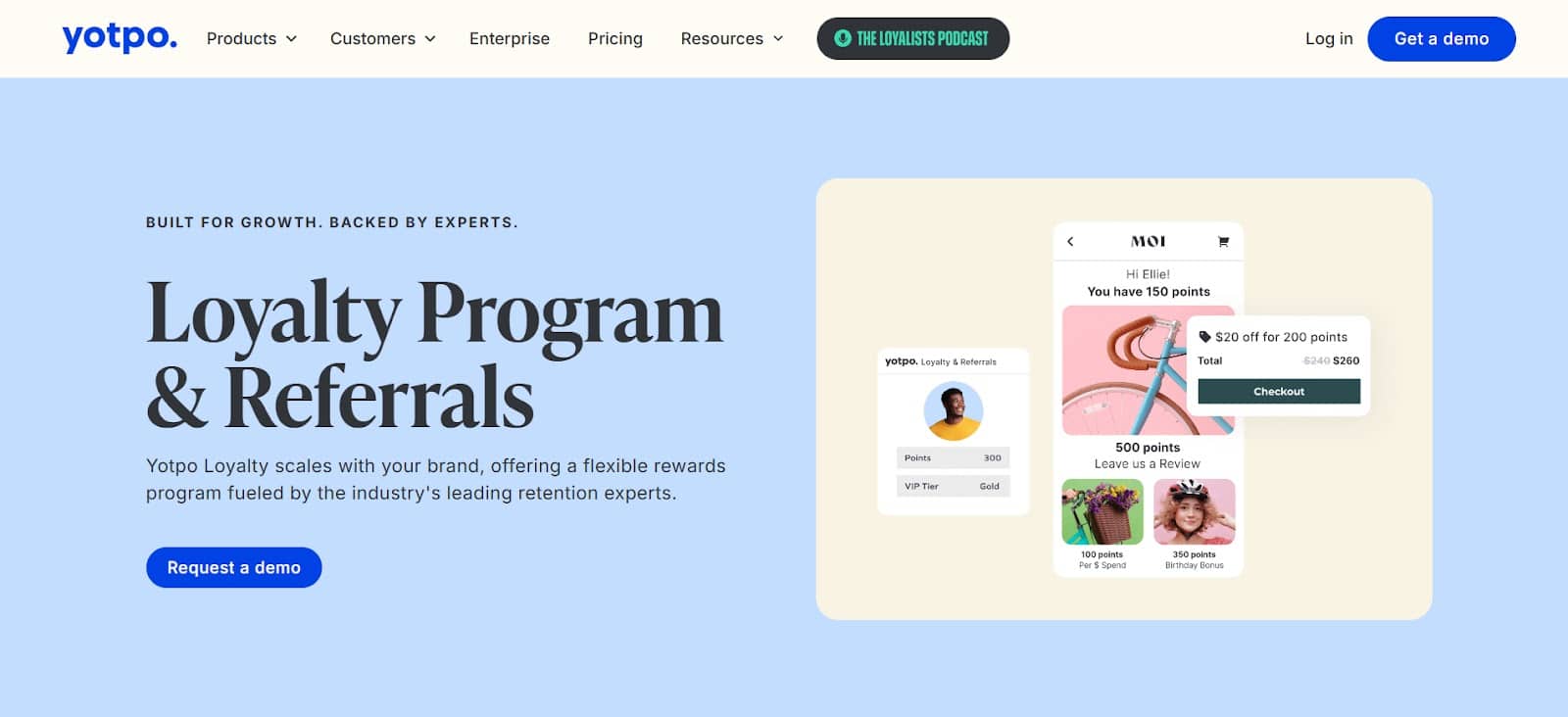
Designing a great program is one thing; executing it effectively is another. The right technology platform is crucial for bringing your vision to life. Yotpo Loyalty is designed specifically for eCommerce brands that want to build sophisticated, customized retention programs.
Built on Partnership and Strategy
One of Yotpo’s key differentiators is its emphasis on strategic partnership. You’re not just getting software; you’re gaining a partner with deep expertise. Yotpo provides dedicated Customer Success Managers (CSMs) and 24/7 support to help you design, launch, and optimize your program. These experts provide proactive advice based on years of market experience, helping you avoid common pitfalls.
Unmatched Flexibility and Customization
Your brand is unique, and your loyalty program should be too. Yotpo Loyalty offers extensive flexibility, allowing you to create an experience that is perfectly aligned with your brand. You can design unique earning rules, create dynamic customer segments for personalized rewards, and build highly customized VIP tiers with unique branding. This level of control ensures your loyalty program feels like a natural extension of your brand, not a third-party add-on.
Rewarding More Than Just Purchases
Modern loyalty is about building a community. Yotpo makes it easy to incentivize a wide range of high-value customer actions. You can configure your program to reward customers for:
- Writing product reviews
- Adding photos and videos to reviews
- Referring friends
- Engaging on social media
Deep Analytics for Smarter Decisions
A successful program requires constant monitoring. Yotpo Loyalty provides a comprehensive reporting suite that gives you a clear view of performance. You can track key metrics like program ROI, member vs. non-member purchase behavior, and redemption rates. These insights allow you to make data-driven decisions to improve your program over time.
Powerful Integrations
While Yotpo Loyalty is an extremely effective standalone product, its power is amplified when it works with other best-in-class solutions.
- Loyalty + Reviews: This is a powerful combination. You can automatically reward customers with loyalty points for submitting reviews with a solution like Yotpo Reviews. You can even offer bonus points for including a photo or video to generate more engaging user-generated content.
- Connecting Loyalty Data to Your Marketing: Loyalty data is a goldmine for personalization. You can sync loyalty segments (e.g., “Gold Tier Members”) to your marketing channels to send hyper-targeted campaigns, such as exclusive offers for VIPs or point balance reminders.
Common Pitfalls in Loyalty Programs (And How to Avoid Them)
Being aware of common pitfalls can help you design a program that avoids them.
- Pitfall 1: Making it Too Complicated: If customers can’t easily understand the rules, they won’t participate.
How to Avoid It: Prioritize simplicity and clarity. Use clear on-site messaging to explain exactly how the program works.
- Pitfall 2: Offering Low-Value Rewards: If the rewards aren’t desirable, customers have no incentive.
How to Avoid It: Ensure your reward rate is competitive, typically between 1-5%. Offer a mix of rewards to appeal to different motivations.
- Pitfall 3: Poor Communication: If nobody knows about your program, it will fail.
How to Avoid It: Develop a communication plan. Promote the program at launch and continue to integrate it into all your marketing channels.
- Pitfall 4: “Set It and Forget It” Mentality: A loyalty program is not a static project.
How to Avoid It: Regularly analyze your program’s performance. A partner that provides strategic support, like Yotpo, can be invaluable here.
The Future of Store Loyalty: Trends to Watch
The world of customer loyalty is constantly evolving. Staying ahead of the trends will ensure your program remains effective.
- Hyper-Personalization: Generic rewards are becoming a thing of the past. The future lies in using data to offer individual customers the specific rewards that are most relevant to them.
- Experiential Rewards: Customers are increasingly looking for more than just discounts. Experiential rewards—like access to exclusive online events or members-only content—create a much deeper emotional connection.
- The Rise of AI in Loyalty: Artificial intelligence is set to transform loyalty programs. Yotpo is leveraging AI to predict customer behavior, identify at-risk customers, and recommend optimal rewards to maximize engagement and ROI.
Conclusion: Building a Program That Lasts
Store loyalty programs are a powerful asset for any eCommerce brand. When designed thoughtfully and executed with the right technology, they can increase LTV, boost AOV, and build a community of passionate brand advocates.
The key is to move beyond a simple transactional mindset. Build a program that offers genuine value, creates a sense of exclusivity, and is seamlessly integrated into your brand experience. By focusing on your customers, setting clear goals, and leveraging the power of data, you can create a loyalty program that builds relationships that last.
Frequently Asked Questions
What’s the first step to creating a loyalty program?
The very first step is to define your goals. Before you think about points, tiers, or rewards, you need to know what you want to achieve. Are you trying to increase how often customers buy, how much they spend per order, or something else entirely? Setting clear, measurable goals will guide every other decision in the design process.
How do I make my loyalty program stand out from competitors?
Personalization and branding are key. Instead of a generic “Loyalty Program,” give it a creative name that fits your brand’s personality. Offer rewards that are unique to your business, such as exclusive access to products, experiential rewards, or collaborations. A technology partner like Yotpo can provide the flexibility to customize the look and feel of your program so it’s a seamless part of your brand experience.
Are points-based programs still effective?
Yes, absolutely. Points-based programs remain popular because they are simple and easy for customers to understand. The “spend-get” model is intuitive and provides a clear incentive for repeat purchases. Their effectiveness is often boosted when combined with other elements, like VIP tiers or rewards for non-transactional activities.
How do I choose the right rewards for my customers?
The best way is to use data and ask them directly. Analyze your sales data to see what your best customers are buying. You can also send out a survey to ask them what they would value most. A mix of rewards—such as percentage discounts, dollar-off coupons, free products, and free shipping—usually appeals to the widest range of customers.
What is a good reward rate for a loyalty program?
A typical reward rate is between 1% and 5% of a customer’s spend. For example, a 2% reward rate means that for every $100 a customer spends, they get $2 back in rewards value. The right rate depends on your profit margins and business goals. It needs to be generous enough to be motivating for customers but sustainable for your business.
Should my loyalty points expire?
Point expiration can be a powerful tool to create urgency and encourage customers to shop again. However, it must be communicated very clearly and fairly to avoid frustrating your members. A common approach is to have points expire after a period of inactivity (e.g., 12 months) rather than on a fixed date.
How important is naming my loyalty program?
It’s more important than you might think! A creative, on-brand name makes your program more memorable and appealing than a generic title like “Rewards Program.” Think of names like Sephora’s “Beauty Insider” or Starbucks’ “Starbucks Rewards.” A good name makes the program feel like an exclusive club that customers want to be a part of.
What are some effective ways to promote a new loyalty program?
A multi-channel approach works best. Announce the launch on your website with a prominent banner, send a dedicated email to your customer list, and post about it on all your social media channels. Offering a sign-up bonus (e.g., “Get 50 points just for joining!”) is a great way to encourage immediate enrollment.
How can I reward customers for things other than purchases?
This is a fantastic way to boost engagement. You can award points for a variety of actions, such as creating an account, writing a product review, following you on social media, referring a friend, or on their birthday. Rewarding these actions helps build a community and encourages customers to interact with your brand between purchases.
What makes a tiered loyalty program successful?
A successful tiered program has clear, achievable tiers and offers increasingly valuable benefits at each level. The perks for the top tiers should feel exclusive and aspirational, motivating customers to spend more to reach that next level. It’s important to make sure even the entry-level tier provides value so new members feel included right away.
Can a loyalty program help with collecting customer data?
Yes, it’s one of the best tools for collecting zero-party data. As customers engage with your program, you learn about their purchase habits, what rewards they prefer, and what motivates them. This valuable data can be used to personalize their experience, refine your marketing strategies, and make smarter business decisions.
How often should I update or change my loyalty program?
You should review your program’s performance quarterly and be open to making adjustments at least once a year. Use your analytics to see what’s working and what isn’t. Are certain rewards never redeemed? Is engagement dropping? You can introduce new rewards, run limited-time promotions, or adjust earning rules to keep the program fresh and exciting for members.
Why is a technology partner like Yotpo important for a loyalty program?
A strong technology partner is critical for execution, management, and optimization. A platform like Yotpo Loyalty automates point tracking, reward redemption, and customer communication, which saves you an enormous amount of time. More importantly, it provides deep analytics to measure ROI and strategic guidance from experts to ensure your program is designed for maximum impact.


 Join a free demo, personalized to fit your needs