














A frequent and important question for growing eCommerce businesses is whether Shopify has a referral program. The answer is nuanced. While Shopify provides programs to reward partners for referring new merchants, it lacks a built-in feature for your customers to refer their friends. However, this functionality is easily accessible through powerful apps, and implementing one is a key strategic decision for growth. This guide clarifies these distinctions and outlines how to build an effective referral program for your store.
Key Takeaways
- Shopify’s Programs vs. Your Program: Shopify’s Partner and Affiliate programs reward people for referring new merchants to the platform, not for referring new customers to your store.
- Apps are the Solution: To create a customer-to-customer referral program, you need to use a dedicated app from the Shopify App Store.
- Strategy is Essential: A successful referral program requires clear goals, attractive and balanced incentives for both the referrer and the friend, and a simple user experience.
- Promotion is a Must: You can’t just launch a program and expect results. You need to actively promote it through email, social media, and on-site placements to drive awareness and participation.
The Short Answer: Untangling Shopify’s “Referral” Programs
To understand referral programs in the Shopify ecosystem, it’s essential to distinguish between two different types. One is managed by Shopify to expand its merchant base, while the other is a tool you build to grow your own brand.
What Shopify Offers: The Partner & Affiliate Programs
Shopify runs two primary programs designed to grow its own platform by rewarding individuals and agencies who refer new merchants. These are not customer-facing referral programs for your store.
- The Shopify Partner Program: This program is designed for professionals who contribute to the eCommerce ecosystem, including developers, designers, agencies, and marketers. Partners earn recurring revenue by building new Shopify stores, creating apps, or providing expert services to merchants.
- The Shopify Affiliate Program: This program targets content creators, influencers, and educators with an audience interested in entrepreneurship. Affiliates earn a commission for each new merchant who signs up for a paid Shopify plan through their unique affiliate link.
The key distinction is that both programs reward referrals of new store owners to Shopify, not new shoppers to your individual store.
What Shopify Doesn’t Offer: A Native Customer Referral Program
The Shopify platform does not include a native feature that allows your customers to refer their friends for a reward. Shopify focuses on providing core commerce infrastructure, such as product catalogs, checkout, and payment processing. It delegates specialized marketing functions, including customer referral programs, to dedicated applications in the Shopify App Store.
This model provides merchants with significant flexibility. Instead of a one-size-fits-all solution, you can select a specialized application that aligns perfectly with your brand’s strategic needs, goals, and budget.
Why Your Shopify Store Needs a Customer Referral Program
Implementing a customer referral program is one of the most effective and cost-efficient methods for business growth. It activates your most powerful marketing channel: your existing customer base.
The Power of Word-of-Mouth Marketing in eCommerce
In a crowded digital marketplace, trust is a crucial differentiator. Nothing builds trust more effectively than a recommendation from a peer. A formal referral program digitizes and scales word-of-mouth marketing, incentivizing satisfied customers to become brand advocates. Their genuine enthusiasm can generate a reliable stream of high-intent new customers. Why? Because an authentic endorsement from a friend cuts through the noise of traditional advertising.
Key Benefits of a Referral Program
A well-structured referral program delivers measurable results that directly impact key business metrics.
- Lower Customer Acquisition Cost (CAC): Referral marketing leverages your existing customers as an acquisition channel. This results in a significantly lower CAC compared to paid search or social media advertising.
- Higher Customer Lifetime Value (LTV): Referred customers tend to exhibit higher retention rates and spend more over time. This is often because they are introduced to the brand by a trusted source, which fosters stronger initial loyalty.
- Increased Conversion Rates: A lead from a trusted peer is far more likely to convert than one from a cold advertisement. The pre-established trust shortens the path to purchase considerably.
- Enhanced Brand Loyalty: A referral program not only acquires new customers but also strengthens the relationship with existing ones. By rewarding their advocacy, you make them feel valued and more connected to your brand.
Building Your Referral Program: Key Components of Success
A successful referral program requires more than just activating an app. It demands a strategic approach that considers your goals, incentives, and the overall user experience.
Defining Your Goals and KPIs
Before launching, you must define what you want to achieve. Are you aiming to increase your customer base, boost average order value (AOV), or improve purchase frequency? Your primary objective will shape the program’s structure.
Once a goal is set, identify the Key Performance Indicators (KPIs) to measure success:
- Referral Rate: The percentage of total orders generated through referrals.
- Participation Rate: The percentage of customers who join the referral program.
- Share Rate: The frequency with which participants share their unique referral link.
- Referred Customer Conversion Rate: The percentage of users who complete a purchase after clicking a referral link.
Crafting an Irresistible Incentive Structure
The reward is the core motivator of your referral program. A two-sided incentive, where both the advocate and the referred friend receive a reward, is typically the most effective structure.
Popular reward types include:
- Percentage Discounts: (e.g., “Give 20%, Get 20%”) Simple and highly effective.
- Fixed-Value Discounts: (e.g., “Give $10, Get $10”) Works well for brands with consistent price points.
- Store Credit: Guarantees the advocate will return to your store for a future purchase.
- Free Products: Offering a popular or exclusive item can be a powerful incentive.
- Free Shipping: A simple yet valuable perk that can reduce purchase friction.
Select a reward that aligns with your profit margins and provides genuine value to your customers.
Creating a Seamless User Experience
If your referral program is difficult to find or use, it will not succeed. The experience must be effortless.
- Accessibility: Promote the program prominently. A dedicated landing page, links in the site header or footer, and inclusion in customer account pages are essential.
- Clarity: Use clear, concise language. For example, “Give your friends $15 off their first order, and we’ll give you $15 for your next one.” Avoid complex rules.
- Shareability: Provide a unique referral link or code that customers can easily share via email, SMS, or social media.
- Transparency: Offer advocates a simple dashboard to track their referrals and earned rewards. This builds trust and encourages continued participation.
Promoting Your Program Effectively
Active promotion is critical to program awareness and adoption.
- Email Marketing: Announce the program launch to your email list. Incorporate a call-to-action in regular marketing campaigns and transactional emails, such as order confirmations.
- On-Site Placements: Use homepage banners, pop-ups, and dedicated sections on product pages. The post-purchase “thank you” page is a prime location to request a referral.
- Social Media: Regularly share information about your program on social channels to drive engagement.
Common Pitfalls to Avoid When Launching Your Referral Program
While referral programs are incredibly powerful, their success isn’t guaranteed. Several common mistakes can undermine performance and prevent you from realizing a strong return on your investment. By anticipating these challenges, you can design a program that is both effective and sustainable.
Setting Unbalanced or Unappealing Rewards
The incentive is the core of your program, and getting it wrong is a frequent misstep.
- Rewards Are Too Low: If the reward isn’t compelling, customers won’t have the motivation to participate. A 5% discount may not be enough to inspire someone to actively share your brand.
- Rewards Are Too High: An overly generous offer can erode your profit margins and become unsustainable, especially as the program scales. Offering a $50 reward on a $75 product is rarely a viable long-term strategy.
- One-Sided Incentives: Programs that only reward the advocate often fail. A successful structure is almost always two-sided, giving the new customer a compelling reason to make their first purchase.
Creating a Confusing User Experience
If your program is difficult to understand or use, participation will suffer. Simplicity is key. Avoid these common friction points:
- Hidden Program: The referral link shouldn’t require a scavenger hunt to find. It must be prominently displayed on your site and in customer communications.
- Complex Rules: Avoid complicated conditions for earning a reward. The mechanics should be instantly understandable: “You give X, you get Y.”
- Difficult Sharing: The process of sharing a referral link should be effortless. Provide one-click sharing options for email, SMS, and major social platforms. The entire experience must be optimized for mobile devices.
Neglecting Program Promotion
One of the most common errors is the “if you build it, they will come” mindset. You cannot simply launch your program and expect customers to find it. Consistent and multi-channel promotion is non-negotiable.
Ignoring the Threat of Fraud
Referral fraud can quickly devalue your program. Common abuses include self-referrals from new email addresses or users creating multiple accounts to exploit the system. Without proper safeguards, you risk rewarding bad actors instead of genuine advocates. A professional platform with built-in fraud detection is critical for protecting your program’s integrity.
The Solution: Leveraging a Dedicated Referral & Loyalty App
With the strategy defined, the focus shifts to implementation. Attempting to manually track referrals is inefficient and prone to error, which is why a specialized app is essential. A dedicated referral and loyalty app automates the entire process, provides deep customization, and delivers the analytics needed to monitor performance.
Yotpo Loyalty
For brands seeking to build a best-in-class referral and retention program, Yotpo Loyalty offers a comprehensive solution designed for strategic growth. With years of market experience, Yotpo provides more than just software. You get a partnership with dedicated eCommerce loyalty experts who guide you in building a dynamic program powered by a flexible platform.
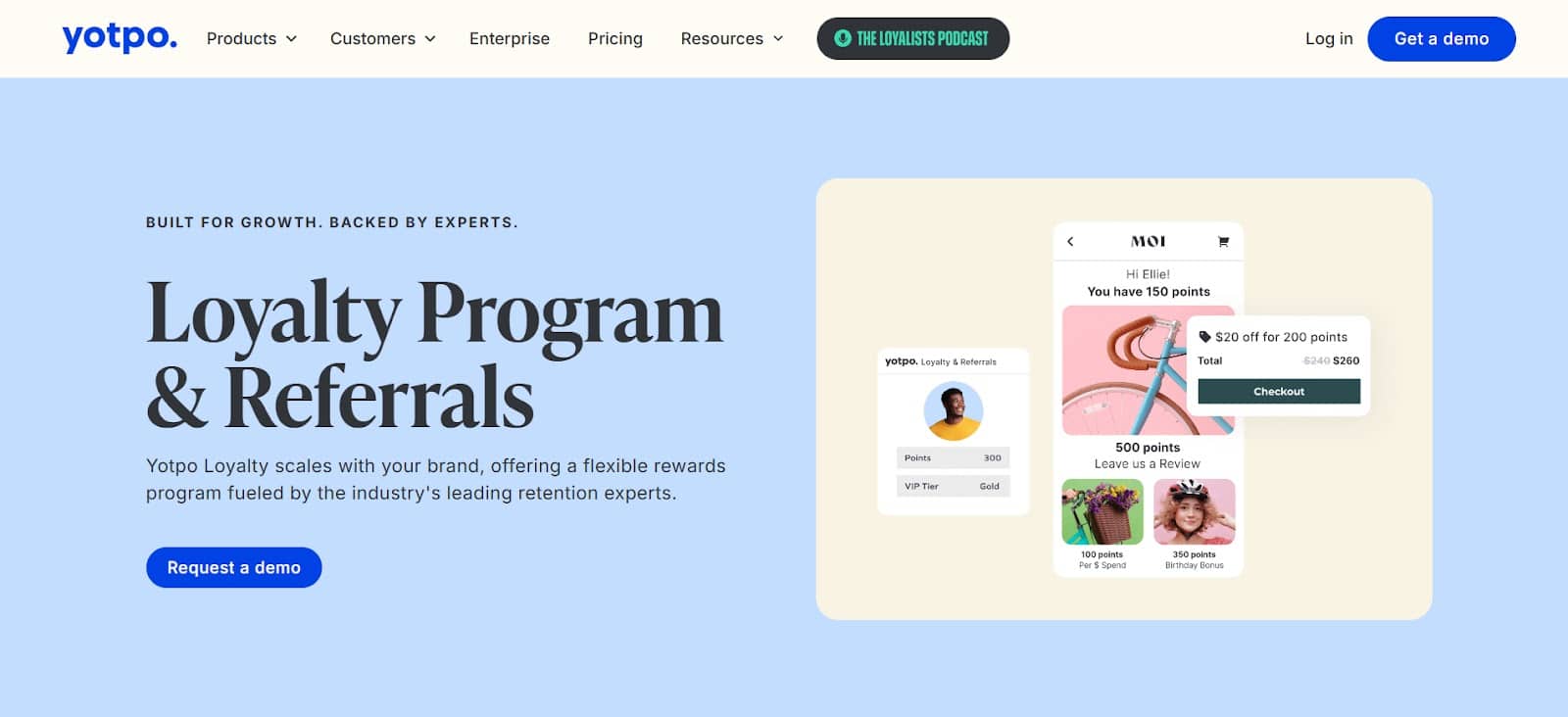
Yotpo stands out with its robust, accurate reporting dashboards that offer true insight into shopper behavior without inflating results. The platform’s flexibility allows you to create fully customized, on-brand experiences that feel native to your website, including sophisticated VIP tiers and dynamic segmentation to reward top customers in unique ways. Yotpo Loyalty is engineered to be a powerful standalone solution, enabling brands to achieve significant results.
Conclusion: From Asking a Question to Building a Growth Engine
To return to the initial question: Shopify does not offer a native customer referral program. Instead, it empowers merchants to select a best-in-class solution from its app ecosystem that aligns with their specific brand and strategy. By leveraging a dedicated app, you can build a sophisticated, automated referral program that transforms your most satisfied customers into a powerful and cost-effective acquisition channel.
A referral program is more than a marketing tactic; it is a reflection of the confidence you have in your products and the value you place on your customers. By rewarding their advocacy, you create a virtuous cycle of loyalty and growth. With a strategic approach and a powerful tool like Yotpo Loyalty, you can convert word-of-mouth into a predictable and scalable growth engine for your eCommerce business.
Frequently Asked Questions
What is a good referral rate for an eCommerce store?
While rates vary by industry, a common benchmark for a healthy program is between 2% and 5% of total orders. This means for every 100 orders, 2 to 5 are generated through referrals. Top-performing programs can exceed this, but focusing on steady, incremental growth is a sound objective.
How do I prevent referral fraud?
Robust referral platforms include built-in safeguards. Solutions like Yotpo Loyalty incorporate several fraud prevention measures, such as tracking IP addresses to flag self-referrals, requiring a minimum purchase amount from the referred friend before issuing a reward, and setting limits on referrals. These automated checks help ensure program integrity.
Should I offer cash rewards for referrals?
Generally, it’s better for eCommerce brands to offer rewards like discounts and store credit. These incentives encourage repeat purchases and keep value within your business ecosystem. While cash payouts are possible through third-party integrations, in-store rewards are the recommended and more effective approach for retailers.
How much does a referral program cost on Shopify?
The cost varies depending on the app. Some apps offer free plans with limited features, which are suitable for new stores. Advanced platforms typically use a subscription model based on order volume. These plans include advanced features, deep customization, and dedicated strategic support, offering a higher potential ROI for growing brands.
What is a two-sided referral incentive?
A two-sided incentive rewards both the person making the referral (the advocate) and the new customer they refer. For example, “Give your friend $20 off their first order, and get $20 in store credit for yourself.” This structure is highly effective because it motivates the advocate to share and gives the new customer a strong reason to make a purchase.
Where is the best place to promote my referral program?
The post-purchase or “thank you” page is one of the most effective places. Customers are highly engaged at this moment and are often excited about their purchase, making them more likely to share. Other key places include email newsletters, transactional emails (like order confirmations), your website’s homepage, and customer account pages.
Can a referral program work for a new store with few customers?
Yes, it can. While you may have fewer advocates initially, a referral program encourages your very first customers to spread the word. This can be a powerful way to build early momentum and acquire new customers based on trust right from the start.
What’s the difference between a referral program and an affiliate program?
A referral program is designed for your existing customers to refer their friends and family. The rewards are typically store discounts or credits. An affiliate program is usually for content creators, influencers, or publishers who promote your brand to a larger audience. Affiliates earn a cash commission on sales they generate.
How long does it take to see results from a referral program?
You can start seeing referred traffic and sales shortly after launching and promoting the program. However, building a strong, self-sustaining referral channel takes time. Consistent promotion and optimization over several months will lead to the best long-term results as more customers become aware of the program.
Should I limit how many friends a customer can refer?
It’s generally best not to limit referrals. You want to encourage your most enthusiastic advocates to share as much as possible. A powerful referral app will have fraud prevention tools to stop abuse, so you can leave the program open for genuine advocates to continue driving new customers to your store.
How do I track the success of my referral program?
A dedicated referral app will provide an analytics dashboard to track key metrics. You should monitor your referral rate (percentage of sales from referrals), share rate (how often customers share), and the conversion rate of referred customers. This data helps you understand what’s working and where you can improve.
What kind of messaging works best for a referral program?
Keep your messaging simple, direct, and benefit-focused. Use clear calls-to-action like “Get $15” or “Share the Love.” Frame it as a win-win for both the customer and their friend. For example, “Give your friends $15 off their first purchase, and you’ll get $15 for your next one.”
Can I run a referral program alongside a loyalty program?
Absolutely! They work very well together. A loyalty program rewards customers for their own repeat business, while a referral program rewards them for bringing in new customers. Integrating them can be very powerful, as you can reward loyalty points for successful referrals, further strengthening customer relationships.


 Join a free demo, personalized to fit your needs