













Running a Shopify store has never been more accessible, yet standing out has never been harder. It is a paradox that keeps many merchants up at night. You have the product, but so do thousands of others. The differentiator in 2026 isn’t just what you sell, but how you connect, how you are found, and how you treat the people who buy from you.
This isn’t about chasing every new trend. It is about doubling down on what actually drives sustainable growth: technical excellence in SEO, authentic social commerce, and a loyalty strategy that turns one-time buyers into lifelong advocates. Let’s look at how to build a marketing engine that actually works for you.
Key Takeaways: Shopify Marketing Strategy
- SEO is Technical: Success starts with Core Web Vitals, structured data, and optimizing for “AI Overviews.”
- Content Funnels: Shift from generic blogging to answering specific customer questions at every stage of the buying journey.
- Social Commerce: Platforms like TikTok are now direct sales channels; treat them as extended storefronts.
- AI Personalization: Use AI to segment audiences and personalize ads, moving beyond manual bid management.
- Trust Drives Sales: User-generated content (UGC) is essential; shoppers who see it are 161% more likely to convert.
- Retention is Profit: With acquisition costs rising, a loyalty program is critical for increasing Customer Lifetime Value (CLV).
Foundational SEO Strategy
Even the most innovative products require visibility to succeed. Search Engine Optimization (SEO) serves as the organic engine that drives qualified traffic to your store. In 2026, Shopify SEO has evolved beyond simple keyword matching into GEO (Generative Engine Optimization)—the practice of optimizing content for the AI models that summarize answers for users.
Beyond Keywords: Mastering Search Intent
The most effective strategy in 2026 is satisfying search intent. Rather than focusing solely on search volume, brands must understand the motivation behind a query and align their content to that specific need.
Search intent generally falls into four categories:
- Informational: The user wants to learn (e.g., “how to wash a weighted blanket”).
- Navigational: The user is looking for a specific site (e.g., “Your Brand Name”).
- Commercial: The user is researching options (e.g., “best weighted blankets 2026”).
- Transactional: The user is ready to buy (e.g., “buy 15 lb weighted blanket”).
A robust strategy maps content to these intents: blog posts address informational queries to build authority, while collection pages target commercial intent. By aligning with intent, you signal to Google and its AI Overviews that your site is a trusted resource.
Technical SEO and Performance
Technical SEO ensures search engines can crawl and index your site efficiently.
- Site Speed: Google’s Core Web Vitals measure real-world user experience. Focus on Largest Contentful Paint (LCP) (loading speed) and visual stability. Compressing images and removing unused apps are often the most impactful ways to improve these scores.
- Structured Data (Schema): Implementing Product schema is essential. This code powers “rich results”—such as star ratings and pricing—directly in search results. This is particularly critical for GEO, as AI models rely on structured data to parse and display product details accurately.
Clean Site Architecture
A clean architecture helps both users and search engines navigate your store.
- The Three-Click Rule: A user should be able to get from your homepage to any product in three clicks or less.
- Internal Linking: Use your blog to link to relevant products, and product pages to link to related collections. This distributes ranking power (“link equity”) throughout your site.
Content Marketing as a Sales Funnel
Your blog can be a powerful sales driver when treated as a funnel.
- Top of Funnel: Answer broad questions to build awareness and trust.
- Middle of Funnel: Create “Best of” lists and comparison guides to capture shoppers in the research phase.
- Bottom of Funnel: Publish detailed product guides and customer success stories that validate the purchase decision.
Fueling Growth: Paid Media & Social Commerce
While organic traffic builds long-term value, paid media serves as an accelerator. With 76% of consumers using mobile devices to shop, your strategy must be mobile-first and deeply integrated with social platforms.
The Evolution of Social Commerce
Social media platforms have transitioned from awareness channels to direct storefronts.
- TikTok: Success on TikTok is often built on authenticity. Partnering with creators who genuinely use and enjoy your product can be more effective than polished advertising, as their endorsement acts as a trusted recommendation.
- Instagram: Utilize Instagram Shops to allow users to browse your catalog without leaving the app. Use Link Stickers in Stories to drive immediate traffic to new drops or promotions.
Optimizing Paid Ad Spend with AI
In 2026, effective advertising relies on leveraging AI-powered platforms.
- Google Performance Max (PMax): This AI-driven campaign type identifies customers across Search, YouTube, and Display. The merchant’s role has shifted from manual targeting to providing high-quality creative assets and clear conversion goals, allowing the AI to optimize delivery.
- Retargeting: Re-engaging “window shoppers” remains highly effective. Dynamic retargeting ads can display the exact product a user viewed, often paired with a small incentive to encourage conversion.
Building Brand Trust
In a market saturated with options, trust is a primary competitive advantage. As Amit Bachbut, e-commerce expert, notes, “The brands that win today are the ones that turn a one-time buyer into a lifetime advocate.”
The Strategic Value of Reviews
Customer reviews serve as a powerful conversion engine.
- Conversion Lift: Data indicates that shoppers who interact with reviews are 161% more likely to convert.
- Volume Impact: Reaching just 10 reviews on a product can drive a 53% uplift in orders.
- Visual Trust: Including customer photos in reviews can increase purchase likelihood by 137%.
Collecting High-Impact Feedback
To maximize the value of reviews, brands need a proactive collection strategy.
- Timing: Automated requests should be sent when the customer is most likely to have used the product.
- Channels: SMS review requests (powered by integrations with platforms like Klaviyo or Attentive) can be highly effective, converting 66% higher than email alone.
- Depth: AI-driven “Smart Prompts” can ask specific questions (e.g., “How was the fit?”), which are 4x more likely to generate the detailed insights future shoppers need.
Displaying Reviews for Maximum Impact
How you display reviews is just as important as how you collect them. Your review widgets should be:
- Fast-loading: Ensuring they do not negatively impact site speed scores.
- Strategic: placed on the homepage (for trust), collection pages (for comparison), and product pages (for conversion).
- Filterable: Allowing shoppers to sort by topic or see only reviews with photos to find the answers they need quickly.
Strategic Solution: Yotpo Reviews
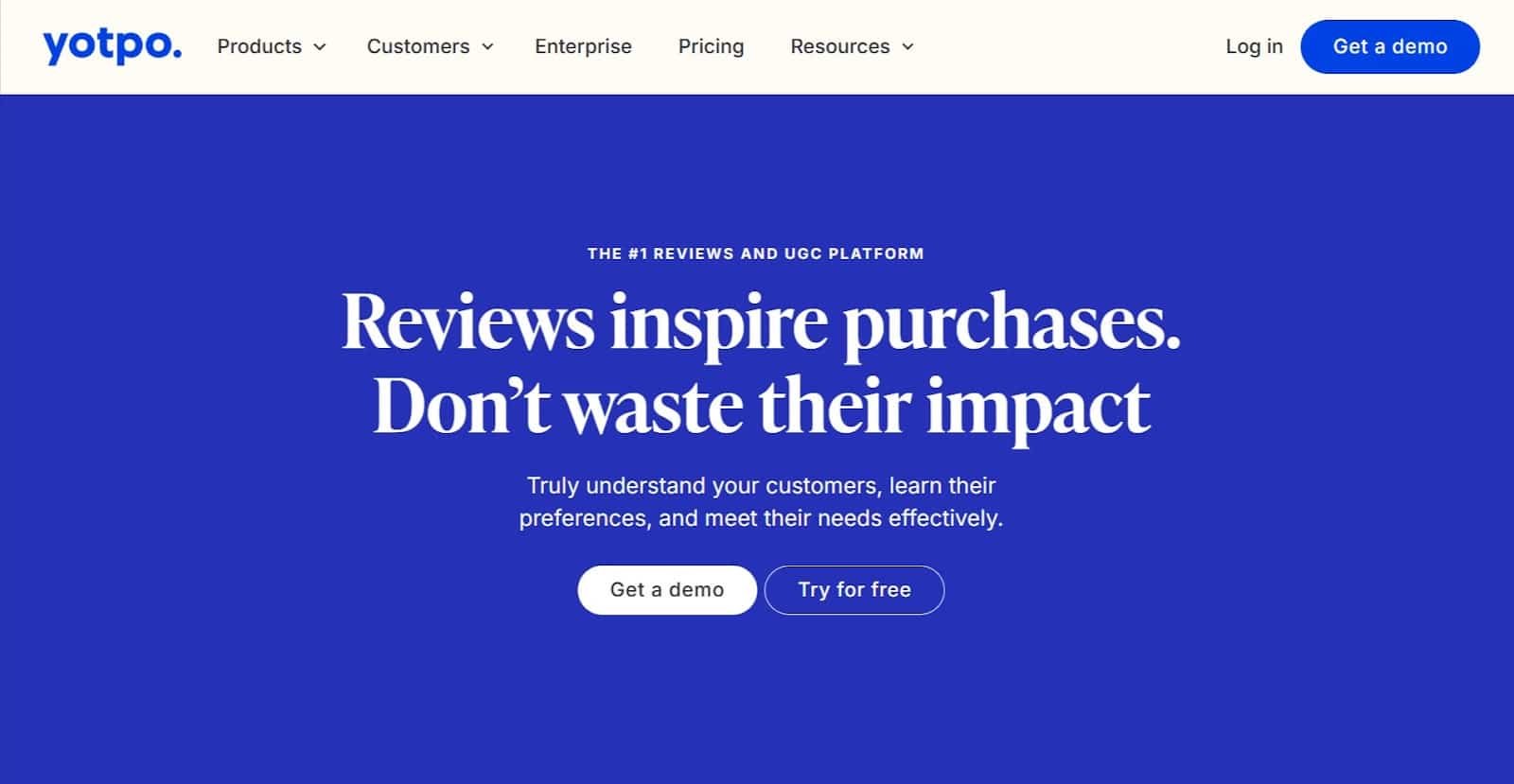
For brands focused on scaling trust, Yotpo Reviews provides a comprehensive solution. The platform leverages AI to collect higher-quality feedback and syndicates star ratings to Google, enhancing visibility in search results. By integrating user-generated content directly into the buyer journey, brands can effectively turn past customers into a persuasive sales force.
Driving Retention & Loyalty
With Customer Acquisition Costs (CAC) rising approximately 60% over the last five years, relying solely on new customer acquisition is often unsustainable. Profitability is increasingly driven by retention.
The Lifecycle Approach
A loyalty program creates a structured system for identifying and rewarding valuable customers, increasing Customer Lifetime Value (CLV).
- VIP Tiers: Creating aspirational tiers (e.g., Bronze, Silver, Gold) gamifies the shopping experience. This structure motivates customers to increase their spending to unlock exclusive perks.
- Experiential Rewards: Beyond discounts, offering experiential rewards—such as early access to new product drops or exclusive community events—fosters a deeper emotional connection with the brand.
The Synergy of Reviews and Loyalty
These two strategies work best when integrated. For example, rewarding customers with loyalty points for leaving a review creates a powerful flywheel: you generate more social proof for your product pages while simultaneously engaging your customer base and bringing them back to the store to redeem their points.
Strategic Solution: Yotpo Loyalty
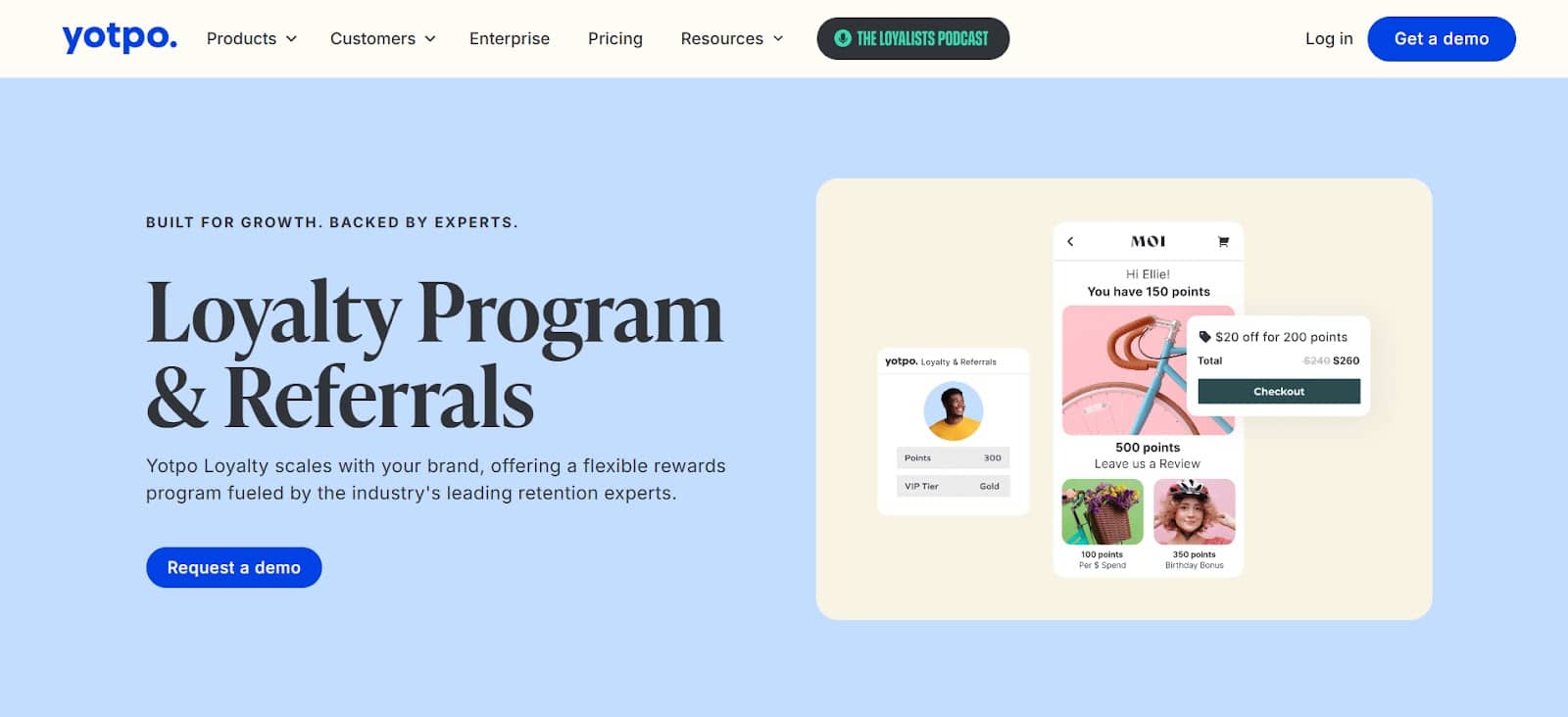
Yotpo Loyalty enables Shopify merchants to build agile, customized programs without complex development. Whether the goal is a straightforward points-for-purchase model or a sophisticated VIP tier structure, the platform offers the flexibility and analytics required to identify top customers and maintain their engagement over time.
Conclusion
A successful 2026 Shopify marketing strategy operates as an interconnected ecosystem. Technical SEO ensures discoverability; social commerce and paid media drive targeted traffic; reviews convert that traffic by establishing trust; and a loyalty program transforms those buyers into lifelong advocates. By focusing on these core pillars, brands can build a resilient, profitable business adapted to the modern digital landscape.
FAQs: Shopify Marketing Strategy
1. How should I begin a Shopify marketing plan?
Start by clearly defining your ideal customer profile (ICP) and understanding their specific pain points. Rather than attempting to launch on every channel simultaneously, focus on mastering one organic channel (such as SEO) and one paid or social channel. Set clear, measurable goals for traffic and conversion to track early progress.
2. What is the most effective marketing tactic for Shopify?
While effectiveness depends on the specific brand, Customer Retention (Loyalty) typically yields the highest ROI because retaining an existing customer is significantly less expensive than acquiring a new one. For driving immediate sales, Google Shopping ads combined with strong social proof (reviews) are often the most effective lever.
3. How much budget should be allocated to marketing?
A common benchmark for growing e-commerce brands is 10-15% of gross revenue. Startups aiming for aggressive growth may invest up to 30%. It is crucial to monitor Return on Ad Spend (ROAS) and ensure that the Customer Acquisition Cost (CAC) remains lower than the customer’s Lifetime Value (LTV).
4. How can I market my store with limited resources?
Focus on “sweat equity” channels like Organic SEO and Content Marketing. Optimizing product descriptions and writing helpful blog posts costs time rather than money. Additionally, leveraging user-generated content (UGC)—encouraging customers to share photos of your products on social media—provides authentic marketing assets at no cost.
5. How do “AI Overviews” impact SEO strategy?
AI Overviews (formerly referred to as SGE) summarize search results directly on the results page. To be featured here, brands need to practice GEO (Generative Engine Optimization). This involves creating authoritative, direct answers to common questions and utilizing structured data so AI models can easily interpret product information.
6. What are the essential elements of a high-converting product page?
A high-converting page typically requires:
- High-resolution, zoomable images.
- Clear pricing and prominent “Add to Cart” buttons.
- Concise, benefit-driven product descriptions.
- Social Proof: Visible star ratings and recent reviews.
- Trust signals (e.g., “Free Shipping,” “Secure Checkout”).
7. How can I get products listed on Google Shopping?
Merchants must set up the Google & YouTube channel within the Shopify admin. This syncs product data to the Google Merchant Center. Once the product feed is approved, brands can launch Performance Max or Shopping campaigns to display visual product listings in search results.
8. Why is it important to have verified reviews?
Verified reviews confirm that the reviewer has actually purchased the item, which prevents spam and builds higher trust with potential buyers. Platforms like Yotpo automatically send requests to verified buyers, ensuring that the feedback displayed on the site is authentic and credible.
9. What is the primary difference between a Reviews app and a Loyalty app?
A Reviews app (like Yotpo Reviews) focuses on acquisition and conversion by using social proof to convince new visitors to purchase. A Loyalty app (like Yotpo Loyalty) focuses on retention by using points, rewards, and VIP perks to encourage existing customers to purchase again.
10. How can I measure the success of a loyalty program?
Key metrics for evaluating a loyalty program include:
- Redemption Rate: The percentage of issued points that are redeemed (a rate above 20% is generally considered healthy).
- Participation Rate: The percentage of the total customer base that joins the program.
- Repeat Purchase Rate: The frequency with which loyalty members return to shop compared to non-members.




 Join a free demo, personalized to fit your needs