














Many eCommerce brands invest heavily in advertising to attract new customers, only to see them purchase once and never return. This cycle of costly acquisition and low retention is a significant obstacle to long-term success. To build a truly sustainable business, brands must look beyond the initial transaction and prioritize a metric that defines financial health: Customer Lifetime Value (LTV).
This article serves as a definitive guide to LTV. We will define the metric, explain its importance for any Shopify store, and provide a clear methodology for its calculation. Most importantly, we will present a practical framework to analyze and strategically increase your LTV, helping you convert one-time buyers into high-value, lifelong customers.
What is Customer Lifetime Value (LTV) and Why Does It Matter for Shopify Stores?
Before exploring implementation, it is essential to understand the concept of LTV and its strategic importance. A clear grasp of this metric is the first step toward building a more profitable and resilient business.
Defining LTV in Simple Terms
In essence, Customer Lifetime Value (LTV) is a forecast of the total net profit a business can expect to realize from an individual customer account. It represents the entire revenue a customer is projected to generate over the course of their relationship with your brand.
Consider this: a customer’s first order, measured by Average Order Value (AOV), provides only a snapshot. Their LTV, however, reveals the complete narrative. It is the crucial distinction between a transient buyer and a loyal, returning customer.
The “Why”: LTV’s Critical Role in eCommerce
A focus on LTV fundamentally shifts your business strategy from pursuing short-term gains to ensuring long-term viability. Here is why this metric is so critical:
- Drives Profitability: It is a well-established principle that acquiring a new customer is significantly more expensive than retaining an existing one. By increasing the lifetime value of your customers, you generate more revenue from your current customer base, which directly enhances profit margins without a proportional rise in marketing expenditure.
- Optimizes Marketing ROI: LTV provides the data necessary to determine an appropriate customer acquisition budget. By understanding a customer’s potential worth, you can make informed decisions about your Customer Acquisition Cost (CAC). An ideal LTV:CAC ratio is at least 3:1, indicating that a customer’s value should be a minimum of three times the cost of acquiring them.
- Builds Sustainable Growth: Businesses that rely on a constant influx of one-time buyers are inherently fragile and vulnerable to fluctuating advertising costs. In contrast, a business with a high LTV possesses a stable, predictable revenue stream from a loyal customer base, making it more resilient and structured for sustained growth.
- Informs Product & Inventory Decisions: Analyzing the LTV of different customer segments provides invaluable insights into purchasing behavior. This data can guide your product development strategy, inform inventory management, and uncover new opportunities for upselling and cross-selling.
In essence, LTV is a crucial metric that redirects focus from single transactions to the cultivation of long-term customer relationships, which is the primary driver of profitability and sustainable growth.
How to Measure LTV on Shopify: A Step-by-Step Guide
Calculating LTV does not require advanced data science skills. By leveraging a few key metrics available in your Shopify dashboard, you can establish a reliable estimate to inform your strategy.
The LTV Calculation Formula
While several methods exist for calculating LTV, the following formula is a standard and effective starting point for most Shopify stores:
- LTV=Average Order Value (AOV)×Purchase Frequency (PF)×Customer Lifespan (CL)
Let’s examine how to determine each of these components.
Step 1: Finding Your Average Order Value (AOV)
AOV indicates the average amount a customer spends per order. It serves as a fundamental health metric for your business.
- How to Find It: In your Shopify Admin, navigate to Analytics > Reports. The “Sales” reports contain your total sales and the total number of orders for a specified period.
- The Calculation: AOV=Number of OrdersTotal Sales
- What It Tells You: AOV represents your transactional baseline. Increasing this value through tactics like upselling or product bundling directly contributes to a higher LTV.
Step 2: Calculating Purchase Frequency (PF)
Purchase Frequency measures how often an average customer makes a purchase within a specific timeframe. It is a core indicator of repeat business.
- How to Find It: You will need the total number of orders and the total number of unique customers from your Shopify reports over a defined period, such as one year.
- The Calculation: PF=Total Unique CustomersTotal Orders
- What It Tells You: A low purchase frequency indicates a challenge in securing repeat business. This is a key signal to enhance your customer retention and engagement strategies.
Step 3: Estimating Customer Lifespan (CL)
Customer Lifespan is the average duration a customer continues to purchase from your store. It is often the most complex metric to calculate, particularly for newer businesses.
- How to Calculate It: A direct method involves calculating the average time elapsed between each customer’s first and last purchase dates. This typically requires exporting your order data for analysis.
- A Simpler Estimate: For a less technical approach, you can begin with a conservative estimate (e.g., 1-3 years) and refine it as your business accumulates more historical data. Consistency in the value used is key.
- What It Tells You: This metric is a direct reflection of customer loyalty. A longer customer lifespan indicates greater success in maintaining customer satisfaction and engagement.
Putting It All Together: An LTV Calculation Example
Let’s apply the formula to a hypothetical Shopify store.
- Average Order Value (AOV): $120
- Purchase Frequency (PF): 2.5 (the average customer orders 2.5 times annually)
- Customer Lifespan (CL): 3 years
The LTV calculation would be:
LTV= $120×2.5×3 = $900
This result signifies that, on average, each customer is worth $900 in revenue over their entire relationship with the store. You now have a strategic metric to guide your marketing investments and overall business strategy.
In essence, measuring LTV involves calculating your AOV, Purchase Frequency, and Customer Lifespan using data that is readily accessible within your Shopify reports.
Analyzing LTV: Uncovering Your Most Valuable Customers
While calculating a single LTV figure is a valuable first step, its true strategic power is realized through deeper analysis. A store-wide average can obscure critical differences within your customer base.
Why a Single LTV Number Isn’t Enough
An average LTV metric groups your most loyal, high-spending customers with single-purchase, discount-seeking buyers. To implement effective strategies, you must segment your customer base to understand which groups drive the most value and why.
For instance, analysis might reveal that customers who initially purchase a specific product have a 300% higher LTV. Alternatively, customers acquired through a particular marketing channel might exhibit a much shorter lifespan. Insights like these allow you to allocate resources to the most effective strategies.
A Powerful Analysis Tool: RFM Segmentation
One of the most effective methods for customer segmentation is RFM analysis. This model evaluates customers based on their transactional history across three dimensions:
- Recency: How recently did they make a purchase? Customers who bought last week are generally more engaged than those who have not purchased in a year.
- Frequency: How often do they buy? A customer with ten purchases is more valuable than a customer with only one.
- Monetary: How much do they spend? This identifies your highest-spending customers.
By scoring customers on these three factors, you can create actionable segments, such as:
- Champions: High scores in all three categories. These are your VIPs.
- Loyal Customers: High frequency, but may have lower monetary scores. They form the stable foundation of your business.
- At-Risk Customers: Previously valuable customers who have not purchased in some time. They require re-engagement campaigns.
- New Customers: Have made a recent purchase. The objective is to convert them into repeat buyers.
A Framework to Boost Your Shopify LTV
Once you have measured and analyzed your LTV, the next step is to improve it. We recommend a strategic framework focused on three core pillars: Engage, Personalize, and Retain.
Pillar 1: Engage Across Channels
Effective engagement involves maintaining a meaningful dialogue with your customers between purchases. Consistent and valuable communication ensures your brand remains top-of-mind and encourages subsequent transactions.
Master Post-Purchase Email Communication
The Challenge: The customer journey does not end at checkout. The post-purchase phase is a critical opportunity to build a lasting relationship, yet many brands neglect it with generic, transactional communication.
The Solution: Elevate your post-purchase communication beyond the standard receipt. Develop an email flow that delivers tangible value, including well-designed order confirmations, proactive shipping updates, and relevant content like “how-to” guides or styling tips for their new product.
Pillar 2: Personalize the Customer Journey
Modern consumers expect personalized interactions. Generic, one-size-fits-all marketing is no longer effective. Personalization involves leveraging customer data to create tailored experiences that demonstrate an understanding of individual needs and preferences.
Turn Customer Feedback into a Conversion Engine
The Challenge: Building trust with prospective customers who are unfamiliar with your brand is a primary hurdle. They require authentic validation that your products meet their expectations.
The Solution: Empower your existing customers to serve as brand advocates. Actively collect and strategically display product reviews, particularly those containing authentic customer photos and videos, also known as user-generated content (UGC).
How Yotpo Reviews Helps
Yotpo Reviews is designed to help you collect and leverage this high-impact social proof. The objective is not merely to accumulate ratings, but to generate high-quality reviews that provide rich detail and visual content to address potential buyers’ questions. Yotpo achieves this through customizable review-request emails and a suite of smart display widgets. The platform also integrates AI-powered tools like sentiment analysis and features an extensive syndication network that distributes your reviews to key partners like Google, Target, and TikTok Shop, building trust at every point of discovery.
While other tools like Okendo or Bazaarvoice also facilitate review collection, Yotpo’s key strengths lie in its strategic focus on utilizing reviews to directly drive revenue and its robust syndication partnerships that amplify social proof across the digital ecosystem.
Segment and Target with Precision
The Challenge: Many brands collect valuable data—purchase history, review ratings, loyalty status—but this information often resides in disparate systems that do not communicate. This fragmentation prevents the creation of a truly unified and personalized customer experience.
The Solution: Eliminate data silos by using an integrated platform that provides a 360-degree view of the customer. This enables you to deliver the right message at the right time through the right channel.
Pillar 3: Retain Your Best Customers
Retention is the final and arguably most crucial pillar. It is about providing your best customers—those who drive the most profit—with compelling reasons to remain loyal to your brand.
Build a Rewarding Loyalty Program
The Challenge: In a competitive marketplace, customer loyalty cannot be taken for granted. To prevent churn, brands must create an emotional connection and make their best customers feel valued.
The Solution: Implement a strategic loyalty program that extends beyond simple discounts. A well-designed program offers exclusive perks, recognizes customer status with VIP tiers, and rewards valuable actions beyond purchases, such as writing reviews or engaging on social media.
How Yotpo Loyalty Helps
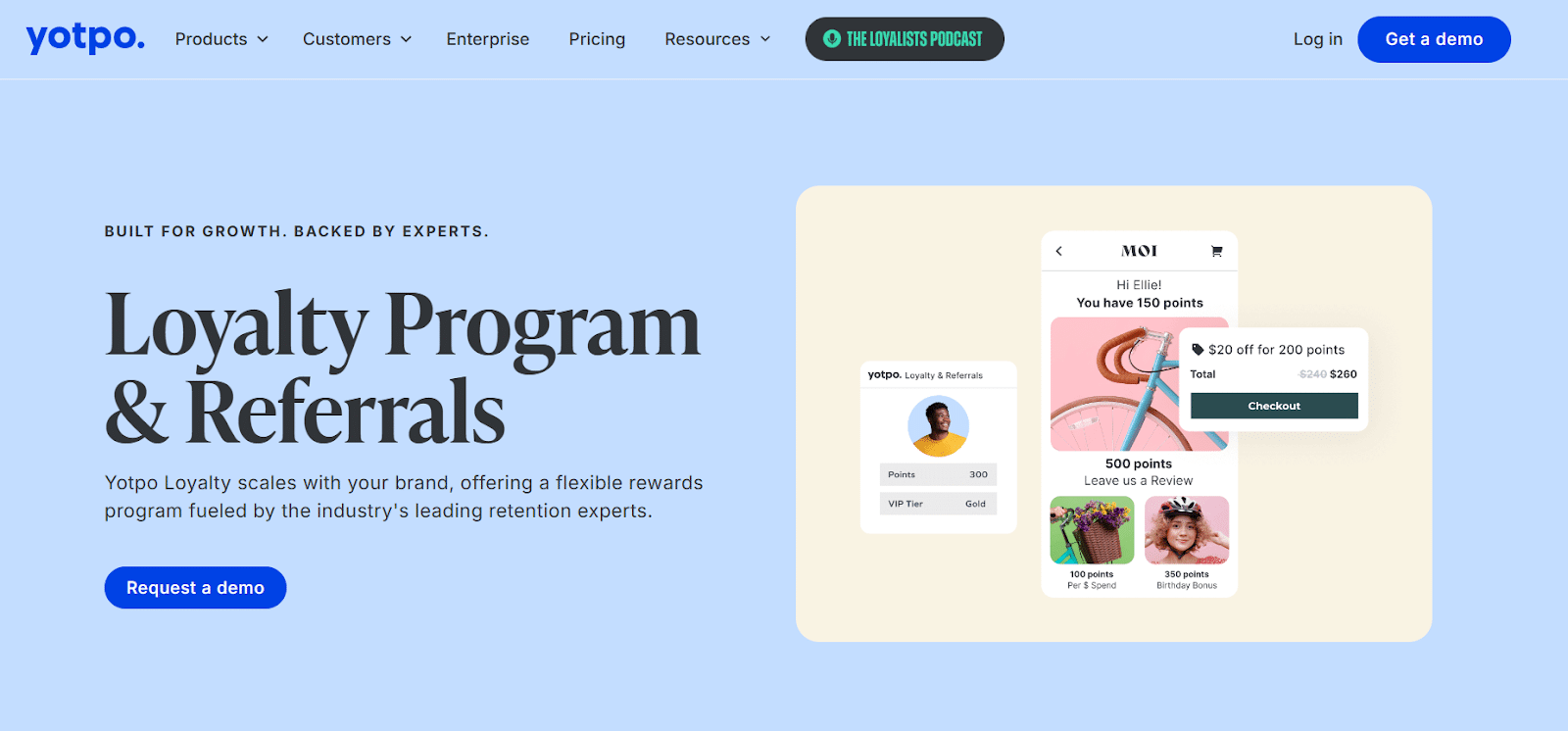
Yotpo Loyalty is a comprehensive solution that combines a powerful platform with expert partnership. Clients receive strategic guidance from eCommerce loyalty specialists to design a program that aligns with specific business objectives. The platform itself is highly flexible, allowing for deep customization to create unique, on-brand loyalty experiences. It also provides robust reporting and analytics to measure program ROI and understand its impact on LTV. Advanced features like flexible point expiration rules and dynamic segmentation for VIP tiers provide the control needed to build a sophisticated and effective program.
While other loyalty applications like Loyalty Lion and Smile exist in the market, Yotpo is differentiated by its combination of a powerful, flexible platform and a hands-on, strategic support model designed to ensure program success.
Conclusion
Customer Lifetime Value is more than an industry metric; it is a strategic compass for building a resilient, profitable, and enduring brand. By shifting your focus from acquiring single transactions to cultivating long-term relationships, you strengthen the foundation of your business for sustainable growth.
The framework is straightforward: Measure your LTV to establish a baseline. Analyze it through segmentation to identify your most valuable customers. And boost it by consistently applying the principles of engagement, personalization, and retention. By investing in the complete customer journey, you are not just securing another sale—you are building a brand that customers will value for years to come.
FAQs
What is a “good” LTV for a Shopify store?
A universal LTV benchmark does not exist, as it varies by industry and product cost. The most important metric is your LTV to Customer Acquisition Cost (LTV:CAC) ratio. A healthy ratio is typically considered to be 3:1 or higher, which indicates that a customer’s lifetime value is at least three times the cost incurred to acquire them.
How often should I measure and analyze LTV?
It is advisable to formally calculate and monitor your aggregate LTV on a quarterly basis to identify long-term trends. However, the analysis of your customer segments, particularly with RFM modeling, should occur more frequently—ideally monthly. This cadence allows for rapid adjustments to marketing strategies based on evolving customer behavior.
Can I improve LTV without a large budget?
Yes. Many high-impact strategies can be implemented at a low cost. Begin by optimizing your post-purchase email flows to deliver greater value. Actively solicit product reviews, as social proof is a powerful and cost-effective marketing asset. You can also launch a simple loyalty program that rewards points for purchases. These foundational initiatives can significantly improve retention without a large financial investment.
My store is new. When should I focus on LTV?
An LTV-oriented mindset should be adopted from day one. While you may lack sufficient historical data for precise calculations, the foundational practices you establish will support long-term success. Focus on providing exceptional customer service, systematically collecting customer emails from the first order, and creating a memorable brand experience. This groundwork is crucial for building the loyal customer base that will drive future LTV.
What is the biggest mistake brands make with LTV?
A common mistake is focusing exclusively on the “Monetary” aspect of RFM analysis. A customer who makes a single large purchase and never returns is often less valuable than a customer who purchases less per transaction but does so consistently. Frequency and Recency are often stronger predictors of long-term loyalty. Do not overlook customers who make your brand a regular part of their lives, as they form the backbone of a stable business.


 Join a free demo, personalized to fit your needs