











It’s a well-known fact in eCommerce: getting a new customer costs five to 25 times more than keeping one you already have. Still, many brands pour their budgets into acquisition, hoping to attract new shoppers. But what happens after that first sale? If you’re not focused on your existing customers, you can get stuck in an expensive cycle of acquiring and losing, without ever seeing real growth. This guide will walk you through everything you need to know about customer retention, from what it is to how you can improve it.
Key Takeaways
- Retention is Profitable: Keeping existing customers is significantly more cost-effective than acquiring new ones and directly boosts your bottom line.
- Calculate to Improve: Use the standard formula—CRR = [(E−N)/S]∗100—to establish a baseline and track your retention performance over time.
- Loyalty Programs Work: A well-structured loyalty program is a powerful tool for incentivizing repeat purchases and building a stronger customer relationship.
- Trust is Crucial: Leverage social proof through customer reviews and user-generated content (UGC) to build the trust needed for long-term loyalty.
- Measure What Matters: Go beyond CRR and track metrics like Customer Lifetime Value (CLV) and Repeat Purchase Rate (RPR) to get a full picture of your retention success.
What is Customer Retention Rate?
Before we dive into advanced strategies, let’s get a clear handle on this foundational metric. Understanding the customer retention rate (CRR) is the first step toward building a more profitable and resilient business.
Your CRR is the percentage of customers you keep over a specific time. Think of it as a direct measure of how well you’re satisfying your customer base and earning their loyalty. A high retention rate points to happy customers, a solid product, and a positive brand experience. On the flip side, a low rate can be an early warning sign of problems in your customer journey.
Why Retention Rate is a Critical eCommerce Metric
This metric deserves your attention because it has a huge impact on your bottom line. It’s not just a number on a dashboard; it’s a core driver of sustainable growth.
- Impact on Profitability: The financial case for retention is undeniable. Repeat customers spend more. Research from Bain & Company shows that a mere 5% increase in customer retention can boost profits by 25% to 95%. Loyal customers buy more often and tend to have a higher average order value, which dramatically increases their lifetime value.
- Predictive Power: A stable retention rate gives you a predictable stream of revenue. This makes forecasting, budgeting, and planning much more accurate. Instead of chasing inconsistent sales from new customers, you can build on a reliable foundation.
- Brand Advocacy: Your happiest customers often become your best marketers. They provide powerful word-of-mouth referrals and social proof that are highly trusted by potential shoppers.
- Valuable Feedback Loop: Your long-term customers are a goldmine of feedback. They can offer honest insights into your strengths and weaknesses, which is crucial for improving your products and overall customer experience.
Retention Rate vs. Churn Rate
You’ll often hear retention rate discussed alongside its opposite: churn rate. The two are simply two sides of the same coin.
- Retention Rate: The percentage of customers who stay.
- Churn Rate: The percentage of customers who leave.
If your retention rate for a quarter is 80%, your churn rate is 20%. It’s helpful to look at both. Retention helps you understand what keeps customers around, while churn analysis helps you find and fix the issues that drive them away.
In short, your customer retention rate is a vital sign of your business’s health. A high CRR leads to better profits, predictable revenue, and powerful brand advocacy, making it a cornerstone of eCommerce growth.
How to Calculate Your Customer Retention Rate (CRR)
Figuring out your CRR is a simple process. With a straightforward formula and the right data, you can get a clear picture of how well you’re holding on to your customer base.
The Customer Retention Rate Formula
The standard formula is:
CRR = [(E−N)/S]∗100
Here’s what each variable means:
- S = The number of customers at the Start of the period.
- E = The number of customers at the End of the period.
- N = The number of New customers you acquired during the period.
The key part of the formula is (E – N). This isolates the number of customers from your starting group who were still with you at the end. By dividing that by the number you started with (S), you get the percentage of customers you successfully retained.
A Step-by-Step Calculation Example
Let’s use a practical example. Imagine you run an online coffee subscription service and want to calculate your CRR for the first quarter.
- Determine your time period.
- Period: Q1 (Jan 1 – Mar 31).
- Find ‘S’ (Starting Customers).
- On January 1st, you had 1,000 active subscribers. S = 1,000.
- Find ‘E’ (Ending Customers).
- By March 31st, you have 1,200 active subscribers. E = 1,200.
- Find ‘N’ (New Customers).
- During Q1, you acquired 300 new subscribers. N = 300.
- Apply the formula.
- CRR = [(1,200 − 300) / 1,000] ∗ 100
- CRR = [900 / 1,000] ∗ 100
- CRR = 0.9 ∗ 100
- CRR = 90%
Your customer retention rate for Q1 is 90%. This means you kept 90% of the customers you had at the start of the quarter.
Choosing the Right Time Period
The best interval for calculating CRR depends on your business.
- Monthly: Good for subscription models or brands with frequent purchases.
- Quarterly: A great starting point for most eCommerce businesses. It’s long enough to show real trends without overreacting to small dips.
- Annually: Offers a high-level view of your business’s health but might be too slow for making quick adjustments.
For most online stores, calculating CRR quarterly and annually gives you a balanced view of your performance.
What is a Good Retention Rate? Benchmarks for eCommerce
Once you have your CRR, how do you know if it’s any good? While benchmarks are useful, the answer isn’t a single magic number.
There’s no universal “good” retention rate. What’s great for one industry might be average for another. Factors like your industry, business model, and product type all play a role. A grocery service will naturally have a higher retention rate than a furniture store.
While some data suggests an average eCommerce retention rate of around 20% after 10 weeks, you should take these figures as broad guidelines. The most important benchmark is your own historical performance.
How to Set Realistic Goals for Your Brand
Instead of chasing generic averages, focus on improving your own numbers.
- Establish a Baseline: Calculate your CRR for the last four quarters to see where you currently stand.
- Track Over Time: Chart your progress to see if your rate is going up, down, or staying flat.
- Aim for Incremental Growth: Set a realistic goal, like improving by a few percentage points each quarter. This is much more sustainable than trying to double your rate overnight.
The main goal is steady progress. A retention rate that is consistently improving is a clear sign of a healthy, customer-focused business.
10 Actionable Strategies to Improve Your Customer Retention Rate
Knowing your retention rate is the first step. Improving it requires a strategic approach focused on creating an outstanding customer experience. Here are ten powerful strategies to get you there.
1. Build a Powerful Loyalty & Rewards Program
The Why: A loyalty program is one of the best ways to encourage repeat business. It shifts the customer relationship from purely transactional to something more meaningful. When you reward customers for their business, you show them they’re valued and give them a great reason to stick with you.
The How:
- Points-Based Systems: Let customers earn points for purchases, reviews, or social media engagement. They can redeem these points for discounts or exclusive products.
- Tiered VIP Programs: Create status levels like Bronze, Silver, and Gold. Each tier unlocks better perks, which encourages customers to spend more to reach the next level.
- Referral Programs: Turn your loyal customers into brand advocates by rewarding them for bringing in new shoppers.
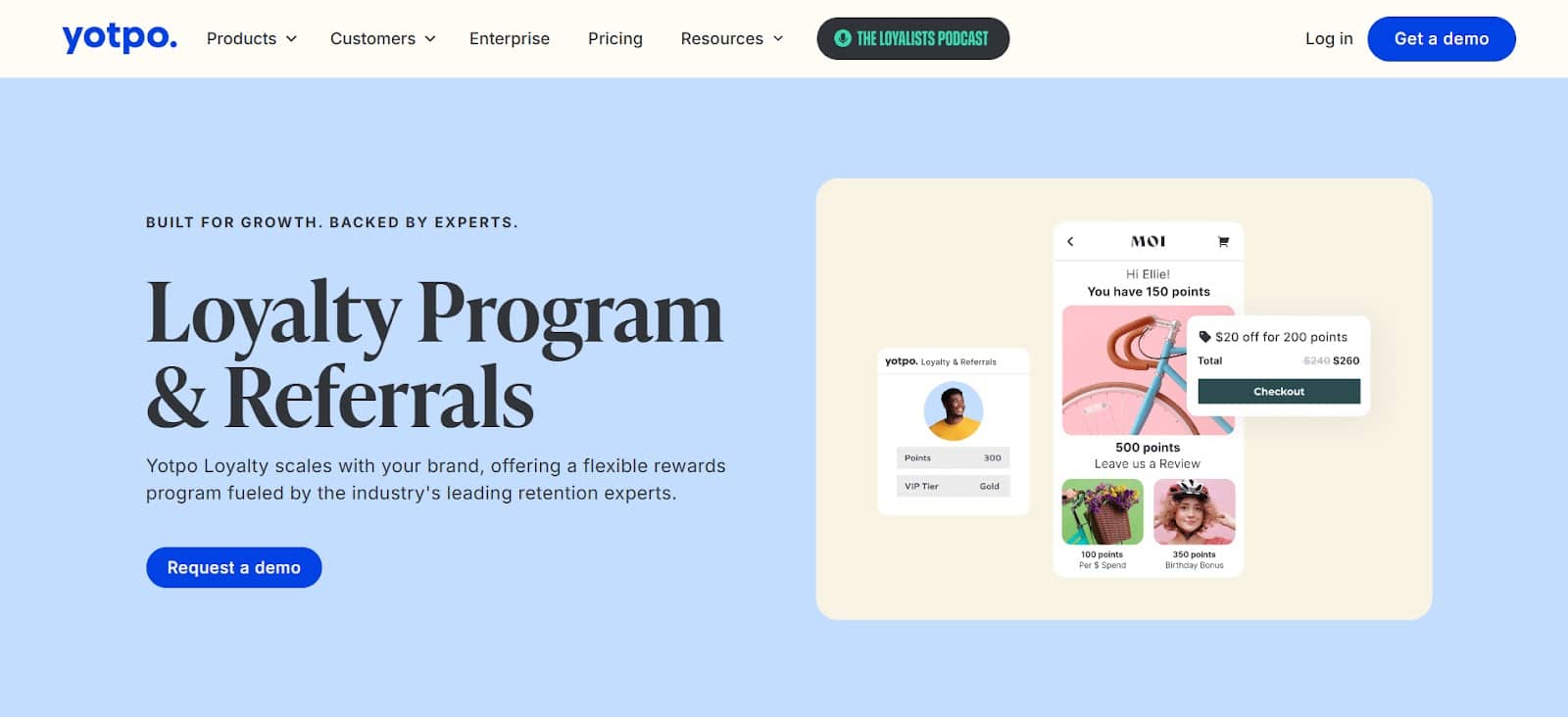
Yotpo Loyalty is a best-in-class solution for this. It gives brands a team of eCommerce loyalty experts to help build a dynamic program, all powered by a flexible platform that can quickly evolve. It offers robust reporting and segmentation capabilities that allow for truly customized customer journeys.
2. Leverage Social Proof with Customer Reviews & UGC
The Why: Trust is everything in retention.
The How:
- Proactively Request Reviews: Use automated post-purchase emails to invite customers to leave feedback.
- Showcase Reviews Prominently: Display star ratings and compelling reviews on your product and category pages.
- Create Visual Galleries: Encourage customers to share photos and videos of your products in action and feature this user-generated content (UGC) on your site.
Yotpo Reviews helps brands turn customer feedback into assets that drive conversions. It excels at collecting high-quality reviews with AI-powered tools and makes it easy to display them in strategic ways to guide shoppers. This focus on conversion helps you do more than just collect ratings; it helps you build a transparent, trustworthy brand.
3. Personalize the Customer Experience
The Why: Today’s customers expect you to know them.
The How:
- Personalized Product Recommendations: Use a customer’s purchase and browsing history to suggest products they’ll actually want.
- Segmented Communication: Group customers based on their purchase history or loyalty status to send them relevant offers.
- Leverage Loyalty Data: Use information from your loyalty program, like a customer’s VIP tier, to customize your marketing messages.
4. Provide Exceptional Customer Service
The Why: One bad service experience can lose you a customer for good. On the other hand, amazing service can turn a problem into a chance to build even stronger loyalty. How you handle issues is often more important than the issue itself.
The How:
- Be Accessible: Offer support through live chat, email, and phone so customers can reach you how they prefer.
- Be Responsive: Acknowledge inquiries quickly to show you value your customers’ time.
- Be Empowered: Give your support team the authority to solve problems efficiently without needing to escalate every issue.
5. Create a Seamless Onboarding Experience
The Why: The journey starts after the first purchase. A great onboarding process welcomes a new customer, reduces buyer’s remorse, and sets the stage for a long-term relationship.
The How:
- Welcome Email Series: Send a series of automated emails to welcome new customers, share your brand story, and invite them to join your loyalty program.
- “Getting Started” Guides: If your product requires setup, provide clear instructions or video tutorials.
- Introduce Your Loyalty Program: Make joining your loyalty program a key part of onboarding by offering bonus points for signing up.
6. Master Post-Purchase Communication
The Why: Silence after a purchase can make a customer anxious. Clear and proactive communication about their order status builds trust and keeps your brand top-of-mind.
The How:
- Instant Order Confirmation: Send a detailed confirmation email right after a purchase.
- Proactive Shipping Updates: Keep the customer in the loop with automated updates when their order ships, is out for delivery, and has arrived.
- Satisfaction Check-ins: Follow up a few days after delivery to make sure they’re happy with their purchase. This is also a great time to ask for a review.
7. Use Strategic Email and SMS Marketing
The Why: Email and SMS are your direct lines to your customers. Used correctly, they are powerful tools for driving repeat purchases and building relationships.
The How:
- Win-Back Campaigns: Re-engage customers who haven’t purchased in a while with a special offer.
- Exclusive Offers: Reward your subscribers with early access to sales or exclusive discounts.
- Celebrate Milestones: Send automated messages for customer birthdays or the anniversary of their first purchase.
Connecting Yotpo: Yotpo focuses on being the best-in-class platform for Reviews and Loyalty. To do this, it integrates seamlessly with leading communication platforms. You can use the powerful data from Yotpo Loyalty (like a customer’s VIP tier) and Reviews (like a 5-star rating) in your email and SMS campaigns on platforms such as Attentive or Klaviyo. This creates hyper-targeted messages that are far more effective.
8. Gather and Act on Customer Feedback
The Why: You can’t improve what you don’t measure. Actively asking for and analyzing customer feedback shows that you value their opinions and are committed to getting better.
The How:
- Surveys: Use metrics like Net Promoter Score (NPS) to measure overall customer satisfaction.
- Analyze Reviews: Look for recurring themes and insights in the content of your reviews, not just the star ratings.
- Listen on Social Media: Monitor comments and direct messages for unfiltered customer feedback.
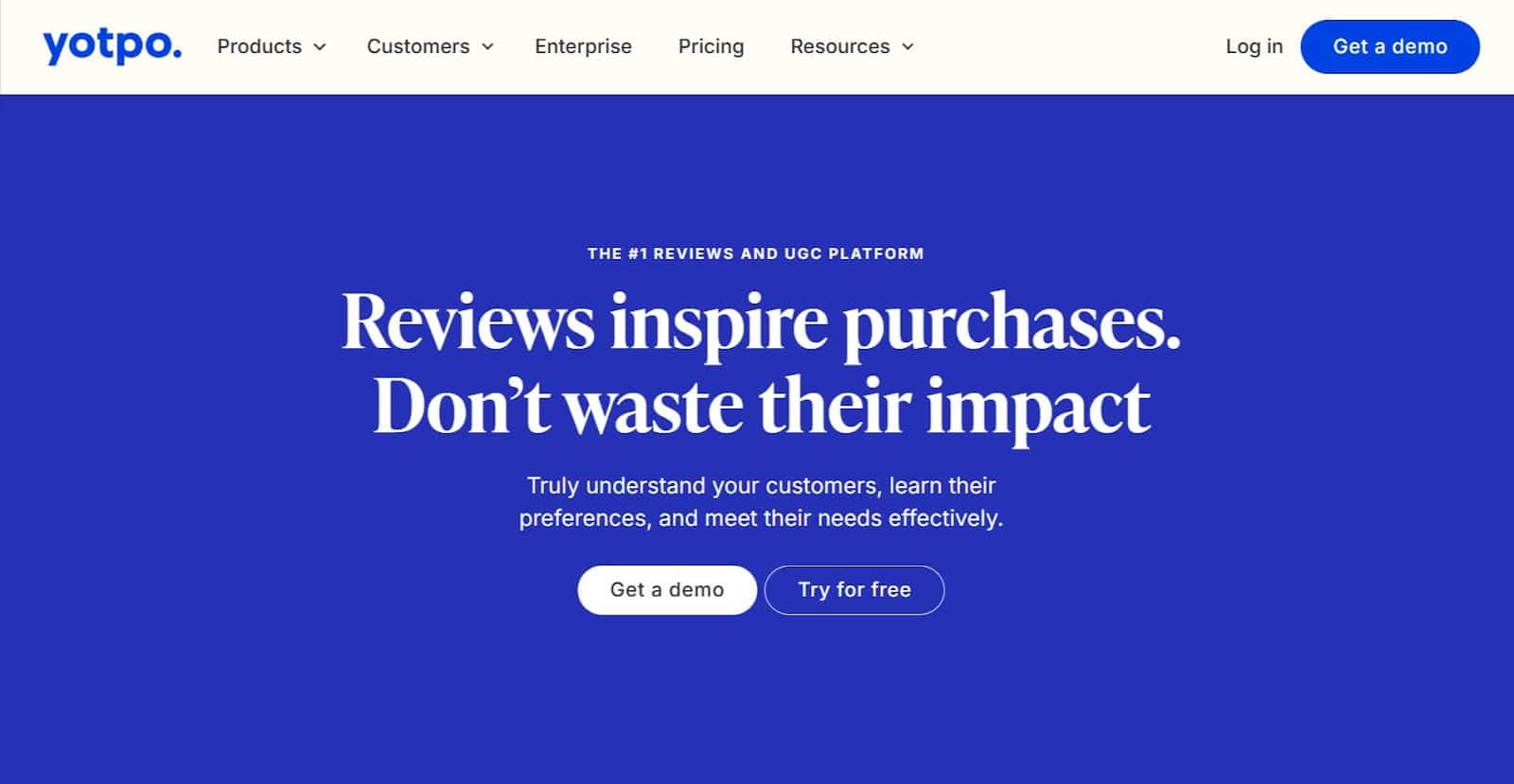
Yotpo Reviews is excellent for this. Its AI-powered insights engine can analyze thousands of reviews to automatically identify key topics and trends, turning customer feedback into actionable data.
9. Offer a Subscription Model
The Why: For brands with consumable products, a subscription model is a fantastic retention strategy. It automates repeat purchases, creates predictable revenue, and builds long-term loyalty.
The How:
- Incentivize Subscribing: Offer a discount for subscribing versus making a one-time purchase.
- Prioritize Flexibility: Make it easy for customers to pause, skip, or modify their subscriptions.
- Offer Subscriber-Only Perks: Add extra value with benefits like free shipping or early access to new products.
10. Build a Strong Brand Community
The Why: People want to connect with brands on a deeper level. A community creates a sense of belonging that turns customers into passionate advocates.
The How:
- Create Engaging Content: Share content that reflects your brand’s values and gives a behind-the-scenes look at your business.
- Foster Connection: Create a space, like a private Facebook group, where customers can connect with each other.
- Feature Your Customers: Celebrate your customers by sharing their stories and photos.
Measuring the Success of Your Retention Efforts
Improving your retention rate is an ongoing process that requires careful measurement. While CRR is your headline metric, a few other key performance indicators (KPIs) can give you a deeper understanding of your success.
- Customer Lifetime Value (CLV): The total profit you expect to earn from a customer over their entire relationship with you. This is arguably the most important retention metric.
- Repeat Purchase Rate (RPR): The percentage of customers who have made more than one purchase.
- Purchase Frequency (PF): How often, on average, a customer makes a purchase.
- Average Order Value (AOV): The average amount a customer spends per transaction.
To accurately measure your strategies, use cohort analysis. A cohort is a group of customers who made their first purchase in the same period (e.g., January 2025). By tracking different cohorts over time, you can see if your new initiatives are actually improving retention. For example, if the cohort from May (after you launched a new loyalty program) has a higher retention rate than the January cohort, you have strong evidence your strategy is working.
Conclusion: Making Retention Your Growth Engine
In today’s competitive eCommerce world, focusing on customer retention is the most reliable and cost-effective way to grow your business. It requires a shift from focusing only on acquisition to a balanced approach that prioritizes building lasting relationships.
By understanding your retention rate, calculating it accurately, and implementing these proven strategies, you can build a loyal customer base that not only buys more but also becomes a powerful advocate for your brand. An investment in retention is a direct investment in the long-term health and profitability of your store.
Frequently Asked Questions
What’s the difference between customer loyalty and customer retention?
Customer retention is the metric; it’s the result of keeping customers over time. Customer loyalty is the cause; it’s the positive emotional connection a customer has for your brand that drives retention. You build loyalty to improve retention.
How often should I calculate my customer retention rate?
For most eCommerce businesses, calculating quarterly is ideal. It helps you identify trends without overreacting to short-term changes. It’s also a good idea to calculate it annually for high-level planning.
Why are product reviews so important for a brand?
Product reviews build trust and offer social proof, which directly influences a customer’s decision to buy. They give potential shoppers real-world insights into a product’s quality and performance. For brands, reviews also boost search engine visibility and provide priceless feedback for product improvement.
What percentage of consumers read online reviews before buying?
Research shows that up to 98% of consumers read online reviews before making a purchase. This highlights just how critical social proof is in the decision-making process. Great reviews build the confidence needed to turn a browser into a buyer.
Can a B2B company use the same retention rate formula?
Yes, the formula CRR = [ (E – N) / S ] * 100 works for both B2C and B2B businesses. While the definition of a “customer” might be different, the calculation method is the same.
What is the single most effective strategy for improving retention?
While it depends on the business, implementing a well-designed loyalty and rewards program is often one of the most impactful strategies. It directly incentivizes repeat purchases and makes customers feel recognized for their business.
Can I collect photo and video reviews from customers?
Yes, and you absolutely should! Visual content from customers gives potential shoppers a much clearer, more authentic picture of your product’s quality and how it’s used in real life. This significantly boosts trust and helps shoppers feel more confident in their purchase.
Are there any tools that can help me automate retention marketing?
Yes. Platforms like Yotpo are designed to help brands automate and scale their retention efforts. Yotpo’s Loyalty and Reviews products provide the tools to reward customers, collect valuable feedback, and build a brand community—all of which are critical for a successful retention strategy.
Does Yotpo support review moderation?
Yes, effective review management includes moderation. Tools like Yotpo Reviews provide sophisticated features to manage your feedback, including manual and automatic approvals, spam detection, and profanity filters to ensure only relevant and appropriate content is published.
How do I request reviews from my customers?
The best approach is to automate your requests. You can set up triggers based on order information to send a review request email at the perfect moment after a purchase. Using customizable, mobile-friendly templates with simple forms makes it incredibly easy for customers to respond.
Can I display my reviews on Google or social media?
Yes. Syndicating your reviews to third-party platforms like Google Shopping, Facebook, and TikTok Shop is a powerful strategy. This puts your authentic user feedback right next to your products on these channels, which boosts visibility, builds trust, and increases conversions.
What kinds of on-site widgets can I use to display reviews?
You can use a variety of customizable widgets, including review carousels, star ratings, and galleries for visual content. These can be placed on product pages, category pages, or your homepage to help shoppers quickly find the most relevant social proof.
Can I collect reviews in different languages?
Absolutely. To provide a great experience for global customers, you should use a solution that supports collecting and displaying reviews in multiple languages. This includes sending review request emails in a customer’s preferred language and offering real-time translation on your review widgets.


 Join a free demo, personalized to fit your needs