










While acquiring new customers is a fundamental growth strategy, it is also an expensive one. The key to sustainable, profitable growth often resides with the customers you have already converted. Encouraging a first-time buyer to return for a second, third, or fourth purchase is where significant business value is unlocked. This is why understanding your Repeat Customer Rate (RCR) is one of the most impactful analyses you can perform for your business.
Key Takeaways
- Indicator of Health: Your Repeat Customer Rate (RCR) is a direct measure of customer satisfaction and brand health. A higher rate signals that your products and customer experience are meeting expectations.
- Drives Profitability: Retaining existing customers is far more cost-effective than acquiring new ones. Repeat customers also tend to spend more over time, boosting your Average Order Value (AOV) and Customer Lifetime Value (LTV).
- Simple Calculation: You can calculate your RCR with a straightforward formula: (Number of Customers with More Than One Purchase ÷ Total Number of Unique Customers) × 100.
- Actionable Strategies: Improving your RCR requires a deliberate focus on building trust through authentic social proof and creating compelling incentives with a strategic loyalty program.
In this guide, we will provide a comprehensive breakdown of this vital metric. We will explore its critical importance, explain how to calculate it accurately, and detail proven strategies for its improvement.
Why Your Repeat Customer Rate is a Critical Ecommerce Metric
Your Repeat Customer Rate is not merely another number to track. It serves as a direct indicator of your brand’s health and long-term viability. When customers return to buy from you again, it confirms that your products, service, and overall experience meet market expectations. Let’s examine why this metric warrants your full attention.
Drives Higher Profitability
Retaining a customer is significantly more cost-effective than acquiring a new one. Marketing expenditures to reach an existing customer base are substantially lower because these individuals are already familiar with your brand and trust your products. Furthermore, repeat customers tend to spend more over time. They exhibit higher confidence in their purchasing decisions, which leads to a greater average order value (AOV) and strengthens your bottom line.
Boosts Customer Lifetime Value (LTV)
Customer Lifetime Value represents the total revenue a brand can expect from a single customer throughout their entire relationship. A higher repeat customer rate has a direct and positive correlation with a higher LTV. Each subsequent purchase a customer makes increases their lifetime value. By focusing on strategies that encourage repeat business, you are making a direct investment in the long-term financial health of your company.
Lowers Customer Acquisition Cost (CAC)
If your business model depends solely on new customer acquisition, your growth is tied to a constantly escalating marketing budget. By improving your RCR, you generate a more stable and predictable revenue stream from your existing customer base. This reduces your dependency on costly acquisition channels, such as paid advertising, and facilitates more efficient growth. A robust retention strategy functions as a powerful economic engine for your brand.
Creates Brand Advocates
Happy, loyal customers do more than purchase your products—they become advocates. Satisfied repeat buyers are your most authentic and effective marketers. They leave positive reviews, recommend your brand to friends and family, and post about their experiences on social media. This word-of-mouth marketing is incredibly valuable for building trust and attracting new, high-quality customers.
How to Track and Calculate Your Repeat Customer Rate
Before you can improve your RCR, you need a solid understanding of what it is and how to measure it with precision. Let’s review the specifics.
What Exactly is Repeat Customer Rate?
Your Repeat Customer Rate measures the percentage of your customer base that has made more than one purchase from your store within a defined time frame. It is a clear method for quantifying how many of your buyers remain engaged with your brand post-purchase.
It is important not to confuse this metric with purchase frequency, which measures how often an average customer buys. RCR focuses specifically on the proportion of your total customers who have transitioned from a one-time shopper into a repeat buyer.
The Formula for Calculating Repeat Customer Rate
The calculation is direct and uncomplicated. Use the following formula:
- Repeat Customer Rate = (Number of Customers with More Than One Purchase ÷ Total Number of Unique Customers) × 100
To ensure clarity, let’s walk through a practical example.
Step-by-Step Calculation:
- Define Your Time Period: First, determine the timeframe for your analysis. This could be a quarter, six months, or a full year. For this example, we will use the most recent fiscal quarter.
- Count Your Unique Customers: Analyze your sales data for the last quarter to determine the total number of individual customers who made a purchase. Assume you had 5,000 unique customers.
- Count Your Repeat Customers: Next, filter that customer list to identify how many of those 5,000 individuals made two or more purchases during that same period. Let’s say you find that 1,250 of them returned for at least a second purchase.
- Apply the Formula:
- RCR = (1,250 ÷ 5,000) × 100
- RCR = 0.25 × 100
- RCR = 25%
In this scenario, your Repeat Customer Rate for the quarter is 25%.
How to Track the Necessary Data
Obtaining the data for this formula is more accessible than you might think. Most e-commerce platforms have built-in analytics that can provide this information.
- Ecommerce Platforms: Systems like Shopify and BigCommerce typically offer reports that show customer behavior, including repeat purchase rates, often found within their “Analytics” or “Customers” sections.
- CRM Systems: If you utilize a Customer Relationship Management (CRM) tool, it will almost certainly possess the reporting capabilities to track unique and repeat buyers.
What’s a Good Repeat Customer Rate? (Industry Benchmarks)
Once you have calculated your rate, the next question is whether it is competitive. The answer depends heavily on your industry and the types of products you sell.
- Consumables (e.g., Cosmetics, Food & Beverage): These industries naturally see higher RCRs, often in the 30-40% range, as customers need to replenish products regularly.
- Fashion & Apparel: Repeat business is also strong in this sector, with benchmarks frequently falling between 25-35%.
- Electronics & High-Ticket Items: For products with a longer lifecycle, a lower RCR is standard. A rate between 10-20% might be considered excellent.
The primary goal should be to benchmark against your own historical performance. Calculate your current rate and focus on implementing strategies to improve it over time.
How to Improve Your Repeat Customer Rate
Knowing your RCR is the first step. The next, and most crucial, is to improve it. This requires a deliberate strategy focused on building trust, creating incentives, and maintaining a meaningful dialogue with your customers.
Build a Foundation of Trust with Yotpo Reviews
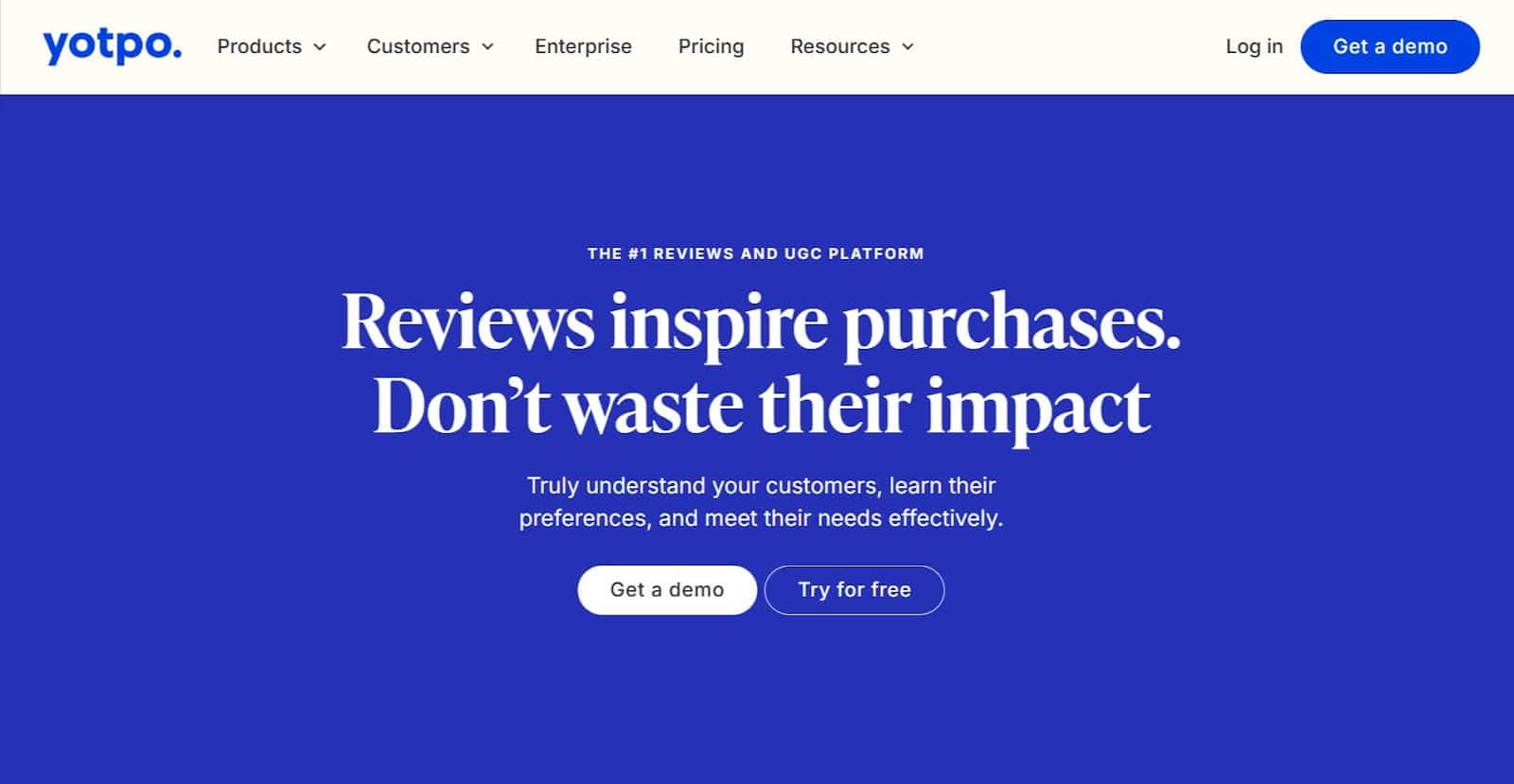
A customer is unlikely to make a second purchase if their first experience is unsatisfactory. The journey to a higher repeat customer rate begins with ensuring the initial purchase meets or exceeds expectations. This is where social proof, in the form of customer reviews, becomes indispensable.
Yotpo Reviews is a best-in-class solution for building unwavering trust from the very first interaction. When new shoppers see authentic feedback from previous customers, it validates their decision and establishes a positive foundation for their entire experience.
Here’s how Yotpo Reviews helps solidify that crucial first purchase, paving the way for future ones:
- Collect High-Impact Feedback: Yotpo helps you collect reviews that are genuinely helpful. Through automated and customizable review request emails, you can gather detailed feedback, including photos and videos. This visual user-generated content (UGC) shows your products in a real-world context, dramatically increasing a new shopper’s confidence.
- Strategic On-Site Display: Collecting reviews is only part of the process; showcasing them effectively is paramount. Yotpo offers a suite of customizable widgets you can place on your homepage, category pages, and product pages. Features like smart sorting, which displays the most helpful reviews first, allow shoppers to quickly find the information they need.
- Gain Deeper Insights: Yotpo provides analytics that extend beyond basic star ratings. You can analyze customer sentiment to identify what customers appreciate about your products and where you can improve. Addressing this feedback demonstrates that you are listening and leads to a better product and customer experience—a direct driver of repeat business.
Create Powerful Incentives with Yotpo Loyalty & Referrals
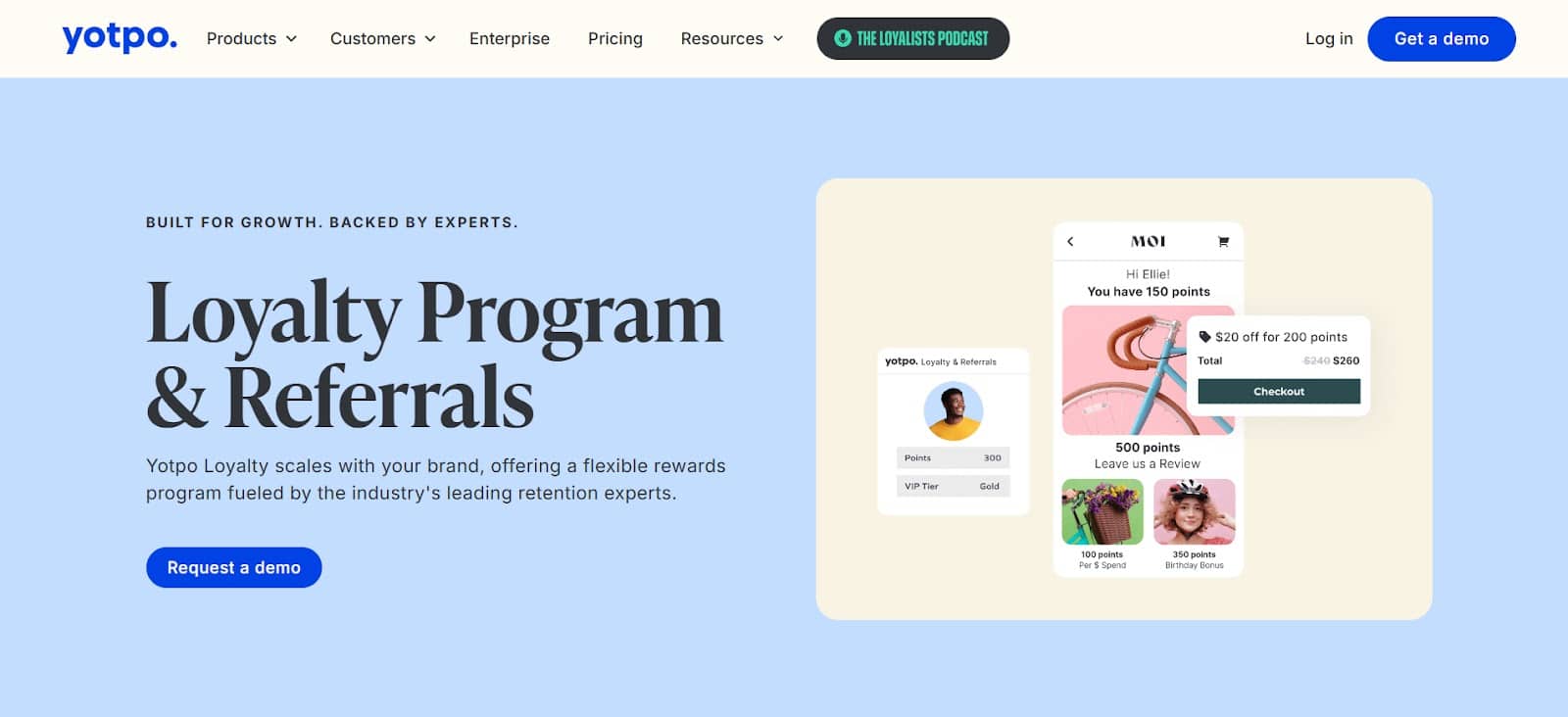
The most direct method for encouraging repeat purchases is to provide customers with a clear and compelling reason to return. A well-designed loyalty program transforms the transactional nature of e-commerce into a relational one.
Yotpo Loyalty is engineered to help you build customized loyalty and referral programs that actively drive up your repeat customer rate. It moves beyond simple models to create engaging experiences that cultivate an emotional connection with your brand.
Here’s how Yotpo Loyalty empowers you to boost your RCR:
- Flexible & Customizable Programs: Every brand is unique, and your loyalty program should reflect that. Yotpo Loyalty offers deep customization, allowing you to create unique earning and spending rules. You can reward customers for purchases and for non-transactional engagements like writing a review or following on social media.
- Strategic VIP Tiers: You can create tiered programs that offer escalating benefits to your most valuable customers. As customers increase their spending, they unlock exclusive rewards, early access to sales, or free shipping. This gamification encourages them to consolidate their spending with your brand.
- Expert Strategic Guidance: Building an effective loyalty program can be challenging. Yotpo provides a partnership approach, offering access to e-commerce loyalty experts who provide strategic guidance to ensure your program is optimized for maximum ROI.
- Robust Reporting and Insights: Yotpo Loyalty includes powerful reporting tools that track key metrics like your repeat purchase rate, reward redemptions, and the overall financial impact of your program.
Conclusion
Your Repeat Customer Rate is more than a metric; it is a reflection of your brand’s ability to build lasting customer relationships. While new customer acquisition will always be part of the growth equation, a focus on retention is the key to building a profitable and resilient e-commerce business. By delivering an outstanding initial experience, creating compelling incentives, and maintaining personalized communication, you can convert one-time shoppers into loyal brand advocates.
Improving this rate requires a dedicated strategy, but the rewards—including higher LTV, lower CAC, and predictable revenue—are well worth the effort. Best-in-class tools like Yotpo Reviews and Yotpo Loyalty provide the solutions needed to execute a retention strategy that drives sustainable growth.
Frequently Asked Questions
What is the difference between repeat customer rate and purchase frequency?
Repeat Customer Rate (RCR) measures the percentage of unique customers who have made more than one purchase in a specific period. It answers, “What portion of my customers came back?” Purchase frequency, on the other hand, measures the average number of times a customer buys within that same period. It answers, “How often do my customers buy?”
How does a high repeat customer rate impact profitability?
A high RCR boosts profitability in several ways. First, it costs significantly less to retain an existing customer than to acquire a new one, lowering your marketing expenses. Second, repeat customers tend to have a higher average order value (AOV) and a greater lifetime value (LTV), generating more revenue per customer.
What are the most common reasons customers don’t make a second purchase?
Common reasons include a poor first experience with the product, slow or expensive shipping, unresponsive customer service, or a lack of follow-up engagement from the brand. If a customer feels their first purchase was a simple, forgotten transaction, they have little incentive to return.
How can I use customer feedback to increase my RCR?
Customer feedback, especially from reviews, is a goldmine of information. Use positive reviews as social proof on your product pages to build trust. Analyze negative feedback to identify and fix issues with your products or service. Acting on feedback shows customers you value their opinions, which builds loyalty.
Are loyalty programs effective for all types of e-commerce businesses?
Yes, loyalty programs can be adapted for nearly any e-commerce business. For brands selling consumable goods, a points-per-purchase system works well. For businesses selling high-ticket items with a long purchase cycle, a program rewarding engagement, referrals, and smaller purchases can be very effective.
What role does customer service play in improving RCR?
Customer service plays a massive role. A single positive support interaction can turn a frustrated customer into a loyal advocate. Responsive, helpful, and empathetic service builds trust and shows that you stand behind your products, making customers feel confident about buying from you again.
How soon after a first purchase should I try to re-engage a customer?
The ideal timing depends on your product. For most businesses, a post-purchase follow-up within 24-48 hours is a good start. This could be a “thank you” email, a request for a review, or tips on how to use their new product. The goal is to reinforce their purchase decision and keep the conversation going.
Can personalized marketing improve my repeat customer rate?
Absolutely. Personalization makes customers feel seen and valued. Use a customer’s purchase history to recommend complementary products or send them exclusive offers related to their interests. This level of relevance is far more effective than generic marketing blasts and directly encourages repeat business.
What are some simple perks I can offer to encourage repeat business?
Simple but effective perks include offering free shipping on their next order, providing early access to new product launches or sales, or including a small, unexpected gift in their second shipment. These gestures make returning customers feel special and appreciated.
How do customer reviews directly influence repeat purchases?
Reviews build the trust necessary for both first-time and repeat purchases. When a customer is considering a second purchase, seeing recent, positive reviews reinforces their confidence in your brand. It confirms that your quality is consistent and that other shoppers continue to have good experiences.
Should I focus more on acquiring new customers or retaining existing ones?
While both are important, many experts argue that a focus on retention offers a better ROI. Acquiring a new customer can cost five times more than retaining an existing one. A balanced strategy is best, but investing in keeping your current customers happy is the foundation of sustainable growth.
How does a tiered loyalty program help increase RCR?
Tiered loyalty programs gamify the shopping experience. Customers are motivated to spend more to unlock the exclusive benefits of the next tier, such as better rewards, free shipping, or exclusive access. This encourages them to consolidate their spending with your brand instead of shopping with competitors.
What’s the best way to track my RCR over time?
The best way is to calculate it consistently over set timeframes, such as monthly or quarterly. By tracking it this way, you can identify trends, see how your RCR changes seasonally, and measure the direct impact of new retention strategies you implement.



 Join a free demo, personalized to fit your needs