













An eCommerce transaction represents a pivotal moment in the customer journey. While securing a sale is the primary objective, the moments immediately following a purchase offer a unique opportunity to deepen the customer relationship. A well-executed post-purchase upsell capitalizes on high buyer intent to increase average order value while delivering tangible value to the customer. This strategy is not merely about increasing revenue; it is about fundamentally enhancing the customer experience.
Key Takeaways
- Timing is Everything: The best moment to offer an upsell is immediately after a customer completes their purchase on the order confirmation page. Their buying intent is at its highest, and the core sale is already secure.
- Relevance and Simplicity Win: Successful upsells are highly relevant to the original purchase and incredibly simple to accept. A “one-click” offer that doesn’t require re-entering payment details is essential for high conversion rates.
- Go Beyond AOV: While post-purchase upsells boost Average Order Value (AOV), their true value lies in increasing Customer Lifetime Value (LTV). They improve product discovery and enhance the overall customer experience.
- Data is Your Best Guide: Use your store’s analytics to identify which products are frequently bought together. Data-driven offers based on actual purchasing patterns outperform guesswork every time.
- Leverage Social Proof and Loyalty: Integrating customer reviews into your upsell offer builds trust and validates the purchase. Offering loyalty points as a reward for accepting the upsell provides a powerful incentive.
This guide explores the best practices, flows, and examples to master this technique.
What Exactly is a Post-Purchase Upsell? (And Why It’s Not Just Another Sales Tactic)
In eCommerce, marketing terminology can often be used interchangeably. To build an effective strategy, it is essential to establish a clear and precise understanding of the post-purchase upsell.
Defining the Post-Purchase Upsell
A post-purchase upsell is an offer presented to a customer after they have completed their initial transaction but before they navigate away from the order confirmation page. The timing is the critical element. The customer has already provided their payment information and successfully completed a purchase, establishing a baseline of trust. The offer is typically presented as a “one-click” addition, enabling the customer to accept it without re-entering shipping or payment details.
This frictionless process capitalizes on the moment of peak buyer intent. The customer is satisfied with their purchase, and their trust in the brand is high. This opportune moment is ideal for presenting a relevant, high-value offer that complements their original purchase.
Upsell vs. Cross-Sell: A Critical Distinction
It is important to differentiate between upsells and cross-sells, as they serve distinct strategic purposes.
- Upsell: An upsell encourages a customer to purchase a more premium or upgraded version of an item. For example, offering a 24-ounce bag of coffee instead of the 12-ounce bag they considered.
- Cross-Sell: A cross-sell involves offering a complementary product that pairs well with the item the customer has already acquired. If a customer buys a camera, a logical cross-sell is a memory card or a camera bag.
While both strategies are valuable, the post-purchase window is particularly effective for low-friction cross-sells that “complete the set” for the customer.
The Real Value: Beyond Just Increasing AOV
While the most immediate benefit of a post-purchase upsell is an increase in Average Order Value (AOV), its true impact is far more strategic and contributes to sustainable growth.
- Enhanced Customer Experience: A relevant and helpful upsell offer is perceived not as a sales pitch, but as a personalized recommendation from a brand that understands the customer’s needs.
- Increased Customer Lifetime Value (LTV): Introducing customers to more of your product catalog increases the probability of them discovering additional items they value. A successful upsell can convert a one-time buyer into a loyal, repeat customer.
- Improved Product Discovery: Customers may not be aware of a brand’s full product range. The post-purchase flow provides a low-pressure context to showcase other relevant items.
- Higher Profit Margins: Because customer acquisition costs are not incurred on the upsell item, its profit margin is substantially higher.
In essence, the post-purchase upsell is a strategic tool that, when implemented correctly, boosts immediate revenue while fostering stronger, more profitable long-term customer relationships.
The Anatomy of a High-Converting Post-Purchase Upsell Flow
A successful post-purchase upsell is the result of a meticulously designed flow that simplifies the customer’s decision-making process. The following components are essential for its structure.
The Trigger: Right After the “Thank You”
Timing is a critical factor. The optimal moment to present an upsell is immediately after the initial transaction is confirmed on the order confirmation or “thank you” page. At this stage, the customer is experiencing the satisfaction of their purchase and remains highly engaged.
This contrasts with pre-purchase upsells, which can introduce friction before the primary sale is secured, potentially increasing cart abandonment rates. By waiting until after the purchase, you secure the core sale first.
The Offer: Making It Irresistible
The offer is the core of the upsell. It must be compelling, relevant, and exceptionally easy to accept.
- Relevancy is King: A generic offer will be ineffective. The upsell must feel like a logical extension of the original purchase. Analyze purchasing data to identify product affinities. For instance, if a customer purchases a specific shampoo, offering the matching conditioner is a helpful and logical cross-sell.
- The “One-Click” Rule: This is an essential requirement. The customer has already entered their shipping and payment information. Your upsell platform must allow them to add the new item to their existing order with a single click.
- Exclusivity and Scarcity: Frame the offer as a special, time-sensitive opportunity. Language such as “Exclusive Post-Purchase Offer” or “Add this now—this offer is not available elsewhere” creates a sense of urgency. A countdown timer can further encourage immediate action.
Best Practices for Crafting Post-Purchase Upsell Offers That Convert
Executing an upsell flow for maximum conversions requires adherence to proven best practices. These principles can help transform a standard upsell strategy into a highly profitable one.
- Master Your Product Data: The most effective upsell ideas originate from data, not assumptions. Analyze your store’s analytics to identify purchasing patterns. Which products are most frequently purchased together? What are your best-sellers that have a logical complementary product?
- Segment Your Customers Intelligently: A one-size-fits-all approach is ineffective. Segment your offers based on customer data. For example, a first-time buyer may respond well to an introductory cross-sell, while a loyal customer might be a better candidate for a higher-value upsell.
- Personalize Everything: Use the customer’s name and reference the specific product they just purchased. For example, “Jane, would you like to add the matching silk pillowcase to your new sheet set?” This approach makes the offer feel less automated and more like a personal recommendation.
- Keep the Offer Simple and Clear: A customer should be able to understand the offer and its value in seconds. Use a clear headline, compelling visuals, concise copy, and an obvious call-to-action (CTA) like “Add to My Order for $19.99”.
- Optimize for Mobile First: A significant portion of eCommerce traffic originates from mobile devices. Your post-purchase upsell page must be designed for a flawless mobile experience, featuring large buttons, readable text, and a simple layout.
- A/B Test Your Offers Rigorously: The optimal upsell formula is discovered through continuous testing. Test the offer, the discount, the copy, and the design. Track the take rate (the percentage of customers who accept the offer) for each variant.
Top Post-Purchase Upsell Apps & Tools
Choosing the right technology is key to implementing a seamless post-purchase upsell strategy. Several apps and platforms specialize in this area, each with different strengths. While not a dedicated upsell app, Yotpo provides the foundational elements that make upsell offers more powerful and persuasive.
Yotpo Loyalty allows you to incentivize upsells by offering bonus points, which reframes the purchase as a rewarding action. With Yotpo Reviews, you can embed 5-star reviews and visual customer content directly into your offer, providing the social proof needed to build trust and drive conversions. This approach turns a simple offer into a relationship-building opportunity.
When evaluating options, consider how each tool integrates with your existing marketing stack and whether it supports the deeper strategic goals of enhancing customer experience and building loyalty.
Integrating Reviews and Loyalty into Your Upsell Strategy
An exceptional upsell strategy integrates elements of social proof and customer loyalty to make the offer more compelling and build brand affinity.
Using Social Proof to Validate the Upsell Offer
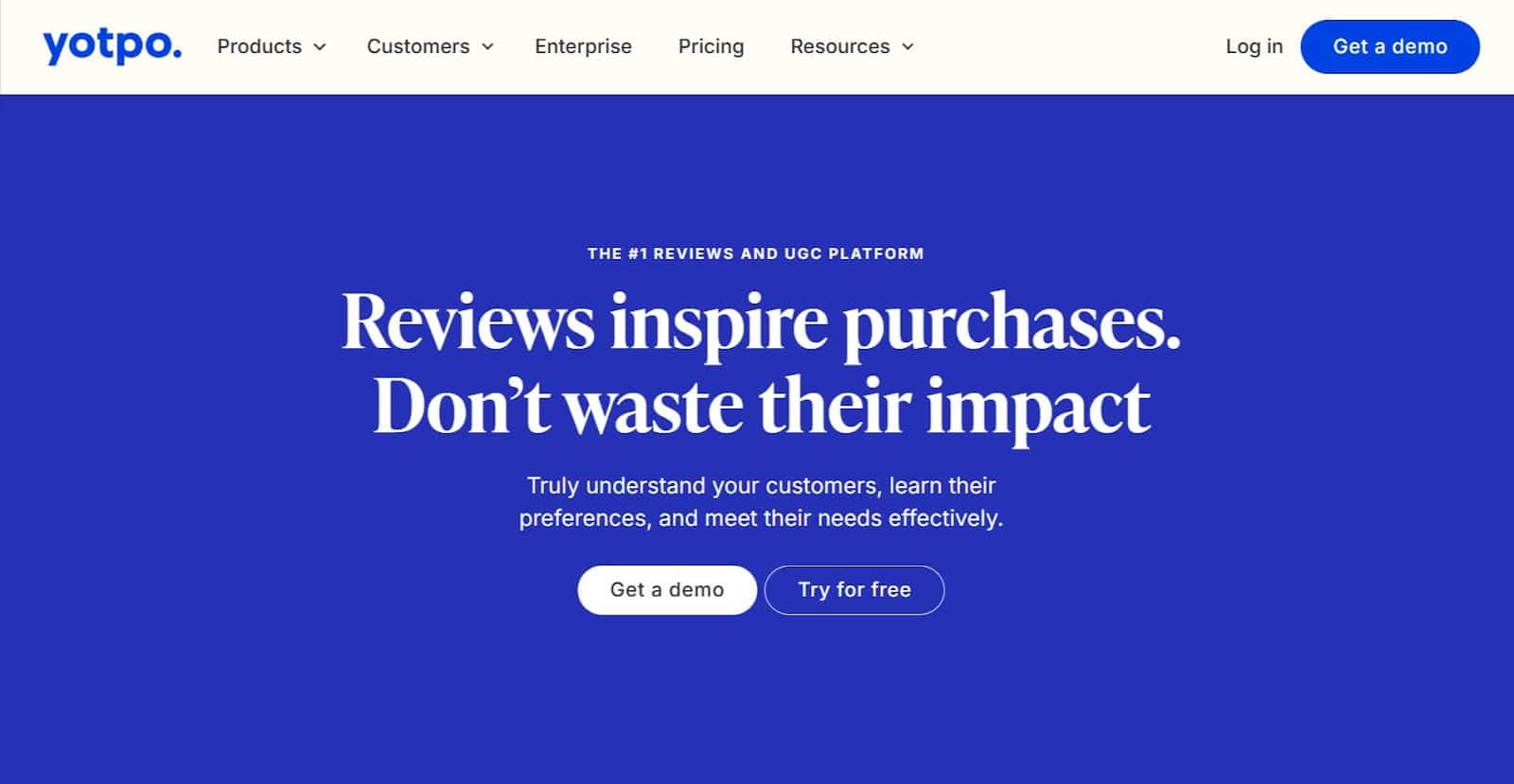
When presented with a post-purchase offer, a customer evaluates its value in seconds. Customer reviews are a powerful tool for answering potential questions and validating the offer’s quality. Instead of simply showing the product, showcase what other customers think about it.
With Yotpo Reviews, you can seamlessly integrate this social proof directly into the upsell offer.
- Strategic Review Display: Embed a reviews widget directly on the post-purchase offer page. These widgets can be configured to display only 4- and 5-star reviews, immediately building shopper confidence.
- AI-Powered Summaries: Yotpo’s AI Reviews Summary widget analyzes all reviews for the upsell product and generates a concise summary of key themes (e.g., “Customers praise the ‘long-lasting battery’ and ‘premium feel'”).
- Visual UGC: Featuring photo or video reviews of the upsell product can be more persuasive than a standard product shot. Seeing the product in a real-world context significantly boosts confidence.
Rewarding Purchases with a Loyalty Program
A loyalty program adds another powerful dimension to an upsell strategy. It allows you to frame the upsell not just as a purchase, but as an opportunity for the customer to earn valuable rewards.
Yotpo Loyalty is designed as a strategic tool to drive specific customer behaviors, including the acceptance of an upsell offer.
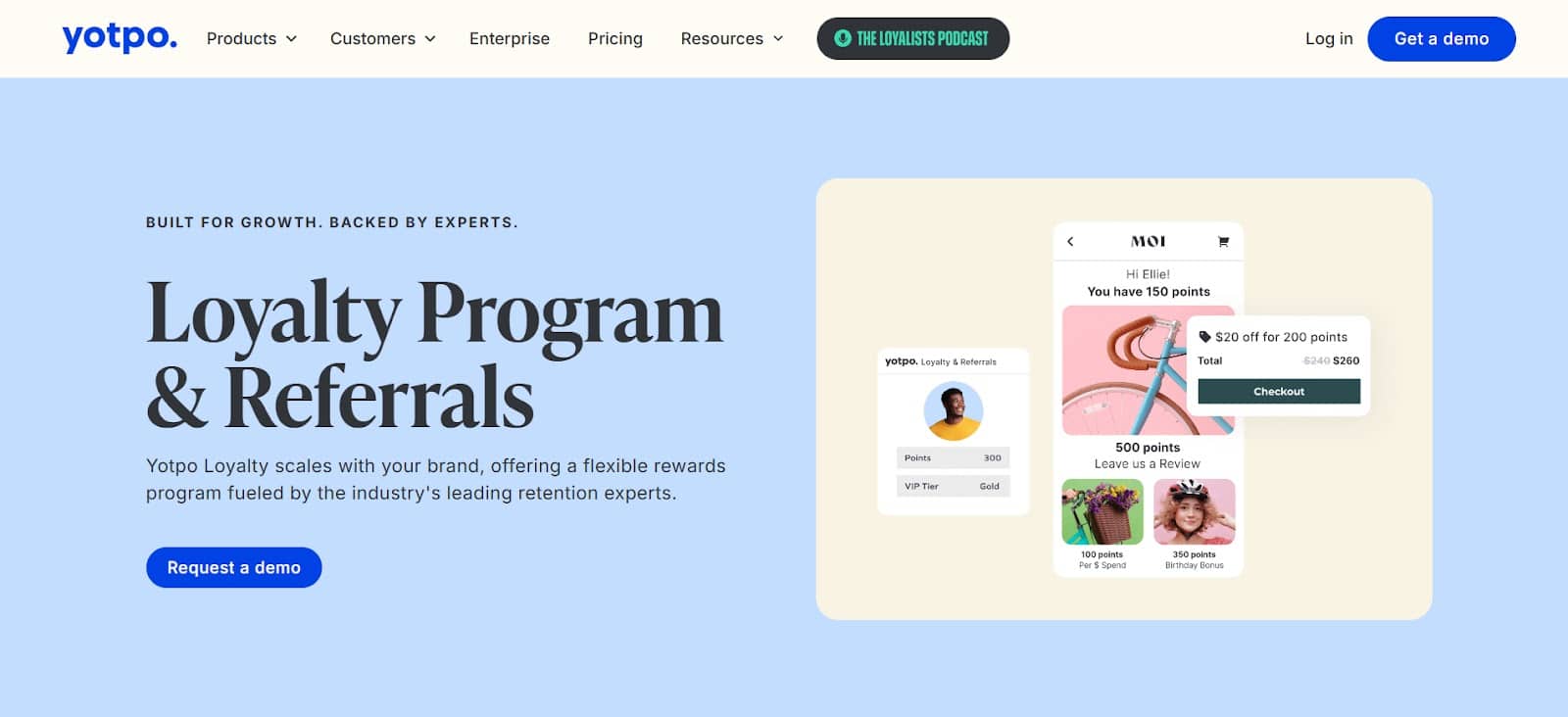
- Incentivize with Points: Offer bonus points for accepting the post-purchase offer. The copy can change from “Add this for $19.99” to “Add this for $19.99 and earn 100 bonus points!” This reframes the cost by adding a clear, immediate benefit.
- Unlock VIP Tiers: Use an upsell to graduate a customer into the next tier of your loyalty program. For example, “You’re only $20 away from our VIP tier! Add this product to unlock free shipping for a year.” This turns the upsell into a gateway for long-term benefits.
- Strategic Guidance: Yotpo Loyalty provides a partnership approach, offering guidance from eCommerce loyalty experts to help you design the most effective incentive structures for your business goals.
Top Examples of Effective Post-Purchase Upsells in Action
Theoretical concepts are best understood through practical examples. Here are four classic post-purchase upsell models that can be adapted for various businesses.
- The “Complete the Set” Cross-Sell (Fashion/Beauty): A customer buys a bottle of high-end facial cleanser. The post-purchase offer presents the matching toner and moisturizer from the same product line, often at a slight bundle discount.
- The “Subscription” Upsell (Consumables): A customer buys a bag of premium coffee beans. The offer is to “Convert this purchase to a monthly subscription and save 20% on every order.” This transforms a one-time purchase into recurring revenue.
- The “Product Protection” Upsell (Electronics/High-Ticket Items): A customer buys new expensive headphones. The offer is to “Add a 2-Year Extended Warranty with Accident Protection for only $29.99.” This provides peace of mind and is a high-margin service.
- The “Next Level” Upgrade (Apparel/Gear): A customer buys a standard yoga mat. The offer is to “Upgrade to our Pro-Grip Yoga Mat for just $15 more!” This represents a small incremental cost for a substantial perceived benefit.
Measuring the Success of Your Post-Purchase Upsell Strategy
Continuous improvement requires diligent measurement. A successful upsell program depends on tracking key metrics to understand performance and identify opportunities for optimization.
- Take Rate (or Conversion Rate): The percentage of customers who are shown an upsell offer and accept it. This is your most important top-level metric.
- Average Order Value (AOV) Lift: Calculate the AOV for orders with an upsell and compare it to orders without one. The difference is your AOV lift.
- Total Revenue Generated: Track the gross revenue generated directly from accepted upsell offers.
- Customer Lifetime Value (LTV): Track whether customers who accept an upsell have a higher LTV than those who do not. This demonstrates the strategy’s impact on customer retention.
By regularly reviewing these metrics, you can make data-backed decisions to refine offers, improve take rates, and maximize the profitability of your post-purchase upsell program.
Conclusion: Turning a Transaction into a Relationship
The post-purchase upsell is one of the most powerful and often underutilized tools in eCommerce marketing. It is far more than a simple tactic to increase AOV. When executed with a focus on the customer, it enhances their experience and introduces them to more of the value a brand has to offer.
By understanding data, crafting relevant offers, and integrating social proof and loyalty, brands can transform the moment after the sale. A simple transaction can become the starting point of a longer, more profitable customer relationship.
Frequently Asked Questions
What is the best timing for a post-purchase upsell offer?
The optimal time is immediately following the initial purchase, on the “thank you” or order confirmation page. At this point, buyer intent is at its peak and the customer is still engaged with your site.
How many upsell offers should I show a customer?
To avoid choice paralysis, it is best practice to present a single, highly relevant upsell or cross-sell offer. Overwhelming the customer with too many options typically results in them choosing none.
Will post-purchase upsells increase my return rate?
If the offers are irrelevant, they can. However, when the strategy focuses on genuinely helpful offers that enhance the original purchase, the impact on return rates should be minimal. Always monitor the return rate of upsold items.
Can I offer an upsell on the checkout page itself?
This is known as a pre-purchase upsell and it carries risk. Adding new offers during checkout can introduce friction and increase cart abandonment. The post-purchase upsell is safer because it secures the primary sale first.
What makes an upsell offer compelling?
A compelling offer is relevant, presents clear value, and creates a sense of exclusivity. A slight discount, framing it as a “customer-only” deal, or showing a countdown timer can all increase its appeal.
Should I upsell a more expensive item or cross-sell a related one?
This depends on your products. For items that have clear upgrades (e.g., standard vs. pro version), an upsell works well. For most products, a complementary cross-sell (e.g., shampoo and conditioner) feels more natural and helpful.
How do I know which products to offer as an upsell?
Dive into your sales data. Look for “frequently bought together” patterns in your analytics. This data-driven approach is far more effective than guessing what customers might want.
Is a discount necessary for a successful post-purchase upsell?
Not always, but it helps. The main draw is convenience and relevance. However, a small discount (10-15%) can significantly increase the take rate by making the offer feel more exclusive and urgent.
How can I use social proof in my upsell offer?
Embed a 5-star review or a customer photo directly next to the upsell product. Seeing that other people have purchased and loved the item builds instant trust and reduces hesitation.
How does a loyalty program help with upsells?
A loyalty program adds an incentive layer. Offer bonus points for accepting the upsell. This frames the action as a reward, making customers more likely to say yes and strengthening their connection to your brand.
What’s the difference between a post-purchase upsell and a down-sell?
An upsell offers a more expensive or additional item. A down-sell is a fallback offer presented if the customer declines the initial upsell. It typically involves a less expensive item to still capture some additional revenue.
How important is mobile optimization for upsell pages?
It is absolutely critical. A majority of eCommerce shopping happens on mobile. If your offer page is difficult to navigate on a small screen, your conversion rate will suffer dramatically. Use large buttons and concise text.
What is a good take rate for post-purchase upsells?
A common benchmark for a well-optimized post-purchase upsell is a take rate of around 10-15%. However, this can vary widely based on your industry, offer relevance, and price point. Start by tracking your baseline and aim for continuous improvement through A/B testing.


 Join a free demo, personalized to fit your needs