











The era of the one-size-fits-all loyalty program has ended. Today’s customers look for relationships, not just transactions, and they expect brands to understand their unique needs and preferences. In the competitive eCommerce landscape, personalized rewards are no longer a novelty. They are the foundation of genuine, lasting customer loyalty.
Key Takeaways
- Personalization Drives Connection: Moving beyond generic points systems to offer tailored rewards makes customers feel seen and valued, strengthening their emotional bond with your brand.
- Data is the Foundation: A successful program relies on ethically collected transactional, behavioral, and preference data to create meaningful customer segments.
- Strategic Rewards Matter: A mix of tier-based, behavioral, and surprise rewards keeps customers engaged and encourages a wide range of value-driving actions beyond just purchasing.
- Technology is a Must: Executing a personalized loyalty strategy at scale requires a powerful and flexible technology partner to automate segmentation, rewards, and analytics.
- Measure and Iterate: The most successful loyalty programs are dynamic. They require continuous monitoring of key metrics like repeat purchase rate and customer lifetime value to ensure a positive ROI.
This guide provides a comprehensive look at how you can move beyond generic points systems. You can create a personalized rewards program that resonates with your audience, drives retention, and fuels sustainable growth for your business.
The Limitations of Generic Rewards
For years, the standard loyalty model was simple: spend a dollar, get a point. While straightforward, this approach fails to recognize the individual customer. It treats your most valuable brand advocate the same as a first-time shopper. In a world of endless choice, this impersonal strategy is becoming less effective.
The Psychology of Personalization
At its core, personalization taps into a fundamental human need: the desire to be seen and valued. When a brand offers a reward that aligns with a customer’s past purchases or interests, it sends a powerful message: “We know you, and we appreciate you.”
This act of recognition accomplishes several key objectives:
- It strengthens the emotional connection as customers feel a stronger bond with brands that make them feel understood.
- It reduces choice paralysis by presenting a curated reward that is more appealing than a vast, generic catalog.
- It builds trust by demonstrating that you are paying attention and are committed to providing value, which builds confidence in your brand.
Feeling appreciated is a powerful motivator. When customers feel a brand genuinely cares about their experience, they are far more likely to remain loyal.
The Business Cost of Impersonal Experiences
Failing to personalize your loyalty strategy is not just a missed opportunity; it carries significant business costs. Brands that stick to generic rewards often face challenges that directly impact their bottom line.
- Higher Customer Churn: If customers do not feel valued, they have little reason to stay. A competitor with a more personalized offer can easily persuade them to switch their allegiance.
- Lower Program Engagement: A loyalty program is only effective if customers use it. Uninspiring, generic rewards lead to low redemption rates and a program that fails to deliver results.
- Missed Revenue Opportunities: Impersonal programs do not use customer data for strategic upselling and cross-selling. This means missing the chance to recommend a product they might love or encourage a higher spend to reach a meaningful, personalized reward.
To succeed today, brands must embrace a more tailored, data-driven approach to loyalty.
The Foundation: Gathering and Using Customer Data
A successful personalized rewards program runs on data. The more you understand your customers, the better you can tailor their experience. The goal is not simply to collect data. You must gather the right data and use it ethically and strategically to deliver real value.
What Data Do You Need?
To build a complete customer profile, focus on gathering four key types of data.
- Transactional Data: This essential information includes purchase history, purchase frequency, and average order value (AOV). It tells you what and how often customers are buying.
- Behavioral Data: This data reveals how customers interact with your brand beyond a purchase. It includes browsing history, products viewed, and items added to the cart, providing crucial context for their decisions.
- Demographic Data: Basic information like location can help create broad segments for targeted campaigns. You must always collect and use this data ethically and with a clear purpose.
- Preference Data: This is information customers provide directly, including items on their wish lists, feedback from product reviews, and survey responses. This data is invaluable for understanding what they want and need.
How to Collect Customer Data Ethically
In an age of heightened privacy awareness, building trust is essential. Customers are willing to share data if they trust you will use it responsibly and provide them with real benefits.
- Be Transparent: Maintain a clear, easy-to-understand privacy policy. When requesting information, explain why you need it and how it will improve the customer experience.
- Offer a Value Exchange: Provide something in return for data. Offer loyalty points for completing a customer profile, subscribing to a newsletter, or taking a short survey about their preferences.
- Make Opt-Outs Simple: Always provide a clear and easy way for customers to manage their data preferences or opt out of communications. Respecting their choices is a non-negotiable part of building trust.
Segmenting Your Audience for Maximum Impact
Once you have the data, you can begin segmenting your audience. Segmentation is the process of grouping customers based on shared characteristics. This allows you to create more targeted and relevant reward experiences.
Here are a few powerful segments to start with:
- VIP Tiers: Group customers based on spending levels or engagement. High-spenders in your top tier should receive your most exclusive rewards, such as early access to new products or invitations to special events.
- New vs. Repeat Customers: A new customer might respond best to a welcome discount. A long-time repeat customer might appreciate a surprise gift as a thank-you for their loyalty.
- At-Risk Customers: Use purchase frequency data to identify customers who have not made a purchase in a while. A targeted campaign with bonus points or a special discount can effectively win them back.
- Brand Advocates: These are the customers who consistently leave positive reviews or refer new business. Reward this behavior with extra points or exclusive perks to encourage more of it.
Crafting Your Personalized Rewards Strategy
With a solid data foundation, you can begin designing the rewards. The goal is to create a diverse and appealing mix of offers. These offers should cater to your different customer segments and encourage a wide range of value-driving behaviors.
Types of Personalized Rewards
A successful program often combines several different approaches to keep customers engaged and motivated.
- Tier-Based Rewards: This is a classic and highly effective strategy. Customers unlock increasingly valuable benefits as they move up through different loyalty tiers (e.g., Bronze, Silver, Gold). You achieve personalization by making the perks in each tier genuinely desirable and exclusive. Examples include free shipping upgrades, early access to sales, exclusive access to limited-edition products, or a higher points-earning rate.
- Points-for-Purchase Customization: Instead of a single, fixed reward, this approach lets customers choose how to use their points from a rewards “catalog.” This empowers them to select what they find most valuable. You could let them redeem points for discounts ($5 off, 10% off), free products, exclusive merchandise, gift cards, or charitable donations.
- Behavior-Driven Rewards: Loyalty is about more than just transactions. A great program rewards customers for all forms of engagement. This encourages a deeper relationship and provides valuable user-generated content and social proof. For example, award points for writing a product review, following your brand on social media, or referring a friend.
- Surprise & Delight Rewards: Some of the most powerful loyalty-building moments are unexpected. Unanticipated rewards create a memorable experience and make customers feel truly special. You could send a surprise birthday gift, an anniversary reward celebrating their first purchase, or a “just because” discount for being a valued customer.
Building a Framework for Personalization
To implement your strategy effectively, follow this step-by-step framework.
- Define Your Goals: Be specific about what you want to achieve. For example, aim to increase your repeat purchase rate by 15% or boost customer lifetime value by 20% within the next year.
- Choose Your Segmentation Criteria: Based on your goals and data, decide which customer segments to target first (e.g., VIPs, at-risk customers).
- Map Rewards to Segments: For each segment, determine which types of rewards will be most motivating. VIPs might value exclusivity, while new customers may be more motivated by a straightforward discount.
- Select the Right Technology: Manually managing a personalized rewards program is nearly impossible at scale. A powerful loyalty platform is necessary to handle data segmentation, automate reward delivery, and measure performance.
- Test, Measure, and Iterate: Your loyalty program requires ongoing attention. Continuously monitor key metrics, gather customer feedback, and refine your strategy over time.
The Tech Stack: Choosing the Right Loyalty Platform
Your strategy is only as good as your ability to execute it. A robust, flexible technology platform is the engine that powers a modern personalized rewards program. It automates complex processes and frees you to focus on strategy and optimization.
Key Features to Look For in a Loyalty Solution
When evaluating loyalty platforms, focus on these essential features that are critical for delivering true personalization.
- Advanced Segmentation: The platform must pull data from various sources. It should allow you to create dynamic, rule-based customer segments based on spend, purchase history, engagement level, and more.
- Flexible Reward Rules Engine: You need precise control over how customers earn and redeem points. The platform should let you set custom earning rules for specific actions and create a diverse catalog of redemption options.
- Deep Integrations: Your loyalty platform cannot operate alone. Ensure it integrates seamlessly with your eCommerce platform (like Shopify or BigCommerce), review provider, and helpdesk software for a unified customer experience.
- Robust Analytics and Reporting: An effective solution will provide a clear, intuitive dashboard. You’ll use it for tracking key performance indicators (KPIs) like program ROI, redemption rates, and the impact on customer lifetime value (LTV).
How Yotpo Loyalty Powers Personalization
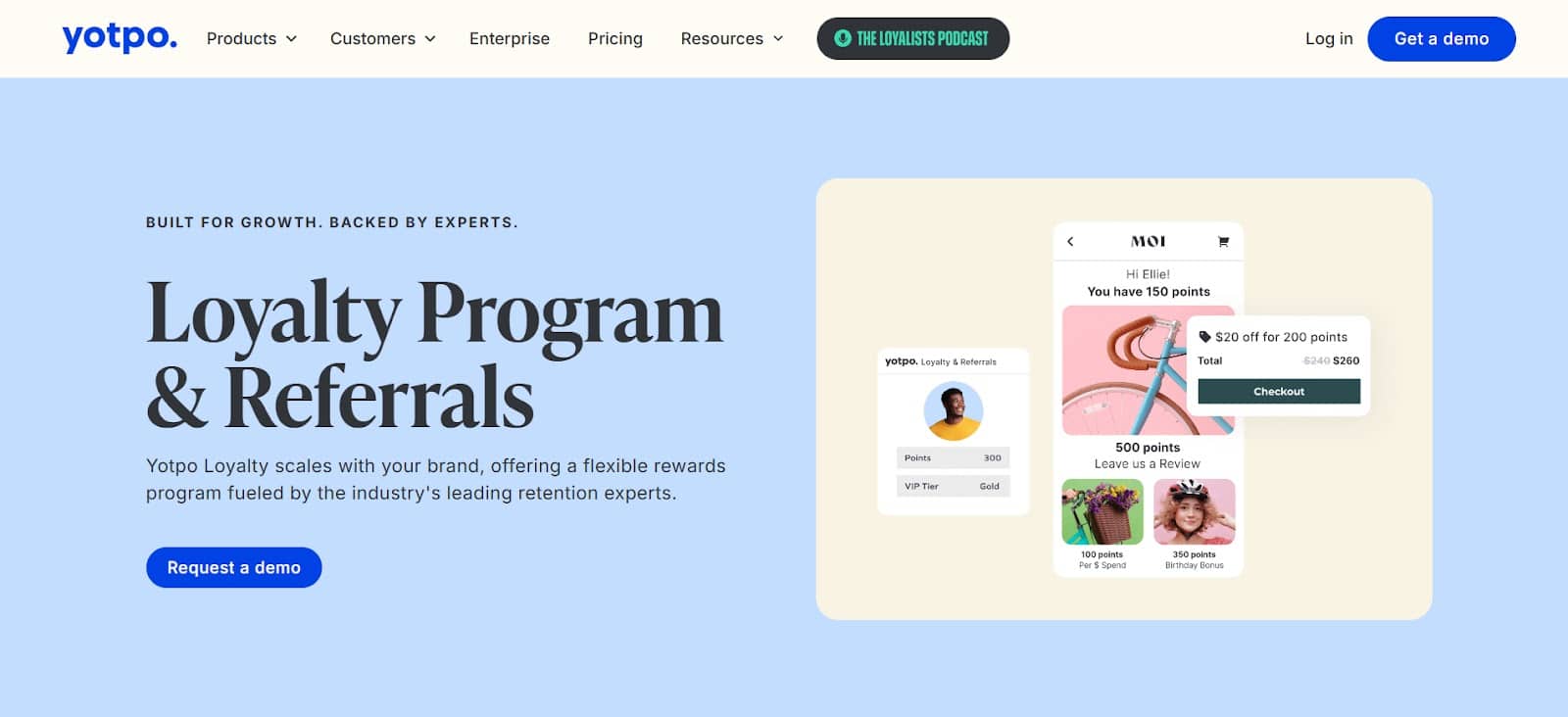
Executing a sophisticated loyalty strategy requires the right technology partner. Yotpo Loyalty is designed specifically to help eCommerce brands build highly customized and personalized rewards programs that drive retention. The platform focuses on several core capabilities that directly enable personalization:
- A True Partnership Approach: Yotpo provides more than just software. It offers the expertise of eCommerce loyalty specialists who deliver strategic guidance to design a program tailored to your business goals. This is a critical factor for businesses seeking a partner, not just a tool.
- Unmatched Flexibility and Customization: Yotpo Loyalty provides the tools to create unique loyalty experiences. You can design custom VIP tiers with exclusive perks, set flexible point expiration rules to create urgency, and build a rewards catalog that reflects your brand’s identity.
- Dynamic, Data-Driven Segmentation: The platform allows for the creation of precise customer segments based on a wide range of data points. This enables you to target an offer to “customers who have purchased twice but not in the last 90 days” or “VIPs who have left a 5-star review,” ensuring your rewards are always relevant.
- Robust and Accurate Reporting: Yotpo delivers deep insights into program performance, helping you understand what is working and what is not. The analytics dashboards make it easy to track ROI and demonstrate the value of your loyalty initiatives.
- Synergy Between Products: While Yotpo Loyalty is a powerful standalone solution, its capabilities are amplified when used with Yotpo Reviews. For example, you can automatically award loyalty points to customers who submit a photo or video with their review, encouraging the creation of high-impact user-generated content.
Best Practices for Launching and Managing Your Program
Designing an excellent program is only half the battle. A successful launch and a commitment to ongoing management are what separate programs that flourish from those that fade away.
Communicating Your Program Effectively
A multi-channel communication strategy is essential for driving awareness and adoption of your loyalty program.
- On-Site Promotion: Use prominent banners on your homepage. Create a dedicated loyalty program landing page that clearly explains the benefits and how to enroll.
- Email Campaigns: Announce the program launch to your subscriber list. After launch, send regular automated communications, such as monthly points balance updates and notifications about new rewards.
- Clarity is Key: Avoid jargon and complex explanations. Your value proposition should be clear, allowing customers to understand at a glance how they can earn and redeem points.
Avoiding Common Pitfalls
Many loyalty programs fail to reach their full potential due to a few common, avoidable mistakes.
- Overly Complex Rules: If your program is difficult to understand, engagement will suffer. Keep the earning and redemption processes as simple and intuitive as possible.
- Low-Value Rewards: Ensure your rewards are genuinely desirable. A reward that feels cheap or unattainable will not motivate customers. Ask them what they would like to see in your rewards catalog.
- A “Set It and Forget It” Mentality: A loyalty program is a dynamic part of your marketing strategy. It requires ongoing promotion, analysis, and optimization to remain relevant and effective.
Measuring Success: Key Metrics to Track
To ensure your program delivers a positive return on investment, you must track the right metrics.
- Repeat Purchase Rate: This is a direct measure of loyalty. Compare the purchase frequency of program members to that of non-members.
- Customer Lifetime Value (LTV): A successful program should increase the total value of your customers over time. Track the LTV of members and non-members to see the program’s impact.
- Redemption Rate: This metric indicates how engaged customers are with your rewards. A low redemption rate may signal that your rewards are not compelling enough or the redemption process is too difficult.
- Program ROI: Ultimately, your program must be profitable. Calculate the incremental revenue generated by members and compare it to the total cost of the rewards and the platform.
Conclusion: The Future of Loyalty is Personal
The market has shifted decisively from transactional rewards to relational loyalty. Personalization is no longer a trend but a fundamental customer expectation. Building a program that makes every customer feel seen, understood, and valued is the most sustainable way to foster the kind of loyalty that lasts. The journey starts with understanding your customer data.
From there, you can build a flexible, multi-faceted program that rewards a wide range of behaviors and offers genuine value. With the right strategy and technology partner, you can create a personalized rewards program that not only delights your customers but also becomes a powerful engine for your brand’s growth.
Frequently Asked Questions
How do I start personalizing rewards if I have limited customer data?
Start with simple segmentation based on available transactional data, such as “new customers” versus “repeat purchasers.” You can then offer loyalty points as an incentive for customers to provide more information. Ask them to complete a profile, answer a short survey, or create a wish list. Each new piece of data unlocks deeper personalization opportunities.
Are personalized rewards expensive to implement?
The cost can vary, but the return on investment from increased retention and customer lifetime value is often substantial. Not all rewards need to be monetary. Non-cash perks like early access to new products or exclusive content can be highly valuable to customers without a high direct cost. A scalable platform can help you design a program that fits your budget.
How often should I update my rewards catalog?
You should review and refresh your rewards regularly to keep the program exciting and maintain customer engagement. A great practice is to survey your most loyal customers to ask what rewards they would find most appealing. Introducing seasonal or limited-edition rewards is another excellent tactic to create a sense of urgency.
What is the difference between a loyalty program and a rewards program?
While people often use the terms interchangeably, there is an important distinction. A rewards program is typically transactional (e.g., “buy 10, get one free”). A loyalty program, in contrast, aims to be more relational. It seeks to build an emotional connection through ongoing, personalized value that extends beyond simple discounts.
What are VIP tiers and why are they effective?
VIP tiers are a way to segment your most valuable customers based on spending or engagement. They are effective because they create a sense of exclusivity and aspiration. Customers are motivated to spend more to unlock better perks, such as free shipping, early access to sales, or exclusive products. This makes your best customers feel recognized and appreciated.
How can I reward customers for actions other than purchases?
Rewarding non-transactional behaviors is a great way to build a deeper relationship. You can award points for actions like writing a product review, following your brand on social media, referring a friend, or even on their birthday. This encourages engagement and helps build a community around your brand.
What’s a common mistake brands make with loyalty programs?
One of the most common mistakes is making the program too complicated. If customers can’t easily understand how to earn and redeem points, they won’t participate. Another pitfall is offering rewards that aren’t valuable or desirable to your specific audience. Simplicity and value are key.
How do I promote my new loyalty program to customers?
Use a multi-channel approach. Announce the program with a dedicated email campaign. Promote it with banners on your website’s homepage. Create a clear landing page that explains all the benefits and how to join. Don’t forget to mention it on your social media channels to generate excitement.
Can a loyalty program help me win back at-risk customers?
Absolutely. You can create a segment of customers who haven’t purchased in a while and target them with a special offer. For example, you could send an email offering them bonus points on their next purchase or a unique discount to remind them of the value you offer. This can be a very effective re-engagement tactic.
Should I use points or direct discounts for rewards?
A points-based system is often more flexible and engaging. It allows customers to save up for a reward they truly want and encourages a wider range of earning behaviors. Direct discounts can be effective for immediate impact, but a points system can build more long-term engagement and a stronger sense of progress.
How does a loyalty program improve Customer Lifetime Value (LTV)?
A loyalty program increases LTV in several ways. It encourages repeat purchases, which increases purchase frequency. It also motivates customers to spend more to reach the next VIP tier or a specific reward, increasing their average order value. By making customers feel valued, it reduces churn and keeps them shopping with you for longer.
What role does segmentation play in a successful loyalty program?
Segmentation is crucial for personalization. Instead of sending the same offer to everyone, you can tailor your rewards to specific groups. For example, you can give your top-spending VIPs an exclusive reward, send a welcome offer to new members, and create a win-back campaign for lapsed customers. This makes your communication far more relevant and effective.
How do I measure the ROI of my loyalty program?
To measure Return on Investment (ROI), you need to compare the incremental revenue generated by program members to the total cost of the program. Key metrics to track include the repeat purchase rate of members vs. non-members, the change in Customer Lifetime Value (LTV), and redemption rates. A robust analytics dashboard is essential for tracking these KPIs accurately.



 Join a free demo, personalized to fit your needs