











The subscription economy has fundamentally changed consumer expectations of value. From streaming services to meal kits, customers consistently demonstrate a willingness to pay a recurring fee for convenience, exclusivity, and an enhanced experience. What if you could apply this same powerful model to your customer retention strategy?
That is the function of a paid loyalty program.
This approach moves beyond traditional points-based systems to establish a premium, members-only framework that your best customers will be eager to join. This guide provides a comprehensive overview of the process, from validating the concept for your brand to designing, building, and launching a paid loyalty program that not only retains customers but transforms them into your most passionate advocates.
The Rise of Premium Loyalty: Why Customers Pay for Perks
For years, the standard loyalty model has been straightforward: spend more, earn more points. It’s a free-to-join system that is effective but has become commonplace. A paid loyalty program, often called premium loyalty, inverts the traditional approach. It requires customers to pay an upfront fee—monthly or annually—in exchange for immediate, high-value benefits they cannot access otherwise.
Shifting from “Free” to “Fee”: The Underlying Psychology
Why would a customer pay to be loyal? The decision is driven by several key psychological factors:
- The Sunk Cost Fallacy: Once a customer invests money (the fee), they are psychologically motivated to shop more frequently to maximize the value of their investment. This directly encourages repeat purchases.
- Exclusivity and Status: A paid program cultivates an exclusive “in-group.” Members feel special, recognized, and valued beyond their transactional worth. This sense of belonging is a powerful emotional driver that free programs rarely achieve.
- Reciprocity: When a brand provides instant, tangible benefits (like free shipping on all orders), customers feel a natural inclination to reciprocate that generosity by concentrating their spending with that brand.
The Core Business Benefits
Adopting a paid model is a strategic decision that delivers tangible business results. Brands that successfully implement paid loyalty programs often see significant improvements in key metrics.
- Increased Customer Lifetime Value (LTV): Paid members are, by definition, more invested in your brand. Studies have shown that members of paid loyalty programs are 60% more likely to increase their spending with a brand after subscribing. They consolidate their purchases with you, leading to a higher LTV.
- Predictable, Recurring Revenue: The membership fees themselves create a new, predictable stream of high-margin revenue. This can help stabilize cash flow, particularly for businesses with seasonal sales cycles.
- Deeper Data on Your Best Customers: Your paid members are your most engaged users. Their behavior provides an incredibly valuable dataset. You can analyze their buying patterns, benefit redemption, and feedback to make more informed decisions about marketing, merchandising, and overall business strategy.
The Customer Value Proposition
Of course, this model only works if the value proposition for the customer is clear and compelling. Customers who join paid programs expect a significant upgrade from the standard experience.
- Enhanced, Instant Value: The benefits must clearly outweigh the cost. This often includes high-value transactional perks like complimentary two-day shipping, a standing discount (e.g., 10% off all orders), or early access to sales.
- Unmatched Convenience: Paid loyalty removes friction from the purchasing process. Consider the success of Amazon Prime, where the primary benefit that attracted millions was the convenience of fast, free shipping. Your program should make shopping with you simpler and more enjoyable.
- A Sense of Belonging: Premium programs can offer access to a community, exclusive content, or special events. This transforms the customer relationship from purely transactional to one that is more emotional and community-focused.
In short, the shift to paid loyalty is about creating a symbiotic relationship where your most dedicated customers invest in you, and in return, you invest in delivering a superior experience for them.
Is a Paid Loyalty Program Right for Your Brand? A Readiness Assessment
A paid loyalty program is a powerful tool, but it is not a universal solution. Before designing benefits and setting prices, it’s essential to conduct an honest assessment of your business to determine if your brand is prepared for this advanced retention strategy.
Key Indicators of Readiness
The presence of these indicators suggests your business is well-positioned for a successful launch.
- A Strong, Engaged Customer Base: Do you have a core group of customers who already purchase from you repeatedly? A healthy repeat purchase rate (ideally 20-40% or higher) is a strong signal that you have a base of fans who would likely be willing to pay for an elevated experience.
- High Brand Affinity: Do customers express affection for your brand, not just your products? Look for evidence of brand affinity in social media mentions, customer reviews, and direct feedback. If customers are already acting as advocates, they are prime candidates for a paid program.
- A Clear Path to Value Realization: Could a customer realistically recoup their membership fee within a reasonable timeframe? For instance, if your annual fee is $50 and standard shipping is $10, a customer who plans to make five or more purchases a year sees immediate and obvious value.
Analyzing Your Products, Margins, and Purchase Frequency
Next, you must analyze the financial viability. The model for a paid program must be sustainable for both your business and your customer.
- Can Your Margins Support the Benefits? If your primary benefit is “free shipping on all orders,” you need to understand your average shipping cost and how that will impact the margin on each sale from a paid member. The goal is for the resulting increase in purchase frequency and LTV to more than offset the cost of the benefits.
- What is Your Average Order Value (AOV) and Purchase Frequency? A paid program is most effective when it encourages customers to increase one or both of these metrics. If your customers already buy frequently (e.g., a consumables brand), the program can focus on increasing AOV. If they buy infrequently but at a high AOV (e.g., a luxury goods brand), the program could focus on creating more purchasing occasions.
Gauging Customer Interest
You do not have to launch a paid program without data. It is crucial to validate the concept with your actual customers before investing significant resources.
- Surveys: Send a survey to a segment of your most loyal customers. Do not just ask, “Would you pay for a loyalty program?” Instead, present a concrete offer. For example: “For an annual fee of $49, you would receive the following benefits: free 2-day shipping on all orders, 15% off all purchases, and early access to new collections. How likely would you be to join?”
- Focus Groups: Gather a small group of top customers for a more in-depth discussion. Talk to them about their pain points and what they value most. Use this qualitative feedback to brainstorm benefits that will truly resonate.
- Beta Testing: Consider a “soft launch” to a small, invitation-only group. This allows you to test the technology, benefits, and messaging in a controlled environment. These founding members can provide invaluable feedback to help you refine the program before a full public launch.
Taking the time to validate your idea is a critical step. It ensures you are not just building a program you believe is great, but one that your customers have confirmed they are willing to purchase.
Designing a Paid Loyalty Program That Delivers Real Value
Once you’ve determined that a paid program is a strong fit for your brand, the design phase begins. The success of your program hinges entirely on its construction. It must be simple to understand, packed with value, and priced appropriately.
Step 1: Defining Your Core Value Proposition
Before listing a single benefit, you must answer one question: What is the single biggest promise of this program? This will be your guiding principle. Every benefit and message should align with this core proposition. Is it about…
- Saving Money? (e.g., “Never pay for shipping again.”)
- Unrivaled Convenience? (e.g., “The fastest, easiest way to shop with us.”)
- Exclusive Access? (e.g., “Be the first to get everything.”)
- VIP Status? (e.g., “Join the club and receive the treatment you deserve.”)
Your core value proposition should be clear, concise, and focused on the customer.
Step 2: Structuring Your Tiers
You have a few options for structuring your program. The right choice depends on your existing customer base and strategic goals.
The Hybrid Model: A Gateway to Premium
In this model, you maintain a free, entry-level tier and offer the paid program as an optional upgrade.
- Pros: It is inclusive and does not alienate customers who are not ready to pay. The free tier acts as a marketing funnel for the paid tier, allowing you to showcase the premium benefits they are missing.
- Cons: It can create complexity. You must clearly differentiate the value between the free and paid tiers to make the upgrade compelling.
The VIP-Only Model: Exclusivity from Day One
This is a pure-play paid loyalty program where there is no free tier; access to any and all loyalty benefits requires paying the membership fee.
- Pros: It is simple and creates maximum exclusivity. The message is clear: our best experience is reserved for paying members.
- Cons: It is a more significant request of the customer. This model works best for established brands with very high brand affinity, where the desire to be part of the “club” is already strong.
Step 3: Crafting an Irresistible Benefits Package
This is the heart of your program. The benefits need to be so valuable that joining becomes a compelling decision for your target customer. A well-rounded program includes a mix of different benefit types.
Transactional Benefits (The “Head”)
These are the tangible, monetary perks that appeal to a customer’s rational side. They are often the primary drivers of sign-ups.
- Free Shipping: This is the most popular and effective benefit, as it removes a major point of friction in the online checkout process.
- Percentage or Dollar-Off Discounts: A consistent discount (e.g., 10% off every order) provides clear, ongoing value.
- Cashback or Accelerated Points: Paid members could earn points at a faster rate (e.g., 2x points) or receive a percentage of their spending back as store credit.
Experiential Benefits (The “Heart”)
These benefits provide access and experiences that money cannot necessarily buy. They build an emotional connection to your brand.
- Early Access: Allow paid members to shop new arrivals or sales before anyone else.
- Exclusive Products: Create special products or collections that are only available to members.
- VIP Customer Service: Offer a dedicated support line or email address for faster service.
- Exclusive Content: Provide access to tutorials, behind-the-scenes content, or interviews.
Emotional Benefits (The “Soul”)
These benefits center on community and shared values. They make members feel like they are part of something larger than a simple transaction.
- Community Access: Create a private Facebook group, Discord server, or forum where members can connect with each other and your brand.
- Brand Recognition: A “VIP” badge on their customer profile or next to their product reviews can create a sense of status.
- Charitable Donations: Pledge to donate a portion of every membership fee to a charity that aligns with your brand’s values.
Step 4: Setting the Right Price Point
Pricing is both an art and a science. A price that is too high will deter sign-ups, while a price that is too low can devalue the program and reduce potential revenue.
Value-Based vs. Cost-Plus Pricing
- Cost-Plus Pricing: This involves calculating the cost to deliver the benefits (e.g., average shipping cost) and adding a margin. This is a safe but often uninspired approach.
- Value-Based Pricing: Your price is based on the perceived value of the benefits to the customer. This is the superior approach. If the combined value of your benefits is well over $100 per year for the average customer, a $49 annual fee is perceived as an incredible deal.
Finding the Sweet Spot: A/B Testing Your Price
Use the data from your initial customer surveys as a starting point. From there, you can A/B test different price points (e.g., $49/year vs. $59/year) on your website to see how pricing impacts conversion rates. The objective is to find the price that maximizes both sign-ups and revenue.
Designing a paid loyalty program requires careful thought and planning. By defining a clear value proposition, structuring your tiers intelligently, creating a robust benefits package, and setting a strategic price, you will build a program that customers are not just willing to join, but one they truly value.
Building Your Program with the Right Technology: A Look at Yotpo Loyalty
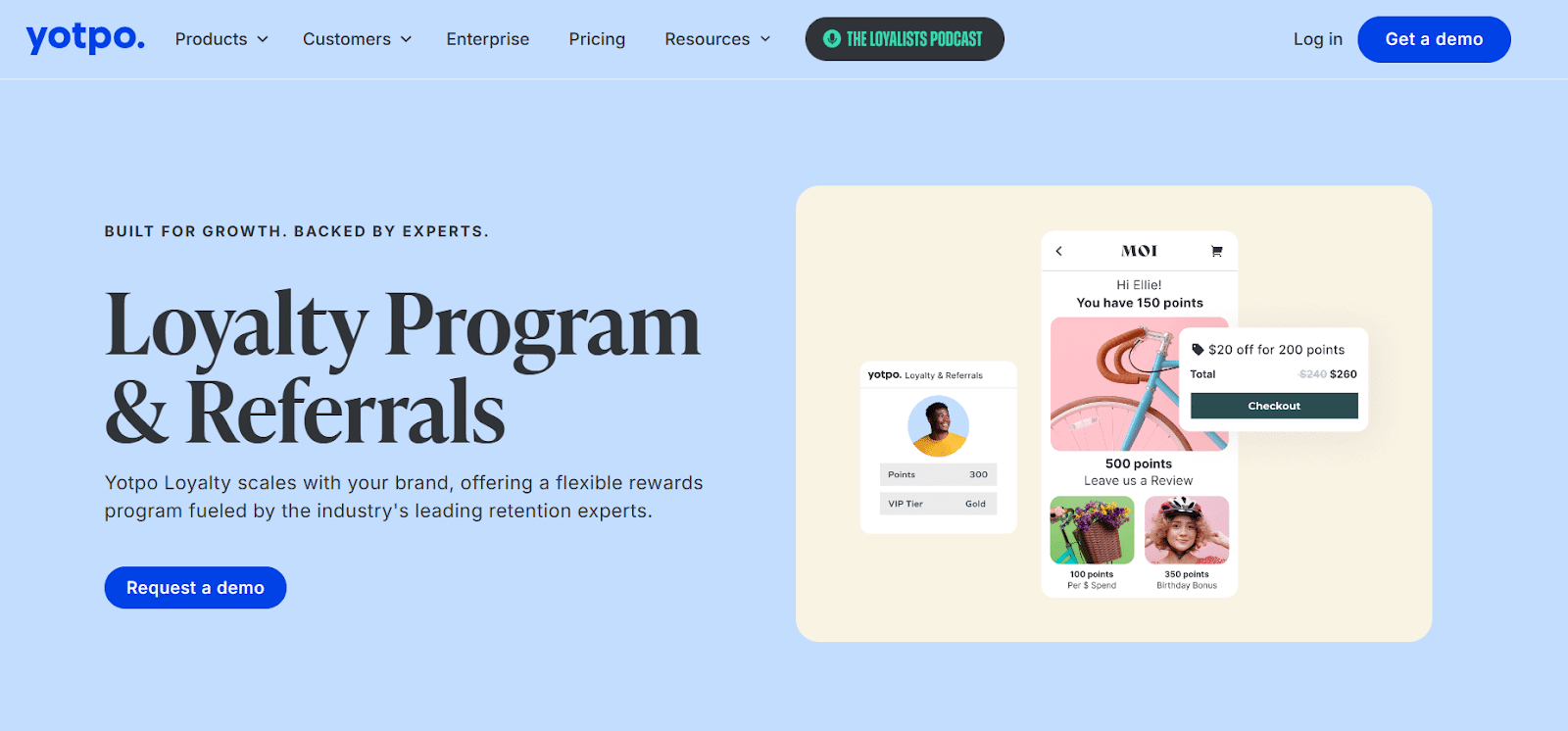
A brilliant program design is only as good as the technology that powers it. A paid loyalty program has more complexity than a standard free program, requiring flexible tiers, differentiated rewards, and sophisticated segmentation. Managing this manually or with a rigid, homegrown system often leads to a poor experience for both you and your customers.
Why a Specialized Platform is Essential
To execute a paid program effectively, you need a platform that can handle:
- Complex Tiering: The ability to create distinct free and paid tiers with different earning rules and benefits.
- Benefit Management: The capacity to easily assign and automate the delivery of specific perks (like free shipping or exclusive access) to the correct member tier.
- Robust Segmentation: The power to segment customers based on their tier and other attributes, allowing for highly targeted communication.
- Scalability: A system that can grow with your program without technical limitations.
Building a Paid Program with Yotpo Loyalty
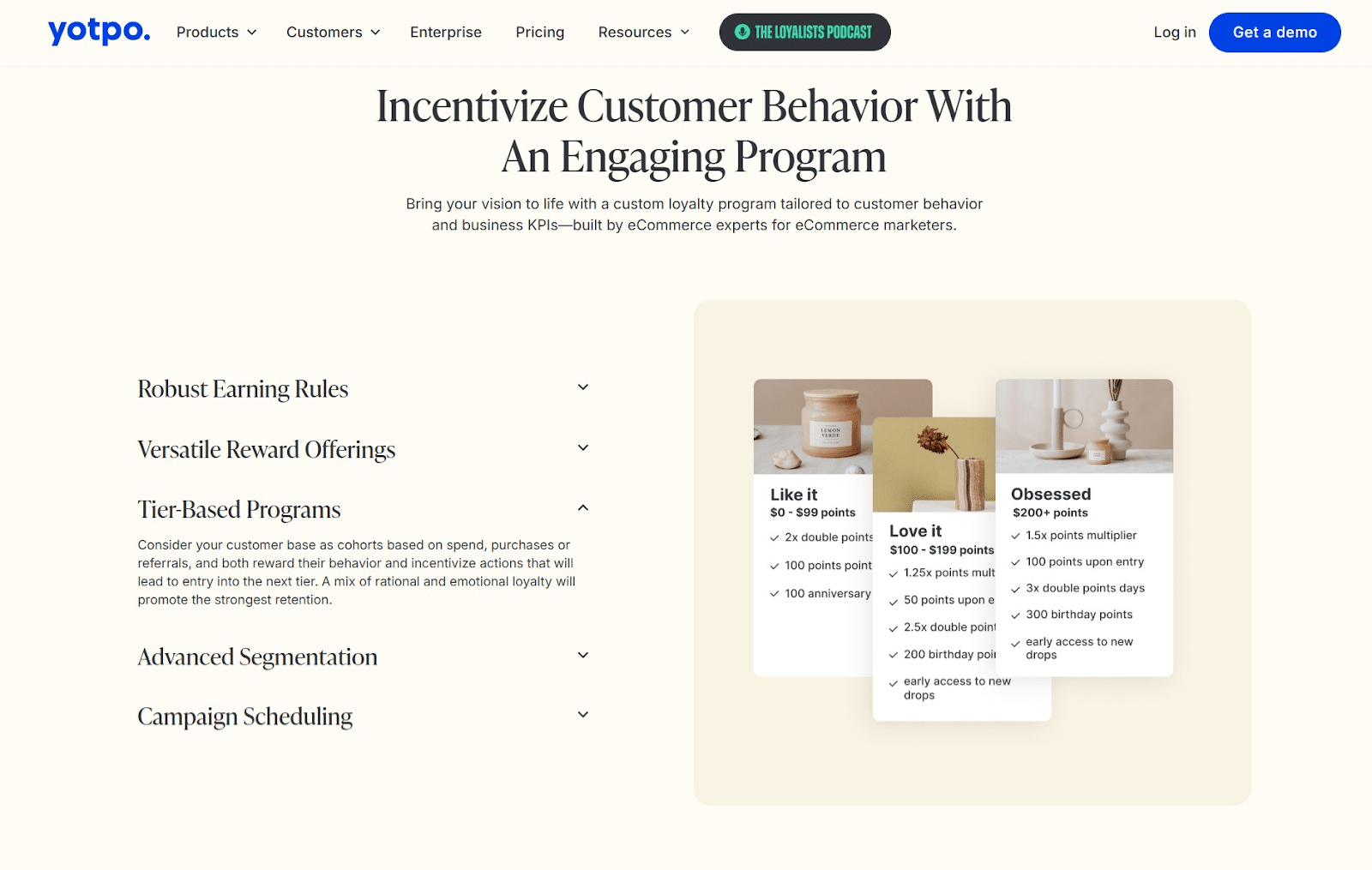
This is precisely where a dedicated solution like Yotpo Loyalty becomes essential. It’s designed with the flexibility and strategic depth required to build and manage a sophisticated paid loyalty program that feels seamless to the customer.
When you’re building a premium experience, the platform you use must be equally capable. Here’s how Yotpo Loyalty provides the framework for a successful paid program:
- Unmatched Flexibility and Customization: Yotpo enables you to create a truly unique experience. You have granular control to design multiple tiers, including a VIP or “paid” tier, and set completely custom earning rules. For example, your paid members could earn 2x the points on every purchase, while free members earn 1x. You can create custom campaigns that are only visible and available to your paid members, ensuring their experience feels exclusive.
- Segmenting Your VIPs for Personalized Treatment: With Yotpo, you can easily create a dynamic segment of all your “Paid Tier” members. This isn’t just a static list; it’s a living group that updates automatically. You can then use this segment to offer exclusive rewards, bonus point events, and highly personalized communications, allowing you to treat your most valuable customers like the VIPs they are.
- Rewarding More Than Just Purchases: An effective loyalty program encourages engagement across all touchpoints. Yotpo Loyalty allows you to reward members for a wide range of actions beyond transactions. Paid members can earn points for leaving reviews, sharing photos and videos (UGC), following on social media, or referring friends. This builds a deeper, more engaging relationship and turns your members into active brand advocates.
- Strategic Guidance and Support: Launching a paid loyalty program is a significant strategic initiative. Yotpo provides a partnership that extends beyond software. You gain access to experienced Customer Success Managers (CSMs) who are experts in eCommerce loyalty. They can provide strategic guidance on everything from structuring your benefits to optimizing your program post-launch, ensuring you’re following best practices and maximizing your ROI.
The Launch Plan: From Concept to Kickoff
You have designed the ideal program and chosen your technology. Now it is time to introduce it to the world. A successful launch is not a single event but a carefully orchestrated campaign designed to build excitement and drive initial enrollment.
Pre-Launch: Building Hype and Seeding Your Program
Ensure a receptive audience from day one by building anticipation a week or two before the official launch.
- Create a “Founding Members” Group: Invite your top 50-100 customers to join the program early, perhaps for free or at a significant discount. This seeds your program with advocates and allows you to gather testimonials.
- Run a “Coming Soon” Teaser Campaign: Use email and social media to hint that something new and exciting is on the way. Use phrases like, “The best way to shop with us is about to get even better,” or “Get ready for the VIP treatment you deserve.”
- Build a Waitlist: Set up a simple landing page where interested customers can sign up to be the first to know when the program launches. This builds your email list and provides a clear indicator of initial demand.
Launch Day: The Multi-Channel Marketing Campaign
On launch day, deploy a coordinated marketing effort across all your channels to ensure maximum visibility.
- Email Announcement: Send a dedicated email to your entire subscriber list. Clearly explain the core value proposition and list the top 3-5 benefits. Include a clear, bold call-to-action (CTA) to “Join Now” or “Become a VIP.”
- On-Site Promotion: Your website should be the focal point of the launch.
- Homepage Banner: Use a prominent banner at the top of your homepage.
- Dedicated Landing Page: Create a comprehensive landing page that details all program tiers and benefits, includes an FAQ, and showcases testimonials from your founding members.
- Pop-ups and Nudges: Use non-intrusive pop-ups to inform visitors about the new program.
- SMS Blast: Send a concise text message to your SMS subscribers with a direct link to the loyalty landing page. Given the immediacy of SMS, this can be a powerful driver of instant sign-ups.
- Social Media Campaign: Announce the program on all your social channels. Use visually appealing graphics or short videos to explain the benefits. Consider running targeted ads to your website visitors or lookalike audiences.
Post-Launch: Monitoring, Measuring, and Optimizing
The launch is just the beginning. The long-term success of your program depends on continuous monitoring and improvement.
Key Metrics to Track
It is critical to know what is working and what is not. Keep a close eye on these key performance indicators (KPIs):
- Enrollment Rate: What percentage of site visitors are signing up?
- Member Churn Rate: How many members are failing to renew their membership? A high churn rate is a strong indicator that the value proposition is not compelling enough.
- Benefit Redemption Rate: Are members actually using the benefits you offer? Low redemption on a specific perk might mean it is not as valuable as you perceived.
- LTV of Paid vs. Non-Paid Members: This is the ultimate measure of success. Your paid members should have a significantly higher LTV than your non-member customers.
- Purchase Frequency and AOV: Are members buying more often or spending more per transaction than they were before joining?
The Feedback Loop: Constantly Evolving Your Program
Use surveys and direct communication to ask your members for feedback.
- What is their favorite benefit?
- What benefits would they like to see added?
- Why did they decide to join?
Use this feedback to evolve your program over time. A loyalty program should not be static. By listening to your best customers and adapting to their needs, you will ensure your program remains a valuable and cherished part of your brand experience for years to come.
Common Pitfalls and How to Avoid Them
Launching a paid loyalty program can be a transformative initiative, but it is not without challenges. Being aware of common pitfalls can help you navigate them effectively and set your program up for success.
Pitfall #1: The Benefits Do Not Justify the Price
This is the most common reason paid programs underperform. If customers cannot see a clear path to receiving more value than the cost of the fee, they will not join.
- How to Avoid It: Be objective about your value proposition. The benefits need to be both aspirational and practical. Your primary benefit (like free shipping) should be so compelling that it alone nearly justifies the fee. Before you launch, validate your proposed benefits and price with customer surveys.
Pitfall #2: Poor Communication and Marketing
You can build an excellent program, but if no one knows about it or understands how it works, it will fail to gain traction.
- How to Avoid It: Develop a comprehensive marketing plan before you launch. This includes pre-launch teasers, a multi-channel launch day campaign, and an ongoing communication strategy. Create a dedicated landing page that explains everything clearly. Do not just promote the program at launch; integrate it into your regular marketing calendar, onboarding emails, and post-purchase flows.
Pitfall #3: Technical Glitches and a Poor User Experience
A premium program demands a premium experience. If the sign-up process is difficult, benefits do not apply correctly in the cart, or the member dashboard is confusing, you will erode trust and frustrate your best customers.
- How to Avoid It: Invest in the right technology. Using a robust platform like Yotpo Loyalty is critical. It ensures the backend complexity is handled smoothly, providing a seamless frontend experience for your members. Before you launch, conduct thorough testing. Go through the entire user flow yourself: sign up, make a purchase, redeem a reward, and view your member status.
Pitfall #4: Forgetting About Your “Free” Members
If you are running a hybrid model with both free and paid tiers, it can be easy to focus all your attention on paying members. This can lead to your free members feeling ignored or devalued, which can damage your brand’s overall perception.
- How to Avoid It: Continue to provide value to your free tier members. While the best perks are reserved for paid members, ensure the free program still offers a clear path to earning rewards. Use your communication with free members to consistently and clearly showcase the value of upgrading, framing it as an opportunity rather than a penalty for not paying.
By anticipating these common challenges, you can build a more resilient and successful program. The key is to always view the program through your customer’s eyes, ensuring it is valuable, easy to use, and well-communicated.
Conclusion: Building a Community, Not Just a Program
At its core, a successful paid loyalty program does more than just drive revenue. It transforms the traditional customer-brand dynamic. You are no longer just a store they purchase from; you are a club to which they belong. You are inviting your best customers into an inner circle and rewarding their commitment with your best possible experience.
This strategy requires careful planning, a deep understanding of your customers, and the right technology to bring it to life. The payoff is immense: a predictable revenue stream, higher customer lifetime value, and, most importantly, a thriving community of brand advocates who value your brand and are proud to be a part of it. It is not just a retention tool; it is your brand’s exclusive, members-only club.
FAQs
What is the difference between a paid loyalty program and a subscription box?
While both involve recurring fees, their core purpose is different. A subscription box is a product-delivery service where the customer pays to receive a curated box of physical goods on a set schedule. A paid loyalty program is a service-based membership; the customer pays a fee to unlock a set of premium benefits and perks (like free shipping, discounts, and exclusive access) that enhance their overall shopping experience whenever they choose to buy.
How long does it take to see ROI from a paid loyalty program?
You can see some returns almost immediately from the membership fees themselves. However, the true ROI comes from the change in member behavior. You should start to see a lift in key metrics like purchase frequency, average order value, and overall LTV within the first 6-12 months. Tracking the LTV of your paid members versus your non-members is the most effective way to measure the program’s long-term financial impact.
Can I switch from a free loyalty program to a paid one?
Yes, but this transition requires careful communication. Instead of eliminating your free program, a superior approach is to introduce a paid tier as an upgrade (the hybrid model). You can “grandfather” your existing loyal members into the new free tier and then run a targeted campaign to encourage them to upgrade by clearly communicating the significant value of the new, exclusive benefits.
What are the most popular benefits in successful paid loyalty programs?
Consistently, the most powerful and popular benefit is free and fast shipping. It’s a highly tangible and frequently used perk that removes a major point of friction. Other very popular benefits include a fixed percentage off all orders (e.g., 10% off), early access to sales and new products, and exclusive access to members-only products or content.


 Join a free demo, personalized to fit your needs