











In the competitive world of e-commerce, getting a new customer is one thing, but earning their long-term loyalty is a completely different challenge. As customer acquisition costs keep rising, smart brands are focusing more on the customers they already have. They do this by building powerful and engaging loyalty programs designed to turn one-time buyers into lifelong fans.
This guide gives you an in-depth look at the most successful loyalty programs in 2026. It offers a detailed framework for you to design, launch, and grow a program that delivers real results.
Key Takeaways
- Retention is Profitable: It can be 5 to 25 times more expensive to acquire a new customer than to keep an existing one. Focusing on loyalty directly boosts your bottom line.
- Structure Matters: The most common loyalty programs are points-based, tiered, VIP, or paid. Many successful brands use a hybrid model that combines elements from different types.
- Rewards Should Be Compelling: A mix of transactional rewards (like discounts) and experiential rewards (like early access) creates a stronger emotional connection with customers.
- Technology is Crucial: A dedicated loyalty platform is essential for managing, automating, and analyzing your program. A strategic partner like Yotpo Loyalty provides the tools and expert guidance needed for success.
- Measure Everything: To ensure your program is working, you must track key metrics like Repeat Purchase Rate (RPR), Customer Lifetime Value (CLV), and Redemption Rate.
The Undeniable Power of Customer Loyalty in E-commerce
For years, many online retailers focused mainly on customer acquisition. While attracting new shoppers is still important, the most stable and profitable brands know that the real value is in retention.
Why Customer Retention is the New Growth Engine
Your existing customers already have a relationship with your brand. Since they’ve bought from you before, they are much more likely to buy from you again compared to a potential customer. Investing in these relationships isn’t just a customer service task; it’s a direct strategy for improving your profits.
Moving Beyond Transactions to Build Relationships
A successful business knows that a sale is the start of a customer relationship, not the end. A customer loyalty program gives you a structured way to nurture that relationship. It provides a formal system to recognize and reward customers for their continued business, making them feel valued and creating an emotional connection that separates short-lived brands from lasting ones.
Key Statistics on Loyalty and Repeat Purchases
The data confirms this strategic shift. A focus on customer loyalty pays off in big ways:
- Acquiring a new customer can be five to 25 times more expensive than retaining an existing one.
- Increasing customer retention rates by just 5% can increase profits by 25% to 95%.
- The probability of selling to an existing customer is 60-70%, while the probability of selling to a new customer is only 5-20%.
These numbers clearly show that not actively retaining customers means losing out on a lot of potential revenue.
What Exactly is a Customer Loyalty Program?
To use one effectively, we first need to define what a loyalty program is in today’s e-commerce world.
A Definition for the Modern E-commerce Era
A customer loyalty program is a marketing strategy designed to encourage customers to keep doing business with a company. Participants get rewards, discounts, or other exclusive perks. In e-commerce, these programs are advanced digital systems that track customer behavior and automatically provide personalized rewards to encourage repeat business and increase customer lifetime value.
The Psychology Behind Why Loyalty Programs Work
Effective loyalty programs tap into basic human psychology. They create a sense of reciprocity, where customers feel appreciated and want to respond with more business. They also use the endowed progress effect, where people are more motivated to finish a goal after getting a head start, like welcome points. Finally, they create a feeling of exclusivity and belonging, making members feel like they are part of a special group.
In short, a well-designed loyalty program is a powerful tool for driving sustainable growth by focusing on your most valuable asset: your existing customers.
Decoding the Architecture of the Most Successful Loyalty Programs
Not all loyalty programs are the same. The best ones are built on a strategic foundation that fits the brand’s identity and connects with customer behavior. Understanding these basic models is the first step toward building your own.
The Foundational Models of Loyalty Programs
While you can customize a program in endless ways, most are based on a few core models.
The Points-Based System: Simple and Effective This is the most common type of loyalty program. Customers earn points for specific actions, usually making purchases. These points can then be exchanged for rewards, like discounts, free products, or other offers.
- Why it works: The structure is simple and easy for customers to understand. The link between action (spending) and reward (points) is clear and immediate. This model works great for brands with frequent purchases.
The Tiered System: Gamifying Engagement A tiered program has different membership levels based on a customer’s engagement or spending. As customers move up through the tiers, they unlock more valuable and exclusive rewards. This setup gamifies the experience, encouraging customers to spend more to reach the next level.
- Why it works: Tiers create goals and status. Customers feel a sense of achievement as they advance, which builds a deeper emotional connection to the brand. This model is perfect for brands in beauty, fashion, or lifestyle.
The VIP Club: Exclusivity as a Reward A VIP club offers exclusive benefits to a select group of customers, often chosen based on high spending, a long history with the brand, or even an application process. The goal is to make members feel like true insiders.
- Why it works: This model uses the power of exclusivity. The rewards are often experiences, like early access to new products, invitations to special events, or personal styling services. It’s great for luxury brands or businesses with a strong community focus.
The Paid Program: The Premium Loyalty Experience In a paid loyalty program, customers pay a fee upfront to get immediate and ongoing benefits. This model needs a strong value proposition, as customers must feel that the benefits are worth much more than the cost from the very beginning.
- Why it works: A paid program attracts your most dedicated customers and provides a steady revenue stream. The members who join are highly invested and more likely to make the brand their first choice for purchases.
The Hybrid Model: Combining the Best of All Worlds Many of the most successful loyalty programs are actually hybrid models. For example, a program might use a points system for earning rewards while also having tiers that unlock permanent perks. This approach lets brands create a highly customized experience that works for different customer segments.
- Why it works: The hybrid model offers the most flexibility. It lets you create a program that is easy for new customers to join and very rewarding for your most loyal supporters.
Case Study Analysis: What Makes the Greats So Great?
Let’s look at a few famous loyalty programs to see what makes them so successful.
Sephora’s Beauty Insider: A Masterclass in Tiered Rewards
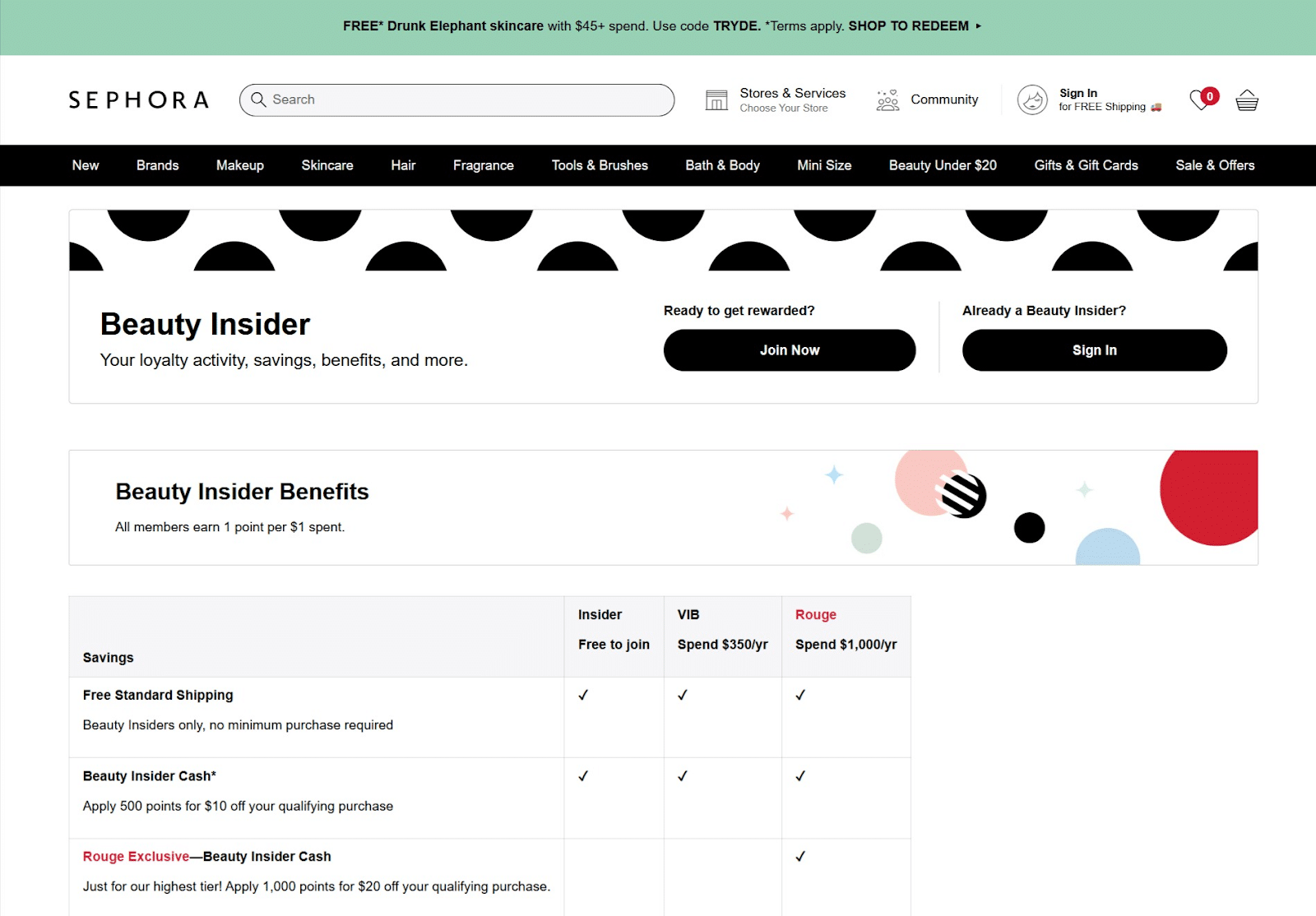
Sephora’s Beauty Insider program is a perfect example of a tiered system done right. It has three levels: Insider, VIB (Very Important Beauty Insider), and Rouge. Each tier unlocks better rewards, from birthday gifts and free shipping to exclusive event access.
- Key Takeaway: The program creates a strong desire to advance. Customers are always motivated to spend more to reach the sought-after Rouge status. The rewards are also very relevant to beauty lovers, making the program feel genuinely valuable.
Starbucks Rewards: The Power of Personalization and Ease
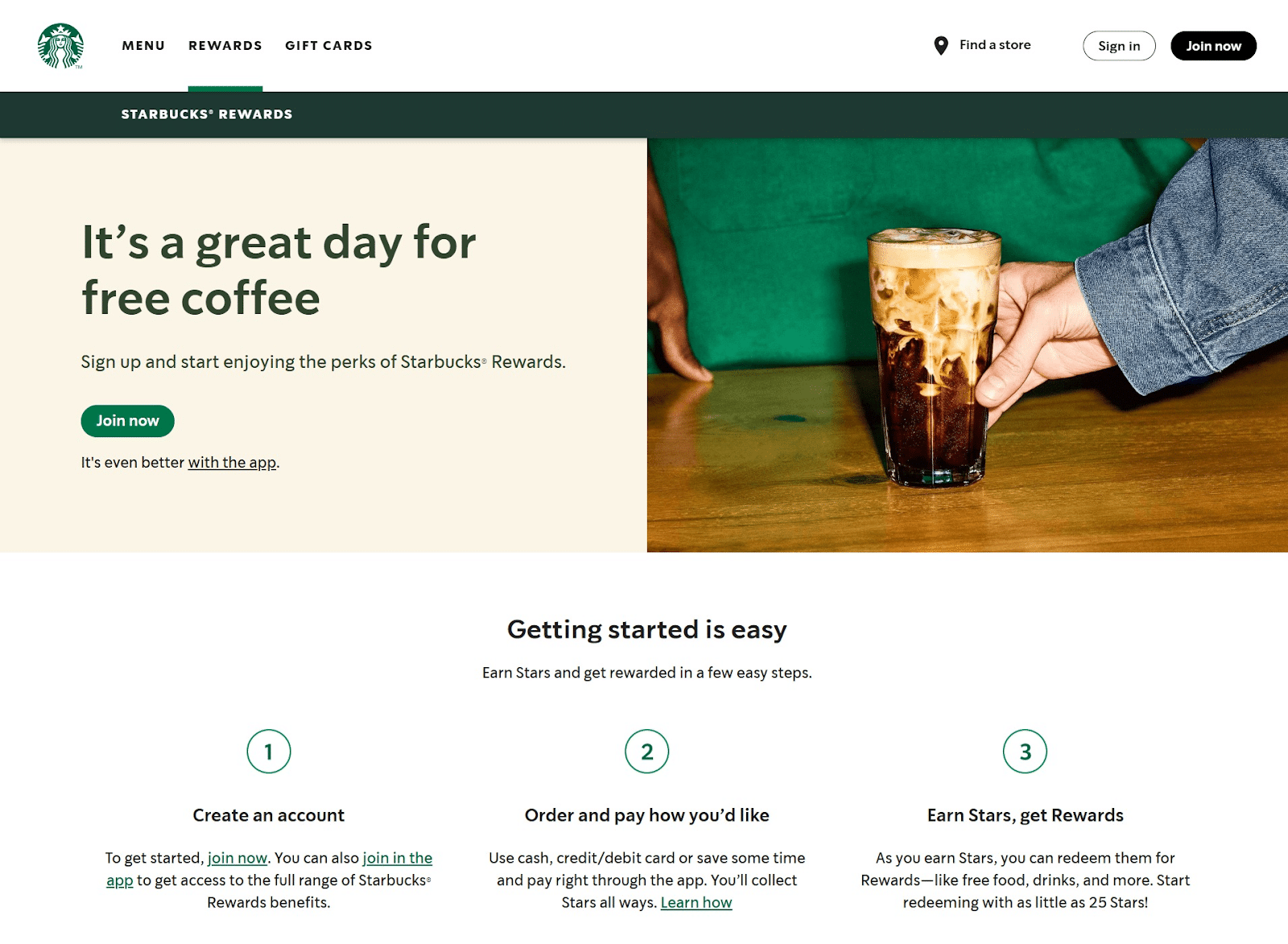
The Starbucks Rewards program shows how to make loyalty smooth and part of the customer experience. Members earn “Stars” for their purchases, which can be redeemed for free food and drinks. The program is deeply integrated into the Starbucks mobile app, making it effortless to use.
- Key Takeaway: Starbucks has successfully made its loyalty program a key part of the buying process. The company also uses the data it collects to send personalized offers and recommendations, making customers feel understood.
Amazon Prime: The Benchmark for Paid Loyalty
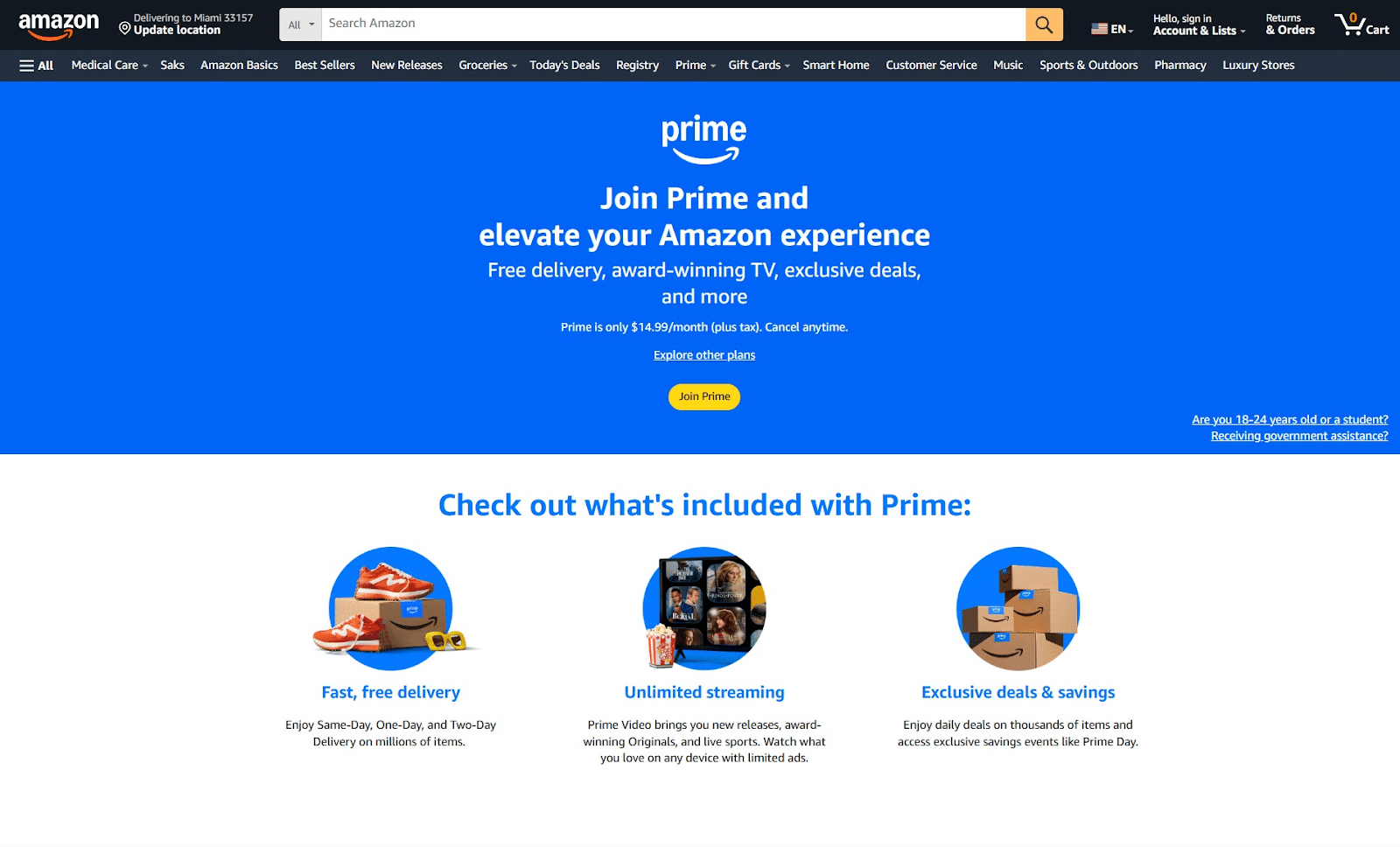
Amazon Prime is probably the most famous paid loyalty program in the world. For an annual fee, members get a ton of benefits, most importantly free two-day shipping. Over the years, Amazon has added more perks like streaming services, exclusive deals, and more.
- Key Takeaway: Prime works because its value is incredibly clear. The convenience of fast, free shipping is so appealing that it becomes a main driver of customer behavior. Once a customer pays for Prime, Amazon becomes their go-to place for online shopping.
Nike Membership: Building a Community Beyond Purchases
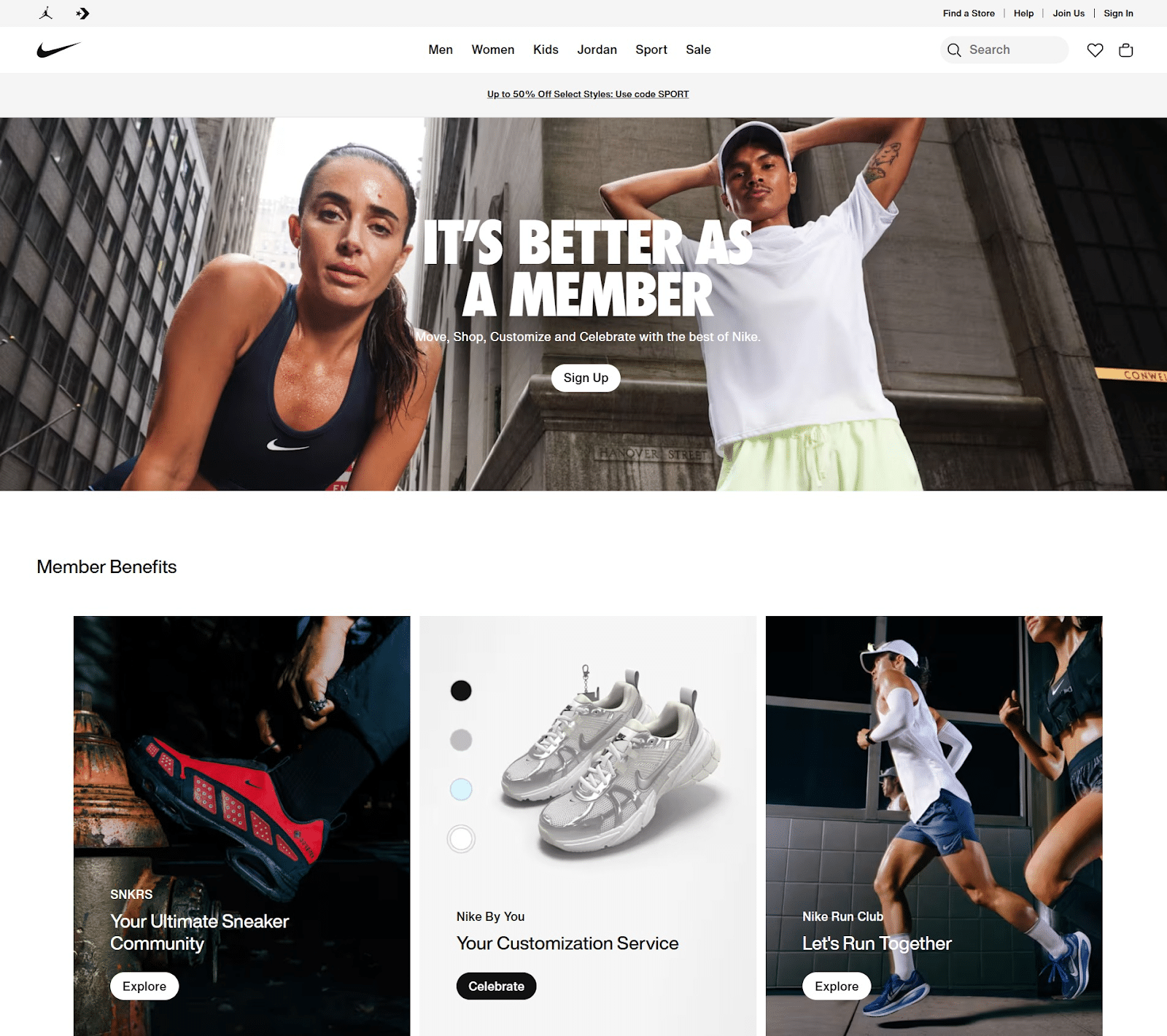
Nike’s free membership program is all about building a community and providing value beyond just discounts. Members get access to exclusive products, expert advice from Nike athletes, and priority access to events.
- Key Takeaway: Nike knows that its most loyal customers are passionate about fitness and sports. The program uses this passion by offering experiences and content you can’t get anywhere else. It’s a great example of using a loyalty program to build a strong brand community.
These examples show that the best loyalty programs are deeply connected to the overall brand experience and provide real, relevant value to their members.
Building Your Own High-Impact Loyalty Program: A Step-by-Step Framework
Now that we have a foundation of successful examples, we can move to the practical side. Building a high-impact loyalty program requires careful planning and a strategic, step-by-step approach.
Step 1: Defining Your Strategic Goals
Before you think about points or tiers, you must define what you want to achieve. A loyalty program without clear goals has no direction.
What Do You Want to Achieve? Be specific with your goals. Are you trying to:
- Increase Customer Lifetime Value (CLV)? Encourage customers to spend more over their entire relationship with your brand.
- Boost Repeat Purchase Rate? Motivate first-time buyers to come back for more purchases.
- Raise Average Order Value (AOV)? Incentivize customers to add more items to their carts.
- Drive More User-Generated Content (UGC)? Reward customers for writing reviews or sharing photos.
- Reduce Customer Churn? Keep your existing customers engaged.
Choose one or two primary goals. This focus will guide all the other decisions you make when designing your program.
Aligning Loyalty with Your Brand Identity Your loyalty program should feel like a natural part of your brand. A luxury brand’s program should feel exclusive and high-end, while a more casual brand’s program should have its own unique personality. The name, rewards, and messaging must all match your overall brand identity.
Step 2: Choosing the Right Loyalty Program Structure
Once your goals are set, it’s time to pick the basic model for your program.
Matching the Model to Your Customers and Products Think about your business model. If you sell products people buy often, like coffee or cosmetics, a points-based system might be perfect. If you sell high-end fashion or electronics, a tiered system can create the sense of status your customers appreciate. If you’re building a community around a certain lifestyle, a VIP club might be the best choice.
Points, Tiers, or a Custom Hybrid? Making the Right Choice You don’t have to stick to just one model. Many of the best programs are hybrids. You could use a points system for earning rewards and tiers for unlocking permanent perks. The key is to choose a structure that fits your goals and is easy for your customers to understand.
Step 3: Designing a Reward System That Truly Motivates
The rewards are the heart of your loyalty program. If they aren’t appealing, no one will participate.
Transactional vs. Experiential Rewards Think beyond simple discounts. While transactional rewards (like “$10 off”) work well, experiential rewards can create a much stronger emotional bond. These could include:
- Early access to new products
- Invitations to member-only online events
- Free consultations
- Access to exclusive content
The Importance of Non-Monetary Perks Some of the most valuable rewards cost you nothing directly. Perks like free shipping, longer return windows, or priority customer service can be powerful motivators. They add convenience and make your members feel truly valued.
Crafting a Flexible and Appealing Rewards Catalog Give your customers options. Instead of just offering one discount, create a catalog of rewards they can redeem their points for. This could include different discount amounts, free products, or branded merchandise. A varied catalog keeps members engaged and makes sure there’s something valuable for everyone.
Step 4: The Technology That Powers It All: Choosing Your Loyalty Platform
A great strategy needs the right technology to work. A modern loyalty program is a complex system that needs a dedicated platform to manage it.
Why a Dedicated Platform is Non-Negotiable A strong loyalty platform handles all the complex tasks. It tracks customer purchases, gives out points, manages tiers, automates communication, and provides the analytics you need to measure success. Trying to manage this process by hand isn’t scalable or effective.
Introducing Yotpo Loyalty: Your Strategic Partner
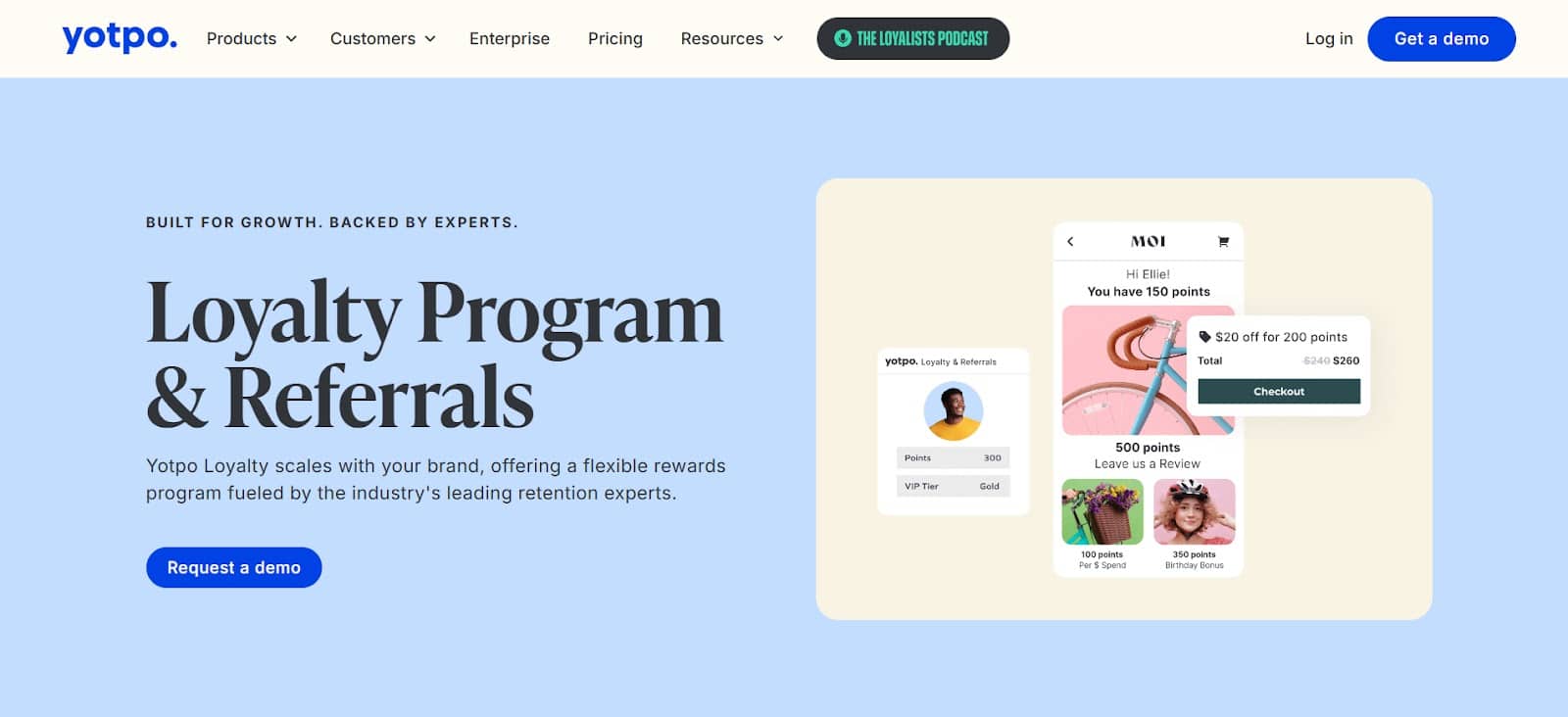
Building a successful loyalty program is a strategic move. Yotpo Loyalty is designed to be more than just software; it’s a strategic partnership. With a sharp focus on its core products, Yotpo is speeding up innovation in customer retention, leading to a next-generation Loyalty platform. This focus guarantees that clients get a solution built on deep e-commerce knowledge, not just a list of features.
- Unmatched Flexibility and Customization: Your brand is unique, and your loyalty program should be too. Yotpo Loyalty offers great flexibility and customization options, letting you create a program that perfectly matches your brand identity and goals. You can design unique loyalty experiences, from the names of your tiers to the types of rewards you offer. This includes dynamic segmentation, which lets you tailor offers to specific customer groups for the biggest impact.
- A Partnership Approach with eCommerce Experts: When you choose Yotpo, you get more than a platform; you get a team of e-commerce loyalty experts committed to your success. This partnership approach gives you strategic advice at every step, from designing your program to improving its performance. With dedicated Customer Success Managers and 24/7 technical support, you have the strategic and technical help you need to build a top-tier program.
- Robust Reporting and Actionable Insights: You can’t improve what you don’t measure. Yotpo Loyalty provides strong, accurate reporting and insights that give you a clear picture of your program’s performance. The platform makes it easy to track key metrics like repeat purchase rate, customer lifetime value, and overall program ROI. These actionable insights help you understand what’s working and what isn’t, so you can keep optimizing your strategy.
Considering the Broader Market When looking for a loyalty solution, you’ll find other platforms available. For example, Loyalty Lion and Smile are known options in the market. Others like Rivo and Stamped also provide tools for creating loyalty programs. When comparing your choices, it’s important to look at the level of strategic support, customization features, and the depth of the analytics offered. The right partner will give you not only the tools but also the expertise to use them well.
Step 5: Integrating Your Loyalty Program Across Your Marketing
Your loyalty program shouldn’t be an island. To be truly effective, it needs to be part of every customer interaction.
Making Loyalty a Core Part of the Customer Journey Promote your loyalty program everywhere: on your homepage, product pages, and at checkout. Mention it in your email newsletters and on social media. The more visible it is, the more members you’ll get.
Creating Powerful Integrations
This is where a well-connected solution shows its true value. You can create powerful, cohesive customer experiences by integrating your loyalty program with other marketing tools. For example, you can connect your loyalty program with your customer reviews strategy. By rewarding customers with loyalty points for leaving a review or submitting a photo with Yotpo Reviews, you can get more user-generated content. This not only builds social proof but also deepens engagement with your loyalty program. It creates a positive cycle where reviews strengthen loyalty, and loyalty drives more reviews.
By following these steps, you can go from an idea to a fully functioning loyalty program that not only keeps customers but also becomes a major driver of growth for your brand.
Advanced Strategies to Elevate Your Loyalty Program
Launching a loyalty program is a beginning, not an end. The best programs are always changing and improving. Here are some advanced strategies to take your program from good to great.
Deep Personalization: The Key to Deeper Connection
In a crowded digital world, personalization is how you get customers’ attention and build real connections. A one-size-fits-all approach to loyalty doesn’t work anymore.
Leveraging Data for Tailored Experiences Use the data you collect from your customers to create truly personal experiences. This goes beyond using their first name in an email. Look at their purchase history, browsing habits, and how they engage with your program. If they always buy a certain type of product, send them a special offer for that category. If they haven’t bought anything in a while, send a “we miss you” offer with bonus points.
How Yotpo Loyalty Facilitates Advanced Segmentation This level of personalization needs a platform with powerful segmentation tools. Yotpo Loyalty lets you create dynamic segments based on many different criteria, like spending level, point balance, tier status, and more. This means you can easily create targeted campaigns for your most valuable customers, your at-risk customers, and every group in between. This ability to send the right message to the right person at the right time turns a loyalty program into a powerful relationship-building tool.
Building a Community, Not Just a Customer List
The most successful brands have built more than just a customer base; they’ve created a community. Your loyalty program can be the center of this community.
Using Your Program to Foster a Sense of Belonging Think of your loyalty program members as your brand’s most valued group. Give them a place to connect with each other and with your brand. This could be a private social media group, a special section on your website, or exclusive online events. The goal is to make them feel like part of something special.
Exclusive Content, Early Access, and Member-Only Events This is where experiential rewards are especially valuable. Offer your members benefits that money can’t buy, like a behind-the-scenes look at product development, a Q&A with your founder, or early access to your biggest sale of the year. These exclusive perks reinforce the value of membership and create a strong sense of community.
Gamification: Keeping Your Members Engaged
Gamification means applying game-like elements to non-game situations. It’s a powerful way to make your loyalty program more engaging and fun.
Points for Non-Purchase Activities One of the best ways to gamify your program is to reward customers for more than just spending money. Offer points for actions like:
- Creating an account
- Following your brand on social media
- Writing a product review
- Referring a friend
- Celebrating a birthday
This encourages customers to engage with your brand in different ways and keeps them coming back to your site even when they aren’t buying something.
Badges, Challenges, and Leaderboards To take your gamification even further, you can add things like digital badges for completing certain challenges (e.g., “The Skincare Pro” badge for buying five different skincare products). You could also create a leaderboard that recognizes your most engaged members, tapping into natural competitive instincts. These elements add a layer of fun and challenge that can really boost long-term engagement.
By using these advanced strategies, you can create a loyalty program that not only drives repeat purchases but also builds a passionate community of brand advocates.
Measuring the Success of Your Loyalty Program
Launching a loyalty program is a big investment. To make sure that investment is paying off, you need to track its performance carefully. While gut feelings have their place, long-term success comes from using hard data to guide your strategy.
Key Performance Indicators (KPIs) You Must Track
While you can track many metrics, a few key performance indicators will give you the clearest picture of your program’s health.
Repeat Purchase Rate (RPR) This is one of the most basic metrics for retention. It measures the percentage of your customers who come back to make another purchase. A rising RPR is a strong sign that your loyalty program is successfully encouraging customers to return.
Customer Lifetime Value (CLV) CLV is the total revenue a customer is expected to bring in over their entire relationship with your brand. A successful loyalty program should significantly increase the CLV of its members compared to non-members, proving the program’s long-term value.
Redemption Rate This metric tracks the percentage of points that are redeemed for rewards. A low redemption rate might mean that your rewards aren’t appealing enough or that the redemption process is too complicated. A healthy redemption rate shows that members are actively engaged and see value in the program.
Loyalty Program ROI Ultimately, you need to know if your program is profitable. To calculate ROI, you compare the financial gains from the program (like increased spending from members) against the costs of running it (like the cost of rewards and platform fees). A positive ROI is the ultimate proof of success.
Using Analytics to Continuously Optimize
Tracking these KPIs is just the first step. You must use the insights you gather to keep improving your program.
How Yotpo’s Reporting Dashboards Give You Clarity This is where a platform with strong analytics is essential. Yotpo Loyalty offers clear, easy-to-use dashboards that put all your key metrics right in front of you, providing accurate reporting and actionable insights. You can easily track your program’s performance as a whole and dig into the behavior of specific customer groups. This clarity lets you make data-driven decisions.
A/B Testing Rewards and Communication Don’t be afraid to experiment. Use A/B testing to try out different rewards, offers, and communication strategies. For example, you could test whether a 20% discount coupon works better than a “free gift with purchase” reward. Or you could test different email subject lines to see which one gets the highest open rate. Continuous optimization is key to making sure your program stays relevant and effective.
By carefully measuring performance and using the insights to refine your strategy, you can ensure your loyalty program remains a powerful engine for growth.
The Future of Customer Loyalty
The world of e-commerce is always changing, and customer loyalty strategies have to change with it. As technology gets better and customer expectations shift, loyalty programs will need to adapt to stay effective. Here’s a look at what the future holds.
The Impact of AI and Predictive Analytics
Artificial intelligence (AI) is going to completely change loyalty programs. AI can analyze huge amounts of customer data to predict future behavior. Imagine a program that can tell when a customer is about to leave and automatically send them a personalized offer to keep them. Or a program that can predict which reward a customer will like most and show it to them at the perfect time. This level of predictive personalization will make loyalty programs more effective than ever.
Hyper-Personalization at Scale
The trend toward personalization will only get bigger. The future will see hyper-personalized loyalty programs where every customer has a unique experience. Tiers, rewards, and communications will all be tailored to the individual’s preferences and behavior. This will change loyalty programs from a one-to-many model to a true one-to-one relationship between the brand and the customer.
The Continued Rise of Brand Communities
As we’ve discussed, forward-thinking brands are already using their loyalty programs to build communities. This trend will continue to grow. The future of loyalty isn’t just about transactions; it’s about connection. Brands that successfully build a passionate community around their products and values will create a level of loyalty that no discount can match. The loyalty program will be the gateway to this community, offering a place for customers to connect, share, and celebrate their shared love for the brand.
The future of customer loyalty is more personal, predictive, and community-focused. Brands that embrace these trends will be well-positioned to succeed in the years to come.
Frequently Asked Questions
What’s the very first step in creating a loyalty program?
The first and most important step is to define your strategic goals. Before you think about points or rewards, you need to be clear on what you want to achieve. Do you want to increase repeat purchases, raise the average order value, or something else? Your goals will guide every other decision you make.
How do I choose between a points-based, tiered, or VIP program?
Think about your products and customer behavior. A points-based system is great for brands with frequent, everyday purchases. A tiered system works well for aspirational brands in fashion or beauty, as it encourages customers to spend more to unlock a higher status. A VIP program is best for luxury brands or those with a strong community, focusing on exclusivity. Many brands find success with a hybrid model.
Are paid loyalty programs like Amazon Prime a good idea for smaller brands?
They can be, but you need a very strong value proposition. Customers must feel that the immediate and ongoing benefits are worth more than the fee. For a smaller brand, this could include perks like constant free shipping, exclusive access to new products, and a permanent discount. It’s a great way to identify and reward your most committed customers.
What are some common mistakes to avoid when launching a loyalty program?
A few common mistakes are making the program too complicated for customers to understand, offering rewards that aren’t valuable or relevant, and not promoting the program enough. Another big mistake is launching it without a way to measure its success.
How can I promote my new loyalty program to get initial sign-ups?
Promote it everywhere! Announce it on your website’s homepage, in a dedicated email to your customer list, and across all your social media channels. Offer a sign-up bonus, like 50 free points, to give new members an immediate incentive to join. Make it a visible and exciting part of your brand from day one.
What are some creative, non-monetary rewards I can offer?
Think about what your customers truly value. Experiential rewards are very powerful. You could offer early access to new collections, invitations to member-only online workshops, a shout-out on your social media, or even a one-on-one consultation with a product expert. These perks make members feel special and build a stronger emotional connection.
How important is personalization in a loyalty program?
It’s incredibly important. A modern loyalty program should feel like a one-to-one conversation. Use customer data to offer personalized rewards, send birthday bonuses, and create targeted campaigns. A platform like Yotpo Loyalty allows you to segment customers and tailor the experience, which makes the program far more effective.
How do I calculate the ROI of my loyalty program?
To calculate ROI, compare the financial gain from the program to its costs. The gain is the extra profit from members’ increased spending and repeat purchases. The costs include the value of redeemed rewards, platform fees, and any marketing expenses. A positive ROI means your program is successfully generating more revenue than it costs.
Should my loyalty program be the same on my website and my mobile app?
Yes, you should aim for a seamless and consistent experience across all channels. A customer’s points, tier status, and available rewards should be the same whether they are shopping on their laptop or on their phone. This consistency is key to a good user experience.
How often should I update or refresh my loyalty program’s rewards?
It’s a good idea to review your rewards catalog at least once or twice a year. Keep an eye on your redemption rates to see which rewards are popular and which ones aren’t. You can introduce new rewards, especially seasonal or limited-time offers, to keep the program fresh and exciting for your members.
Can a loyalty program help me get more customer reviews?
Absolutely. This is a perfect example of a smart integration. You can offer loyalty points to customers as a reward for writing a product review or uploading a photo. This incentivizes them to create user-generated content, which builds trust with new shoppers, and it keeps them engaged with your loyalty program.
What’s the difference between a loyalty program and a referral program?
A loyalty program is designed to reward existing customers for their own repeat business and engagement. A referral program specifically rewards existing customers for bringing in new customers. Many loyalty platforms, including Yotpo Loyalty, allow you to manage both within the same system.
How does a dedicated loyalty platform help more than just using built-in e-commerce features?
While basic e-commerce platforms might offer simple discount codes, a dedicated platform like Yotpo Loyalty provides a much more powerful and strategic solution. It offers advanced features like tiers, detailed segmentation, robust analytics, and expert guidance. This allows you to build a sophisticated, customized program that truly drives customer behavior and delivers measurable ROI.


 Join a free demo, personalized to fit your needs