











In eCommerce, a lot of resources go toward finding new customers. But what if your biggest growth opportunity is with the people who already know your brand? It can cost up to five times more to acquire a new customer than to keep a current one. This simple fact makes customer retention a critical part of any smart growth strategy.
This guide explores one of the most powerful tools for the job: loyalty rewards program software. We’ll cover what this software is, why it’s essential for your business, and how you can use it to build a thriving community of repeat customers.
Key Takeaways
- Retention is Cheaper Than Acquisition: It costs significantly less to retain an existing customer than to acquire a new one, making loyalty programs a high-ROI investment.
- Boost Key Metrics: A well-designed loyalty program directly increases Customer Lifetime Value (LTV) and Average Order Value (AOV) while lowering Customer Acquisition Cost (CAC).
- Data is a Goldmine: Loyalty programs are an excellent way to collect zero-party data, giving you valuable insights into customer preferences that can be used for personalization.
- Software is Non-Negotiable: Managing a program manually is too complex. Specialized software automates point accrual, reward redemption, and communication, making the process efficient.
- Flexibility Matters: The best loyalty software offers flexible program structures (points, tiers, VIP) and integrates seamlessly with your eCommerce platform and marketing tools.
Why a Loyalty Program is Critical for eCommerce Growth
In today’s market, customer retention is a primary driver of growth. While attracting new shoppers is always important, fostering loyalty among your current customers builds a more sustainable and profitable business. A well-designed loyalty program is the engine for this retention, directly impacting the metrics most crucial to your success.
A loyalty program formalizes the process of appreciating your best customers. It creates a structured system for giving back, which encourages them to stick with your brand and spend more. The results of this strategic exchange can fundamentally transform your business.
Increased Customer Lifetime Value (LTV)
Customer Lifetime Value (LTV) is the total revenue you can expect from a single customer over their entire relationship with your brand. When a customer makes a second or third purchase, their LTV increases dramatically. Loyalty programs are specifically designed to encourage these repeat buys. By offering points, discounts, or exclusive perks, you give customers a compelling reason to return to your store instead of turning to a competitor.
Higher Average Order Value (AOV)
Have you ever added an item to your cart just to qualify for free shipping? Loyalty programs use the same psychology to increase Average Order Value (AOV). Many programs are built around spending thresholds. For instance, a customer might earn double points on orders over $100 or unlock a special reward by reaching a certain spending level. This tactic incentivizes shoppers to purchase more in each transaction, directly boosting your AOV.
Reduced Customer Acquisition Cost (CAC)
Customer Acquisition Cost (CAC) covers all expenses related to attracting a new customer, from ad spend to marketing overhead. Because it costs so much more to acquire a new buyer than to keep an existing one, improving retention is one of the most efficient ways to lower your CAC. A successful loyalty program reduces your dependence on expensive advertising by cultivating a reliable revenue stream from your existing customer base.
Improved Customer Engagement
Modern eCommerce success hinges on building strong customer relationships. A loyalty program gives you more touchpoints to engage with customers outside of simple transactions. You can communicate with them about their point balances, new rewards, or VIP status. These interactions keep your brand top-of-mind and show customers you value their business.
Access to Valuable Customer Data
In an era of increasing data privacy, zero-party data—information a customer intentionally shares with you—has become invaluable. Loyalty programs are an excellent way to collect this data. When customers enroll, they provide useful information. Their purchasing behavior within the program reveals which products they prefer and which offers they find most compelling. This data allows for better personalization, more effective marketing campaigns, and smarter product strategies.
What is Loyalty Rewards Program Software?
A loyalty program is a powerful strategy, but managing one effectively requires the right tools. Specialized software is designed to automate and streamline the entire process, saving you from a mountain of administrative work.
Loyalty rewards program software is a platform that lets you create, manage, and optimize a customer loyalty strategy. It’s much more than a digital punch card; it’s a comprehensive tool that handles all the complex mechanics behind the scenes.
The software automates key functions, including:
- Point Accrual: Automatically awards points for purchases, account creation, and other custom actions.
- Reward Redemption: Allows customers to easily see and redeem their points for discounts, free products, or other perks.
- Customer Segmentation: Groups customers based on their purchase habits or loyalty status.
- Communication: Sends automated messages about program updates, point balances, and exclusive offers.
- Analytics: Provides a dashboard to track program performance and measure its return on investment (ROI).
Types of Loyalty Programs You Can Build
Modern loyalty software offers the flexibility to build different kinds of programs. Here are some of the most effective models.
- Points-Based Programs: This is the most common model. Customers earn points for actions like making a purchase and can redeem them for rewards.
- Tiered Programs: This model adds a touch of gamification. Customers move through levels (e.g., Bronze, Silver, Gold) based on spending, unlocking better benefits at each tier.
- VIP Programs: Similar to tiered programs, these focus on a single, exclusive group of top customers who receive highly valuable perks.
- Paid Programs: Customers pay a recurring fee (like Amazon Prime) for instant and ongoing benefits, such as free shipping on all orders.
- Cashback Programs: Instead of points, this program offers customers a percentage of their purchase back as store credit for future use.
- Hybrid Programs: Many of the best programs mix elements from different models, like a points-based system with a special VIP tier for top spenders.
Must-Have Features in Loyalty Software
When you’re evaluating loyalty software, look for these essential features to ensure the platform can scale with your business.
- Flexible Points and Rewards: The software should let you set custom rules for earning points (e.g., for account creation, birthdays, or social follows) and offer various redemption options (e.g., dollar discounts, percentage discounts, or free products).
- Referral Program Capabilities: Your best customers are also your best advocates. A built-in referral program that automates referral codes and rewards is a powerful, cost-effective growth tool.
- Tiered & VIP Structures: Even if you start simple, you may want to add tiers later. Choose software with this capability built-in so you can evolve your program over time.
- Customization and Branding: Your program should feel like a seamless part of your brand. The software must offer robust options to control colors, fonts, and language to match your website.
- Seamless Integrations: The platform must connect with your eCommerce platform (like Shopify, BigCommerce, or Adobe Commerce). It should also integrate with your reviews platform, allowing you to do things like reward customers for submitting user-generated content (UGC).
- Powerful Analytics: You can’t improve what you don’t measure. The software must provide a clear dashboard with actionable insights on program ROI, member engagement, and repeat purchase rates.
Why Yotpo Loyalty is Built for eCommerce Growth
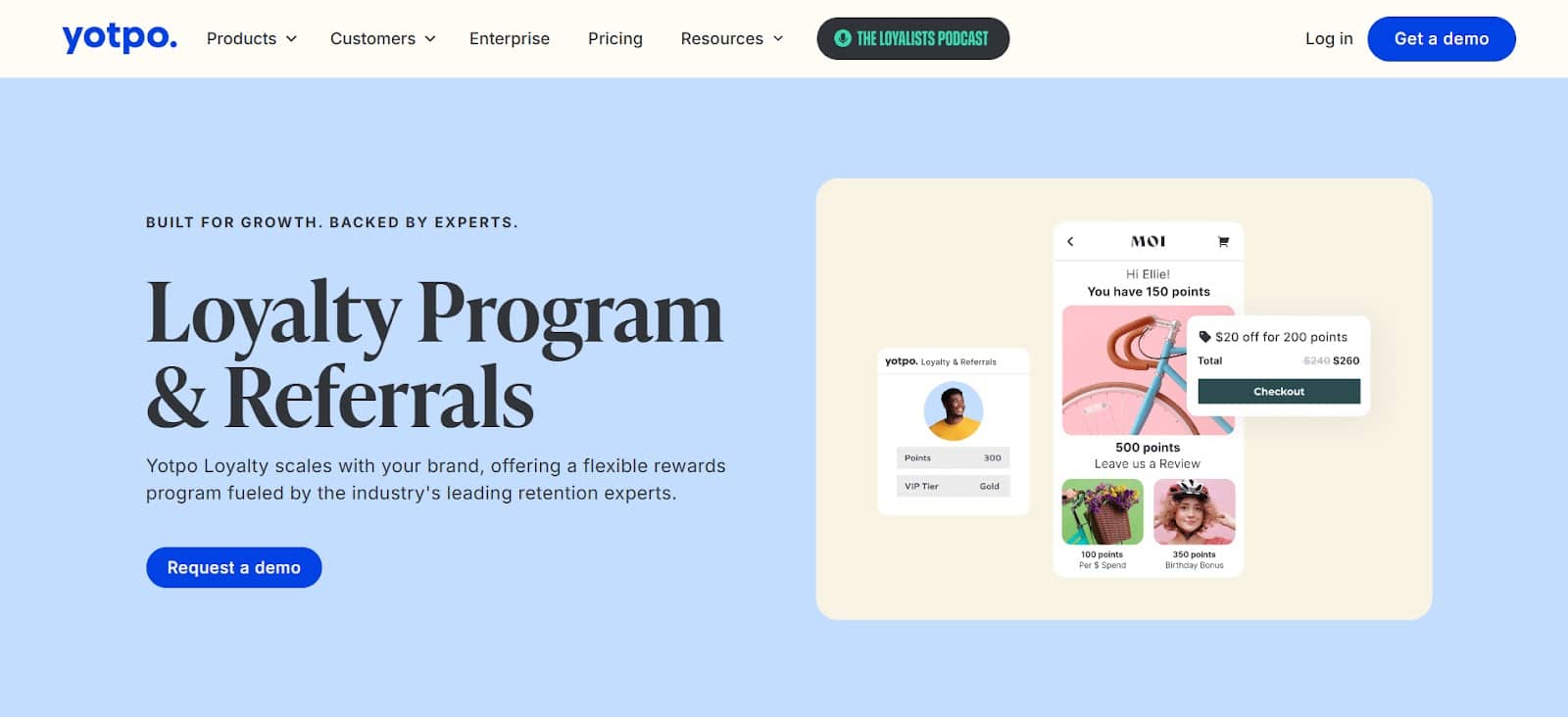
Your choice of software is the most critical decision you’ll make when launching a loyalty program. It dictates your capabilities, growth potential, and the level of support you receive.
For a loyalty rewards program, you need a solution that is both powerful and strategic. Yotpo Loyalty is designed specifically for eCommerce brands focused on growth. It’s more than just software; it’s a strategic tool backed by a team of experts. Yotpo’s approach is built on the idea that every brand is unique. Instead of a one-size-fits-all solution, Yotpo provides a highly flexible platform and partners with you to design a program tailored to your specific business goals.
Key Differentiators:
- Strategic Support & Market Expertise: With Yotpo, you gain a strategic partner. You get access to a dedicated Customer Success Manager who is an expert in loyalty marketing. They provide strategic guidance, help analyze your program’s performance, and offer proactive advice to ensure you get the best results. This is complemented by 24/7 technical support.
- Unmatched Flexibility: The platform is designed for deep customization, from earning rules and reward structures to the on-site look and feel. Yotpo allows you to create over 20 unique earning campaigns, rewarding customers not just for purchases but for actions like creating an account, following on social media, or referring a friend.
- Robust Reporting: Yotpo provides a comprehensive analytics suite that offers deep insights into your program’s performance. The dashboard makes it easy to track KPIs and measure ROI, so you can make data-driven decisions to optimize your strategy.
Enhancing Your Program with Synergies
While Yotpo Loyalty is a powerful standalone solution, its value can be enhanced when used with other best-in-class tools. For example, brands that also use Yotpo Reviews can create powerful synergies between the two products.
You could set up a campaign in Yotpo Loyalty to automatically award points to customers who leave feedback using Yotpo Reviews. This not only encourages more user-generated content, which builds trust and boosts conversions, but it also deepens customer engagement with your loyalty program. This kind of integration helps you build a stronger, more connected customer experience.
Best Practices for a High-ROI Loyalty Program
Launching your program is just the beginning. To ensure it delivers a strong return, follow these best practices.
- Ensure Simplicity and Clarity. Avoid complex rules. The value should be immediately clear to a customer.
- Offer Both Aspirational and Attainable Rewards. Include easily achievable perks for instant gratification and high-value rewards to encourage long-term engagement.
- Communicate Consistently. Use email and other channels to send regular updates on point balances and exclusive member promotions.
- Promote the Program Everywhere. Feature it on your homepage, mention it on product pages, and include it in your email footers.
- Gather Feedback and Iterate. Use your software’s analytics and direct customer feedback to continuously refine and improve your program.
Conclusion
In today’s competitive eCommerce landscape, focusing only on acquisition isn’t enough. Building a loyal customer base is the most reliable path to sustainable growth. A well-executed loyalty program is the best tool for this goal, as it drives repeat purchases, increases customer lifetime value, and turns your best customers into vocal advocates.
The foundation of this strategy is choosing the right software. You need a platform that is flexible, powerful, and designed for eCommerce. A strategic solution like Yotpo provides not only the advanced tools to build a custom program but also the expert guidance needed to ensure its success.
Frequently Asked Questions
How much does a loyalty program cost?
The cost varies based on the platform and your needs. While there is a software fee, it should be viewed as an investment. A successful program generates a positive ROI by increasing customer LTV and repeat purchases, more than covering its own cost.
How long does it take to see results from a loyalty program?
You can see initial results like member sign-ups almost immediately. However, the real impact on metrics like LTV and retention typically becomes clear within three to six months as members start changing their purchasing behavior.
What is the difference between a loyalty program and a referral program?
A loyalty program is for retaining existing customers by rewarding their repeat business. A referral program is for acquiring new customers by rewarding existing customers for spreading the word. The best loyalty software includes a built-in referral component.
Can small businesses benefit from a loyalty program?
Absolutely. Loyalty programs are especially powerful for small businesses. They help you compete with larger retailers without cutting prices and allow you to build a strong community around your brand.
How do I measure the ROI of my loyalty program?
To measure ROI, you track the behavior of loyalty members compared to non-members. Key metrics to compare are repeat purchase rate, AOV, and LTV. A strong loyalty platform will provide a dashboard that calculates this ROI for you.
What are some common mistakes to avoid when launching a program?
The biggest mistakes are making the rules too complicated, offering rewards that aren’t valuable to your customers, and not promoting the program enough. Keep it simple, desirable, and visible.
How can I make my loyalty program stand out?
Personalization is key. Use your customer data to offer unique rewards that resonate with different segments. You can also offer experiential rewards, like early access to new products or invitations to exclusive events.
Can I customize the look and feel of my program?
Yes, top-tier software like Yotpo offers deep customization. You should be able to control the colors, fonts, and language of your on-site widgets and landing pages so the program feels like a natural extension of your brand.
How do I promote my new loyalty program?
Announce it everywhere! Use homepage banners, on-site pop-ups, social media posts, and dedicated emails. Mention it on product pages and in your transaction confirmations. The more visible it is, the faster it will grow.
Is it better to offer discounts or free products as rewards?
Both can be effective. Discounts offer broad appeal and flexibility. Free products can feel more special and have a higher perceived value. The best strategy is often to offer a mix of both to appeal to different customer preferences.
How does loyalty software integrate with my eCommerce store?
Good loyalty software offers seamless, one-click integrations with major platforms like Shopify, BigCommerce, and Adobe Commerce. This connection allows the software to automatically track purchases and award points without any manual work.
What kind of support should I expect from a loyalty software provider?
Look for a provider that offers more than just technical support. A true partner, like Yotpo, provides strategic guidance from loyalty experts who help you design, launch, and optimize your program for maximum business impact.
What’s the difference between points-based and tiered loyalty programs?
A points-based program is straightforward: customers earn points for actions and redeem them for rewards. A tiered program is more advanced; it creates different membership levels (e.g., Bronze, Silver, Gold) where customers unlock more valuable benefits as they spend more and climb the tiers.


 Join a free demo, personalized to fit your needs