











Rising customer acquisition costs present a persistent challenge for ecommerce brands. Relying solely on attracting new shoppers is an expensive strategy. A key differentiator for today’s fastest-growing brands is their focus on turning first-time buyers into lifelong fans. A powerful customer loyalty program is the strategic asset that makes this possible.
This guide explores a range of loyalty program ideas, from foundational models to creative strategies that build genuine customer connection. We will analyze why loyalty is crucial for growth, examine actionable ideas for implementation, and demonstrate how to put these concepts into practice.
Why a Customer Loyalty Program is Critical for E-commerce Growth
In a competitive market, a loyalty program enables a brand to stand out. It formally acknowledges the value of a customer’s business and signals a commitment to a lasting relationship. This strategy delivers significant returns in several key areas.
From a financial perspective, the benefits are clear. It costs significantly more to acquire a new customer than to retain an existing one. Loyalty programs directly address this by encouraging repeat purchases. When customers can earn rewards, they have a compelling reason to return to your store instead of a competitor. This directly boosts crucial metrics like customer lifetime value (LTV) and repeat purchase rate.
Beyond that, loyal customers tend to spend more. A positive history with your brand, combined with the promise of future rewards, often increases their average order value (AOV). The benefits also extend beyond direct sales. A well-designed loyalty program builds a community, making customers feel like insiders. This emotional connection transforms a simple transactional relationship into genuine brand advocacy. These advocates are more likely to leave positive reviews and recommend your brand, generating powerful social proof and word-of-mouth marketing.
Different Types of Loyalty Programs
The optimal loyalty program structure depends on your products, customers, and business goals. Understanding the primary models is the first step before exploring specific creative ideas.
Foundational Loyalty Program Models
These established frameworks provide a solid base for any loyalty strategy.
The Points-Based Program
This is the most common and easily understood type of loyalty program.
- How it Works: Customers earn points for specific actions, most commonly for every dollar spent. They can then redeem these points for rewards, such as discounts, free products, or exclusive access. The structure is straightforward: spend more, earn more.
- Why it Works: Its simplicity is its strength. The value proposition is clear and immediate, which encourages customer participation. It provides a flexible foundation that you can enhance with more creative earning and redemption options.
- Best For: Businesses of all sizes, especially those in retail with frequent purchases. It is an excellent starting point for any brand new to loyalty programs.
The Tiered Program
Tiered programs introduce gamification and exclusivity to the points-based model.
- How it Works: Customers unlock new levels or “tiers” based on spending or engagement over a specific period. Each tier offers an increasingly valuable set of perks. For instance, a “Silver” member might receive free shipping, while a “Gold” member receives free shipping plus early access to new products.
- Why it Works: Tiers create a sense of achievement and status, motivating customers to spend more to reach the next level and unlock better benefits. This exclusivity makes your most valuable customers feel recognized and appreciated, strengthening their brand connection.
- Best For: Brands aiming to foster a strong sense of community and reward top spenders. This model is effective for industries like fashion, beauty, and high-end electronics.
The Paid (VIP) Program
This model, popularized by Amazon Prime, requires customers to pay a recurring fee for immediate access to a suite of benefits.
- How it Works: Customers pay a monthly or annual fee to join an exclusive club. In return, they instantly receive premium benefits, such as free shipping on all orders, guaranteed discounts, or exclusive content.
- Why it Works: A paid program effectively identifies your most committed customers. A customer willing to pay for membership is significantly more likely to become a long-term, high-value shopper. The fee also generates a predictable revenue stream.
- Best For: Brands with a strong value proposition and a dedicated customer base. This model requires offering benefits so valuable that customers view the fee as a worthwhile investment.
The Value-Based (Charity) Program
This approach connects customer loyalty to a social cause.
- How it Works: Instead of, or in addition to, personal rewards, customers can convert their points into charitable donations. For every purchase, your brand might pledge to plant a tree, donate a product, or contribute to a specific non-profit.
- Why it Works: It builds a powerful emotional connection. Modern consumers often prefer to support brands that align with their values. A value-based program demonstrates that your brand stands for more than profit, fostering deep loyalty and a positive brand image.
- Best For: Mission-driven brands or any business seeking to build a stronger emotional bond with its audience.
Creative & Engaging Loyalty Program Ideas
After establishing a foundational model, you can layer on creative tactics to maintain program engagement and appeal.
Innovative Ways for Customers to Earn Rewards
The most successful programs reward customer engagement, not just transactions.
- Reward for Account Creation: This is an effective first step. Offer a small number of points for signing up to introduce customers to your loyalty ecosystem immediately.
- Points for Social Engagement: Encourage customers to become brand advocates. Award points for following your brand on social media platforms or sharing your content. This organically expands your digital reach.
- Celebrate a Birthday: A personal touch goes a long way. Automatically gift customers bonus points or a special discount during their birthday month to make them feel valued.
- Incentivize Product Reviews: Customer reviews are invaluable marketing assets. Offer points for leaving a review after a purchase. To generate higher-impact content, offer more points for reviews that include a customer photo or video. This user-generated content (UGC) provides compelling social proof.
- Gamify the Experience: Introduce surprise point drops for logging in on a specific day or create digital “punch cards” that offer a bonus after a set number of purchases. Awarding badges for milestones, like “5-time Buyer,” can also add a fun, competitive element.
- Build a Strong Referral Program: Turn loyal customers into a sales force. Provide them with a unique referral link. When a friend makes a purchase using their link, both the referrer and the new customer receive a reward.
- Reward Community Participation: If you have a community forum or a Q&A section on your site, award points to customers who provide helpful answers to other shoppers’ questions. This builds a self-sustaining support network.
Compelling Ways for Customers to Redeem Rewards
The rewards you offer must be both desirable and attainable.
- Flexible Monetary Rewards: The most direct redemption option is a discount. Allow customers to trade points for a fixed-dollar amount (e.g., 500 points = $5 off) or a percentage discount. Offering various redemption levels allows customers to use small rewards quickly or save for a larger one.
- Free Products: Offer exclusive products available only through point redemption. This could be a special edition item or a sample of a bestseller, making the reward feel more tangible and exclusive than a simple discount.
- Experiential Rewards: Move beyond transactions to offer unique experiences. This could include early access to new product launches, an invitation to a virtual workshop, or a one-on-one consultation with a product expert. These rewards create lasting positive memories associated with your brand.
- Free Shipping Vouchers: The appeal of free shipping is a significant motivator for many customers. Allowing customers to redeem a small number of points to waive shipping fees can be a highly effective incentive.
- Partner Rewards: Collaborate with complementary, non-competing brands. Allow your customers to redeem their points for discounts or special offers from your partners. This adds value to your program and can introduce your brand to a new audience.
How to Implement These Ideas with Yotpo
Effective ideas require powerful tools for execution. A dedicated loyalty platform is essential for implementing these strategies without creating a significant manual administrative burden. This is where a specialized solution like Yotpo Loyalty excels.
Building Your Program with Yotpo Loyalty
Yotpo Loyalty is designed for ecommerce brands that aim to build sophisticated, customized loyalty and referral programs. It provides the flexibility and strategic support necessary to transform casual shoppers into passionate advocates.
Unmatched Flexibility and Customization
A primary challenge in loyalty marketing is avoiding a generic appearance. Yotpo addresses this by offering deep customization options that allow you to create a program that aligns with your brand identity.
You can easily configure a wide array of earning campaigns that extend beyond simple purchases. Rewarding customers for writing a review, following on social media, or celebrating a birthday can be configured in just a few clicks. The platform allows you to create over 15 unique earning campaigns, ensuring your program remains dynamic and engaging.
Redemption options are equally flexible. You can offer straightforward points-for-discount redemptions, percentage-off coupons, free shipping vouchers, or even free product rewards, ensuring your customers have desirable and attainable goals.
Strategic Guidance and Partnership
Successful loyalty programs are built on more than just software; they require a sound strategy. Yotpo differentiates itself by providing a partnership approach. Clients gain access to ecommerce loyalty experts who offer strategic guidance to design the most effective program for their business goals. This support extends from initial setup to ongoing optimization, helping to ensure the best possible return on investment.
Sophisticated VIP Tiers
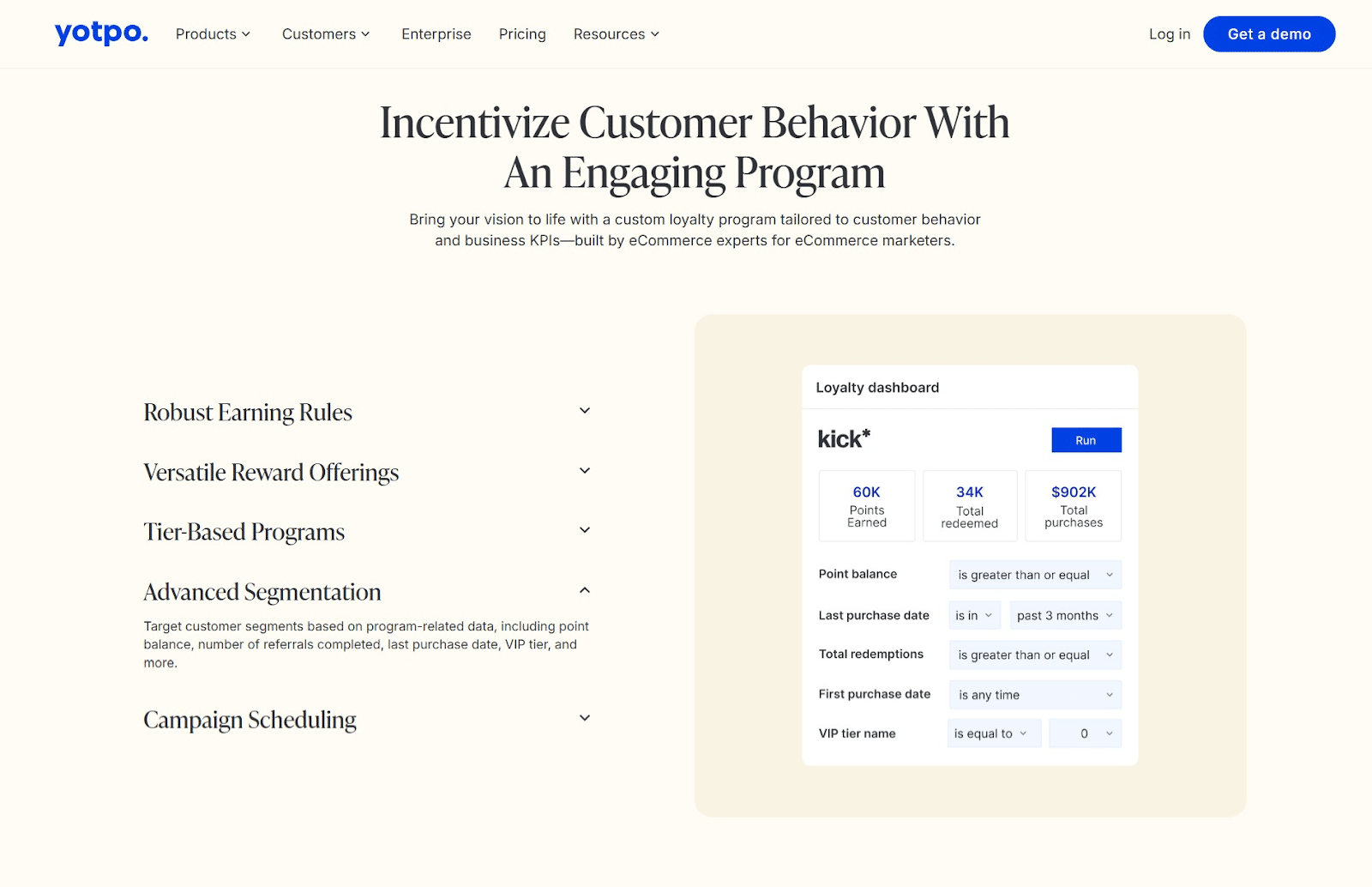
For brands looking to implement a tiered program, Yotpo simplifies the process. You can create custom VIP tiers with unique names, perks, and entry requirements. The platform automates customer movement between tiers based on spending or points accumulation. You can also implement flexible point expiration policies to encourage ongoing engagement, such as having points expire only for customers who have been inactive for a set period.
Actionable Best Practices for a Successful Loyalty Program
Launching a program is just the beginning. Adhering to these best practices will support its long-term success.
- Maintain Simplicity and Clarity. Your program must be easy to understand. The value proposition should be immediately obvious. Clearly explain earning rules and reward options on a dedicated, easy-to-find landing page.
- Promote it Across All Channels. Do not obscure your loyalty program. Feature it on your homepage, in email newsletters, on social media, and on packaging. Greater visibility leads to more sign-ups.
- Offer Attainable and Desirable Rewards. If the best rewards seem unreachable, customers may disengage. Ensure a mix of small, easily attainable rewards and larger, aspirational ones.
- Analyze and Optimize. Use your platform’s analytics to understand performance. Identify popular earning campaigns and redeemed rewards. Use this data to refine your strategy. With robust reporting from a platform like Yotpo, you can track key metrics like member enrollment, redemption rates, and the ROI of your program to make informed decisions.
- Personalize the Experience. Use the data you gather to make your members feel recognized. Address them by name, acknowledge their VIP status, and send offers based on their purchase history. Personalization is essential for building a genuine connection.
Conclusion
A customer loyalty program is a fundamental component of a modern ecommerce strategy. By moving beyond simple transactional discounts and creating a program that rewards engagement and builds community, brands can foster customer relationships that drive long-term, profitable growth. The possibilities are extensive, from points and tiers to referrals and experiential rewards.
The key is to choose a strategy that aligns with your brand and implement it with a powerful, flexible tool. A platform like Yotpo Loyalty provides the customization, strategic support, and integration capabilities necessary to build an exceptional program that invests in the future of your brand.
FAQs
How much does a customer loyalty program cost?
The cost can vary depending on the platform and program complexity. It is best to view it as an investment rather than a cost, as a successful program should generate a positive return by increasing customer lifetime value and repeat purchase rates. Platforms like Yotpo offer flexible models designed to scale with your business.
How do I get customers to sign up for my loyalty program?
Promotion is crucial. Announce the program to your email list and social media followers. Use website banners and pop-ups to attract attention. A highly effective tactic is to offer an instant sign-up bonus, like free points, to provide immediate value to new members.
What is the difference between a points program and a tiered program?
A points program is a single-level system where all members earn and redeem points uniformly. A tiered program adds layers, creating exclusive groups (tiers) for more engaged customers. As customers spend more, they advance to higher tiers and unlock more valuable perks, which gamifies the experience and encourages higher spending.
Can a small business have a successful loyalty program?
Yes. A loyalty program can be particularly impactful for a small business. It is a powerful way to compete with larger retailers by building a strong community and personal connection with customers. Modern platforms make it affordable and straightforward for businesses of any size to launch a sophisticated program.
How long does it take to see results from a loyalty program?
Initial results, such as an increase in sign-ups and engagement, can appear quickly. However, the most significant benefits, including a measurable increase in customer lifetime value and retention, are long-term gains. Loyalty is about building lasting relationships, and the true ROI of your program will grow over months and years.


 Join a free demo, personalized to fit your needs