










In the fast-paced world of eCommerce, getting a new customer is just the start. The real challenge, and where the biggest opportunity lies, is turning that first-time buyer into a loyal fan for life. Loyalty discounts are one of the most effective tools for retention marketing. They aren’t just about offering a deal. They are a strategic way to recognize, reward, and keep your most valuable customers, which drives sustainable growth for your brand.
Key Takeaways
- Loyalty Discounts vs. Regular Discounts: Loyalty discounts are exclusive rewards for program members, designed to build long-term relationships and increase customer lifetime value (CLV). Regular discounts are for everyone and aim for short-term sales.
- Psychological Drivers: These programs work because they tap into principles of reciprocity, exclusivity, and gamification, making customers feel valued and motivated to engage.
- Key Business Benefits: A strong loyalty strategy directly boosts key metrics like CLV, repeat purchase rate, and average order value (AOV), while also helping you acquire new high-value customers through referrals.
- Effective Discount Types: Popular strategies include points-based systems, tiered programs for aspirational goals, exclusive access to new products, personalized birthday rewards, and referral bonuses.
- Choosing the Right Technology: A successful program requires a robust technology partner. A solution like Yotpo Loyalty provides the strategic guidance, deep customization, and accurate analytics needed to build a best-in-class program that delivers a measurable return on investment.
What Are Loyalty Discounts?
Before we get into strategy and execution, it’s important to have a clear picture of what loyalty discounts are and why they are so effective.
Defining the Concept: More Than Just a Sale
A loyalty discount is a special price reduction or offer available only to members of a brand’s loyalty program. Unlike a general, site-wide sale that treats every visitor the same, a loyalty discount is a targeted incentive. It’s designed to reward repeat business and build a stronger connection with customers.
These rewards are earned through specific actions, such as making repeat purchases, engaging on social media, writing product reviews, or referring new customers. This “earned” quality is what sets them apart from simple promotional markdowns.
The Psychology Behind Loyalty Discounts
The power of loyalty discounts isn’t just about saving money; it’s psychological. Several key principles make these programs so compelling for shoppers.
- Reciprocity: When someone does something nice for you, you feel an urge to return the favor. By offering exclusive discounts, you give customers real value. This makes them more likely to respond by continuing to shop with your brand.
- Exclusivity and Status: Everyone likes to feel special. Loyalty programs create an in-group of customers who get perks that others don’t. This sense of exclusivity makes shoppers feel valued, strengthening their emotional bond with your brand.
- Gamification: Many loyalty programs use game-like elements, such as earning points or unlocking new tiers. This taps into our natural desire for achievement. Customers are motivated to take the next step to reach a new level and unlock a better discount, which keeps them engaged.
Loyalty Discounts vs. Regular Discounts: A Key Difference
It’s vital to understand the difference between a loyalty discount and a standard one. While both lower the price, their purpose and impact are very different. A regular discount is available to everyone, including new visitors, with the primary goal of driving immediate, short-term sales.
In contrast, a loyalty discount is exclusive to members of a loyalty program and is designed to foster long-term relationships and increase customer lifetime value (CLV). This exclusivity also changes how the discount is perceived; frequent regular discounts can devalue a brand, whereas a loyalty discount is seen as an earned reward. Furthermore, a regular discount provides minimal data beyond the transaction itself, while a loyalty program generates rich data on the behaviors and preferences of your best customers.
While regular discounts have a place for acquiring customers or clearing inventory, relying on them too much can train shoppers to wait for sales. Loyalty discounts, on the other hand, train customers to engage more deeply with your brand to unlock rewards.
The Business Benefits of a Loyalty Discount Strategy
A well-designed loyalty discount strategy delivers measurable results that directly impact your bottom line. It’s not just about making customers feel good; it’s about driving key business metrics.
Increasing Customer Lifetime Value (CLV)
Customer Lifetime Value (CLV) is the total profit you expect from a customer over their entire relationship with your brand. Loyalty discounts are a primary driver of CLV. By rewarding customers for repeat business, you give them a powerful reason to choose you over a competitor. Each repeat purchase adds to their lifetime value.
Boosting Repeat Purchase Rate
The repeat purchase rate—the percentage of customers who have bought more than once—is a critical health metric. Loyalty discounts directly encourage this behavior. When a customer knows they are earning points toward their next discount, the barrier to making that second or third purchase becomes much lower.
Enhancing Average Order Value (AOV)
Many loyalty programs are built to encourage larger purchases. Offers like “Spend $100 and get free shipping” or “Earn double points on orders over $75” are strategic ways to increase AOV. Customers are often willing to add one more item to their cart to reach a threshold that unlocks a reward.
Acquiring High-Value Customers Through Referrals
Your best customers often know people just like them. Loyalty programs can turn your happy shoppers into a powerful acquisition channel. By offering a “give-get” discount (e.g., “Give your friend $10 off, and you’ll get $10 off”), you encourage word-of-mouth marketing. Customers acquired through referrals often have a higher CLV.
Collecting Valuable Zero-Party Data
In an era of increasing data privacy, the information customers willingly share is priceless. Loyalty programs are a great way to collect this zero-party data. You can reward customers with points for providing their birth date or product preferences. This data allows you to create highly personalized marketing campaigns.
Types of Loyalty Discounts You Can Offer
There’s no single “best” way to structure a loyalty discount. The right approach depends on your brand and your goals. Here are some of the most popular and effective types.
- Points-Based Systems: This is the most common type of loyalty program. Customers earn points for every dollar spent and for actions like leaving a review. They can then redeem points for discounts, free products, or free shipping.
- Tiered Loyalty Programs: Tiered programs gamify the experience by creating different status levels. Customers move up tiers based on their spending. As they climb, they unlock better discounts and perks, which creates a goal that encourages higher spending. Starbucks Rewards is a classic example.
- Exclusive Access & Early Bird Discounts: These discounts reward loyalty with status. You give members first access to new product launches or sales. This makes them feel like insiders. Nike’s Membership program frequently offers member-only access to popular shoe drops.
- Birthday & Anniversary Rewards: Personalization is key. Celebrating a customer’s milestones is a simple yet powerful way to show you care. You can automatically send them a special discount during their birthday month or on the anniversary of them joining your program.
- Referral Program Discounts: Referrals are a great way to acquire new, high-quality customers. You give each member a unique referral link. When a new customer uses it, both the new customer and the referring member get a discount.
- Surprise and Delight Discounts: Sometimes the best reward is an unexpected one. You can occasionally surprise your best customers with a valuable discount or gift. This creates a memorable and positive experience.
Building Your Loyalty Discount Strategy: A Step-by-Step Framework
A successful loyalty program doesn’t happen by accident. It requires careful planning. Follow this framework to build a strategy that aligns with your business goals.
- Define Your Primary Goals: What are you trying to achieve? Do you want to increase repeat purchase rate, boost AOV, or get more referrals? Your goal will influence every other decision.
- Understand Your Customers: Segment your audience to tailor your rewards. RFM (Recency, Frequency, Monetary) analysis can help you identify different groups—like Champions, At-Risk Customers, and New Customers—and design targeted strategies for each.
- Choose Your Program Structure: With your goals in mind, select the right structure. A points-based system is great for simplicity. If you want to increase AOV, a tiered program is a better fit. Many brands use a hybrid model.
- Determine the Value of Your Discounts: Your discounts need to be valuable enough to motivate customers but not so generous that they hurt your profit margins. Start with a conservative structure and optimize over time.
- Select the Right Technology Partner: You can’t run a modern loyalty program with spreadsheets. You need a robust platform to manage members, track points, and automate rewards. This is where a dedicated loyalty solution becomes essential.
How Yotpo Loyalty Powers Your Discount Strategy
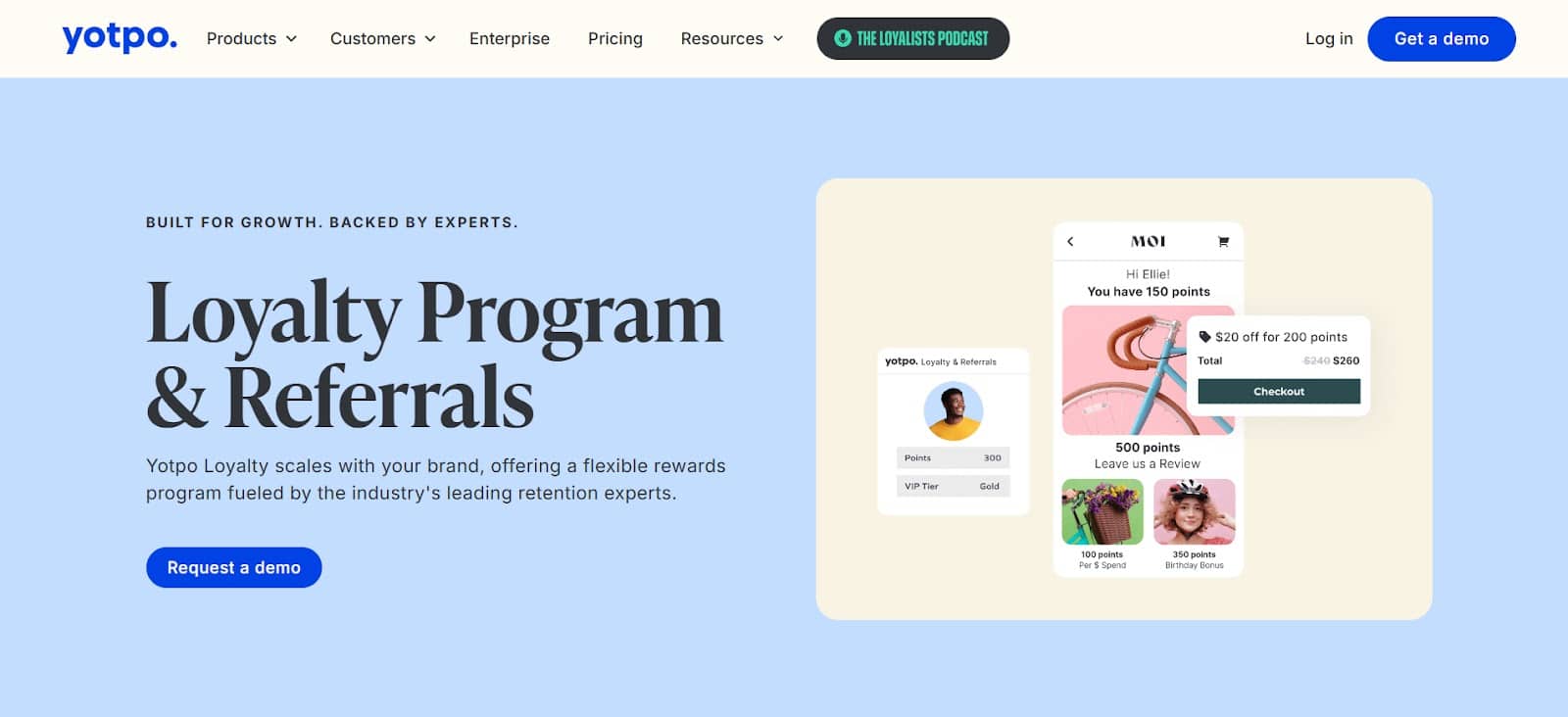
Choosing the right technology is a critical step. Your platform determines your flexibility, scalability, and the insights you can gather. Yotpo Loyalty is a best-in-class loyalty software built to solve this exact challenge.
The Yotpo Difference: A Strategic Partnership
Many loyalty platforms just provide the software. Yotpo acts as a strategic partner. This starts with access to a team of eCommerce loyalty experts and a dedicated Customer Success Manager (CSM) who helps you design a program tailored to your goals. This hands-on support is a key differentiator for brands that want to maximize their ROI.
Unmatched Flexibility and Customization
Your brand is unique, and your loyalty program should be too. Yotpo Loyalty offers deep customization options that let you create a program that reflects your brand identity. You can customize reward structures, design unique VIP tiers, and create a seamless, branded on-site experience for your members.
Implementing Discount Types with Yotpo Loyalty
Here’s how you can implement the discount strategies we discussed using Yotpo’s platform:
- Setting up Points-for-Discounts: The platform makes it simple to create redemption options, like “$10 off for every 1,000 points earned.” The system automatically generates and tracks unique coupon codes.
- Building VIP Tiers: Yotpo’s intuitive interface lets you define criteria for each tier (e.g., annual spend) and assign specific rewards, such as an automatic discount for all “Gold Tier” members.
- Automating Personalized Rewards: You can easily set up automated workflows to send birthday discounts or other personalized offers, saving you time while delivering a personal touch.
- Creating Powerful Referral Programs: Yotpo Loyalty includes a robust, built-in referral solution. You can quickly launch a “give-get” campaign with unique referral links for your members.
Robust Reporting to Measure Success
A strategy is only as good as your ability to measure it. Yotpo Loyalty provides a comprehensive analytics dashboard with a clear view of your program’s performance. You can track key metrics like program ROI, member engagement, and repeat purchase rate. These insights allow you to understand what’s working so you can continuously optimize your strategy.
Enhancing Loyalty with Yotpo Reviews
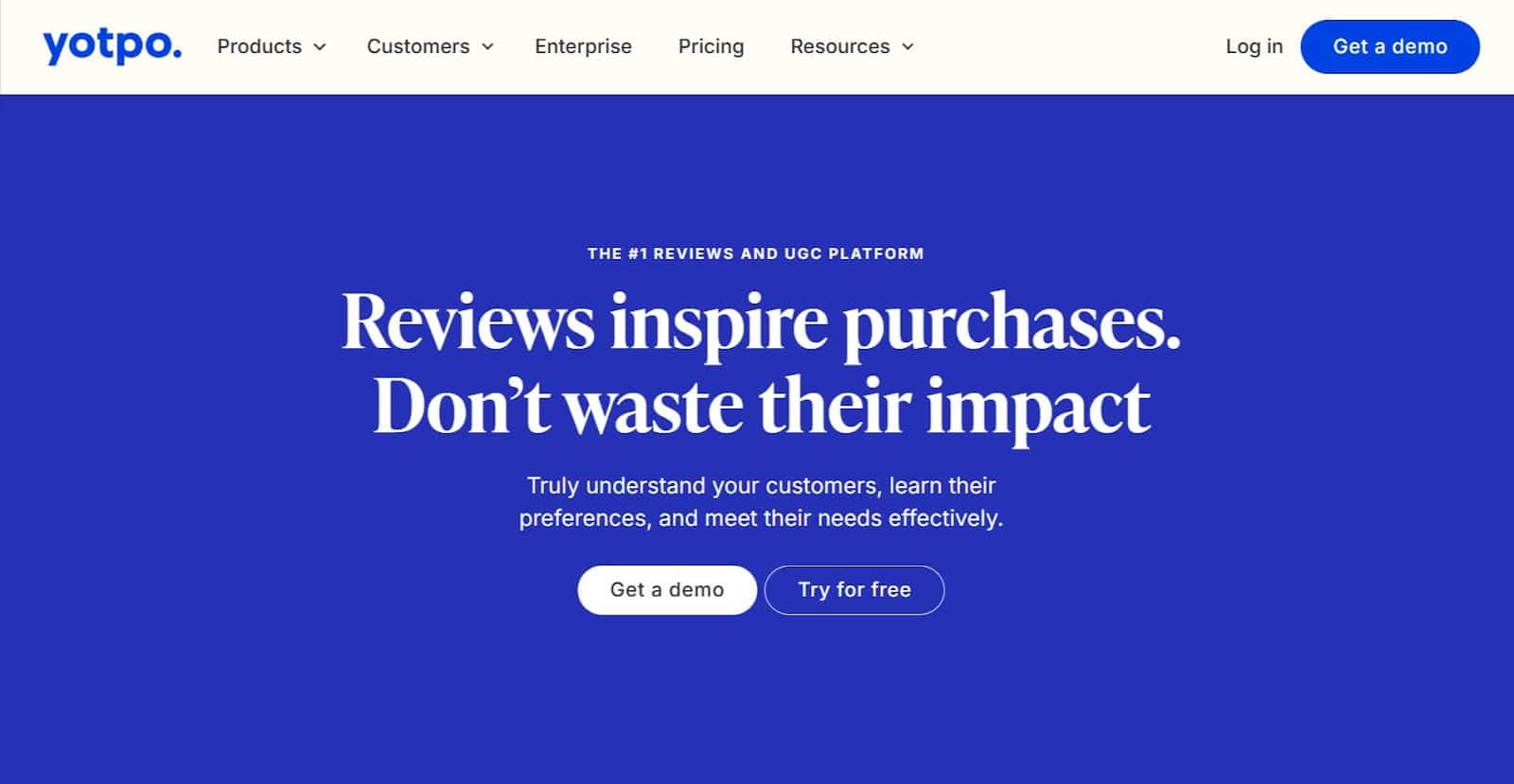
While Yotpo Loyalty is an incredibly powerful solution on its own, its effectiveness can be amplified when it works with other engagement tools. Your most loyal customers are often your biggest advocates. The synergy between Yotpo Loyalty and Yotpo Reviews allows you to create a powerful engagement loop.
You can automatically award loyalty points to customers who leave a product review. You can even offer bonus points for reviews that include photos and videos. This integration turns the post-purchase experience into a cycle of engagement and reward, fueling your program while generating high-converting social proof.
Common Challenges and How to Overcome Them
Launching a loyalty program comes with potential hurdles. Being aware of them upfront allows you to build a more resilient strategy.
- Challenge 1: Program Profitability: The main concern for many merchants is that a loyalty program will become too expensive. The solution is to model your costs carefully. Use a partner like Yotpo that provides robust ROI tracking so you can clearly see the revenue generated by the program.
- Challenge 2: Lack of Customer Engagement: Low enrollment is a common problem. The solution is effective promotion. Market your loyalty program like a new product. More importantly, make sure the rewards are both desirable and attainable.
- Challenge 3: Over-Discounting and Brand Devaluation: Careless discounting can cheapen your brand’s image. The solution is to focus on value over price. Structure your program so the best discounts feel earned and exclusive.
- Challenge 4: Technical Implementation: Integrating a new system can be daunting. The solution is to choose the right partner. A solution like Yotpo, which offers a dedicated CSM and 24/7 support, can significantly reduce the technical burden.
Conclusion: Make Loyalty Discounts Your Competitive Edge
In today’s competitive eCommerce landscape, loyalty discounts are a strategic imperative. By moving beyond generic promotions, you can build a system that rewards your best customers, increases their lifetime value, and turns them into passionate brand advocates. A successful program requires a clear strategy and the right technology—a platform that offers not just tools, but the partnership, flexibility, and insights you need to win.
Frequently Asked Questions
How much should a loyalty discount be?
There is no single answer, as it depends on your product margins and goals. A good starting point is a reward value between 1% and 5% of a customer’s total spending. For example, a $10 discount for spending $500 is a 2% reward value. The key is to make the discount enticing without hurting profitability.
Can a small business create a successful loyalty program?
Absolutely. Loyalty isn’t just for large corporations. A simple points-for-purchase system is easy to manage. A platform like Yotpo Loyalty is scalable, meaning it can support a business as it grows from a simple program to a more complex, tiered system.
How do I promote my loyalty program to get more members?
You need to market your loyalty program actively. Use prominent on-site banners, announce the program to your email list, prompt customers to join on post-purchase pages, and run social media campaigns that explain the benefits.
What’s the difference between a loyalty program and a referral program?
A loyalty program is a broad strategy to retain existing customers by rewarding a range of behaviors. A referral program is a specific tactic focused on acquiring new customers by incentivizing existing customers to spread the word. Most robust loyalty platforms, including Yotpo Loyalty, incorporate a referral program as a core feature.
How do I measure the ROI of my loyalty program?
To measure Return on Investment (ROI), you need to track the revenue generated directly by program members against the cost of the rewards and the platform. Look at metrics like the repeat purchase rate and average order value (AOV) of members versus non-members. A platform with a strong analytics dashboard, like Yotpo Loyalty, is essential for this.
What are some common mistakes to avoid?
Three common mistakes are making rewards too hard to earn, not promoting the program enough, and offering discounts that are too generous and hurt your profit margins. It’s also a mistake to “set it and forget it.” You should continuously analyze performance and optimize your strategy.
Should my loyalty points expire?
This is a great question. Point expiration can create a sense of urgency that encourages customers to redeem their rewards. However, it can also create a negative experience if customers feel they lost something they earned. A flexible approach, like a rolling expiration policy (e.g., points expire 12 months after they are earned), is often a good compromise.
How do loyalty discounts work for subscription businesses?
They work very well. You can offer members-only discounts on their recurring orders, provide early access to new products, or allow them to redeem points for one-time add-on products. This adds extra value beyond the core subscription, reducing churn.
Can I offer non-monetary rewards?
Yes, and you absolutely should! Non-monetary rewards like exclusive access to new products, invitations to special events, or free content can make your program feel more like a VIP club than just a discount system. This helps build a stronger emotional connection with your brand.
What’s the best way to name my loyalty program tiers?
Your tier names should reflect your brand’s personality. Avoid generic names like “Bronze, Silver, Gold.” Instead, get creative. A coffee brand might use “Apprentice, Barista, Master Roaster,” while a beauty brand could use “Glow-Getter, Radiant, Luminous.”
How can I re-engage inactive loyalty members?
Use the data from your loyalty platform to identify members who haven’t purchased in a while. You can create a targeted campaign offering them bonus points on their next purchase or a surprise “we miss you” discount to bring them back.
Is it better to offer a percentage-off or a fixed-amount discount?
Psychologically, fixed-amount discounts (e.g., “$10 off”) often perform better for smaller purchases, as the value is clear. Percentage-off discounts (e.g., “20% off”) tend to be more effective for larger purchases because the potential savings are greater. It’s a good idea to offer a mix of both.
How does Yotpo Loyalty ensure my data is accurate?
Yotpo Loyalty believes in conservative reporting that gives you a true insight into shopper behavior without inflating results. The platform provides robust dashboards that track different program elements with customizable date ranges, giving you the power to analyze specific trends and make data-driven decisions confidently.




 Join a free demo, personalized to fit your needs