















Think about how you search. You rarely type just “shoes” or “software” and hit enter. You ask questions. You look for specific solutions like “best running shoes for flat feet” or “loyalty platform for small business.”
That specificity is where the intent lies. While broad keywords might look impressive in a monthly report because of their high search volume, they rarely tell you if a user is ready to buy. Long-tail keywords do. They are the difference between attracting a window shopper and connecting with a customer who has their credit card in hand. This guide will show you how to identify those high-value opportunities and use them to drive genuine growth.
Key Takeaways: Long-Tail Keywords
- Definition: Long-tail keywords are specific, multi-word search phrases (e.g., “best waterproof hiking boots for wide feet”) that signal high intent.
- Volume vs. Value: While they attract lower search volumes individually, they account for over 91% of all web searches and convert at a higher rate.
- AI Compatibility: Voice search and AI engines (like ChatGPT and Google’s AI Overviews) thrive on long-tail queries because they mimic natural conversation.
- Competitive Edge: Targeting these keywords allows growing brands to bypass the fierce competition for broad “head terms” and capture ready-to-buy shoppers.
- Source Material: Your best source for long-tail keywords is your own customer base—specifically through User-Generated Content (UGC) and reviews.
What Are Long-Tail Keywords?
Let’s establish a precise definition. A common misconception is that “long-tail” refers strictly to the length of the phrase. In reality, the defining metrics are specificity and intent.
A long-tail keyword is a search query that is highly specific and typically reflects a user who is further along in the buying cycle. Because of this specificity, these terms have lower individual search volumes than broad “head” terms, but they collectively make up the vast majority of search traffic.
The Head, The Body, and The Long Tail
To visualize this, imagine a demand curve for search queries:
- The Head (Short-Tail): Broad, high-volume terms like “shoes” or “coffee.” These are extremely competitive and often have vague intent. Is the user looking to buy, browse, or define the word? It is often unclear.
- The Body (Medium-Tail): Slightly more specific terms like “men’s running shoes” or “organic coffee beans.” The intent is clearer, but competition remains high.
- The Long Tail: Highly specific queries like “best organic coffee beans for cold brew.” Each unique query has low volume, but together they dominate the search landscape.
Comparison of Keyword Types:
- Head Term: “Sofa”
- Intent: Vague (Browsing)
- Conversion Potential: Low
- Body Term: “Leather Sofa”
- Intent: Some focus (Researching)
- Conversion Potential: Medium
- Long-Tail Term: “Mid-century modern grey sectional sofa for small apartment”
- Intent: Specific (Ready to Purchase)
- Conversion Potential: High
Misconceptions vs. Reality
- Myth 1: They are just keywords with 4+ words.
- Reality: Not always. “Best web developer” is three words, but it is a high-competition head term. “Used 2023 Honda Civic Si” is five words, but it is a specific, high-intent long-tail keyword. Focus on specificity, not just length.
- Myth 2: Low volume means low value.
- Reality: This is a critical error. Rather than focusing on 10,000 visitors who are “just looking,” prioritize the 50 visitors searching for the exact product you sell. You will likely generate more revenue from the high-intent visitors.
- Myth 3: You should “stuff” them into your page.
- Reality: Avoid this outdated tactic. Search engines in 2026 use semantic analysis to understand topics. Instead of forcing keywords into text, aim to answer the specific question the keyword represents.
Why Long-Tail Keywords Drive Growth in 2026
For marketers looking to optimize their budget, prioritizing the long tail is often a smarter investment than chasing high-volume terms.
1. Lower Competition, Higher Efficiency
Ranking for a broad term like “boots” puts you in direct competition with global giants and massive marketplaces. It is a resource-intensive battle. By targeting “vegan leather chelsea boots for women,” you narrow the playing field. You are no longer competing with the entire internet; you are competing with a handful of relevant brands. This is how smart businesses gain market share.
2. Superior Conversion Rates
Specificity equals purchase intent. Long-tail keywords typically have a conversion rate 2.5x higher than head terms. A user searching for a general term is browsing; a user searching for a specific model, feature, or use-case has likely already done their research and is looking for a checkout button.
3. The Foundation of Voice Search and AI
How do you interact with a smart speaker or an AI assistant? You don’t say keywords; you ask questions.
- Typing: “Weather Seattle”
- Voice/AI: “What is the weather going to be like in Seattle this weekend?”
Voice search is inherently long-tail. As more consumers use tools like Google Lens or ask questions to LLMs, the importance of natural, question-based keywords will only increase. Optimizing for these phrases is now often referred to as GEO (Generative Engine Optimization).
“AI engines crave specificity. They are designed to provide the best single answer, not just a list of links. Long-tail content that directly answers a complex question is the fuel these engines run on.” — Amit Bachbut, SEO Expert
4. Building Topical Authority
Search engines don’t just rank pages; they rank websites based on perceived expertise. You build this “Topical Authority” not by writing one-off articles, but by covering a topic comprehensively.
- Pillar: The Ultimate Guide to Coffee
- Cluster (Long-Tail): “Difference between Arabica and Robusta,” “Best grind for French Press,” “How to store beans.”
By answering these specific long-tail questions, you signal to Google that you are an expert on the broader topic of “coffee,” which helps all your related pages rank higher.
How to Find Long-Tail Keywords: A Step-by-Step Guide
Finding these valuable phrases is a process of discovery. Here is a methodology to build a robust list of high-value terms using widely available tools.
Step 1: Start with Your “Seed” Keywords
Before you can find long-tail keywords, you need to know your main topics. These are your “seed” keywords—usually 1-2 words long.
- If you sell shoes: “boots,” “sneakers,” “sandals.”
- If you sell software: “loyalty program,” “customer feedback.”
Step 2: Leverage Google’s Native Features
Google provides free, real-time insights into user intent.
- Autocomplete: Type your seed keyword but don’t hit enter. The dropdown suggestions are high-volume long-tail queries. Try the “Alphabet Soup” method: type your keyword followed by “a”, then “b”, then “c” to see what comes up.
- People Also Ask (PAA): These boxes reveal the exact questions users are asking. If you see “How do I care for suede boots?”, that is a signal to create a guide on that topic.
- Related Searches: Located at the bottom of the search results, these terms show what users search for after their initial query, offering a window into their next step in the journey.
Step 3: Leverage Research Tools
While Google is great, professional tools can speed up the process. Platforms like Semrush, Moz, or Ahrefs allow you to filter keyword lists by word count (e.g., 4+ words) or difficulty. This helps you instantly identify low-competition opportunities that are relevant to your seeds.
Step 4: Analyze Your Own Data
Your most reliable data comes from your existing audience.
- Google Search Console: Review your performance report for queries with high impressions but lower rankings (positions 11-20). These are opportunities where you are already visible but need more targeted content to win.
- Site Search: Analyze what users type into the search bar on your own store. These are users who are already interested in your brand but looking for something specific.
- Support Logs: What questions do your customer service agents answer daily? Every specific question (e.g., “Do you ship to P.O. boxes?”) is a potential long-tail keyword.
Step 5: Monitor Your Community
Go where your customers discuss your industry.
- Reddit & Quora: Look for threads in your niche. Titles like “Is a 4070 Ti good for 4k gaming?” are perfect long-tail topics.
- Social Media Comments: Read the comments on your posts and similar industry posts to see the specific language customers use to describe their pain points.
The Goldmine: User-Generated Content (UGC)
All the methods above involve some guesswork. However, there is a way to read the exact, specific phrases your customers use: User-Generated Content.
When a customer writes a review, they aren’t trying to do SEO. They are trying to be helpful. They use natural, descriptive language.
- Marketer: “Hydro-retention formula.”
- Customer: “Great moisturizer for dry winter skin.”
That second phrase is a high-value long-tail keyword. By collecting detailed reviews, you naturally populate your product pages with the exact phrases future customers are searching for. This turns your product pages into magnets for specific queries like “t-shirt that doesn’t shrink in the wash” or “athletic fit for tall guys.”
Content Strategy: The Topic Cluster Model
Once you have your list, avoid creating a separate page for every single keyword. Instead, organize your keywords by intent using the Topic Cluster model.
- The Pillar Page: A comprehensive guide on a broad topic (e.g., “The Ultimate Guide to Skincare”).
- The Cluster Content: Shorter articles answering specific long-tail questions (e.g., “Best moisturizer for oily skin,” “How to use Vitamin C serum”).
- The Links: Link all cluster articles back to the pillar page, and vice versa.
Tutorial: Writing a Long-Tail Optimized Article
Let’s say your long-tail keyword is “How to clean suede boots without a kit.”
- H1 Title: Use the primary long-tail keyword. “How to Clean Suede Boots Without a Kit: A 5-Step Guide.”
- Gather Related Questions: Look at “People Also Ask” for related queries like “Can you use vinegar on suede?” or “How to fix water stains.”
- Outline with Intent: Use those related questions as your H2 and H3 subheadings.
- H2: What Household Items You Need
- H2: Step-by-Step Cleaning Guide
- H3: Can You Use Vinegar? (Yes, Carefully)
- Write Naturally: Answer the questions helpfully. Don’t stuff the keyword.
- Link: Add a link back to your “Ultimate Guide to Shoe Care” pillar page.
Long-Tail Keywords in Action: PPC and E-commerce
Long-tail strategy isn’t limited to organic content. It is a powerhouse for Paid Search (PPC) and e-commerce optimization.
PPC: The Secret Weapon for ROI
Most advertisers bid on expensive head terms like “shoes.” You can maximize your budget by bidding on specific phrases like “women’s wide-width trail running shoes.”
- Lower Cost: Fewer competitors bid on these specific phrases, lowering your Cost-Per-Click (CPC).
- Higher CTR: A user searching for that specific shoe is far more likely to click an ad that matches their query exactly.
- Higher Quality Score: Google rewards the relevance between the keyword, ad copy, and landing page with a higher Quality Score, further reducing your costs.
Optimizing E-commerce Pages
- Category Pages: Optimize these for “body” keywords (e.g., “Men’s Hiking Boots”).
- Product Pages: These are your long-tail engines. Ensure your titles and descriptions include specific details (Model, Color, Use-Case).
- The UGC Factor: Adding reviews to these pages automatically adds hundreds of long-tail keywords to the text, helping the page rank for variations you might never have thought to write yourself.
Personalization: The Loyalty Connection
Long-tail keywords don’t just tell you what people want; they tell you who they are.
- Searcher A: “best budget headphones” (Price Sensitive)
- Searcher B: “best audiophile headphones for vinyl” (Quality/Hobbyist)
Using Data to Build Smarter Loyalty Ideally, you should not treat these two customers the same. A modern loyalty strategy uses this interest data to segment customers. You might offer the “budget” shopper a discount code, while offering the “audiophile” early access to a limited-edition product drop. By aligning your rewards with the specific intent revealed by their search behavior, you increase retention and Customer Lifetime Value (CLTV).
“The shift to long-tail is a shift to intent. You aren’t just capturing traffic; you’re capturing a mindset. When a customer searches with specificity, they are telling you exactly what they need to convert.” — Amit Bachbut, SEO Expert
How Yotpo Helps You Win with Long-Tail
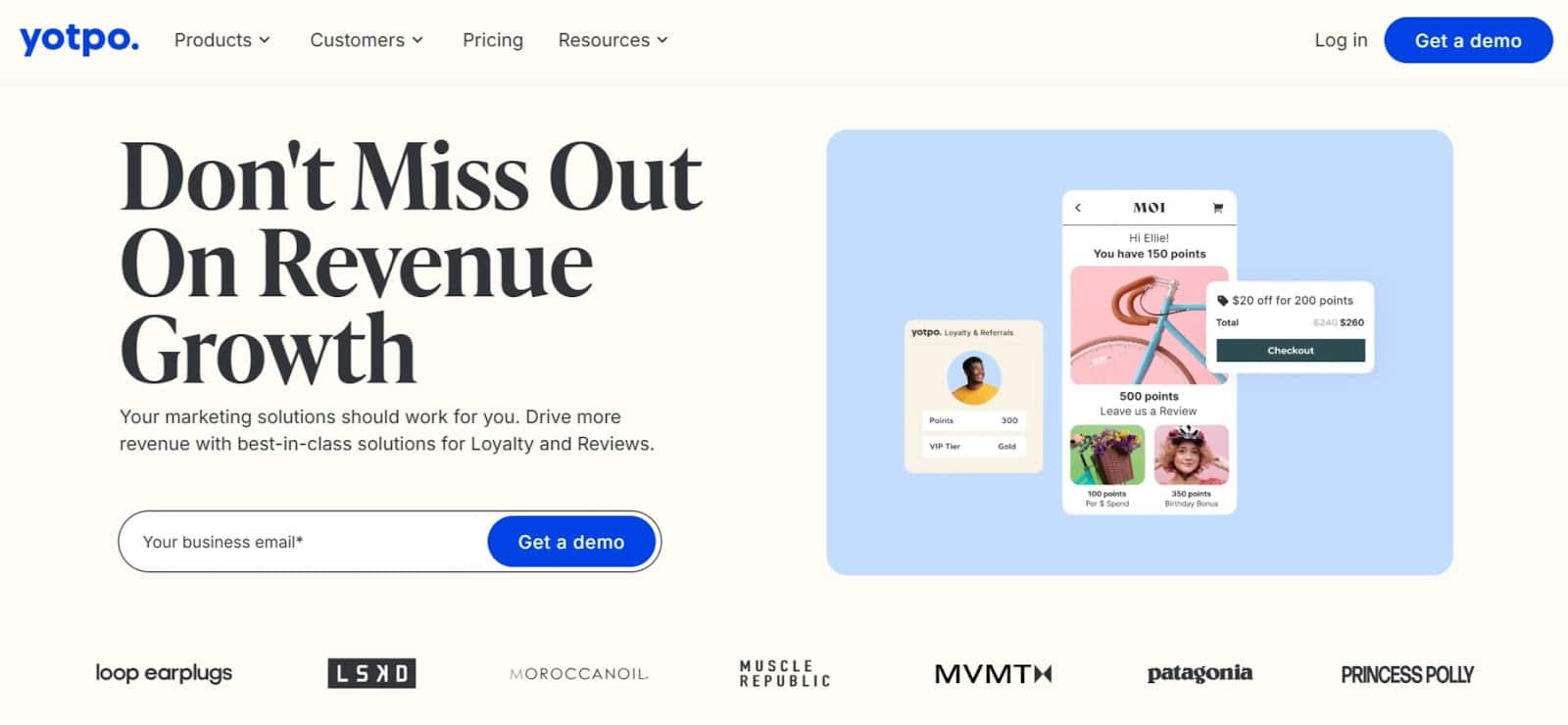
Executing a long-tail strategy requires more than just good writing; it requires the right technology to capture and act on customer data. Yotpo Reviews helps you generate a massive volume of long-tail content by using AI-powered Smart Prompts, which encourage buyers to leave detailed feedback.
In fact, Smart Prompts are 4x more likely to capture high-value topics like fit and sizing. This unique content is then indexed by search engines, boosting your organic visibility and driving conversion rates—shoppers who see UGC convert 161% higher than those who don’t.
Simultaneously, Yotpo Loyalty allows you to take the specific intent data you’ve gathered and build segmented, personalized reward programs that resonate with niche customer groups. By combining high-quality content generation with intelligent retention, you turn search intent into lasting brand loyalty.
Conclusion
The era of chasing broad, vague keywords is fading. To win in 2026, it is essential to align your strategy with the specific, high-intent questions your customers are asking. By focusing on long-tail keywords, leveraging the natural language in your customer reviews, and organizing your content into authoritative clusters, you position your brand to be the answer that both shoppers and AI engines are looking for.
FAQs: Long-Tail Keywords
1. How many words qualify a keyword as “long-tail”?
There is no strict word count rule. The definition is based on specificity and search volume, not length. While most long-tail keywords are three words or longer (e.g., “best running shoes for flat feet”), the focus should be on the intent behind the phrase rather than the number of words.
2. Are long-tail keywords effective for new websites?
Yes, they are often the most effective strategy for new domains. Because they have lower competition than broad “head terms,” it is significantly easier for a new site to rank for specific long-tail queries and build initial traffic and authority.
3. How do AI Overviews impact long-tail keywords?
AI Overviews (formerly SGE) rely heavily on finding direct answers to complex questions. Since long-tail keywords are often phrased as questions, creating content that directly answers them increases your chances of being cited as a source in these AI-generated summaries.
4. Can one page rank for multiple long-tail keywords?
Absolutely. Modern search engines use semantic analysis to understand the topic of a page. A single, comprehensive guide on “leather shoe care” can naturally rank for dozens of related long-tail queries like “how to polish boots,” “removing scuffs from leather,” and “best leather conditioner.”
5. What is the relationship between long-tail keywords and voice search?
Voice search is almost exclusively long-tail. When people speak to assistants like Siri or Alexa, they use conversational sentences (“Where can I find an open coffee shop near me?”) rather than fragmented keywords (“coffee shop open”). Optimizing for long-tail helps you capture this voice traffic.
6. Should I use long-tail keywords in my product titles?
Yes, if it doesn’t compromise readability. Including specific details like color, material, or use-case (e.g., “Men’s Waterproof Hiking Boot – Leather”) helps match the specific queries users type when they are close to making a purchase.
7. How does User-Generated Content help with SEO?
UGC, such as reviews and Q&A, provides a constant stream of fresh, unique content on your product pages. Customers naturally use long-tail phrases to describe their experiences, which helps your pages rank for a wider variety of specific search terms without you having to write the copy yourself.
8. What is a “Topic Cluster”?
A Topic Cluster is an SEO strategy where you create a central “Pillar Page” covering a broad topic and link it to multiple “Cluster Pages” that answer specific long-tail questions. This structure helps search engines understand your site’s hierarchy and expertise.
9. How do I find the intent behind a keyword?
The best way is to search the keyword yourself. Look at the results Google provides. Are they blog posts (Informational intent)? Product pages (Transactional intent)? Comparison guides (Commercial intent)? Align your content with the type of results you see.
10. Do long-tail keywords have higher conversion rates?
Generally, yes. Data consistently shows that long-tail keywords convert at a higher rate because the user has a more specific need. Someone searching for “buy size 10 red running sneakers” is far closer to a purchase than someone simply searching for “sneakers.”




 Join a free demo, personalized to fit your needs