













Learning SEO used to be about memorizing a checklist of technical tricks. Today, it is about understanding psychology. As search engines evolve into conversational assistants, they no longer just retrieve links—they recommend solutions. This shift means your goal is no longer just to rank, but to be the brand that AI trusts enough to cite.
If you are starting from scratch in 2026, you have a distinct advantage: you don’t have to unlearn the old habits of “gaming the system.” You can go straight to building the kind of authoritative, experience-driven content that modern engines crave.
Key Takeaways: How to Learn SEO: A Complete Roadmap for Beginners
- From Retrieval to Synthesis: Search engines now synthesize answers directly via AI Overviews. Success is measured by “Share of Voice” and citations alongside traditional traffic.
- Brand Authority is the New Filter: In an ecosystem rich with AI content, Google prioritizes known brands and “Experience” (E-E-A-T) as proxies for truth and safety.
- The “Zero-Click” Reality: With nearly 60% of searches ending without a click, strategies must optimize for visibility and brand lift, not just direct click-throughs.
- Entity-First Optimization: Modern SEO requires mapping “Entities” (concepts, people, products) and their relationships, rather than just targeting isolated keywords.
- Technical Performance is Baseline: Core Web Vitals and renderability are foundational infrastructure required for indexing.
- UGC is the Engine: Fresh, human-verified reviews provide the unique signal that LLMs prioritize, helping authentic brands convert 161% higher than those without user-generated content.
The New Paradigm: From Retrieval to Synthesis
To learn SEO effectively, it is helpful to evolve beyond the “library” model of the internet. For twenty years, Google acted like a librarian: you asked a question, and it pointed you to a book (a website). Today, Google acts more like an analyst: you ask a question, and it reads the sources for you, synthesizing a direct answer. This shift from retrieval to synthesis changes the economic reality of organic search.
The Rise of Answer Engines and Zero-Click Search
A critical metric for modern SEOs is the “Zero-Click” rate. Approximately 60% of Google searches now end without a click to a website. On mobile devices, where user intent is often about immediate answers (e.g., “weather,” “definitions,” “stock prices”), that figure climbs even higher to 77%.
This phenomenon is driven largely by AI Overviews (formerly SGE), which now appear on roughly 13-16% of all queries, particularly those with informational intent. The impact on traffic is notable: when an AI Overview is present, the click-through rate (CTR) to traditional organic results can drop by as much as 61%.
Advisor Insight: Consider viewing this as a filter rather than a barrier. The users who do click through are often more qualified, having already consumed the basic information. Your content strategy can shift from defining basic terms (which AI handles) to providing deep, experience-based insights that an LLM cannot replicate.
Generative Engine Optimization (GEO): The New Standard
As search engines evolve, so must our optimization framework. “Generative Engine Optimization” (GEO) is the practice of structuring content specifically for AI retrieval and synthesis. Specific optimizations—such as adding relevant statistics, direct quotations, and credible citations—can boost a site’s visibility in AI responses by 40%.
GEO favors content that is “machine-readable.” This means:
- Structured Fact Chunks: Breaking dense paragraphs into clear key-value pairs (e.g., “Price: $50,” “Material: Cotton”).
- Direct Answers: Placing the answer to a user’s question immediately after the heading.
- Authority Signals: AI models prioritize content that references other authoritative entities, effectively “borrowing” trust.
Why Brand Authority is the New Ranking Factor
In an ocean of generated content, Google utilizes Brand Authority as a proxy for truth. Search algorithms are increasingly weighting “Entity strength”—how well-known and trusted a brand is within a specific topic—over individual keyword optimization.
Data supports this focus on quality. When a brand is cited within an AI Overview, its organic click-through rate improves by 35% compared to uncited results. This suggests that visibility in AI answers serves as a powerful “billboard effect,” driving brand recognition that leads to clicks later in the user journey.
The Theoretical Foundation: Mechanics of the Modern Web
Before mastering tactics, it is essential to understand the infrastructure. SEO is the management of how search engine “spiders” (bots) interact with your server.
The Lifecycle of a Webpage: Crawling, Indexing, and Ranking
Every page on the internet goes through three distinct phases. Issues in an earlier phase can prevent success in a later one.
- Crawling (Discovery): Googlebot finds your URL via links or sitemaps. If your site is slow or technically flawed, the bot may abandon the visit to save resources—a concept known as “Crawl Budget.”
- Indexing (Storage): The bot analyzes the content and decides if it is worthy of storage in Google’s massive database (the Index). A common status in Google Search Console is “Crawled – currently not indexed,” which typically indicates that Google found the page but deemed the content too thin, duplicate, or unhelpful to store.
- Ranking (Retrieval): When a user searches, algorithms scan the Index—not the live web—to serve the best result.
Advisor Insight: Beginners often focus on Ranking (Phase 3) while overlooking Crawling (Phase 1). If your site relies on complex JavaScript that Google cannot render, or if your server is slow, you may not reach the Indexing phase. Technical health is the prerequisite for content visibility.
Decoding User Intent: The Four Buckets
Google prioritizes content that best satisfies the user’s specific intent. Misaligning your content with intent is a common reason for ranking challenges.
- Navigational: The user wants a specific site (e.g., “Yotpo login”). You typically cannot rank for this unless you are the brand.
- Informational: The user wants to learn (e.g., “how to get more reviews”). This requires guides, definitions, and “how-to” structured data.
- Commercial Investigation: The user is comparing options (e.g., “best loyalty program software”). This requires comparison tables, “best of” lists, and unbiased reviews.
- Transactional: The user is ready to buy (e.g., “buy noise-canceling headphones”). This requires product pages with clear pricing, shipping info, and “Add to Cart” functionality.
Mastering E-E-A-T (Experience, Expertise, Authoritativeness, Trustworthiness)
Since the December 2026 updates, Google has prioritized the extra “E”—Experience. This is a significant differentiator between human content and AI content. An LLM can generate a generic packing list for hiking; only a human can explain how a specific brand of boots held up after three days of rain in the Pacific Northwest.
- Experience: Evidence of first-hand usage (original photos, video, personal anecdotes).
- Expertise: Formal or everyday knowledge (credentials, bio lines).
- Authoritativeness: Industry reputation (links from other experts).
- Trustworthiness: The baseline of accuracy and safety (secure HTTPS connection, clear contact info, refund policies).
To maintain visibility in this new landscape, your content should lean heavily into Experience. Google’s systems are designed to reward content that demonstrates a depth of knowledge that generative models cannot hallucinate.
Pillar 1: Strategic Keyword Research & Entity Mapping
In the past, SEO began with a list of isolated keywords. Today, it begins with a map of concepts. Google’s Knowledge Graph now manages over 54 billion entities—people, places, and things that it understands as distinct objects rather than just text strings. Learning SEO in 2026 means mastering the relationships between these entities.
Moving Beyond Keywords to “Entity” Optimization
Traditional SEO focused on “strings” (e.g., repeating “best running shoes”). Modern SEO focuses on “things” (e.g., connecting the concept of “running shoes” to “marathon training,” “arch support,” and specific brand entities like “Nike”). This is known as Semantic Search.
To optimize for entities, ensure your content answers the question “Who, What, and How” with absolute clarity. This involves:
- Disambiguation: Using clear nouns to tell Google exactly which entity you are discussing (e.g., “Apple the technology company,” not “apple the fruit”).
- Schema Markup: Implementing structured code (JSON-LD) that explicitly tells search engines, “This is a Product,” “This is a Review,” or “This is an Organization.”
- Co-Occurrence: Naturally including related concepts that usually appear together. For example, an authoritative article on “coffee” should naturally mention “beans,” “roast,” “brewing,” and “barista.”
Building Topic Clusters and Pillar Pages
An effective way to demonstrate authority is through the Pillar and Cluster model. Instead of writing disconnected blog posts, create one comprehensive “Pillar Page” that covers a broad topic (e.g., “E-commerce Marketing”) and link it to smaller “Cluster Pages” that cover specific sub-topics (e.g., “Email subject lines,” “SMS compliance”).
This structure creates a web of relevance. When Google sees a tight cluster of interlinked content, it recognizes your site as a topical authority. Data shows this approach supports conversion as well: while broad “head terms” drive traffic, specific long-tail cluster topics drive a 36% conversion rate, compared to just 2.35% for generic terms.
Tools of the Trade: From Google Trends to Answer The Public
You do not need expensive software to start mapping entities. Some of the best research tools are free:
- Google Trends: Essential for identifying seasonality. Writing about “holiday gift guides” in January uses resources inefficiently; writing about them in September is strategic.
- Answer The Public: This tool visualizes the search cloud, showing you exactly what questions users are asking (Who, What, Where, When).
- “People Also Ask” (PAA): A goldmine for entity research. The PAA box in Google results reveals exactly what sub-topics the algorithm associates with your main keyword.
Pillar 2: Content Engineering for the AI Era
Writing for the web involves structuring data for machines as well as engaging humans. “Content Engineering” is the practice of formatting your knowledge so that AI Overviews and answer engines can easily parse, extract, and cite it.
Optimizing for AI Overviews: The “Definition” Strategy
AI models prioritize structure. To increase your chances of being cited in an AI Overview, adopt a clear formatting strategy known as the Definition Layer.
Ensure that every core concept in your article is defined immediately after the heading in a concise, declarative sentence (approx. 20-30 words).
- Less Effective: “When thinking about what SEO is, we often consider various factors…”
- More Effective: “SEO (Search Engine Optimization) is the process of improving a website’s visibility in organic search results to drive traffic and revenue.”
This “fact chunk” style allows Google to easily lift that sentence and display it as a direct answer.
The Definition Layer and Q&A Formatting
Structure your subheadings (H2s and H3s) as questions where appropriate. Voice search and AI prompts are often question-based. By matching your header to the user’s specific question (e.g., “How much does SEO cost?”) and providing a direct answer immediately following it, you align your content with the retrieval mechanism of LLMs.
Advisor Insight: Avoid burying the lead. The “pyramid style” of journalism applies here: Answer first, elaborate second. Give the user (and the bot) the concise truth upfront, then use the rest of the section to add nuance, examples, and data.
Content Pruning: Managing Low-Value Pages
More content is not always better. Carrying “dead weight” can impact your site-wide authority. Content Pruning is the strategic removal or improvement of pages that receive zero traffic and have no backlinks.
Pruning over 100 low-performing articles can result in a significant improvement in overall organic traffic. By removing low-quality URLs, you preserve your “Crawl Budget,” ensuring Google spends its time revisiting your best pages.
- Keep: High traffic, high conversions, or high backlinks.
- Improve: Good topic, but outdated or thin content. Update these.
- Merge: Three weak articles on the same topic? Combine them into one strong Pillar Page and 301 redirect the old URLs.
- Delete: Zero value, zero traffic, zero historical significance. 410 Gone or 301 redirect to a relevant category.
Pillar 3: Technical Infrastructure & Performance
If content is the vehicle, technical SEO is the infrastructure. In 2026, technical SEO has moved beyond simple meta tags to focus on Rendering and Core Web Vitals.
Mastering Core Web Vitals (LCP, INP, CLS)
Google uses a specific set of metrics to measure user experience, collectively known as Core Web Vitals. As of 2026, a critical update is the replacement of First Input Delay (FID) with Interaction to Next Paint (INP).
- Largest Contentful Paint (LCP): Measures loading speed. The main element of your page (image or text block) should load within 2.5 seconds.
- Interaction to Next Paint (INP): Measures responsiveness. This tracks how much time elapses between a user clicking a button and the browser actually responding. A “good” score is under 200 milliseconds.
- Cumulative Layout Shift (CLS): Measures visual stability. Elements shouldn’t jump around as the page loads.
Advisor Insight: Poor INP scores are often caused by heavy JavaScript execution. If your site relies on complex third-party scripts, ensure they are deferring execution until after the main content is interactive.
Navigating JavaScript SEO (CSR vs. SSR)
The modern web is built on JavaScript, but search engines still prefer HTML. When a browser loads a JavaScript-heavy site, it has to do extra work to “build” the page. Googlebot goes through a similar two-step process:
- Crawl: It downloads the raw HTML.
- Render: It executes the JavaScript to see the full content.
This second step is resource-intensive. If your content is only visible after JavaScript renders (Client-Side Rendering), you risk delayed indexing. The recommendation for 2026 is Server-Side Rendering (SSR) or Dynamic Rendering, where the server does the heavy lifting and sends a fully formed HTML page to the bot.
This is particularly relevant for User-Generated Content. Yotpo widgets, for example, inject fresh reviews via JavaScript. Ensuring this content is rendered effectively allows Google to index that unique, conversion-driving text.
Log File Analysis: Seeing What the Bot Sees
Most beginners rely on Google Search Console, but that is a lagging indicator. Advanced SEO involves Log File Analysis. This means looking at your server’s access logs to see exactly when and how often Googlebot hits your site.
- Crawl Frequency: Is Google visiting your key product pages daily, or only once a month?
- Status Codes: Are you serving 301 redirects or 404 errors that aren’t visible in the browser?
- Efficiency: Is Google using its budget crawling parameters that add no value?
Advanced Configurations: Robots.txt and Sitemaps
Your robots.txt file is the gatekeeper. It tells bots where they cannot go. A single misplaced character here can de-index your site. Conversely, your XML Sitemap acts as a roadmap, specifically highlighting the URLs you do want ranked.
Best Practice: Keep your sitemap clean. Only include 200-status (live), indexable, canonical URLs. Do not include redirects or blocked pages, as this sends conflicting signals to the crawler.
Pillar 4: Authority & Off-Page Signals
Authority is not claimed; it is earned. In the era of AI, Google relies heavily on Off-Page Signals (backlinks and mentions) to verify that a website is a legitimate business endorsed by others.
The Evolution of Link Building (Relevance Over Quantity)
The “Skyscraper” technique of mass cold emailing is losing effectiveness. Google’s algorithms have shifted focus from the sheer number of backlinks to the relevance of the linking domain.
A single link from a niche-specific blog is now often more valuable than a link from a generic giant. Relevance signals to the AI that you are part of a specific topical cluster. Since 94% of all content on the web gets zero external links, earning even a few high-relevance citations places you in the top tier of your industry.
Digital PR and Unlinked Mentions
A highly effective modern link-building strategy is Digital PR. This involves creating data-driven stories that journalists want to cover.
- Data Studies: “We analyzed 10,000 reviews to find the most popular lipstick color.”
- Surveys: “50% of Gen Z shoppers prefer SMS over Email.”
In fact, 48.6% of SEO professionals now rate Digital PR as their most effective tactic. Furthermore, Google is increasingly capable of valuing Unlinked Mentions—instances where a reputable site mentions your brand name without a hyperlink—as a trust signal.
Managing Unnatural Links and the Disavow Tool
In the past, SEOs lived in fear of “Negative SEO” attacks. Today, Google is much better at simply ignoring spammy links rather than penalizing you for them.
Advisor Insight: Avoid obsessing over “Toxic Score” metrics provided by third-party tools. These are often overly sensitive. You should typically only use Google’s Disavow Tool if you have a manual action or a clear, massive history of spammy link building. For most sites, Google’s automated devaluation (ignoring bad links) is sufficient protection.
Ecosystem Implementation: CMS Specifics
A common oversight is treating all websites the same. In reality, your Content Management System (CMS) dictates a significant portion of your SEO success. Each platform has unique architectural characteristics.
WordPress SEO Configuration
WordPress remains the dominant force of the web, powering 43.4% of all websites in 2026. Its greatest strength—flexibility—can also be a challenge. The open-source nature allows for excessive plugins, which can impact Core Web Vitals scores.
- Plugin Strategy: Use a dedicated SEO plugin like Yoast or Rank Math to handle basic meta tags and sitemaps.
- The Category Challenge: WordPress creates archive pages for every Author, Date, Tag, and Category. If left unchecked, this generates thousands of low-quality pages. Consider setting your SEO plugin to noindex Author and Date archives by default.
- Permalinks: Ensure your URL structure is set to Post Name (e.g., domain.com/sample-post/) rather than the default Day and Name or Plain.
Optimizing Shopify for Search Success
Shopify powers millions of e-commerce brands, but its architecture presents specific considerations. A common scenario is the Duplicate URL Issue. By default, Shopify may create multiple URLs for the exact same product:
- /products/red-shirt (Canonical)
- /collections/mens/products/red-shirt (Duplicate)
- /collections/sale/products/red-shirt (Duplicate)
If you link to the “collection” version in your navigation, you split your link equity.
- The Fix: Ensure your theme code points all internal links to the canonical /products/ version, or strictly implement rel=”canonical” tags that tell Google to ignore the collection variants.
- Blog Limitations: Shopify’s blog feature is streamlined. It lacks the nested category structure of WordPress. You may need to use “Tags” creatively to group related content for topic clusters.
Handling JavaScript Platforms (Wix, Squarespace, Webflow)
Historically, platforms like Wix were criticized for SEO limitations. In 2026, the gap has narrowed. Wix now integrates directly with Google Search Console and supports server-side rendering for faster indexing.
However, the trade-off is control. These platforms often do not allow you to upload a custom robots.txt file or access server log files. This makes them excellent for speed and ease of use, but potentially limiting for enterprise-scale technical SEO where granular crawl budget management is required.
Operational Execution: The Daily Workflow
Learning SEO is not just about memorizing definitions; it is about adopting a routine. Successful practitioners operate on a cycle of Audit → Execute → Measure.
Conducting the Audit: Diagnosis Before Prescription
You cannot fix what you do not measure. A comprehensive audit should be conducted quarterly and must cover the “SEO Triad”:
- Technical Audit: (Crawl errors, 404s, Core Web Vitals).
- Content Audit: (Keyword gaps, decaying content, intent mismatches).
- Competitor Audit: (Backlink gaps, new content velocity).
Regular audits are correlated with a 61% increase in organic traffic because they allow you to catch “decay”—the slow decline of older rankings—before it becomes irreversible.
Measurement & Reporting: KPIs that Matter
The metric “Ranking Position” is becoming less relevant in an era of personalized search and AI Overviews. A #1 ranking provides limited value if the AI Overview answers the question and prevents the click.
Modern reporting focuses on Share of Voice (SOV) and Revenue.
- Share of Voice: How often does your brand appear in AI answers (ChatGPT, Gemini, Perplexity) for your category? Tools like HubSpot’s AI Share of Voice grader now track this “citation frequency” as a primary KPI.
- RegEx Filtering: In Google Search Console, use Regular Expressions (RegEx) to filter brand vs. non-brand traffic. True SEO growth is often measured by the increase in non-brand clicks—people finding you who didn’t already know you.
Automating Tasks with Python and Regex
As data sets grow, manual analysis becomes difficult. The modern SEO often acts as a data analyst. Python has emerged as a standard for automation, allowing you to:
- Analyze millions of rows of log files to spot crawl patterns.
- Use the Google Indexing API to request indexing for thousands of pages instantly.
- Cluster thousands of keywords by semantic intent using Natural Language Processing (NLP) libraries.
You do not need to be a software engineer, but learning basic scripts (or using AI to write them for you) allows you to execute tasks in minutes that used to take days.
Specialized Verticals: Adapting the Strategy
While the core principles of SEO remain constant, the application differs depending on your business model. To learn SEO fully, it is valuable to understand these vertical-specific nuances.
E-Commerce SEO: Faceted Navigation and Category Optimization
For online stores, a common challenge is Faceted Navigation. This refers to the filtering systems that allow users to sort products by color, size, price, and brand. While excellent for users, these filters can create millions of unique URLs, potentially trapping bots.
- The Problem: Googlebot creates duplicate content issues by treating every filter combination as a unique page.
- The Fix: Use canonical tags to point all variations back to the main category page, or use robots.txt to block parameters that do not have search demand (like “price” or “sort order”).
- Money Pages: Focus your energy on “Category” pages, not just individual products. Category pages (e.g., “Men’s Leather Jackets”) generally capture high-volume, mid-funnel traffic.
Local SEO: Winning the “Near Me” Battle
If you have a physical location, your “website” is secondary to your Google Business Profile (GBP). In 2026, the “Map Pack” (the 3-pack of local listings) captures 42% of all clicks for local queries.
- NAP Consistency: Your Name, Address, and Phone number must be identical across every directory (Yelp, Apple Maps, Bing).
- Reviews: Recent data confirms that review recency and response rate are top-ranking factors. A business that responds to reviews sees a significant trust lift.
- Proximity: Physical distance is a hard constraint. If a user is 10 miles away, you likely won’t rank for a “near me” search, regardless of your optimization.
News & Publisher SEO: Velocity and Google Discover
For publishers, the game is about speed. The Google News and Google Discover feeds operate differently than traditional search. They are “push” channels—showing users content they didn’t explicitly search for.
- Velocity: Being the first to publish matters significantly.
- Schema: You must use NewsArticle schema to be eligible for “Top Stories” carousels.
- Discover Traffic: As traditional search referrals fluctuate (down 33% for publishers in 2026), optimizing for the Discover feed—using high-resolution images (min 1200px wide) and compelling headlines—is critical.
International SEO: Hreflang and Geotargeting
Taking a brand global involves more than just translation; it requires Localization.
- Hreflang Tags: These are code snippets that tell Google, “This version of the page is for French speakers in Canada (fr-ca), and this version is for French speakers in France (fr-fr).”
- Structure: You must choose between Subdirectories (domain.com/fr), Subdomains (fr.domain.com), or Country Code Top-Level Domains (domain.fr). For most businesses, subdirectories offer the best balance of consolidated authority and ease of management.
The Multi-Platform Future: Beyond the Search Bar
The definition of “Search” has expanded. Users no longer default to Google for every question. To be a complete SEO in 2026, you must optimize for the platforms where discovery actually happens.
YouTube SEO: Watch Time and Key Moments
YouTube is the world’s second-largest search engine. However, its algorithm in 2026 has moved away from simple “keyword tags.”
- Watch Time & CTR: The algorithm prioritizes videos that keep users on the platform. If your Title promises X and the video delivers Y, users bounce, and visibility drops.
- Key Moments: Google Search now indexes specific timestamps within videos. By adding clear, descriptive “Chapters” to your video description, you allow Google to direct users to the exact 30-second clip that answers their query.
Amazon SEO: Mastering the A9 Algorithm
For retail brands, Amazon is often the first search engine. Its algorithm (A9) is distinct because it is purely transactional.
- Sales Velocity: Unlike Google, which cares about “time on site,” Amazon cares about “dollars per session.” High sales velocity improves rankings.
- Conversion Rate: High-converting listings get priority. This is where high-quality images and specific, benefit-driven bullet points become your most powerful SEO levers.
TikTok SEO: Caption Indexing and Social Discovery
The shift is clear: 46% of Gen Z now prefer social platforms like TikTok and Instagram over Google for finding information.
- Caption SEO: TikTok indexes the text in your video captions and on-screen overlays. Include your target keywords naturally in the first sentence of your caption.
- Voice Search: The algorithm listens to your audio. Speaking your keywords clearly in the video helps categorize your content.
- Discovery vs. Search: While Google satisfies explicit intent (I search, I find), TikTok satisfies implicit intent (I scroll, I discover). Your strategy here is to create “edutainment” that stops the scroll.
The Role of User-Generated Content in Modern SEO
In the effort to maintain freshness, User-Generated Content (UGC) is a powerful asset. As AI models look for real-time data to answer queries like “is this product actually good in 2026?”, static marketing copy often lacks the nuance of human experience. Reviews provide a constant stream of unique, keyword-rich text that signals to search engines that your product is active and relevant.
Leveraging Reviews for Freshness and Long-Tail Queries
Google’s “Crawl Frequency” is largely determined by how often a page changes. A static product page might get crawled infrequently. A product page that receives new reviews gets crawled more often. This “freshness signal” is critical for maintaining visibility. Furthermore, customers naturally use “long-tail” language (e.g., “great for wide feet,” “survived a rainy hike”) that might not be in your official copy. This allows you to rank for specific, high-intent queries automatically.
Shoppers who engage with UGC convert 161% higher than those who don’t. This conversion data feeds back into Google’s algorithm—high conversion rates signal that the page satisfied the user’s intent, further cementing the ranking.
Visual UGC and “Time on Site”
The updated “Experience” factor in E-E-A-T makes visual proof essential. Stock photos are often ignored by AI; authentic customer photos are analyzed for context. Displaying customer photos on product pages increases the likelihood of purchase by 137%. More importantly for SEO, browsing through a gallery of customer images significantly increases “Dwell Time” (time on site), sending a powerful engagement signal to Google that your page is high-quality.
How Yotpo Helps
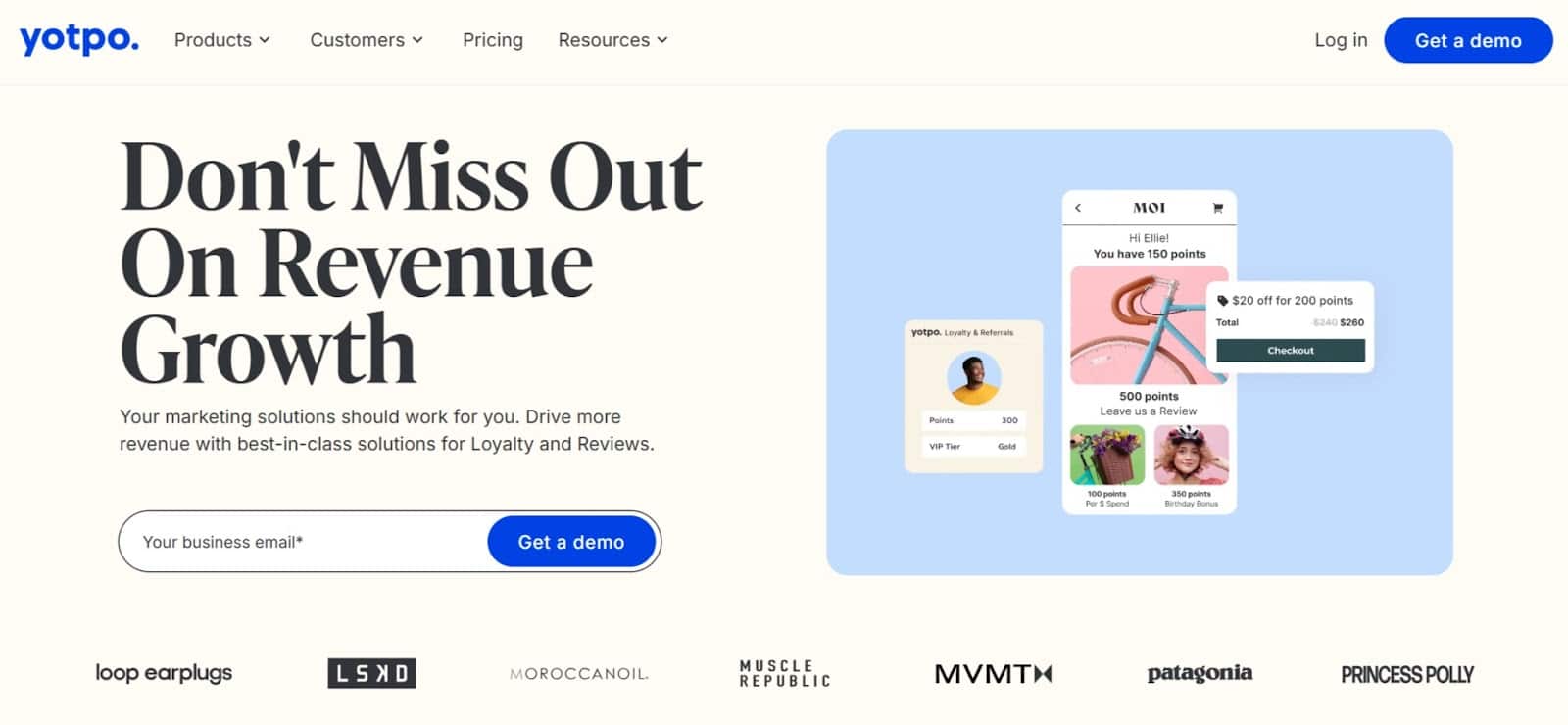
While collecting reviews is standard, Yotpo Reviews elevates this by using AI-powered “Smart Prompts” that are 4x more likely to capture high-value topics than generic forms. Instead of just asking “Did you like it?”, Yotpo’s system analyzes the product and prompts the user to mention specific attributes (e.g., “Fit,” “Quality,” “Battery Life”). This generates structured, topic-rich content that directly feeds into Google’s Knowledge Graph, helping you rank for specific attribute-based searches that competitors miss.
Conclusion
Learning SEO is a cycle of curiosity. The moment you “master” the algorithm, it changes. In 2026, the winners are those who focus on the constants: Technical health, Authority, and User Experience.
As e-commerce expert Ben Salomon advises, “The gap between a user’s question and a brand’s answer is where trust is either won or lost. In the age of AI, the brand that provides the most direct, honest, and experienced-backed answer wins not just the ranking, but the customer.” Start with your audit, map your entities, and continue to publish helpful content.
FAQs: How to Learn SEO: A Complete Roadmap for Beginners
How long does it take to learn SEO from scratch?
For a beginner, gaining a working knowledge of SEO typically takes 1 to 3 months of dedicated study and practice. However, achieving mastery is an ongoing process that takes years due to the constantly changing nature of search algorithms. You can start executing basic tasks (keyword research, meta tag optimization) within a few weeks, but understanding complex technical SEO and data analysis requires long-term experience.
Do I need to know how to code to do SEO?
No, you do not need to be a developer. Most modern CMS platforms (Shopify, WordPress) handle the heavy lifting. However, learning the basics of HTML (for headings and links) is essential. As you advance, understanding JavaScript rendering and basic Python for automation will give you a significant advantage over competitors, but they are not required for entry-level success.
Is SEO dead in 2026 due to AI?
No, SEO is not dead; it has evolved. While “ten blue links” are less dominant, the need to be visible is higher than ever. Users are still searching, but they are doing so via AI Overviews, voice assistants, and social platforms. “Optimization” now means ensuring your brand is the entity that these AI models choose to cite. The channel has changed, but the fundamental need for discovery remains.
What are the best free tools for learning SEO?
You can build a professional-grade strategy using only free tools. Start with Google Search Console (for performance data) and Google Analytics 4 (for traffic analysis). Use Google Trends for topic research, Answer The Public (free version) for question mapping, and the MozBar Chrome extension for quick on-page analysis.
How does Google’s AI Overview affect organic traffic?
AI Overviews tend to reduce traffic for simple, definitional queries (e.g., “what is SEO?”) because the user gets the answer instantly. However, for complex, experience-based queries (e.g., “best SEO strategy for B2B SaaS”), users still click through to deep-dive content. The key is to shift your content strategy away from basic definitions toward deep, expert insights that require a click to fully consume.
What is the difference between on-page and off-page SEO?
On-Page SEO refers to everything you can control on your website: content quality, keyword usage, meta tags, internal linking, and site speed. Off-Page SEO refers to signals that happen off your website, primarily backlinks from other sites, brand mentions, and social media signals. You need both to succeed; On-Page shows Google what you are about, while Off-Page shows Google that you are trusted.
How often does Google update its search algorithm?
Google releases minor updates almost daily, but “Core Updates”—significant changes that can drastically alter rankings—typically happen 3 to 4 times per year. Rather than panicking over every update, focus on the core principle that never changes: Google wants to reward helpful, authoritative, user-friendly content.
Can I do SEO for my own website without hiring an agency?
Absolutely. For small to mid-sized businesses, “DIY SEO” is often more effective because no one understands your product and customer better than you do. By following a roadmap like this one—focusing on technical health, consistent content, and getting reviews—you can outrank larger competitors who rely on generic agency tactics.
What is the most important ranking factor in 2026?
While there is no single “magic bullet,” Content Relevance backed by Brand Authority is the dominant factor. Google must trust who is speaking before it evaluates what they are saying. This is why building a brand (via PR, social, and reviews) is now an inseparable part of SEO.
How do I measure the ROI of my SEO efforts?
Stop looking at “rankings” and start looking at revenue. Use Google Analytics 4 to track “Organic Search” as a channel. specific KPIs should include Conversion Rate from organic traffic, New Users, and Revenue per Session. If your traffic is flat but your revenue is up because you are attracting higher-intent users, your SEO is winning.



 Join a free demo, personalized to fit your needs