



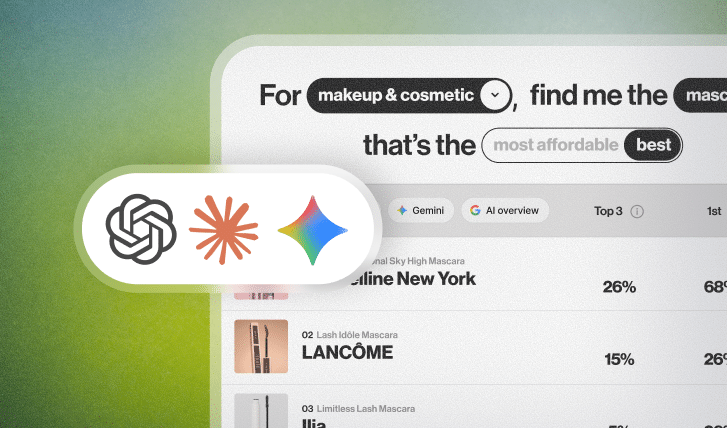










Traditional search is going through its most significant transformation in decades, shifting from keyword indexing to something much closer to a conversation. Generative engines are increasingly the first stop when someone wants to explore a product, compare options, or get a direct recommendation.
For heads of SEO and growth marketers, that shift means the old playbook needs a serious rethink. What follows maps out a practical framework: audit where you stand, fix what’s broken, deploy what scales, and earn the trust signals that AI engines actually respect.
Key Takeaways
- Generative search engines are rapidly capturing consumer mindshare, with shoppers increasingly planning to use AI for product discovery.
- AI-driven traffic to retail websites has grown quickly enough that brands can feel it in their analytics — not just in reports.
- Appearing in traditional organic listings doesn’t guarantee AI visibility: only 16.7% of sources cited in Google AI Overviews overlap with the top organic results.
- AI tools compress the buying cycle — a meaningful share of users say AI helps them make faster purchasing decisions.
- Winning here means moving past passive tracking to automated execution: agents that fix technical gaps and publish review-backed content continuously.
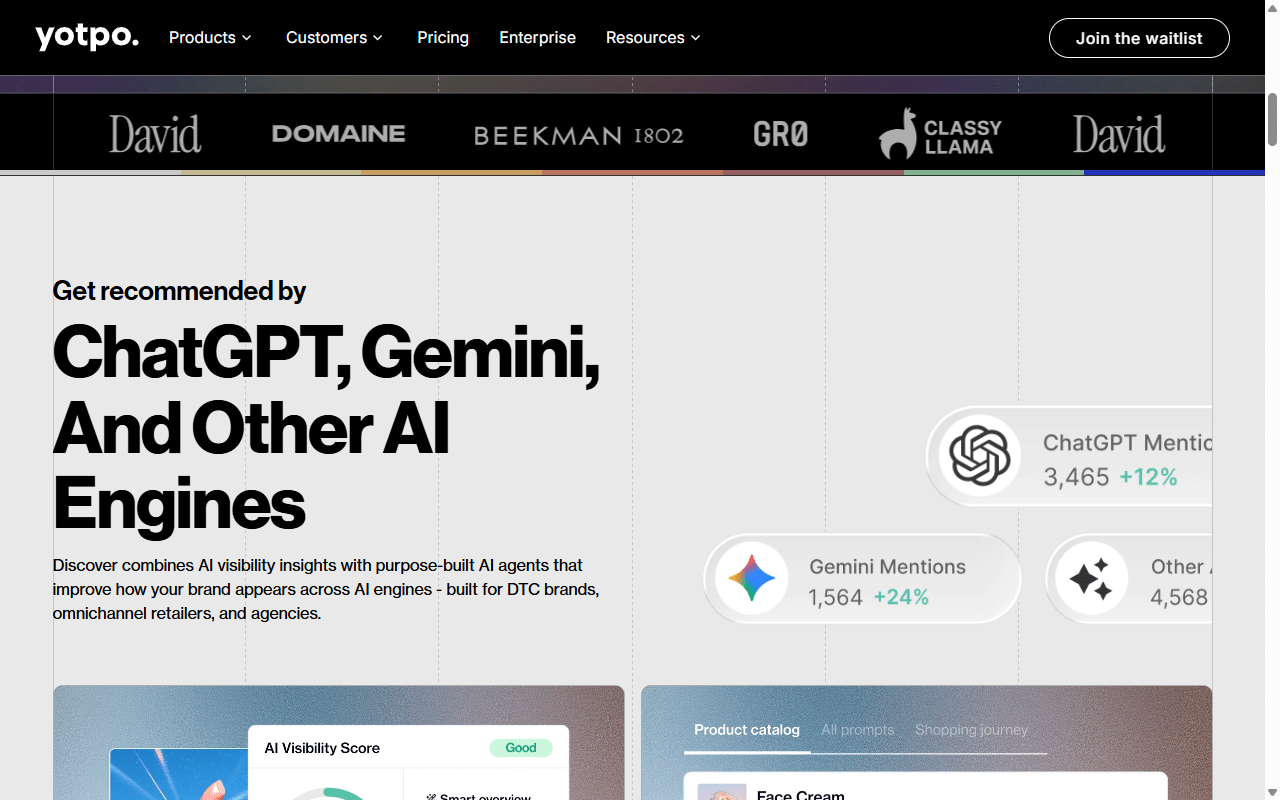
Why This Matters: The Shift to AI-Driven Discovery
The traditional SERP is no longer the only gatekeeper of commerce traffic. Search engines have evolved into active answer engines — they synthesize information, compare products, and make direct recommendations without asking the user to click ten blue links. That changes how consumers interact with brands entirely, turning the discovery phase from self-directed browsing into conversational query resolution.
Consumer behavior is catching up fast. Recent studies show a meaningful share use AI tools at least once per week, and nearly half engage with them daily. A meaningful share use AI specifically to narrow down product choices during the buying process. If your products don’t appear in those chat-based summaries, your brand is effectively invisible to a large portion of active buyers — and they’re not coming back to Google to look you up.
Where classic SEO operated on intent expressed in keywords, AI search works on intent expressed in chat-based context. The surface area for influence has multiplied, and the brands that built visibility on keyword density alone are now asking a fair question: how do you optimize for an engine that paraphrases rather than retrieves?
The honest answer is that the old playbook doesn’t transfer cleanly. New tools, new measurement, and new content surfaces are all required.
This is also a revenue story. AI tools and automated purchasing assistants drove a meaningful share of revenue during the last holiday season — and that number is only going up.
The Framework: Four Stages to AI Search Visibility
To win in the era of answer engines, brands need to move from standard SEO to a structured Answer Engine Optimization (AEO) framework. This framework addresses how large language models (LLMs) crawl, index, and cite ecommerce brands, and it runs in four distinct phases — from passive observation all the way to automated execution.
First, establish an accurate baseline by auditing your current presence across key AI platforms. Second, build the technical connective tissue that translates raw data into structured, machine-readable formats. Third, deploy active, automated agents that continuously improve your onsite and offsite content. And fourth, fuel those systems with authentic customer trust signals that AI engines inherently weight more heavily (and that’s the part most teams leave until last).
Stage 1: The Readiness Audit (AI Visibility Score)
What the audit covers
The first step is establishing a complete readiness audit. You need to know how your products and SKU-level commerce data actually appear across major platforms like ChatGPT, Gemini, and Google AI Overviews. Many tools track these platforms passively, but a true readiness audit measures your actual share of voice and identifies where you’re losing citations to competitors — not just where you rank on a list.
Imagine a senior SEO director checking her analytics on a Tuesday evening. Her traditional keyword trackers are all green. But her products are completely absent from the chat-based answers her customers actually read. That disconnect — green dashboards, invisible brand — is exactly what a readiness audit is designed to surface.
How to execute
Start by measuring your AI Visibility Score across your entire product catalog. Track brand presence across multiple search platforms and analyze which SKUs get cited under high-intent search terms. Specialized tools can automate this and surface the gaps you’d otherwise miss.
Once you have a baseline, segment by performance. Focus early efforts on hero SKUs — the ones with high search volume but low AI citation rates. That targeted approach puts your improvement resources where they’ll move the needle fastest.
The most common mistake at this stage
It’s assuming that strong organic rankings naturally translate into AI citations, when in reality they rarely do. Only 16.7% of sources cited in Google AI Overviews actually rank in the top ten organic results. Relying on traditional SEO metrics to judge your AI readiness will leave real gaps in your visibility strategy.
Stage 2: Building the Connective Tissue (Moving Beyond Monitoring)
Why passive tracking isn’t enough
Once you understand your visibility gaps, you need to close them — and tracking alone doesn’t do that. It tells you where you’re losing. It doesn’t fix the underlying technical and content issues that cause AI engines to ignore your brand.
We see this pattern regularly: brands invest in expensive enterprise dashboards and watch their competitor citation counts keep climbing. Knowing your visibility score is a useful starting point. But tracking a problem doesn’t solve it, and a monthly PDF report is essentially useless when AI models retrain and update their indexes on a continuous basis.
How to execute
You need an automated execution platform that sits between your ecommerce data and the search engines. That platform should analyze exactly why an AI model chose a competitor over you for a specific query — then translate those findings into real-time adjustments on your website.
Yotpo Discover acts as this execution layer. Rather than just showing you visibility gaps, the platform uses your SKU-level commerce data to actively feed search engines the precise information they need to cite your brand. It turns the complex reality of commerce into structured data that AI engines can parse and recommend.
What breaks without this layer
Brands that skip this stage treat AI visibility as a purely analytical exercise — static reports that become outdated quickly. Without a direct mechanism to turn raw audit data into live, optimized web content, the team is documenting its own decline. True progress requires active, programmatic deployment of content that machines can crawl and trust.
Stage 3: The Deployment (Automated Execution Agents)
How automated agents work
Consistent AI visibility at scale requires automated systems. Search crawlers extract code rather than browsing like humans, so your website needs to maintain solid technical foundations at all times. This phase deploys automated agents to manage your technical, onsite, and offsite presence — continuously, not in quarterly sprints.
These systems run in the background, analyzing product pages, publishing optimized content, and driving third-party validation across your entire catalog. That programmatic approach keeps your products machine-readable even as search engines update their crawlers.
Three agents, three jobs
Deploy three specialized automated agents, each handling a different piece of your visibility strategy:
- The Onsite Agent — Scans your online store continuously to identify and fix structural issues. Keeps your structured schema, internal linking, and catalog attributes correctly formatted for AI crawlers.
- The Content Agent — Generates tone-aligned, review-backed articles for your blog. Also compiles outreach briefs to fill visibility gaps on third-party sites, so AI engines find positive brand mentions across the web.
- The Activation Agent — Identifies the specific Reddit threads, marketplaces, and social platforms that AI engines cite most frequently. Then prompts your verified customer base to share genuine experiences on exactly those spaces.
This three-agent setup is a core feature of Yotpo Discover. By deploying all three, your brand builds a digital footprint that search engines can crawl, verify, and cite — across both onsite technical quality and offsite community presence.
One thing automated agents can’t do alone
The agents handle the heavy lifting. But search engines won’t trust content that isn’t grounded in real-world data — they’ve gotten good at spotting generic, unverified copy. That’s where the next stage comes in.
Stage 4: Establishing Trust Signals (Authentic Customer Voices)
Why AI engines weight customer voices heavily
Modern LLMs are trained to prioritize helpful, human-created content over programmatic text. As search engines work to filter low-quality pages, they look for authentic customer voices to validate product quality and brand authority. Customer reviews, loyalty signals, and verified purchase data are some of the strongest trust signals available in AI search.
It’s not enough to have reviews, though. The data needs to be structured so that AI engines can parse and verify it. When a crawler hits your site, it analyzes customer feedback to determine whether your products actually match the specific needs behind a chat-based query.
How to execute
Integrate your customer reviews and purchase data directly into your search improvement strategy. Structure your reviews so that crawlers can extract specific product attributes and customer sentiments — not just star ratings.
Beekman 1802 and David Protein use Yotpo Discover to turn their authentic customer feedback into machine-readable format. That setup helps both brands establish a verified presence that search engines confidently cite in chat-based answers. Real proof beats invented copy, and AI engines are increasingly good at telling the difference.
What to avoid here
Thin, keyword-stuffed articles and automated reviews don’t work. AI search engines have become quite good at detecting artificial patterns, and the penalty is loss of citation visibility — not just a rankings slip. Only authentic, verified customer reviews build the kind of durable trust that holds up as engines update their models.
Measuring Success: KPIs for AI Search Visibility
Tracking AEO performance requires a different set of metrics than classic SEO. Instead of focusing on organic keyword rankings, you measure your brand’s presence and authority within chat-based search environments. Track these to evaluate where you stand:
- AI Citation Rate — How often search engines cite your brand or product pages in chat-based answers.
- Share of Voice — Your percentage of total citations across platforms like ChatGPT, Gemini, and Google AI Overviews compared to your main competitors.
- Structured Data Coverage — The percentage of your product catalog fully optimized with clean, machine-readable schema markup.
- Offsite Mention Volume — Active, positive SKU-level mentions on high-authority third-party platforms that AI engines frequently pull from as source material.
- AI-Driven Referral Traffic — The volume of high-converting referral traffic originating directly from AI search queries.
These metrics move your team away from vanity rankings and toward real business outcomes. A data-driven AEO strategy stays focused on driving qualified buyer traffic — the kind that actually converts.
“Appearing in AI search results requires moving from passive keyword tracking to active data structures. When we supply large language models with structured commerce data and real user validation, we give them the precise evidence they need to cite our products with confidence.”
Ben Salomon, Growth Marketing Manager at Yotpo
Frequently Asked Questions
What is Answer Engine Optimization (AEO)?
Answer Engine Optimization is the practice of structuring your digital content so that AI engines can crawl, synthesize, and cite it. Unlike traditional SEO — which focuses on matching keywords for list-based results — AEO focuses on providing clear, structured information that directly answers chat-based user queries.
How is AI search visibility different from traditional SEO?
Traditional SEO gets your site into list-based search results. AI search visibility, or AEO, focuses on getting your brand and products cited within AI-generated summaries and recommendations. Because AI engines synthesize multiple sources into a single answer, appearing in those results requires strong data structure and third-party validation — not just on-page optimization.
Do standard SEO keywords still help with AI search?
They’re still useful for traditional search, but they’re not enough for AI discovery on their own. AI engines look for chat-based context, detailed product attributes, and authentic user reviews to form their recommendations. Keyword density alone won’t earn you citations in chat-based answers.
Why do AI Overviews cite different sources than organic search?
AI Overviews don’t simply mirror the top organic results — they analyze multiple pages to find the most accurate and trustworthy answer. That’s why only a small portion of AI citations overlap with the traditional organic top ten. To earn those citations, brands need structured product data and high-authority reviews, not just high keyword rankings.
What role does structured data play in AI visibility?
Structured data — product schema markup, for example — gives search crawlers a clear map of your product catalog. It makes it easy for AI engines to extract pricing, availability, and specific features without having to guess. Without clean structured data, crawlers may struggle to parse your site at all, leaving your brand absent from chat-based results.
How do automated agents help brands appear in AI answers?
Automated agents continuously watch your website, content, and offsite mentions to fix visibility issues and publish optimized resources. They can catch technical schema errors, write review-backed blog posts, and prompt your customer community to share genuine feedback on platforms that AI engines frequently cite. That programmatic approach lets brands improve across thousands of SKUs without doing it manually.
Can customer reviews improve AI citation rates?
Yes — customer reviews are among the strongest trust signals for AI engines. Models actively look for real-world user validation to keep their product recommendations accurate. Structuring your reviews so that crawlers can easily parse customer feedback is one of the most reliable ways to build citation visibility over time.
Which engines should ecommerce brands prioritize?
Focus on the major chat-based platforms: ChatGPT, Gemini, Perplexity, and Google AI Overviews. These capture most AI referral traffic and play a significant role in guiding consumers through the purchase process. Tracking your presence across all of them gives you a complete picture of where you stand.
How does Yotpo Discover help my SEO team?
Yotpo Discover gives your team the tools to track and improve visibility across all major AI search engines. It goes beyond basic tracking by analyzing why competitors are winning citations and deploying automated agents to fix technical issues and create optimized content. Your team shifts from manual analysis to active, automated execution — without rebuilding their entire workflow from scratch.
To defend and grow your search footprint, start moving from traditional keyword tracking to active AI optimization. See how your brand can capture chat-based search share by visiting Yotpo Discover and requesting a demo. You can also get an immediate read on where you stand by running a free AI visibility score audit.



 Join a free demo, personalized to fit your needs