












For years, the standard e-commerce growth playbook prioritized customer acquisition. That landscape has shifted dramatically. With rising ad costs, fierce market competition, and increasingly discerning consumers, the paradigm for growth has evolved.
In 2026, sustainable and profitable expansion is not achieved by relying on a continuous stream of one-time buyers. Instead, it is forged through the lasting relationships you build with the customers you already have.
This guide provides a strategic framework for developing a powerful retention strategy. We will explore how to leverage data, email, SMS, loyalty programs, and reviews to convert new shoppers into lifelong brand advocates.
Why Retention Marketing is Non-Negotiable in 2026
If your growth strategy continues to prioritize acquisition above all else, you are overlooking a substantial revenue opportunity. The data is unequivocal: focusing on your existing customer base is one of the most profitable decisions a brand can make.
The Soaring Costs of Customer Acquisition
In the past, launching a successful paid advertising campaign was a relatively straightforward process. Today, however, paid channels are saturated, making it progressively more difficult and expensive to capture new attention. Industry analysis consistently shows that acquiring a new customer can cost between 5 and 25 times more than retaining an existing one. A business model reliant on acquisition is inherently inefficient and costly.
The Compounding Value of a Loyal Customer
Your existing customers represent your most valuable asset. They have already demonstrated trust in your brand and affirmed its value through their purchases. The true potential is unlocked when you provide compelling reasons for them to return. Consider these powerful industry statistics:
- A modest 5% increase in customer retention can amplify profits by an astounding 25% to 95%.
- Existing customers are 50% more likely to try new products and spend 31% more on average compared to new customers.
This illustrates the power of Customer Lifetime Value (CLV). With each repeat purchase, a customer’s value to your business compounds. They become a predictable and reliable revenue stream, enabling more accurate forecasting and confident investments in future growth initiatives.
Building a Defensible Brand
In a crowded marketplace, a robust retention strategy serves as your competitive moat. While competitors may replicate your products or undercut your pricing, they cannot duplicate the strong relationships you have cultivated with your customers.
Satisfied, loyal customers evolve into your most effective marketers. They generate positive reviews, refer to new business, and advocate for your brand across social channels. This organic, word-of-mouth marketing is not only cost-free but also significantly more trusted than traditional advertising. By investing in retention, you are not just growing revenue—you are building a community of advocates that fuels a virtuous cycle of growth.
In essence, shifting focus to retention is no longer just a recommendation; it is a strategic imperative for any e-commerce brand seeking profitable and sustainable success in 2026 and beyond.
The Foundation: Data, Segmentation, and Personalization
A strong customer relationship cannot be built without a deep understanding of the customer. The same principle applies to e-commerce. A successful retention strategy must begin with a commitment to understanding your customers, which requires collecting the right data, segmenting your audience intelligently, and delivering truly personalized experiences.
You Can’t Personalize What You Don’t Know
Every action a customer takes on your site—from purchase history and Browse behavior to email engagement and product reviews—is a valuable data point that tells a story. The foundational step is to unify this information. Rather than allowing data to remain siloed across disparate applications, the objective is to create a single, comprehensive view of each customer. This holistic profile is the bedrock upon which all effective personalization is built.
From Raw Data to Actionable Insights: The RFM Model
With data consolidated, the next challenge is to derive actionable insights. The RFM model provides a proven and effective framework for segmenting e-commerce customers based on their transactional behavior. It analyzes three key dimensions:
- Recency: How recently did the customer make a purchase?
- Frequency: How often do they purchase?
- Monetary: How much have they spent?
Using this model, you can group your customers into actionable segments, enabling you to tailor marketing communications for maximum relevance and impact. Common RFM segments include:
- Champions: Your most valuable customers who buy frequently and spend generously. They warrant VIP treatment.
- Loyal Customers: Consistent purchasers who form the reliable core of your customer base. Nurture them to increase their AOV.
- Potential Loyalists: Recent, active customers who show promise. Engage them strategically to foster long-term loyalty.
- At-Risk Customers: Customers who have not purchased in some time. A targeted win-back campaign is essential to re-engage them.
- Lost Customers: Lapsed customers who are no longer active. A final, compelling offer may bring them back.
The Power of Personalization in Action
Segmentation is only valuable when put into action. The ultimate goal is to use these data-driven insights to create customer experiences that feel uniquely personal and relevant. The impact of this approach is significant: research indicates that 80% of consumers are more likely to purchase from a brand that provides personalized experiences.
Effective personalization can include:
- Distributing emails with product recommendations based on a customer’s purchase history.
- Extending an exclusive discount to your “Champions” segment.
- Displaying dynamic homepage content that differs for first-time visitors versus returning customers.
In essence, a sophisticated data and segmentation strategy is the foundation of any successful retention effort. By understanding who your customers are and what they value, you can deliver the personalized experiences that convert them into lifelong brand advocates.
Channeling Growth: Mastering Email & SMS Marketing
Once you have clearly defined your customer segments, you need effective channels to communicate with them. Email and SMS form a powerful combination in modern retention marketing. When used in a coordinated fashion, they enable you to deliver the right message at the right time through the right channel, keeping your brand top-of-mind and driving repeat purchases.
Email Marketing: The Foundational Channel of Retention
Despite the emergence of newer channels, email remains one of the most powerful and cost-effective tools for nurturing customer relationships. It provides a direct line to your audience, allowing you to share brand narratives, deliver value, and guide customers through their journey.
For a potent retention strategy, your email marketing must transcend generic newsletters. It requires implementing automated campaigns, known as “flows,” for pivotal moments in the customer lifecycle:
- Welcome Series: Greet new subscribers, introduce your brand story, and provide an incentive for their first purchase.
- Post-Purchase Follow-Ups: Thank customers for their order, share shipping updates, and request a product review.
- Cart Abandonment Flows: Remind shoppers of items left in their cart and simplify the process of completing their purchase.
- Win-Back Campaigns: Target “At-Risk” segments with tailored offers to re-engage them before they are lost.
SMS Marketing: The Channel for Immediate and Personal Connection
If email is the foundational channel, SMS is the channel for immediate impact. Text messages command exceptional open rates, often exceeding 90%, and are typically read within minutes. This immediacy makes SMS ideal for time-sensitive communications and for fostering a more personal, conversational relationship with your customers.
Strategic applications for SMS in a retention strategy include:
- Flash Sales & VIP Alerts: Notify your best customers about exclusive offers before anyone else.
- Back-in-Stock Notifications: Instantly alert shoppers when a desired item is available again.
- Transactional Updates: Provide order confirmations and shipping alerts for a frictionless post-purchase experience.
- Conversational Commerce: Utilize two-way messaging to answer customer questions or gather direct feedback.
Building a Community: The Role of Loyalty Programs and UGC
Exceptional retention marketing transcends promotional messaging; it focuses on building a community and fostering a genuine emotional connection with your brand. Two of the most powerful catalysts for this are loyalty programs and user-generated content (UGC). These elements work in tandem to make customers feel valued, convert them into advocates, and build the social proof necessary to attract new buyers.
Beyond Transactions: Creating an Emotional Connection with Loyalty Programs
Historically, loyalty programs were simple transactional tools. Today, they have evolved into sophisticated, experiential platforms designed to increase purchase frequency, raise average order value (AOV), and give your best customers compelling reasons to advocate for your brand. Data confirms their efficacy: one study found that 83% of consumers report a loyalty program makes them more likely to continue doing business with a brand.
The components of a premier loyalty program in 2026 include:
- Tiered Rewards: Establish distinct levels (e.g., Bronze, Silver, Gold) that customers can achieve through increased engagement, conferring exclusive status upon your top clientele.
- Experiential Perks: Move beyond discounts to offer value-added benefits like early access to new products, exclusive content, or invitations to private events.
- Flexible Redemptions: Allow customers to redeem points for a variety of rewards, including discounts, free products, or complimentary shipping.
- Referral Incentives: Formally reward customers for referring new shoppers to your brand.
Crafting Strategic Loyalty with Yotpo Loyalty
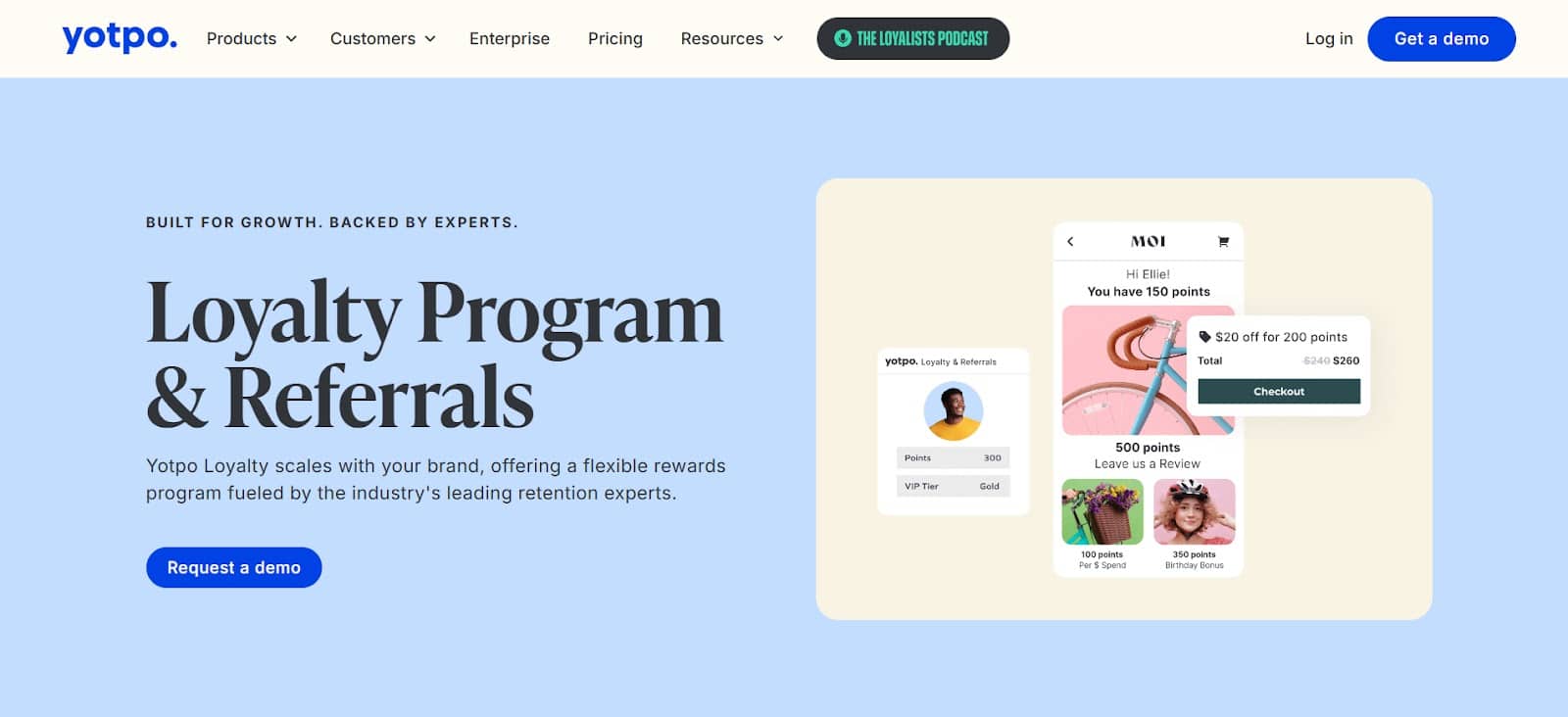
A successful loyalty program is not merely software; it is a core component of your marketing strategy. Launching a program that generates tangible results requires both powerful technology and expert strategic guidance.
This philosophy is the foundation of Yotpo Loyalty. It combines a highly flexible platform with a partnership-driven approach to guarantee program success.
- A Strategic Partner, Not Just a Provider: A partnership with Yotpo Loyalty provides more than just a tool; it offers access to e-commerce loyalty experts and a dedicated Customer Success Manager (CSM). This team provides strategic guidance on everything from program architecture to promotional campaigns, ensuring alignment with your business objectives.
- Unmatched Flexibility and Customization: Your loyalty program should be a seamless extension of your brand. Yotpo Loyalty provides deep customization capabilities, enabling you to design unique, on-brand experiences with features like dynamic segmentation and flexible rewards structures.
- Reporting You Can Trust: To demonstrate the value of your program, you need precise and reliable data. Yotpo offers robust analytics so you can accurately track key metrics, including member spend, repeat purchase rate, and overall program ROI.
While the market includes other loyalty solutions like LoyaltyLion and Smile, Yotpo Loyalty distinguishes itself through its combination of mature, enterprise-grade technology and a hands-on, strategic support model. This ensures brands not only launch a program but are also equipped with the expertise to optimize it for long-term growth.
User-Generated Content (UGC): Your Customers as Your Best Marketers
What is more persuasive than a brand promoting its own products? An actual customer endorsing them. User-generated content—including product reviews, customer photos and videos, and Q&A forums—is the ultimate form of social proof. It is authentic, trustworthy, and remarkably persuasive.
Consider your own shopping behavior. It is unlikely you would purchase a product without first consulting reviews. You are not alone: research shows that up to 98% of consumers read online reviews before making a purchase. UGC builds trust, resolves customer questions, and provides shoppers with the confidence needed to complete a purchase.
Driving Conversion and Trust with Yotpo Reviews
Collecting and displaying UGC effectively is both an art and a science. It requires making it simple for customers to submit content and then strategically showcasing that content to drive conversions. Yotpo Reviews is a platform purpose-built to help brands maximize the impact of their UGC. It provides a comprehensive suite of tools for content collection, management, and display.
- Collecting High-Impact UGC: Yotpo is focused on helping you collect reviews rich with detail. The platform enables you to prompt customers to include photos and videos and to answer specific questions about product attributes (like fit or quality), thereby generating more useful content.
- Strategic On-Site Display: The presentation of reviews is critical. Yotpo offers a variety of customizable on-site widgets, including engaging carousels and filterable photo galleries. This allows shoppers to easily locate the most relevant UGC, facilitating faster and more confident purchase decisions.
- Maximum Cross-Channel Impact: Yotpo helps you place your reviews in front of shoppers across their entire journey. The platform maintains official partnerships that allow you to syndicate your reviews to crucial channels like Google, Facebook, TikTok Shop, and major retail partners such as Target. This significantly boosts visibility and credibility.
- Actionable Insights from Feedback: Yotpo helps you analyze your review content at scale. Advanced tools like Reviews Atlas use AI to identify key topics and sentiment, providing invaluable feedback for product and marketing improvements.
Other review platforms exist in the market, such as Okendo and Bazaarvoice. Yotpo’s key differentiators include its strategic focus on driving conversions, its versatile on-site display options, and its extensive syndication network that maximizes the reach and impact of your customer content.
In essence, loyalty programs and UGC are the cornerstones of community building. They elevate the e-commerce experience from transactional to relational, cultivating a loyal customer base that not only purchases more frequently but also becomes your most passionate brand advocate.
Putting It All Together: Your 2026 Retention Framework
We have explored the core components of a modern retention strategy: data, communication channels, and community-building tools. Now, we will synthesize these elements into a clear, actionable framework for your business.
A Step-by-Step Action Plan
- Audit and Unify Your Data: Begin by consolidating your customer data into a single, unified view. Implement the RFM model to segment your customers into actionable groups such as Champions, At-Risk, and Potential Loyalists.
- Map and Optimize Your Channels: With defined segments, map out your automated communication flows. Establish robust welcome, cart abandonment, post-purchase, and win-back series for both Email and SMS, tailoring the messaging for each segment.
- Launch or Refine Your Loyalty Program: Design a loyalty program that rewards ideal customer behaviors, such as repeat purchases and referrals. Clearly define its tiers, perks, and redemption options, and create a communication plan to promote it.
- Systematize UGC Collection and Display: Do not leave UGC to chance. Automate your review request messages and develop a process for regularly featuring compelling customer photos and reviews across your website and marketing channels.
- Measure, Test, and Iterate: A retention strategy requires continuous optimization. Consistently track key metrics—including Customer Lifetime Value (CLV), repeat purchase rate, and churn rate. A/B test your email subject lines, SMS offers, and loyalty perks to identify what resonates most with your audience.
Conclusion: From Growth Hacking to Sustainable Growth
The e-commerce landscape has matured. The era of “growth at all costs” is being replaced by a strategic focus on profitable, sustainable growth. The key to thriving in this new environment lies in shifting your focus from acquiring new customers to better serving the ones you already have.
A retention-focused strategy is not merely about reducing churn; it is about building a more resilient and profitable business. By leveraging customer data, personalizing communications across email and SMS, and building a strong community through loyalty and user-generated content, you can create lasting customer relationships. These relationships are the ultimate competitive advantage, powering a virtuous cycle of repeat purchases, brand advocacy, and long-term success.
FAQs
Where should I start if I have a limited budget for retention marketing?
Begin with email marketing, which consistently delivers one of the highest ROIs among marketing channels. Focus on implementing essential automated flows: a welcome series for new subscribers, a cart abandonment flow to recover sales, and a post-purchase series to thank customers and request reviews. These foundational campaigns can yield significant impact with minimal investment.
How do I measure the success of my retention strategy?
Track a few key performance indicators (KPIs):
- Customer Lifetime Value (CLV): The total projected revenue a customer will generate throughout their relationship with your brand. This metric should be increasing over time.
- Repeat Purchase Rate: The percentage of your customer base that has made more than one purchase. This is a direct indicator of customer loyalty.
- Churn Rate: The rate at which customers cease to do business with you over a given period. The objective is to minimize this figure.
Can a loyalty program be effective for a business with an infrequent purchase cycle?
Certainly. For brands selling considered purchases like furniture or mattresses, a loyalty program can focus on rewarding engagement rather than just transactions. Offer points for actions like leaving reviews, referring friends, or interacting with social media content. The goal is to maintain brand salience between purchases, ensuring that when the customer is ready to buy again, they return to you.
How can I encourage customers to include photos and videos in their reviews?
First, simplify the process by ensuring your review request forms are mobile-friendly and support easy uploads. Second, provide an incentive. With a platform like Yotpo Loyalty, you can offer bonus points to customers who submit visual content with their reviews. Finally, showcase the best visual UGC prominently on your site. When shoppers see compelling customer photos, it inspires them to contribute their own.
What is the most common mistake brands make with retention marketing?
The most common mistake is inconsistency. Many brands communicate heavily during sales events but are silent otherwise. Effective retention marketing requires building an ongoing relationship through consistent, valuable, and relevant content—not just promotional messages. Automating key lifecycle marketing flows is the most effective way to maintain engagement at every critical touchpoint.



 Join a free demo, personalized to fit your needs