













Running an eCommerce brand has always been a balancing act, but the rules have shifted. It’s no longer enough to just drive traffic and hope for the best. To build a business that lasts in 2026, you need to look beyond the initial ad click. The real opportunity lies in what happens next: how you prove your value to a skeptical visitor and how you turn a one-time buyer into a lifelong fan. This guide cuts through the complexity to focus on a growth framework built on trust and retention—the two assets that actually compound over time.
Key Takeaways: eCommerce Growth Strategies 2026
- The Growth Model Has Shifted: Sustainable growth is no longer just about customer acquisition. The real winners focus on customer retention and increasing Customer Lifetime Value (CLV).
- Trust is Your #1 Conversion Tool: Social proof, especially customer reviews, is the foundation of a high-converting website. Shoppers who engage with UGC convert 161% higher than those who don’t.
- Not All Reviews Are Equal: Collecting high-quality, detailed reviews with photos and videos is far more valuable than just collecting star ratings.
- Loyalty is an Engine, Not an Add-On: A strategic loyalty program is the best mechanism for driving repeat purchases and increasing order value.
- Data is Your Guide: The data you get from your reviews and loyalty programs helps you personalize experiences for specific shopper personas.
Strategy 1: Optimize the Foundation (Conversion & Trust)
Before you can think about loyalty, you have to master the first sale. Many brands deplete their marketing budgets bringing shoppers to a site that simply doesn’t convert. This “leaked” traffic is a significant drain on resources.
The fix is Conversion Rate Optimization (CRO)—making it easier for a visitor to become a customer.
Start with the Basics: Mobile & Speed
Your website’s design isn’t just about aesthetics; it’s about functionality.
- Is it Mobile-First? Mobile devices now account for 79% of smartphone users making a purchase in the last 6 months. If your site is hard to use on a small screen, you are losing the majority of your traffic.
- Is it Fast? Speed is revenue. A mere 0.1s improvement in mobile load speed can boost conversion rates.
- Is it Intuitive? Can people find what they want immediately? A broken “buy” button or a confusing checkout process will hinder conversion instantly.
Strategy 2: Implement Intelligent Social Proof
Once the technical basics are solid, you must address the biggest factor in online buying decisions: trust.
When shoppers can’t touch a product, they rely on the experiences of others. A majority of online shoppers say online reviews impact their purchasing decisions. This is “Social Proof.”
Maximize Trust with Intelligent Reviews
You need a strategy that turns customer feedback into a conversion asset.
- Collect High-Impact Content: Don’t just ask “How was it?” Use AI-Powered Prompts to ask about specific, high-converting topics like “fit,” “fabric,” or “battery life.” Shoppers are 4x more likely to mention these high-value topics when guided by smart prompts.
- Display Strategically: Use AI Reviews Summaries to digest hundreds of reviews into a quick snapshot (e.g., “Shoppers love the ‘durability'”). This respects the shopper’s time and answers their questions instantly.
Strategy 3: Shift from Acquisition to Retention (CLV)
You made the first sale. Now, the real work begins.
For years, eCommerce growth focused on Customer Acquisition Cost (CAC). But in 2026, the smartest brands optimize for Customer Lifetime Value (CLV). It is universally accepted that retaining customers is more profitable than acquiring new ones.
Build a Retention Engine
A strategic loyalty program is your best tool for increasing CLV. It’s not just about giving away points; it’s about building a community.
- Increase Repeat Purchases: Give customers a financial and emotional reason to return.
- Increase Average Order Value (AOV): Use tiered rewards to encourage shoppers to spend a little more to reach the next “VIP Status.”
- Gather Zero-Party Data: Use your program to learn about customer preferences (birthdays, skin type, interests) in exchange for points.
Strategy 4: Leverage “AI Overviews” and SEO
The way consumers search is changing. With the rise of AI Overviews in search engines, providing fresh, relevant content is crucial for visibility. This is where Generative Engine Optimization (GEO) comes in.
Your reviews are a secret weapon for SEO.
- Freshness: Every new review is a content update for your product page, signaling relevance to search engines.
- Natural Language: Customers use long-tail keywords (e.g., “best running shoes for flat feet”) that you might not use in your marketing copy, helping you rank for specific queries.
Strategy 5: Personalize Using Data
As Ben Salomon, a noted e-commerce expert, often says:
“The data from your retention stack is a goldmine. If you aren’t using it to treat your best customers like VIPs, you’re missing a major opportunity for connection.”
Combine your review data and loyalty data to create hyper-personalized experiences:
- Email Segmentation: Send a “Thank You” campaign specifically to customers who left a 5-star review.
- Win-Back Campaigns: Identify “At-Risk” customers who haven’t shopped in 6 months and trigger a specific point bonus to bring them back.
- Smart targeting: If a customer reviewed a product mentioning “oily skin,” tag them in your system and recommend relevant balancing products in the future.
Strategy 6: Syndicate Reviews for Maximum Reach
Collecting reviews on your site is critical, but your customers are searching for you everywhere. To dominate search results, you need a syndication strategy.
- Google Seller Ratings: By partnering with a Google-supported reviews provider, your star ratings can appear directly in Google Shopping ads and search results. This visual trust signal helps your ads stand out and can increase Click-Through Rates (CTR) by up to 17%.
- Retail Syndication: If you sell products on major retailer sites (like Target, Walmart, or Sephora), you need to ensure your reviews travel with your products. Syndicating your direct-to-consumer (DTC) reviews to these retail partners ensures that a shopper on Walmart.com sees the same 5-star social proof as a shopper on your own site.
Strategy 7: Integrate SMS for Immediate Action
In 2026, email is still king, but SMS is the queen of speed. Because text messages have such high open rates, they are the perfect channel for time-sensitive requests.
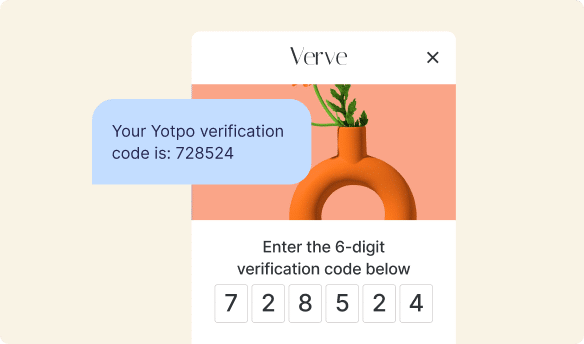
- SMS Review Requests: Don’t rely solely on email to ask for feedback. By integrating your reviews solution with top SMS platforms like Omnisend or Attentive, you can send review requests via text. These SMS requests convert at a 66% higher rate than email alone.
- Loyalty Alerts via SMS: Use SMS to notify customers when their points are about to expire or when they are close to unlocking a new VIP tier. This creates urgency and drives immediate traffic back to your site.
Strategy 8: Build an Emotional “VIP” Community
Transactional loyalty (points for purchases) is the baseline. Emotional loyalty is the goal. This happens when customers feel a sense of status and belonging with your brand.
- Create “Inner Circle” Tiers: Structure your loyalty program so that your top tier isn’t just about bigger discounts—it’s about access. Give your VIPs early access to new product drops, invitations to exclusive events, or the ability to vote on future product colors.
- Gamify the Experience: People love to track progress. A visual progress bar showing how close they are to “Gold Status” is a powerful psychological motivator that encourages customers to add that one extra item to their cart.
Strategy 9: Curate Visual UGC for Discovery
We mentioned earlier that Visual UGC (photos and videos) increases conversion on product pages. But these assets shouldn’t be hidden there. They are powerful discovery tools.
- Shoppable Galleries: curate your best customer photos into a “Shop the Look” gallery on your homepage or category pages. This allows new visitors to browse products through the lens of real customers, which feels more authentic than polished brand photography.
- Social Ads: Repurpose high-quality customer videos (with permission) in your Meta and TikTok ads. Ads that feature real user content often outperform highly produced studio ads because they look like native social content, stopping the scroll and driving 137% higher purchase likelihood.
Strategy 10: Turn Customer Service into a Loyalty Channel
Your customer support team shouldn’t just be a cost center—they can be a retention engine. When things go wrong (a late shipment, a damaged item), you have a choice: offer a refund (which loses revenue) or offer a solution that builds loyalty.
- Points for Appeasement: Instead of just refunding shipping costs for a delay, offer the customer a generous amount of loyalty points. This often has a higher perceived value to the customer and ensures their next purchase will be with you, not a competitor.
- Empower Agents: Give your support agents the ability to see a customer’s loyalty status and review history. A “Gold Tier” customer who has written 10 reviews should be treated with white-glove service immediately.
Case Study: Winning Key Personas
Understanding your customer “persona” allows you to tailor these 10 strategies effectively.
Persona A: The Gifter (Lyra) Lyra is planning a purchase for someone else.
- The Fix: She relies on Visual UGC (Strategy 9) to verify quality. She is also influenced by Loyalty Perks (Strategy 3)—remind her that buying this gift will earn her points toward a reward for herself.
Persona B: The Strategist (Orion) Orion is upgrading his own tech or gear.
- The Fix: He needs detailed AI Summaries (Strategy 2). He is willing to wait for a “Member Exclusive” bundle. Use your VIP Tiers (Strategy 8) to offer him early access, validating his patience.
Why Top Brands Choose Yotpo
To execute these strategies effectively, you need a technology partner that unifies these tools. Yotpo offers a cohesive platform where Reviews and Loyalty work together seamlessly.
- Yotpo Reviews leverages official Google partnerships and AI Smart Prompts to collect high-quality data that drives traffic and conversion.
- Yotpo Loyalty provides the flexible frameworks and strategic support needed to build a retention program that fits your brand perfectly. By using them together, you can reward customers with loyalty points for leaving reviews, creating a self-sustaining cycle of trust and retention.
Conclusion: The Growth Cycle
eCommerce growth in 2026 is a cycle, not a funnel. You use social proof to build the trust required for the first sale. You then immediately invite that customer into a value-driven loyalty program. This program gives them reasons to return and engage, producing more data and more reviews, which in turn helps you acquire the next customer. This is how you stop competing on ad spend and start winning in the community.
FAQs: eCommerce Growth Strategies 2026
What is the difference between acquisition and retention?
Acquisition focuses on gaining new customers (often via ads), while retention focuses on getting existing customers to purchase again. Retention is generally more profitable and sustainable.
Why is Customer Lifetime Value (CLV) important?
CLV measures the total profit a customer generates over their entire relationship with you. High CLV offsets acquisition costs and indicates a healthy, sustainable business model.
What is Social Proof?
Social proof is the psychological phenomenon where people copy the actions of others. In eCommerce, reviews, photos, and testimonials serve as proof that a brand is trustworthy.
How do I get more reviews?
Use an automated tool to send review requests via email or SMS after the product has been delivered. Offering a small incentive, like loyalty points, can significantly increase submission rates.
Are SMS review requests effective?
Yes. SMS review requests (powered by integrations with platforms like Klaviyo or Attentive) can see 66% higher conversion rates than email requests.
What is “AI Overviews” in search?
AI Overviews (formerly SGE) are AI-generated summaries that appear at the top of Google search results. Having fresh, structured content like reviews helps your brand appear in these summaries.
How do I start a loyalty program?
Start with a clear goal (e.g., “Increase Repeat Purchase Rate”). Choose a platform that allows for tiered rewards and integrates with your eCommerce store to ensure a seamless experience.
Can I use Reviews and Loyalty together?
Absolutely. Connecting the two is a best practice. You can reward customers with loyalty points for leaving reviews, which boosts your review volume while increasing customer engagement.
Why are photos and videos important in reviews?
Visual user-generated content acts as “proof of life” for a product. It helps shoppers visualize the item in a real-world context, reducing hesitation and increasing conversion.
What is a “Smart Prompt”?
A Smart Prompt is an AI-driven feature in review requests that asks customers about specific topics (like “fit” or “comfort”) rather than just a generic text box. This leads to higher quality, more useful reviews.
Should I delete negative reviews to protect my conversion rate?
No. Deleting negative reviews damages trust. Shoppers are savvy; a perfect 5.0 rating often looks suspicious. A score of 4.7 with a few negative reviews (that are politely answered by your support team) often converts better because it feels authentic and transparent.
What is the most important metric for a loyalty program?
While total enrollment matters, Redemption Rate is the true health check. If customers are earning points but never using them, they aren’t engaged. A healthy redemption rate signals that your rewards are valuable and attainable, driving true retention.
How exactly does GEO (Generative Engine Optimization) differ from traditional SEO?
Traditional SEO is about optimizing for keywords to rank in a list of blue links. GEO is about structuring your content (like reviews and Q&A) so AI models can understand and synthesize it into direct answers. High-quality, detailed reviews provide the specific data points AI needs to recommend your product in an overview.
Can I import reviews from a previous platform if I switch to Yotpo?
Yes. Historical data is critical for continuity. When you switch to Yotpo Reviews, you can migrate your existing reviews so you don’t lose your hard-earned social proof. This ensures your conversion rates don’t dip during a transition.
How do I prevent my loyalty points from becoming a financial liability?
Points are technically a “debt” on your books until redeemed. To manage this, implement point expiration (e.g., points expire after 12 months of inactivity). This protects your profit margins and creates a natural urgency that encourages customers to shop.
Do reviews actually help reduce return rates?
Yes. Detailed reviews that mention “runs small” or “fabric has no stretch” help future shoppers buy the correct size. By giving customers more accurate expectations before they buy, you significantly reduce the likelihood of a return due to “item not as described.”
What is the best timing for sending a review request?
It depends entirely on your product. For “unboxing” items like fashion, send the request 2-3 days after delivery when excitement is high. For “results-based” items like skincare or supplements, wait 14-21 days so the customer has time to see the benefits. Testing this timing is key to maximizing response rates.
How do I market my loyalty program to existing customers?
Don’t just hide it in the footer. Integrate loyalty data into your email marketing (e.g., “You are 50 points away from a reward”). Use post-purchase flows to immediately show customers how many points they earned on their latest order. Visibility drives participation.
Can I use customer photos in my Facebook or Instagram Ads?
Yes, but you must manage UGC Rights. You cannot legally just take a customer’s photo and use it in an ad. Yotpo Reviews allows you to request permission from the customer directly within the platform, keeping you compliant while unlocking high-performing ad creative.
Does syndication work for all retailers?
Syndication relies on the destination retailer (like Walmart or Target) accepting the feed. Yotpo has an open syndication network with direct partnerships with major retailers. However, you should always check if your specific retail partners are part of the network to ensure your reviews can travel freely.



 Join a free demo, personalized to fit your needs