














The ecommerce landscape is in constant motion. To attract new customers in 2026, brands need strategies that effectively build genuine connections. As customer acquisition becomes more competitive, focusing on sustainable and impactful methods is essential for growth.
This guide explores seven powerful strategies to help your ecommerce brand expand by attracting and converting new shoppers. Let’s examine the approaches that can best position your business for success.
Understanding the 2026 Ecommerce Customer Acquisition Landscape
Before exploring specific strategies, it is important to understand the current state of customer acquisition. Today’s shoppers have more choices than ever before. They expect personalized experiences and seek out brands they can trust. Consequently, outdated mass-marketing tactics are no longer effective.
Several factors shape how brands acquire customers in 2026:
- Rising Advertising Costs: Increased competition on traditional digital advertising platforms is driving up costs. This makes it vital to find more organic and cost-effective acquisition methods.
- Demand for Personalization: Customers respond more favorably to marketing that feels tailored to their interests. Generic messages are often overlooked.
- Importance of Trust and Authenticity: Modern shoppers are discerning. They actively seek genuine recommendations and social proof before making a purchase.
- The Mobile-First Consumer: A growing number of shopping journeys begin and end on mobile devices. Your acquisition strategies must be fully optimized for mobile.
- Data Privacy Changes: With evolving data privacy regulations and the phase-out of third-party cookies, ethically collecting and using first-party data has become critical.
These trends require acquisition efforts to be smarter, more targeted, and focused on building authentic relationships from the very first interaction.
Now, let’s explore the top strategies to achieve this.
Strategy 1: Harnessing the Power of User-Generated Content (UGC) and Reviews
What is more persuasive than a brand promoting its own products? A real customer sharing a positive experience. User-generated content (UGC) and reviews are powerful customer acquisition tools because they provide authentic social proof and build trust.
Why UGC and Reviews Drive Acquisition
Most consumers consult reviews before trying a new product or service. Research indicates that up to 98% of consumers read online reviews before making a purchase. High-quality reviews and authentic customer photos or videos can significantly influence a potential buyer.
Here’s how UGC and reviews help acquire new customers:
- Build Trust and Credibility: Content from real users feels more authentic than branded advertisements.
- Increase Conversion Rates: Product pages featuring reviews and UGC typically see higher conversion rates. Shoppers feel more confident when they see that others have had a positive experience. In fact, a Yotpo study found that 94% of purchases are for products with 4- or 5-star ratings.
- Improve SEO: Reviews provide fresh, relevant content for search engines, which can boost your visibility in search results.
- Provide Rich Product Insights: UGC often showcases products in real-life situations, giving potential customers a better understanding of an item’s appearance, fit, or function.
This strategy leverages your existing customer base to attract new shoppers.
Implementing a UGC and Review Collection Strategy
Acquiring this valuable content requires a systematic approach.
Step 1: Make it Easy to Submit Reviews The simpler the review process, the more likely customers are to participate.
- Send post-purchase emails or SMS messages asking for feedback.
- Use simple, mobile-friendly review submission forms.
- Offer incentives, like loyalty points or entry into a giveaway, for submitting reviews, especially those with photos or videos.
Step 2: Actively Collect Various Types of Reviews Do not limit yourself to only star ratings.
- Product Reviews: Essential for individual product pages.
- Site Reviews: Provide an overall impression of your brand and service.
- Photo and Video Reviews: Visual UGC is highly engaging and offers a clearer picture of your products.
- Q&A: Allow potential customers to ask questions and receive answers from past buyers or your team.
Step 3: Strategically Display UGC and Reviews Collecting reviews is only half the battle; you must showcase them effectively.
- Display reviews prominently on product pages.
- Use widgets like carousels, star ratings, and visual UGC galleries on your homepage, category pages, and even at checkout.
- Share UGC on your social media channels and in marketing emails.
Step 4: Moderate and Respond to Reviews Demonstrate that you value customer feedback.
- Use moderation tools to filter spam or inappropriate content while maintaining authenticity.
- Respond professionally to both positive and negative reviews to show that you value all feedback.
How Yotpo Elevates Your UGC and Review Strategy
Managing UGC and reviews can seem complex, but platforms like Yotpo streamline the entire process. Yotpo Reviews is designed to help you gather and display high-impact reviews across your channels. The solution focuses on tools that strategically display this content to boost shopper engagement and build confidence.
Yotpo offers features to:
- Collect diverse review types, including product, site, and category-level reviews, along with detailed written feedback and visual UGC (photos and videos).
- Automate review requests through customizable, mobile-friendly email and SMS templates with simple submission forms.
- Manage reviews efficiently with tools for manual or automatic approval, spam detection, and profanity filters.
- Syndicate reviews widely to platforms like Google Shopping, Facebook, TikTok Shop, and Target.
- Enhance on-site display with customizable widgets, such as review carousels and an AI-powered Reviews Summary, to improve the shopper experience.
- Support multilingual reviews by enabling you to collect and display feedback in multiple languages.
- Integrate with the broader Yotpo platform, allowing you to use review insights to inform email and SMS campaigns and create a cohesive customer journey.
Leveraging UGC and reviews is a cornerstone of modern customer acquisition. By actively collecting and showcasing authentic customer experiences, you build trust, improve conversions, and enhance your brand’s visibility.
Strategy 2: Building a Robust First-Party Data Asset with SMS & Email Opt-Ins
With shifts in data privacy and the decline of third-party cookies, owning your customer data is more critical than ever. A strong first-party data strategy, fueled by direct opt-ins for SMS and email, allows you to build direct relationships with potential customers and personalize their journey from the first touchpoint.
Why First-Party Data is Crucial for Acquisition
First-party data is information you collect directly from your audience with their consent. This includes email addresses, phone numbers, and Browse behavior. It is valuable for acquisition for several reasons:
- Direct Communication Channel: You own your list and can communicate directly with subscribers without relying on third-party platforms.
- Higher Engagement: Subscribers have explicitly agreed to hear from you, making them more receptive to your messages. SMS, for example, has an industry-leading 98% open rate.
- Deeper Personalization: First-party data enables highly personalized welcome messages and offers that convert new visitors into customers.
- Cost-Effective: Communicating with an opted-in list is often more cost-effective long-term than paid advertising.
- Future-Proofing Your Marketing: A strong first-party data strategy ensures you can continue marketing effectively as privacy regulations evolve.
Strategies for Growing Your SMS and Email Lists
Getting visitors to opt-in requires offering clear value and making the process seamless.
- Compelling Opt-In Incentives: Give new visitors a reason to provide their email address or phone number, such as welcome discounts, exclusive content, free shipping, or contest entries.
- Optimized Opt-In Forms and Pop-Ups: Place pop-ups strategically (e.g., timed or exit-intent), embed forms in your site’s footer, and use dedicated landing pages. Clearly state the benefits of subscribing and keep forms simple.
- Two-Step Opt-Ins for SMS: Always ensure clear consent for SMS with language like, “Reply Y to confirm you want to receive texts.” This complies with regulations and sets clear expectations.
- Leverage Your Website and Social Media: Include calls-to-action (CTAs) to subscribe across your digital properties, including blog posts and social media profiles.
- Post-Purchase Opt-Ins: A customer who just completed a purchase is often receptive to joining your list for future updates and offers.
Nurturing New Subscribers for Acquisition
Once a visitor subscribes, the goal is to convert them into a customer.
- Welcome Series: Send an automated series of emails or SMS messages to introduce your brand, highlight best-sellers, and deliver the promised incentive.
- Personalization: Use available data, such as Browse history, to personalize early communications.
- Value-Driven Content: Share helpful tips, brand stories, or UGC to build a relationship beyond just promotions.
- Segmentation: Segment new subscribers based on how they opted-in or their initial interests to tailor your messaging.
Building first-party data lists via email and SMS opt-ins is a foundational acquisition strategy for 2026. By offering clear value and using specialized tools, you can create direct communication channels to nurture potential customers and drive initial conversions.
Strategy 3: Implementing a Customer Referral Program
What if your best customers could become your most effective salespeople? That is the core principle of referral marketing. A customer referral program incentivizes your existing customers to share your brand with their friends and family, acquiring new customers who often arrive with a higher level of trust.
Why Referral Programs Drive Acquisition
Referrals are highly effective for several reasons:
- Trust Factor: People trust recommendations from individuals they know far more than traditional advertising.
- Higher Conversion Rates: Leads generated through referrals often convert at a higher rate because they come with a positive brand perception.
- Lower Cost Per Acquisition (CPA): Acquiring customers through referrals can be significantly more cost-effective than paid channels, as you reward successful outcomes.
- Increased Customer Lifetime Value (LTV): Referred customers often exhibit higher LTV, as they tend to align well with your ideal customer profile.
- Viral Potential: A well-structured program can create a viral loop where new customers become advocates, expanding your reach.
Key Elements of a Successful Referral Program
To motivate customers to refer, your program must be attractive, simple, and well-promoted.
- Attractive Incentives: Offer motivating rewards for both the referrer (e.g., store credit, loyalty points) and the referred friend (e.g., a discount on their first order).
- Simple Sharing Mechanisms: Provide each customer with a unique referral code or link that is easy to share via email, social media, or messaging apps.
- Clear Program Rules and Tracking: Be transparent about how the program works, what constitutes a successful referral, and when rewards are issued. A reliable tracking system is crucial.
- Program Promotion: Promote your referral program through email newsletters, on your website, on post-purchase pages, and via social media.
- Mobile Optimization: Ensure the referral program is easy to access and use on mobile devices.
Implementing Your Referral Program: Step-by-Step
- Define Your Goals: Determine what you want to achieve (e.g., a specific number of new customers per month).
- Choose Your Incentives: Decide on rewards that are valuable to customers but sustainable for your business.
- Set Up the Program Structure: Define the rules for eligibility and what qualifies as a successful referral.
- Select a Referral Marketing Tool: A dedicated platform helps with link generation, tracking, and reward fulfillment.
- Design Promotional Materials: Create clear and engaging messages to promote the program.
- Launch and Promote: Announce the program to your existing customer base.
- Monitor and Optimize: Track performance metrics like participation rate, share rate, and the conversion rate of referred leads to refine your approach.
Leveraging Yotpo Loyalty & Referrals for Acquisition
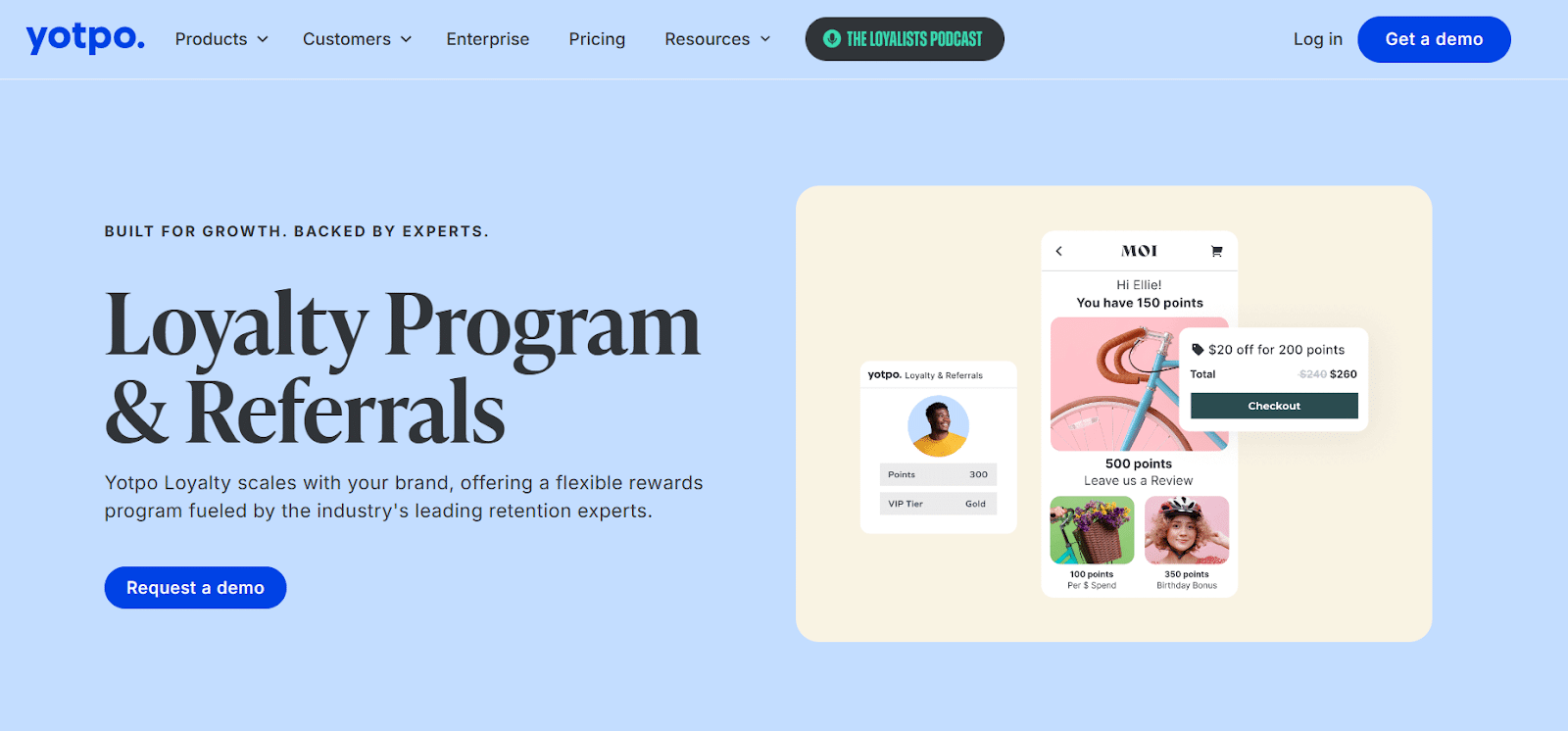
Yotpo Loyalty & Referrals helps ecommerce brands build engaging loyalty and referral programs designed to turn customers into advocates. While loyalty programs focus on retention, a strong referral component is a powerful acquisition engine.
Yotpo’s referral program features include:
- Easy Setup: Quickly create a program that rewards both advocates and their referred friends.
- Customizable Rewards: Offer points, discounts, or exclusive perks to incentivize sharing.
- Simple Sharing: Provide tools for customers to easily share referral links and codes.
- Robust Tracking and Reporting: Understand the impact and ROI of your referral efforts.
- Strategic Guidance: Yotpo provides partnership support from ecommerce loyalty experts.
When choosing a solution, consider the ease of setup, customization options, and the quality of analytics. Yotpo’s emphasis on strategic support and flexible program design helps brands build referral programs that drive new customer acquisition. Other providers in this space include Loyalty Lion, Smile, and Stamped.
Strategy 4: Content Marketing & SEO for Organic Acquisition
In an era of rising ad costs, attracting customers organically through valuable content is a sustainable long-term strategy. Content marketing, combined with Search Engine Optimization (SEO), focuses on creating and distributing relevant information that draws your target audience to your brand naturally.
Why Content and SEO are Powerful for Acquisition
When potential customers have questions, they often turn to search engines. By creating content that provides answers, you can:
- Attract Qualified Leads: People searching for information related to your products are often considering a purchase.
- Build Authority and Trust: Consistently providing valuable content positions your brand as an expert.
- Improve Search Engine Rankings: Effective SEO helps your content get discovered by more people, driving organic (free) traffic.
- Generate Leads Over the Long Term: A single well-optimized piece of content can attract visitors for months or even years.
- Support Other Marketing Channels: Content can be repurposed for social media, email newsletters, and ad campaigns.
Developing a Content Marketing and SEO Strategy
A successful strategy involves several key steps:
- Understand Your Audience: Develop buyer personas and conduct keyword research to identify the terms your audience is searching for. Analyze competitor content to find opportunities.
- Plan Your Content: Create a content calendar that includes blog posts, product guides, case studies, videos, and other formats that will resonate with your audience.
- Create High-Quality, Optimized Content: Focus on providing value. Write for humans but optimize for search engines by including target keywords naturally. Ensure readability with clear language, short paragraphs, and visuals.
- Promote Your Content: Share new content on social media, in email newsletters, and through outreach to industry influencers or publications.
- Measure and Refine: Use tools like Google Analytics to track key metrics such as organic traffic, keyword rankings, and conversion rates. Regularly update and refresh your content.
Integrating Content with Your Ecommerce Platform
Your content should always guide users toward your products where relevant.
- Mention your products naturally within blog posts.
- Link from your content to relevant product pages.
- Incorporate user-generated content, like customer reviews or photos, into your posts to add social proof.
- Optimize product descriptions to be compelling, informative, and SEO-friendly.
While Yotpo’s primary focus is on its suite of marketing tools, these solutions can indirectly support your content and SEO efforts. For instance, Yotpo Reviews generates keyword-rich user content on your product pages, which can boost their SEO value and attract organic traffic. The authentic language in reviews often matches the long-tail keywords potential buyers use in searches.
Strategy 5: Strategic Partnerships and Influencer Marketing
The fastest way to reach a new audience is often by tapping into an existing one. Strategic partnerships and influencer marketing allow you to collaborate with other brands or individuals who already have the attention and trust of your ideal customers, creating a credible path to acquisition.
The Acquisition Power of Collaboration
Partnerships and influencer collaborations are effective for several reasons:
- Access to New, Relevant Audiences: Gain instant exposure to a pool of potential customers who are likely interested in your products.
- Borrowed Trust and Credibility: An endorsement from a trusted brand or influencer can significantly boost your brand’s reputation.
- Authentic Storytelling: Influencers can showcase your products in a relatable way that resonates more than traditional ads.
- Cost-Effective Reach: Targeted partnerships can offer a better return on investment than broad advertising campaigns.
- Content Co-Creation: Collaborations can result in unique content that engages both audiences.
Types of Strategic Partnerships
Consider various partnership types to drive customer acquisition:
- Complementary Brand Partnerships: Team up with non-competing businesses for joint promotions, cross-promotions in newsletters, or bundled offers.
- Affiliate Marketing: Partner with bloggers or influencers who promote your products in exchange for a commission on sales generated through their unique affiliate links.
- Distribution Partnerships: Collaborate with businesses that can sell your products through their existing channels.
- Content Partnerships: Co-create valuable content, like a research report or webinar, with another brand targeting a similar audience.
Navigating Influencer Marketing for Acquisition
Influencer marketing involves partnering with individuals who have a dedicated following.
- Find the Right Influencers: Prioritize relevance and engagement over follower count. Micro-influencers with niche audiences often deliver excellent results. Ensure their values and content style align with your brand.
- Structure Influencer Campaigns: Provide a clear campaign brief with goals and deliverables, but allow for creative freedom. Compensation can range from free products to flat fees or commissions.
- Measure Success: Track metrics like reach, engagement, website traffic (using UTM codes), and conversions (using promo codes or affiliate links).
Integrating User-Generated Content from Partnerships
Influencer campaigns generate high-quality, third-party validated UGC.
- Secure Usage Rights: Ensure your agreement allows you to repurpose influencer content on your own channels.
- Showcase Influencer Content: Feature influencer photos and videos on your product pages, in emails, and in paid ads to add another layer of social proof.
Yotpo Reviews & UGC can be a valuable asset in this area. While influencers are compensated, their authentic-style content can be showcased alongside organic customer reviews and photos in Yotpo’s on-site widgets. This creates a rich and convincing display of social proof. If influencers generate reviews as part of their collaboration, those can also be managed and displayed through Yotpo, adding to the overall review volume and diversity.
Strategy 6: Optimizing for Mobile and Social Commerce
Your potential customers are increasingly spending their time and making purchases on mobile devices and directly within social media platforms. Optimizing for mobile commerce (m-commerce) and leveraging social commerce features are essential for customer acquisition.
The Dominance of Mobile Commerce
Mobile devices are at the center of most online experiences. A significant portion of ecommerce traffic and sales now comes from smartphones, and Google primarily uses the mobile version of a site for ranking. A clunky or slow mobile experience will result in lost customers.
Key m-commerce optimizations include:
- Responsive Design: Your website must adapt seamlessly to all screen sizes.
- Fast Loading Speeds: Optimize images and code for quick loading.
- Simplified Navigation: Use clear menus and easy-to-tap buttons.
- Streamlined Checkout: Minimize steps and support mobile payment options like Apple Pay and Google Pay.
The Rise of Social Commerce
Social commerce involves selling products directly through social media platforms like Instagram Shops, Facebook Shops, and TikTok Shop.
Social commerce is key for acquisition because it:
- Meets Customers Where They Are: It reduces friction by allowing users to purchase without leaving the app.
- Leverages Social Proof: Reviews and UGC shared on social platforms can heavily influence purchase decisions.
- Enables Targeted Advertising: Social platforms offer robust tools to reach highly specific audiences with shoppable posts.
- Integrates with Influencers: Influencers can tag shoppable products in their posts to drive immediate sales.
How Yotpo Enhances Mobile and Social Commerce Acquisition
Yotpo’s suite of tools is designed for the mobile-first, socially-connected consumer.
- Mobile-Optimized Review Collection & Display: Yotpo Reviews ensures that review request emails and on-site widgets are fully responsive. This allows potential customers Browse on their phones to easily read reviews and gain the confidence needed to make a purchase.
- Syndicating Reviews to Social & Retail Channels: A powerful feature of Yotpo Reviews is its ability to syndicate customer reviews to platforms like Google Shopping, Facebook, and TikTok Shop. This places your hard-earned social proof directly where people are discovering and shopping, boosting credibility and click-through rates.
Strategy 7: Personalized On-Site Experiences and Smart Pop-Ups
A visitor’s first few seconds on your website are critical. To convert a visitor into a customer, you need to capture their attention and guide them toward a purchase or a micro-conversion, like an email or SMS opt-in. Smart on-site experiences, including well-timed and targeted pop-ups, are crucial in this initial acquisition phase.
Why On-Site Personalization Matters for Acquisition
Generic website experiences often fail to engage. Personalization can significantly improve conversion rates for new visitors by:
- Increasing Relevance: Showing content or offers based on visitor behavior (e.g., traffic source, location) makes the experience feel more relevant.
- Improving User Experience: Guiding visitors to what they are looking for reduces friction.
- Higher Opt-In Rates: Personalized pop-ups that offer value at the right moment are more likely to convert visitors into subscribers.
- Reduced Bounce Rates: Visitors are more likely to stay on your site when they immediately see something that resonates with them.
- Better First Impressions: A tailored experience builds initial trust by showing you understand customer needs.
Implementing Effective On-Site Personalization and Pop-Ups
- Smart Pop-Ups for Lead Capture: Use pop-ups strategically to build your subscriber lists.
- Trigger Types: Use entry pop-ups with welcome offers, exit-intent pop-ups to capture leaving visitors, or timed/scroll-based pop-ups to engage active browsers.
- Gamified Pop-Ups: Implement “spin-to-win” wheels to make opting in more engaging.
- Best Practices: Always offer real value, target pop-ups based on visitor segments, use a clear CTA, make them easy to close, ensure they are mobile-friendly, and A/B test your designs.
- On-Site Content Personalization:
- Personalized Banners: Display different hero images or messages based on visitor segments.
- Product Recommendations: Show sections like “Recommended for You” or “Recently Viewed” based on Browse history.
- Geo-Targeted Content: Display location-specific offers, shipping information, or currency.
Yotpo’s Role in Enhancing On-Site Acquisition Efforts
Yotpo’s tools contribute significantly to creating more engaging and converting on-site experiences for new visitors by enabling compelling opt-ins and showcasing social proof.
Yotpo Reviews & UGC plays a crucial role. By strategically displaying customer reviews, ratings, and visual UGC on key pages using Yotpo’s widgets, you immediately build trust with new visitors. Seeing authentic social proof can reduce bounce rates and encourage deeper exploration of your site. The AI-powered Reviews Summary widget can provide a quick, compelling overview of product sentiment, which is ideal for new shoppers.
Conclusion: Building a Diversified Acquisition Strategy for 2026
Attracting customers in 2026‘s competitive ecommerce landscape demands a diversified and strategic approach. Successful brands combine multiple acquisition methods to create a resilient growth engine. From leveraging UGC for trust to building direct relationships via SMS and email, each strategy plays a crucial part.
Referral programs, content marketing, strategic partnerships, and optimizations for mobile and social commerce are all vital pieces of the puzzle. By focusing on authenticity, value, and personalization, and by continuously testing and adapting your methods, your brand can attract new customers and build lasting relationships for sustainable growth.
FAQs
What is the most important customer acquisition strategy for a new ecommerce store in 2026?
For a new ecommerce store, leveraging User-Generated Content (UGC) and Reviews early on is crucial. It helps build initial trust and social proof when your brand isn’t yet widely known. Combining this with targeted efforts to build an email and SMS list for direct communication can create a strong foundation.
How much should I budget for customer acquisition?
Your customer acquisition cost (CAC) budget will vary widely based on your industry, product price point, and business stage. Instead of a fixed amount, focus on the ratio of Customer Lifetime Value (LTV) to CAC. A healthy LTV to CAC ratio (often suggested as 3:1) means your acquisition efforts are profitable. Start with smaller, measurable experiments across different channels to see what works. Then, scale your budget accordingly.
With privacy changes, is it harder to acquire customers through paid ads?
Yes, changes like the phase-out of third-party cookies can make targeting in paid advertising more challenging and potentially more expensive. This is why strategies focusing on first-party data (like building your email/SMS lists), organic reach (SEO, content marketing), and trust-based methods (UGC, referrals) are becoming even more important for sustainable customer acquisition.
How long does it typically take for content marketing and SEO efforts to show acquisition results?
Content marketing and SEO are long-term strategies. While you might see some initial traction within a few months, it typically takes 6-12 months of consistent effort to see significant results in terms of organic traffic and customer acquisition. The benefit is that these results are often sustainable and compound over time.


 Join a free demo, personalized to fit your needs