













You’ve poured resources into your eCommerce brand. You perfected your product, optimized your site, and fine-tuned your ads. But what if your best marketing channel isn’t a campaign, but your current customers? This is the promise of referral marketing, a modern take on timeless word-of-mouth advertising.
So, do referral programs really work? Yes, they are highly effective. But they aren’t a set-it-and-forget-it solution. A great referral program comes from a deliberate strategy. It needs a solid understanding of customer psychology, the right technology, and a smart approach to retention marketing. This guide gives you the data, logic, and steps to build a referral program that drives sustainable growth.
Key Takeaways
- Trust is Everything: Recommendations from friends are the most trusted form of advertising. Referral programs leverage this by turning happy customers into brand advocates.
- Cost-Effective Growth: Acquiring customers through referrals is often significantly cheaper than through paid advertising channels, helping you lower your Customer Acquisition Cost (CAC).
- Higher Value Customers: Referred customers typically have a higher lifetime value (LTV), higher retention rates, and a better brand fit than customers acquired through other channels.
- Incentives Matter: A double-sided incentive, where both the referrer and their friend receive a reward, is almost always more effective. Store credit or cash-value rewards often perform best.
- Technology is Crucial: A successful program requires a powerful and flexible platform like Yotpo Loyalty to manage rewards, track referrals, prevent fraud, and provide a seamless user experience.
Why Referral Programs Are More Crucial Than Ever for eCommerce
In a crowded digital world, getting and keeping customer attention is tough. Referral programs cut through the noise by using two of the most valuable assets in eCommerce: trust and relationships.
The Economics of Trust: Why a Friend’s Recommendation Beats an Ad
Think about how you make purchases. Do you trust a banner ad more, or a recommendation from a friend whose opinion you value? The data strongly supports your friend. Nielsen reports that 92% of consumers trust recommendations from people they know over any other form of advertising.
This is all about a core idea in consumer psychology called social proof. When people are unsure about a decision, they look at what others are doing. A referral is the best kind of social proof. It sends a clear message: “I’ve used this, I like it, and I think you will too.” This built-in trust speeds up the buying process and creates a clear path to a sale.
The Rising Costs of Customer Acquisition
eCommerce professionals know that customer acquisition costs (CAC) are going up. Heavy competition on major ad platforms has increased the price of clicks and impressions. Relying only on paid ads can hurt your profit margins and become too expensive over time.
Referral marketing offers a powerful and more affordable alternative. Instead of paying a platform to reach a new audience, you invest in your existing customers. The cost per acquisition (CPA) for a referred customer is often much lower because you only reward a successful conversion, not just impressions or clicks. This makes your growth more predictable and financially sound.
The Compounding Value of Referred Customers
The benefits of referral marketing go beyond lower acquisition costs. The customers you get through these programs are often your most valuable. Studies show that referred customers have a higher lifetime value (LTV), sometimes by 16% or more.
Why are they so valuable?
- Better Customer-Brand Fit: Your best customers tend to refer people who share their values and needs. This means new, referred customers often align perfectly with your brand from day one.
- Stronger Loyalty: The trust that starts the relationship helps form a stronger bond with your brand. Referred customers usually start with a positive view, which leads to better retention.
- Higher Average Order Value (AOV): That initial trust often leads to more confident buying decisions. Referred customers frequently spend more on their first order than those from other channels.
In short, referral programs don’t just bring you more customers. They bring you better customers who are more engaged and profitable over the long term.
The Anatomy of a High-Performing Referral Program: Key Components
A successful referral program is more than just a shareable link. It’s a carefully designed system with several interlocking parts, each tuned for the best performance. Let’s break down the essential components.
The Core Offer: Crafting Irresistible Incentives
The incentive structure is the engine of your referral program. It motivates both your current customer (the advocate) and the new customer they refer.
For the Advocate (The Referrer)
The reward for your advocate has to be good enough to inspire them to act. Here are a few models to think about:
- Double-Sided vs. Single-Sided Incentives: A single-sided incentive only rewards the advocate. A double-sided incentive rewards both the advocate and their friend. Double-sided programs are almost always more effective. Why? They let the advocate give a gift to their friend, which feels more like sharing than selling.
- Types of Rewards:
- Store Credit or Cash: This is often the strongest motivator because its value is clear and tangible. A “$20 credit” usually feels more significant than “20% off.”
- Percentage Discounts: These are common but can feel less valuable unless the discount is large (like 25% or more). They are good for encouraging repeat purchases.
- Tiered Rewards: This model energizes your top advocates by offering better rewards for more referrals. For example, the first referral earns a $10 credit, but later referrals might earn $15 each.
- Non-Monetary Rewards: Don’t underestimate the power of exclusivity. Offering early access to new products, a free gift, or a large number of loyalty points can work very well, especially for brands with a passionate community.
The best practice is to pick a reward that matches your brand’s value and your customers’ motivations.
For the Friend (The Referred Customer)
The offer for the new customer is just as important. Your advocate can make the introduction, but a great welcome offer is what turns interest into a sale. This offer needs to be attractive enough to encourage an immediate purchase. A standard “10% off your first order” might not be enough to stand out. Think about something more tempting, like “$25 off your first purchase of $75 or more” or a popular product included for free with their first order.
Frictionless Experience: Making It Easy to Share
If your referral process is complicated, even the best incentive won’t work. The user experience must be completely effortless.
Discoverability: Where to Promote Your Program
Your customers can’t join a program they don’t know about. Promote it at key points in the customer journey:
- Homepage: A banner or a clear link in your site’s navigation.
- Dedicated Landing Page: A well-designed page that clearly explains how the program works, the rewards, and how to join.
- Post-Purchase Experience: The order confirmation page and follow-up emails are perfect times to invite happy customers to become advocates.
- Customer Accounts: A visible section for referrals within the user’s account dashboard.
- Marketing Channels: Regular promotion in your email newsletters and on social media.
Sharing Mechanisms: One-Click Simplicity
Sharing must be as easy as possible. Provide several simple options:
- Unique Referral Links: A personal link that users can easily copy and paste anywhere.
- Pre-Populated Messages: One-click sharing buttons for social media and messaging apps, complete with ready-to-use, editable text.
- Email Templates: A simple form where users can enter their friends’ email addresses to send a pre-written invitation.
- QR Codes: A modern, mobile-friendly option for sharing in person.
Clear Communication: Setting Expectations and Celebrating Success
Transparency is key to building trust in your referral program. Users should always know their referral status and how the program works.
Use automated notifications to keep them informed:
- Confirmation: Let the advocate know their invitation was sent.
- Success Alert: This is the most important one. Immediately tell the advocate when their friend makes a purchase and give clear instructions on how to get their reward.
- Reward Status: Keep them updated on when their reward is available and how to use it.
All communication should use clear, on-brand language. Avoid legal jargon in your main messages. Celebrate successes and make your advocates feel like valued partners in your brand’s growth.
Building Your Referral Program Strategically with Yotpo Loyalty
Understanding the parts of a great referral program is the first step. Executing it well requires technology that is both powerful and flexible. This is where a dedicated solution is essential.
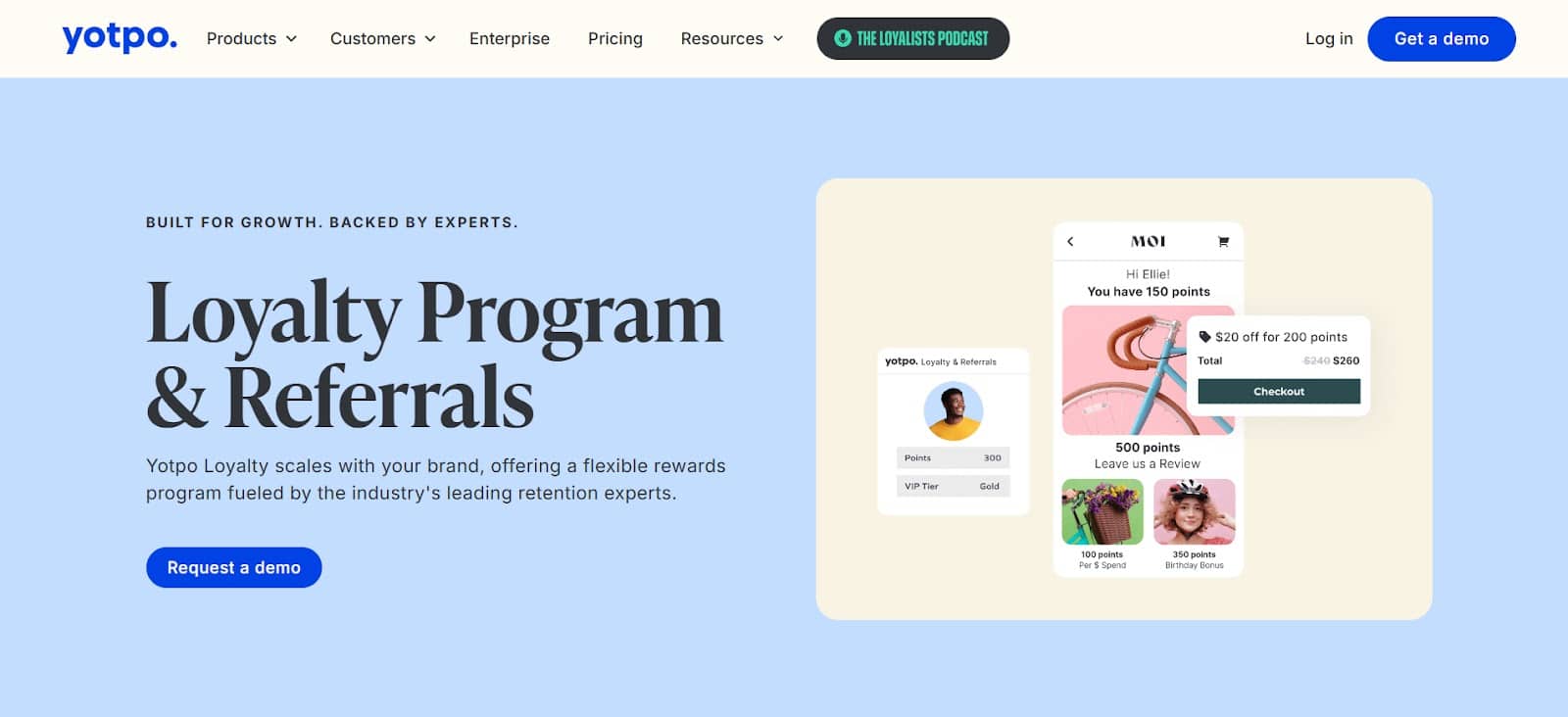
How Yotpo Loyalty Powers World-Class Referral Programs
When you want to build a best-in-class referral program, you need a solution designed for that purpose. Yotpo Loyalty provides the specialized features that eCommerce brands need to build, manage, and scale a high-performing referral strategy.
Flexible and Customizable Reward Structures
Generic, one-size-fits-all rewards rarely work. Yotpo gives you the flexibility to create incentive structures that match your brand and business goals. You can easily:
- Implement diverse reward types: Whether you offer points, discounts, free products, or store credit, the system supports your strategy.
- Configure double-sided incentives: The tool is built to support rewards for both the advocate and the referred friend, a proven best practice.
- Create tiered reward campaigns: You can design campaigns that offer increasing rewards as an advocate refers more customers, turning your best customers into true brand evangelists.
This level of customization ensures your program is both compelling and financially sustainable.
Seamless On-Site Experience and Promotion
As we’ve discussed, visibility and ease of use are critical. Yotpo Loyalty makes the user experience completely seamless. You can embed a fully customizable on-site module that acts as a central hub for customers to join, track referrals, and access rewards. This module makes sharing effortless with unique referral links and one-click social sharing. You can also build a dedicated, professionally branded landing page to explain the program and drive participation.
Robust Tracking and Fraud Prevention
A referral program is only as valuable as its data. Yotpo ensures every referral is tracked accurately from the initial share to the final purchase. This guarantees your advocates are rewarded correctly and on time, which is essential for keeping their trust and motivation.
Just as important is protecting your program from abuse. Self-referrals and fraud can quickly drain your budget. Yotpo Loyalty includes built-in fraud prevention measures that can block referrals from the same IP address and prevent other types of system manipulation, protecting your investment.
Strategic Guidance and Performance Analytics
Yotpo is more than just a software provider; it acts as a strategic partner. The solution includes a robust analytics dashboard where you can monitor all key referral metrics in real-time:
- Participation Rate: The percentage of customers who have joined the program.
- Share Rate: The percentage of participants who are actively sharing.
- Referral Conversion Rate: The percentage of referred friends who make a purchase.
- Revenue from Referrals: The ultimate measure of your program’s return on investment.
This data helps you see what’s working and where you can make improvements. Moreover, Yotpo provides access to dedicated Customer Success Managers—experts in eCommerce loyalty—who offer strategic guidance to help you maximize your program’s performance.
Integrating Referrals into Your Retention Ecosystem
A powerful referral program is a huge asset on its own. But its impact grows when it’s connected to your other retention marketing efforts.
- Connect Referrals to Loyalty: With Yotpo, your referral program is an integrated part of your overall loyalty strategy. You can reward advocates with loyalty points, encouraging deeper engagement. New customers from a referral can be automatically enrolled in your loyalty program, starting their journey on a high note.
- Leverage Reviews Data: A customer who just left a 5-star review is a perfect candidate to become an advocate. You can use data from Yotpo Reviews to trigger a referral request at the moment of highest satisfaction. This synergy creates a powerful, self-reinforcing loop of positive customer engagement.
It’s important to know that you can build a world-class referral program using Yotpo Loyalty as a standalone solution. It is a best-in-class product designed to excel at this function. However, when you use it alongside Yotpo Reviews, you unlock powerful synergies that create a cohesive retention strategy, turning one-time buyers into lifelong advocates for your brand.
A Step-by-Step Guide to Launching Your eCommerce Referral Program
Ready to build your growth engine? Follow this phased approach to plan, build, launch, and optimize your referral program for long-term success.
Phase 1: Planning and Goal Setting (The Blueprint)
Starting without a clear plan can lead to a program with a low return on investment. Build a solid foundation first.
- Step 1: Define Your Objective. What’s your main goal? Do you want to lower your overall CPA, increase customer LTV, or attract a specific type of customer? Your goal will shape your entire strategy, especially your incentives.
- Step 2: Know Your Metrics. You can’t measure success without a baseline. Calculate your current average CPA across all channels and your average LTV. This data will help you set a profitable and sustainable reward value.
- Step 3: Define Your Target Advocate. Who are you designing this program for? Analyze your data to find your most loyal customers—those with high repeat purchase rates and LTV.
- Step 4: Choose Your Incentives. With your goals and advocate profile defined, design your core offer. Decide on the rewards for both the advocate and the referred friend. A double-sided offer of store credit, like “Give $20, Get $20,” is often a powerful starting point.
Phase 2: Building and Implementation (The Setup)
Now it’s time to turn your plan into a functional program with the right tools.
- Step 5: Select Your Platform. This is a critical choice. You need a platform that can handle the complexities of tracking, rewards, and analytics. A solution like Yotpo Loyalty is built for this, providing the robust backend and seamless frontend experience you need.
- Step 6: Design the User Experience. Create your dedicated referral program landing page. Use strong visuals and clear, compelling copy to explain how the program works in three simple steps. Make sure your sharing module is easy to find and use.
- Step 7: Configure Automated Communications. In your platform, set up all the necessary automated emails and notifications. This includes the invitation, share confirmations, successful referral alerts, and reward delivery messages. Write these in your brand’s unique voice.
Phase 3: Launch and Promotion (The Rollout)
With the program built and tested, it’s time to go live and spread the word.
- Step 8: Conduct a Soft Launch. Before a full public launch, invite a small group of your most loyal customers to join. This acts as a final test, letting you gather feedback and fix any issues.
- Step 9: Announce the Program. Now for the main event. Promote your new referral program across all your channels. Send a dedicated email, post on social media, add a banner to your homepage, and consider an SMS blast.
- Step 10: Integrate It into the Customer Journey. Your launch isn’t a one-time event. Embed the referral program into the natural flow of the customer experience, like on post-purchase confirmation pages and in customer account dashboards.
Phase 4: Analysis and Optimization (The Fine-Tuning)
A referral program is not a “set it and forget it” tool. It’s a dynamic marketing channel that needs ongoing analysis and improvement.
- Step 11: Monitor Key Metrics. Regularly check your program’s dashboard. Watch your participation rate, share rate, referral conversion rate, and revenue to find trends and opportunities.
- Step 12: A/B Test Your Offers. Is your incentive as effective as it could be? Test different offers, headlines, and calls-to-action on your landing page. Small, data-driven changes can lead to big improvements.
- Step 13: Solicit Feedback. Actively ask for opinions from your program participants. A simple survey can give you priceless insights into what they like and what could be better.
- Step 14: Acknowledge Your Top Advocates. Your analytics will likely show a small group of “super advocates” driving most of your referrals. Recognize and reward these top performers with exclusive benefits to keep them motivated.
By following this structured approach, you can build a referral program that drives real, measurable results for your eCommerce business.
Common Pitfalls and How to Avoid Them
Many brands launch referral programs with high hopes, only to see them fail. This is often due to a few common, avoidable mistakes.
- Pitfall 1: Overly Complicated Rules
- The Problem: The program has too many conditions, steps, or confusing fine print. This complexity creates friction and stops people from participating.
- The Solution: Keep it simple. The core idea should be easy: an advocate refers a friend, and when that friend makes a purchase, both get a reward. Use clear, direct language on your landing page and in all communications.
- Pitfall 2: Uninspiring Rewards
- The Problem: The reward isn’t valuable enough to motivate customers to promote your brand. A generic, low-value discount is easy to ignore.
- The Solution: Offer real value. As mentioned earlier, store credit or a cash equivalent often feels more significant than a percentage discount. The key is to offer something that makes your customer feel both smart and generous for sharing.
- Pitfall 3: A “Set It and Forget It” Mentality
- The Problem: The brand launches the program but fails to promote it regularly. As a result, the program gets buried and engagement drops.
- The Solution: Treat your referral program like a primary marketing channel. It needs continuous promotion. Feature it in newsletters, run social media campaigns, and have your customer service team mention it.
- Pitfall 4: Poor Visibility
- The Problem: Customers can’t find the referral program because it’s hidden in the website footer or takes too many clicks to access.
- The Solution: Make it highly visible. Promote your referral program in high-traffic areas. Use clear calls-to-action on your homepage, in your main navigation, on post-purchase pages, and in customer account sections. Using a platform like Yotpo Loyalty lets you embed eye-catching on-site modules that keep the program visible.
- Pitfall 5: Ignoring Fraud
- The Problem: A user creates multiple fake accounts to refer themselves, abusing both the new customer discount and the advocate reward. This can quickly make your program unprofitable.
- The Solution: Use a platform with strong fraud protection. A good referral system must have safeguards. Look for features like IP address tracking to block referrals from the same device and rules to prevent a single user from redeeming multiple “new customer” offers. Yotpo Loyalty has these critical safeguards built-in to protect your program’s integrity and your bottom line.
By anticipating these common challenges, you can design a program that is not only effective but also secure and sustainable.
The Competitive Landscape: What to Look For in a Referral Solution
Choosing the right technology partner is one of the most critical decisions you’ll make. The market has many options, so it’s important to know what to look for.
Essential Features for eCommerce
Any referral platform you consider should offer these core capabilities:
- A flexible reward engine
- Seamless integrations with your eCommerce platform
- Robust analytics and a clear dashboard
- Automated fraud protection
- An easy-to-use customer interface that matches your brand
Evaluating Different Platforms
The market for loyalty and referral solutions includes several platforms that offer various features for different business needs. While many tools provide solid capabilities for building a referral program, the depth of service and strategic partnership become key differentiators for brands that view referrals as a core part of their retention strategy.
This is where Yotpo offers a distinct advantage. Designed for eCommerce, Yotpo focuses on providing both powerful technology and expert strategic guidance. With a team of dedicated customer success managers and deep market experience, the platform helps you define goals and maximize your ROI. Its highly flexible and customizable framework allows you to create a unique, branded experience rather than a generic program. This combination of powerful technology and expert partnership is what sets the best solutions apart.
The Final Verdict: Referral Programs Work When You Work Them
So, do referral programs work? The answer is a clear yes. They use the fundamental power of human trust to provide a more cost-effective and sustainable way to acquire high-value customers.
However, their success is not automatic. A referral program is an active growth engine that requires strategic planning, the right technology, and continuous optimization. You must build it with a deep understanding of your customers, promote it consistently, and analyze the data to drive improvement.
By investing in a well-crafted referral strategy, you are investing in your most valuable asset: your relationship with your customers. You are empowering them to become your partners in growth, creating a cycle that builds a loyal, self-perpetuating community of brand advocates.
Frequently Asked Questions
How much should I spend on referral rewards?
There’s no single number, but your decision should be based on data. A good approach is to set your reward value much lower than your average Customer Acquisition Cost (CAC) while making sure it’s high enough to be motivating. For instance, if your average CAC is $50, a “Give $20, Get $20” offer is likely both sustainable and attractive. Always check the cost against your Lifetime Value (LTV) to ensure you’re acquiring profitable customers.
When is the best time to ask a customer for a referral?
Timing is everything. You should ask when customer satisfaction is highest. The best moments include: immediately after a customer leaves a 5-star product review, right after they make a repeat purchase, when they unlock a new tier in your loyalty program, or on the post-purchase confirmation page while their positive experience is fresh in their mind.
Can a referral program work for a new store with few customers?
Absolutely. In fact, it can be one of the best growth tools for a new brand. While you may have fewer customers, these early supporters are vital. Focus on delivering an amazing product and customer experience, then empower them with a simple, generous referral program. Growth might be slow at first, but each new customer can become a new advocate, creating the potential for exponential growth.
What is the single most important metric to track for a referral program?
While several metrics are important, the referral conversion rate is arguably the most critical. This is the percentage of referred friends who complete a purchase. This metric directly measures your program’s success in its main mission: acquiring new, paying customers. A high conversion rate shows that your brand’s message is compelling and the offer to new customers is strong enough to drive action.
What’s the difference between a referral program and an affiliate program?
A referral program is built on personal relationships. It encourages existing customers to share your brand with their friends and family, usually for store credit or discounts. An affiliate program is more of a business partnership. It involves marketers, influencers, or bloggers who promote your products to their broader audience in exchange for a cash commission on sales.
How can I effectively promote my new referral program?
Promotion should be ongoing. Announce it with a dedicated email campaign and social media posts. Add a permanent banner or link to your website’s homepage and navigation menu. Most importantly, integrate it into the customer journey. Prompt customers to refer friends on the post-purchase thank you page and within their account dashboard.
What are the most common types of referral rewards?
The most popular rewards are double-sided, benefiting both the referrer and the new customer. Common reward types include store credit (e.g., “$20 off for you, $20 off for your friend”), percentage discounts (e.g., “Give 25%, Get 25%”), loyalty points, or a free product or gift with purchase.
How do I measure the ROI of my referral program?
To calculate ROI, compare the revenue generated from referred customers to the total cost of the program. The formula is: (Revenue from Referrals – Program Costs) / Program Costs x 100. Program costs include the value of rewards given out and any platform subscription fees. A positive ROI means your program is profitable.
Can I personalize the referral experience?
Yes, and you should! Personalization makes the experience more effective. Use the referring customer’s name in the message sent to their friend (e.g., “Sarah sent you $20 off!”). With a flexible platform like Yotpo Loyalty, you can also create different offers for different customer segments, such as giving your VIP customers a more valuable reward for their referrals.
How can I make my referral program mobile-friendly?
Your referral program must work flawlessly on mobile devices. Ensure your landing page is responsive and that sharing is easy through mobile apps like WhatsApp, Messenger, and SMS. The process of copying a referral link and tracking progress should be simple and intuitive on a small screen.
Are there any legal considerations for referral programs?
Yes, transparency is key. You should have clear terms and conditions that are easy to find and understand. These should outline how the program works, who is eligible, and how rewards are earned. Be sure to comply with advertising regulations, such as the FTC’s guidelines, which require disclosure of the relationship between the brand and the referrer.
How do I handle reward fulfillment?
Reward fulfillment should be automated and instant. Manual fulfillment is slow and prone to errors, which can frustrate customers. Use a referral platform that automatically tracks successful referrals and instantly applies the reward (like store credit or a discount code) to the appropriate customer accounts.
Can B2B companies use referral programs?
Yes, referral programs can be very effective for B2B companies, though the structure might differ. Instead of small discounts, B2B rewards might include a significant credit on the next invoice, a free month of service, or access to premium features. The core principle of leveraging trusted relationships remains the same.


 Join a free demo, personalized to fit your needs