













In the competitive landscape of eCommerce, acquiring a new customer is a significant investment. Brands allocate substantial resources to advertising, content, and outreach to secure a single transaction. The pivotal question, however, is what happens after that initial purchase?
Astute brands recognize that sustainable growth is not found in the constant pursuit of new buyers, but in cultivating the loyalty of existing ones. This is the precise function of customer loyalty programs, which transform one-time shoppers into lifelong brand advocates who fuel profitable growth.
What Are Customer Loyalty Programs?
A customer loyalty program is a structured marketing strategy designed to recognize and reward customers for frequent purchases and brand engagement. At a foundational level, it is a systematic method of expressing gratitude for their continued business. However, the most effective programs transcend simple rewards to build something far more valuable.
Beyond Discounts: Forging Emotional Connections
A truly successful loyalty program fosters a tangible, emotional connection between the customer and the brand. It cultivates a sense of being seen, valued, and included in an exclusive community. When a customer feels a sense of belonging, their relationship with the brand evolves from transactional to relational. They remain a customer not merely because of price, but because of trust and appreciation.
This strategic shift builds resilience against competitor offers and price-based competition. It is the underlying reason a consumer chooses one brand over another, even when faced with a more convenient or slightly less expensive alternative.
The Core Psychology: Why Rewards Motivate
Loyalty programs are effective because they tap into fundamental principles of human psychology. They leverage concepts such as:
- Reciprocity: When a brand provides value, customers feel a natural inclination to reciprocate, often through repeat business.
- The Goal-Gradient Effect: This principle posits that individuals become more motivated as they approach a goal. A visual indicator showing a customer is “only 20 points away” from their next reward can be a powerful incentive to complete another purchase.
- Sense of Accomplishment: Earning points, unlocking tiers, and redeeming rewards provides a feeling of achievement. This gamification of the shopping experience makes it more engaging and memorable.
Key Statistics: The Undeniable Impact of Loyalty
The data supporting customer loyalty is compelling. Industry benchmarks consistently show that:
- Increasing customer retention by as little as 5% can increase profits by 25% to 95%.
- Loyal customers spend, on average, 67% more with a brand than new customers do.
- The probability of selling to an existing customer is between 60% and 70%, whereas the probability of selling to a new prospect is only 5% to 20%.
These figures illustrate a clear business case. Investing in existing customers through a well-designed loyalty program is not merely a customer service initiative; it stands as one of the most potent growth strategies an eCommerce brand can deploy.
The Tangible Business Benefits of a Loyalty Program
A strategically implemented loyalty program translates directly into measurable business growth. It positively influences key performance indicators, creating a more profitable and resilient operation. This section explores the primary benefits.
Boosting Customer Lifetime Value (CLV)
Customer Lifetime Value (CLV) represents the total revenue a business can anticipate from a single customer account throughout their relationship. It is a critical metric for long-term financial health. A loyalty program is a powerful driver of CLV. By encouraging repeat purchases and fostering a sense of value, it extends the duration and profitability of the customer relationship. When customers know their purchases accrue points toward a tangible reward, they have a compelling reason to choose your brand for their next purchase.
Increasing Average Order Value (AOV)
Average Order Value (AOV) measures the average amount spent each time a customer places an order. Loyalty programs provide effective mechanisms for increasing this figure.
- Reward Thresholds: Offering bonus points for orders exceeding a certain value (e.g., “Spend $100 and receive 50 bonus points”) encourages shoppers to add more items to their cart to qualify.
- Strategic Redemptions: Customers often use accumulated points to offset the cost of higher-value products they might not have purchased otherwise, thereby increasing the total cart value.
Driving Repeat Purchases
The most direct benefit of a loyalty program is the cultivation of repeat business. Each purchase moves a customer closer to a reward, creating a positive feedback loop that encourages return visits. An automated email reminding a customer that they have a $10 discount waiting is a powerful catalyst for bringing them back to your site. This consistent stream of repeat business establishes a stable and predictable revenue foundation.
Creating Brand Advocates and Fueling Referrals
Your most loyal customers are also your most effective marketers. A superior loyalty program delights customers to the point where they naturally wish to share their positive experience. Many programs formalize this advocacy by integrating a referral component. For instance, a brand can reward a loyal customer with points for referring a new customer who completes a purchase. This strategy creates a cost-effective customer acquisition channel built on the trust and social proof of your existing clientele.
Gathering Valuable Customer Data
A loyalty program provides an ethical and transparent channel for gathering zero-party data—information that customers share willingly. As customers engage with the program, you gain invaluable insights into their purchasing habits, reward preferences, and motivations. This data can be leveraged to:
- Personalize marketing campaigns with greater precision.
- Segment audiences for more targeted and relevant messaging.
- Inform strategic decisions regarding product development and inventory management.
In summary, a loyalty program is a multifaceted strategic tool that strengthens your business financially while deepening the relationship with your most valuable asset: your customers.
Types of Customer Loyalty Programs: Finding the Optimal Fit
Not all loyalty programs are structured alike. The optimal framework for your brand depends on your product catalog, customer base, and strategic objectives. Understanding the primary models is the first step toward designing a program that resonates with your audience and delivers results.
Points-Based Programs
This is the most conventional loyalty program structure. Customers earn points for specific actions, primarily purchases (e.g., “1 point per $1 spent”). These points can then be redeemed for rewards such as discounts, free products, or exclusive merchandise.
- Advantages: The structure is simple for customers to understand and for businesses to administer. The direct correlation between spending and earning is clear and motivational.
- Considerations: Can feel purely transactional if not enhanced with other engagement elements.
- Best Suited For: Brands characterized by frequent, smaller purchases, such as those in the cosmetics, beverage, or fast-fashion industries.
Tiered Programs
Tiered programs create a sense of exclusivity and aspiration. Customers ascend through different levels or tiers based on their spending or engagement, with each tier unlocking progressively more valuable benefits. For example, a “Silver” member might receive free shipping, while a “Gold” member receives free shipping plus early access to new collections.
- Advantages: It gamifies the customer experience and motivates higher spending to achieve the next level of status. It fosters a strong sense of community and recognition.
- Considerations: Can be more complex to implement. The benefits for lower tiers must still be perceived as valuable to encourage initial participation.
- Best Suited For: Aspirational or high-frequency brands, such as airlines, hotels, and premium apparel retailers.
VIP & Paid Programs
A paid or VIP program requires customers to pay an upfront membership fee for immediate access to a suite of ongoing, premium benefits. The most prominent example is Amazon Prime. The value proposition must be compelling enough to justify the initial investment.
- Advantages: Creates a highly committed customer segment from the moment of enrollment. The membership fee can generate a predictable, recurring revenue stream.
- Considerations: The barrier to entry is high, necessitating an exceptionally strong and clear value proposition.
- Best Suited For: Brands that can offer significant, continuous value, such as unlimited free shipping, exclusive content, or substantial members-only discounts.
Value-Based Programs
These programs align customer loyalty with a shared social or environmental cause. Instead of redeeming points for personal rewards, customers can opt to have the brand make a charitable donation on their behalf. For example, for every 100 points earned, a customer could fund the planting of a tree.
- Advantages: Builds a powerful emotional connection rooted in shared values. It attracts and retains customers who are motivated by purpose beyond just discounts.
- Considerations: May not appeal to all customer segments. The impact of the donations must be communicated clearly and authentically to be effective.
- Best Suited For: Mission-driven brands with a clear and authentic commitment to social or environmental responsibility.
Hybrid Models
Many of the most effective loyalty programs are hybrids that combine elements from different models to create a more robust and engaging experience. A common and highly effective hybrid is a tiered program that uses points as its core earning mechanism.
In this model, customers earn points for purchases and other engagements. Their cumulative point total or spending level determines their VIP tier. They can redeem points for rewards, but the types of rewards and their point-earning power may increase as they ascend through the tiers. This approach offers the intuitive simplicity of a points system combined with the aspirational motivation of a tiered structure.
Designing an Effective Loyalty Program
A successful loyalty program is the result of meticulous planning, a deep understanding of your customers, and clearly defined objectives. The following steps provide a framework for designing a program that drives customer engagement and business growth.
Step 1: Define Your Goals
Before considering points or rewards, you must define what you aim to achieve. The primary purpose of your program will inform every subsequent decision. Common strategic goals include:
- Increasing customer retention by a specific percentage
- Boosting the frequency of repeat purchases
- Improving Average Order Value (AOV)
- Growing email or SMS subscriber lists
- Driving qualified customer referrals
Select one or two primary goals to maintain focus and ensure you can effectively measure the program’s success.
Step 2: Understand Your Customers
For whom are you building this program? Understanding their motivations is critical. You must analyze behavioral data to answer key questions:
- What is the purchase frequency of your best customers?
- What is their average order value?
- Which product categories do they prefer?
- Are they motivated more by monetary discounts or by exclusive access?
If this data is not readily available, consider surveying a segment of your customer base. Direct feedback on what they would value in a loyalty program is invaluable.
Step 3: Choose the Right Rewards
Rewards are the core of your program’s value proposition. They must be desirable enough to motivate sustained engagement. It is helpful to categorize rewards into two main types.
Transactional vs. Experiential Rewards
- Transactional Rewards: These have a direct monetary value, such as percentage discounts, dollar-off coupons, free shipping, or free products. They are effective due to their clear and immediate value.
- Experiential Rewards: These offer value beyond monetary savings, such as early access to new products, invitations to exclusive digital or in-person events, or access to members-only content. These rewards build a stronger emotional connection and differentiate your program.
An optimal program offers a strategic mix of both. Transactional rewards provide a solid foundation of value, while experiential rewards create excitement and a sense of community.
Personalizing Rewards for Maximum Impact
A one-size-fits-all approach to rewards is rarely optimal. The most sophisticated loyalty strategies leverage customer data to deliver personalized offers. For example, instead of a generic coupon, you could:
- Reward a customer with bonus points for reviewing a recently purchased product.
- Provide a special reward on their birthday.
- Grant a frequent buyer of a specific product category early access to new items in that same category.
Personalization demonstrates a deeper understanding of your customers as individuals, making the program feel significantly more meaningful.
Step 4: Structure Your Program
At this stage, you will define the program’s rules. Simplicity is paramount. If a customer cannot understand the program’s mechanics within a few moments, it is overly complicated.
Earning Mechanisms
While purchases are the primary earning activity, you can also reward other valuable brand engagements:
- Creating an account
- Subscribing to your newsletter or SMS list
- Following your brand on social media
- Writing a product review
- Referring a new customer
- Celebrating a birthday
Rewarding these non-transactional actions encourages deeper brand engagement and helps build a richer community.
Redemption Rules
Clarity in redemption is essential. A common and effective approach is a direct conversion, such as 100 points = $10 off. Ensure customers can easily view available rewards and their progress toward the next one. A clean, visual dashboard within their customer account page is critical for a positive user experience.
Step 5: Establish a Brand for Your Program
Assign your program a unique and compelling name. “Loyalty Program” is functional but uninspired. A creative name that reflects your brand’s personality makes the program a memorable and integrated part of the customer experience.
Promote your program with a distinct visual identity and a dedicated landing page that clearly explains the benefits and mechanics. A strong brand identity makes your program more desirable and reinforces its value.
Implementing Your Loyalty Program with Yotpo Loyalty
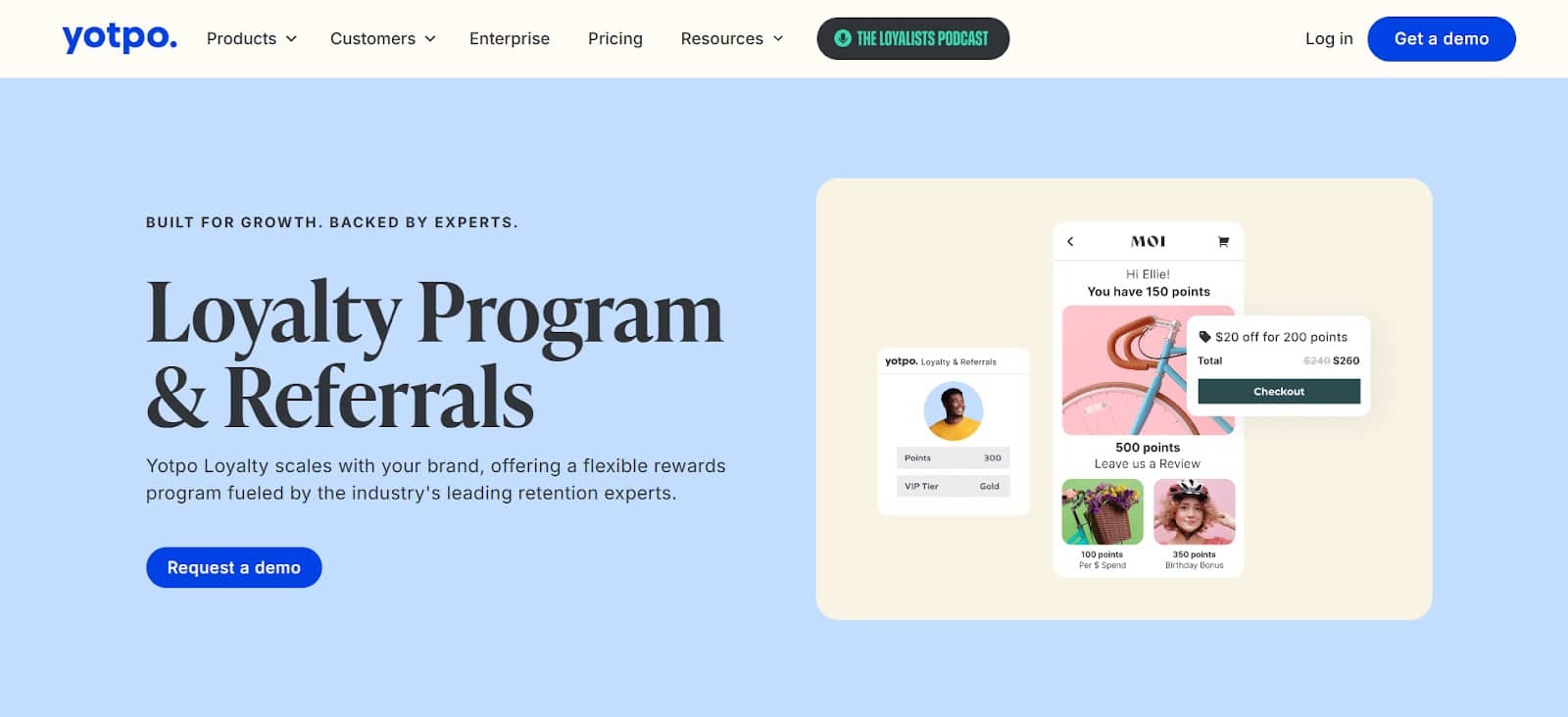
Once you have designed your program, selecting the right technology to execute your vision is a critical decision. While many platforms offer basic loyalty features, a specialized solution engineered for eCommerce provides the strategic depth required for meaningful growth. This is where a platform like Yotpo Loyalty excels, offering not just software, but a partnership focused on results.
The Advantage of a Specialized eCommerce Platform
Generic loyalty tools may suffice for a basic launch, but they often lack the deep data integrations and sophisticated analytics necessary for an advanced eCommerce strategy. The market for loyalty solutions includes various providers, such as Loyalty Lion, Smile, and Stamped. While these platforms offer a range of features, a crucial differentiator for high-growth brands is the level of strategic guidance and customization available.
A Strategic Partnership Approach with Yotpo Loyalty
Yotpo Loyalty is positioned as a strategic partner, not just a software vendor. This distinction is fundamental. The approach is to provide expert guidance to help you architect the most effective and profitable program for your specific business needs.
The Onboarding Experience
A successful program begins with a strategic setup. With Yotpo Loyalty, brands collaborate with dedicated customer success managers (CSMs) who are experts in eCommerce loyalty. This team helps translate your business objectives into a concrete program structure, providing guidance on everything from earning rules to reward values, ensuring your program is built on a foundation of industry best practices.
Leveraging eCommerce Loyalty Experts
This partnership extends well beyond the initial launch. Your dedicated CSM acts as an extension of your team, offering proactive advice and strategic analysis to optimize performance. This level of hands-on support is designed to ensure your loyalty program evolves with your business and continues to deliver a strong return on investment.
Building Your Program: Unmatched Flexibility and Customization
Your brand is unique, and your loyalty program should reflect that. Yotpo Loyalty is engineered for deep flexibility and customization, allowing you to create an on-brand experience that feels seamless to your customers.
Designing Unique Loyalty Experiences
The platform provides granular control over how customers earn and redeem points. It supports a wide array of campaigns, from straightforward points-for-purchase to more complex engagement-based rewards. You can create custom rewards, design VIP tiers with unique perks, and tailor the entire user interface to match your brand’s aesthetic.
Dynamic Segmentation for Targeted Offers
Yotpo Loyalty enables powerful, dynamic segmentation based on attributes like VIP tier, point balance, or purchase history. This allows you to create exclusive campaigns for specific customer groups. For example, you could launch a “double points” event exclusively for your top tier or send a special point bonus to at-risk customers. This level of targeting makes your marketing significantly more relevant and effective.
Flexible Program Rules
The platform offers flexible controls for key program mechanics, such as point expiration and VIP tier qualifications. You can configure points to expire after a period of inactivity to encourage re-engagement or use different models to qualify customers for VIP status. This flexibility ensures the program’s rules align perfectly with your business model.
Measuring Success: Robust Reporting and Insights
A loyalty program’s value must be measurable. Yotpo Loyalty includes a comprehensive reporting suite that provides clear, actionable insights into program performance.
Tracking Key Metrics
The analytics dashboard allows you to monitor all essential metrics, including:
- Program ROI: Quantify the revenue generated by the program.
- Member Engagement: Track enrollment, point earning, and reward redemption rates.
- Repeat Purchase Rate: Measure the program’s direct impact on customer retention.
- Redemption Patterns: Understand which rewards are most motivating to your customers.
Proving Return on Investment
The platform makes it easy to demonstrate the financial impact of your loyalty investment. By tracking and comparing the behavior of loyalty members versus non-members, you can analyze the uplift in AOV and purchase frequency, build a clear business case, and make data-driven decisions to continually optimize your strategy.
Best Practices for Promoting Your Loyalty Program
An exceptional loyalty program cannot deliver value if customers are unaware of its existence. A proactive, multi-channel promotional strategy is essential for driving enrollment and sustained engagement.
Executing a Strong Program Launch
The program launch sets the tone for future engagement. Plan a formal campaign to generate initial excitement and momentum.
- Offer a Sign-Up Bonus: Provide an immediate incentive, such as bonus points for creating an account, to give new members an instant sense of progress.
- Execute a Multi-Channel Announcement: Send a dedicated email blast to your customer list and post coordinated announcements across all social media channels.
- Create a Launch-Exclusive Offer: Consider a limited-time incentive for the first week, such as double points on all purchases, to drive a surge of initial activity.
On-Site Promotion
Your website is your most valuable promotional asset. Ensure the loyalty program is highly visible across your digital property.
- Homepage Banner: Use a prominent banner to announce the program to all site visitors.
- Dedicated Landing Page: Create a comprehensive landing page that clearly explains the program’s mechanics and benefits. This page should be linked from your site’s main navigation and footer.
- In-Cart Reminders: Reinforce the program’s value by showing shoppers how many points they will earn with their current purchase directly on product and cart pages.
Email & SMS Campaigns
Email and SMS are your primary channels for ongoing communication with members.
- Welcome Series: Once a customer joins, trigger a welcome email that confirms their enrollment, highlights key benefits, and displays their starting point balance.
- Monthly Point Summaries: Send regular, automated updates showing members their current point balance and available rewards.
- Triggered Notifications: Use automated messages to notify customers of key events, such as earning points, reaching a new tier, or having a reward available.
Social Media Integration
Leverage your social media audience to promote the program and showcase its value.
- Highlight Program Features: Regularly post about different aspects of your program, such as new rewards or special earning opportunities.
- Share Member Testimonials: Feature user-generated content from happy customers who have successfully redeemed a compelling reward.
- Run Member-Exclusive Contests: Conduct social media contests where enrollment in your loyalty program is a requirement for entry.
Avoiding Common Pitfalls in Loyalty Programs
While highly effective when executed properly, loyalty programs can fail if they fall into common traps. Awareness of these potential pitfalls can help you design a program that delivers lasting value.
Overly Complicated Rules
- The Problem: The program’s structure is convoluted, with too many conditions and exceptions. Customers become confused and disengage.
- The Solution: Simplicity is paramount. The value proposition must be immediately clear. Utilize a straightforward earning rule and ensure the redemption process is intuitive. Your dedicated landing page should explain everything in plain, accessible language.
Low-Value Rewards
- The Problem: The rewards are uninspiring or require an unreasonable level of spending to achieve. If the perceived effort outweighs the perceived value, motivation will falter.
- The Solution: Offer a balanced mix of attainable and aspirational rewards. Include smaller rewards for instant gratification and larger rewards to encourage long-term engagement. Crucially, ensure the rewards are genuinely desirable to your specific customer base.
Poor Communication
- The Problem: A customer enrolls and then receives no further communication. They forget they are a member and are unaware of their status or available rewards.
- The Solution: Communicate regularly and proactively. Use automated email and SMS messages to send point balance updates, reward notifications, and tier status changes to keep the program top-of-mind.
The “Set It and Forget It” Mentality
- The Problem: The program is launched and then never updated. It becomes stale, and its offers fail to adapt to changing customer preferences or market conditions.
- The Solution: Treat your loyalty program as a dynamic product that requires ongoing optimization. Use program analytics to understand what is working and what is not. Use these insights to refresh your offers, run targeted promotions, and keep the program relevant and exciting.
The Future of Customer Loyalty
The principles of customer loyalty are timeless, but the strategies and technologies used to cultivate it are continuously advancing. The future of loyalty is more personalized, engaging, and data-driven than ever before.
Hyper-Personalization
The market is moving beyond basic personalization toward hyper-personalization, where data is used to create truly individualized loyalty experiences. In the near future, a customer’s loyalty program will be uniquely tailored to their preferences and behaviors, powered by predictive analytics that anticipate their needs.
Gamification and Engagement
Future loyalty programs will increasingly incorporate gamification elements—such as challenges, badges, and leaderboards—to make participation more interactive and enjoyable. This encourages a wider range of brand-building behaviors beyond simple transactions, fostering a more deeply engaged community.
The Role of AI and Predictive Analytics
Artificial intelligence (AI) is the engine that will power these future trends. AI can analyze vast datasets to identify patterns and predict customer behavior, enabling brands to:
- Proactively Mitigate Churn: Identify at-risk customers and automatically trigger a personalized re-engagement offer.
- Recommend Personalized Rewards: Act as a predictive engine to suggest the optimal reward for each individual customer.
- Optimize Program Strategy: Analyze program-wide performance to recommend strategic adjustments for maximum impact.
Conclusion: Your Next Step Toward Sustainable Growth
In a saturated eCommerce marketplace, a strategic customer loyalty program is a powerful competitive differentiator. It enables a fundamental shift in focus from costly, short-term customer acquisition to high-value, long-term relationship building. By making your customers feel recognized and rewarded, you cultivate a community of brand advocates who drive predictable revenue and organic growth.
A well-designed program delivers measurable results by increasing customer lifetime value, boosting average order value, and improving purchase frequency. Whether you begin with a simple points-based system or a sophisticated tiered framework, the most important step is the first one. Begin building deeper, more profitable relationships with your customers today to secure a more sustainable business for tomorrow.
FAQs
How much does a loyalty program cost to set up?
The cost varies based on the sophistication of the platform. While simple plug-ins may have a lower initial cost, they often lack the advanced customization, strategic support, and robust analytics required for significant ROI. A more comprehensive platform like Yotpo Loyalty represents a strategic investment in your most valuable asset—your existing customers—designed to deliver a measurable financial return.
How quickly can I expect to see results from a loyalty program?
Initial engagement metrics, such as sign-up rates, can be seen almost immediately after launch. More strategic results, including a measurable lift in customer lifetime value and repeat purchase rate, typically become apparent within the first few months as members begin to accumulate points and alter their purchasing behavior.
Can a loyalty program be effective for a small business?
Absolutely. Loyalty is arguably even more critical for a small business, where each customer relationship has a significant impact. A loyalty program helps smaller businesses compete by building a strong community and providing a compelling reason for customers to remain loyal, rather than defaulting to larger competitors.
What is the difference between a loyalty program and a referral program?
A loyalty program is a customer retention strategy focused on rewarding existing customers for their own repeat business and engagement. A referral program is a customer acquisition tool that incentivizes existing customers to bring in new customers. Many effective loyalty programs, including those built with Yotpo, incorporate referrals as one of several ways for members to earn rewards.
How do I measure the success of my loyalty program?
Success is measured against the specific goals you defined during the design phase. Use your platform’s analytics to monitor key performance indicators (KPIs) such as member growth rate, reward redemption rate, repeat purchase rate among members vs. non-members, AOV lift, and the program’s overall return on investment (ROI). A successful program will demonstrate positive trends across these critical metrics.


 Join a free demo, personalized to fit your needs