













In the competitive world of e-commerce, rising customer acquisition costs are a constant challenge. Brands pour significant budgets into paid ads and marketing, often fighting for the same audience. But what if your most powerful marketing channel is one you already own? Your existing, happy customers.
Key Takeaways
- Trust is Key: A referral from a friend is more powerful than any advertisement. Referral programs turn this trust into a reliable growth channel.
- Cost-Effective Growth: Rewarding existing customers for bringing in new ones is often cheaper and yields higher-value customers than traditional paid advertising.
- Strengthens Loyalty: A referral program makes customers feel valued and turns them into active brand advocates, encouraging repeat business.
- Simple is Better: The most successful programs have clear, simple rules and a two-sided incentive where both the referrer and their friend get a reward.
- Promotion is Crucial: A referral program needs continuous promotion across email, your website, and social media to succeed. Don’t just launch it and forget it.
Why a Customer Loyalty Referral Program is a Must-Have
Before we get into the “how,” let’s talk about the “why.” A referral program isn’t just another marketing tactic. It’s a core strategy that taps into the power of human trust. It creates a win-win-win situation for your brand, your loyal customers, and the new people they bring in.
The Power of Word-of-Mouth Marketing
Think about how you shop. A recommendation from a friend probably means more to you than a flashy ad, right? This idea, known as social proof, is what makes referral programs work. When a customer advocates for your brand, they’re lending you their personal credibility. This trust passes to the new customer, lowering the natural skepticism people have about trying something new. It’s an authentic endorsement that advertising just can’t buy.
A Cost-Effective Way to Find New Customers
From a financial standpoint, the logic is solid. The cost per acquisition (CPA) for channels like paid search and social media keeps climbing. Referral marketing changes this equation. Instead of paying ad platforms, you reward your own customers for bringing you new business.
The cost of getting a customer through a referral is typically much lower. Plus, referred customers often have a higher customer lifetime value (LTV). They spend more, stay more loyal, and are more likely to refer others, creating a cycle of growth.
Strengthen Customer Loyalty and Retention
A referral program does more than just bring in new faces. It deepens the bond with your current customers. When you reward a customer for a referral, you’re telling them you appreciate them. This recognition strengthens their connection to your brand and makes them feel good about their choice to shop with you.
You’re making them an active partner in your brand’s success. This elevates them from a simple buyer to an engaged advocate, which is a powerful driver for long-term loyalty.
The Core Mechanics: How Referral Programs Work
At its heart, a referral program is a structured system for rewarding word-of-mouth sharing. To build a great one, you need to understand the basic parts and what motivates everyone involved.
Understanding the Key Players
Every referral involves three parties:
- The Referrer (Advocate): Your existing customer who likes your brand enough to share it.
- The Friend (Referred Customer): The new potential customer who trusts the advocate’s recommendation.
- The Brand: Your business, which provides the tools and rewards to make the referral happen smoothly.
The Two-Sided Incentive: A Win-Win-Win
The best referral programs offer a two-sided incentive, where both the referrer and their friend get a reward. This creates a powerful, mutually beneficial exchange.
- Referrer Rewards: The advocate needs a good reason to share. This reward thanks them for their effort.
- Friend Offers: The new customer needs a little nudge to make that first purchase. A welcome offer reduces the friction of trying a new brand.
This two-sided model works so well because it feels less like a sales pitch and more like a helpful tip. The advocate isn’t just sharing for their own gain; they’re also giving a great deal to a friend.
Structuring Your Rewards: Finding the Right Motivation
Choosing the right rewards is critical. They need to be valuable enough to motivate people but also financially sustainable for your business. Here are a few effective reward structures.
Points-Based Systems
For brands with a loyalty program, rewarding referrals with points is a natural fit.
- How it works: A successful referral adds points to the advocate’s account. They can redeem these points for discounts, free products, or other perks.
- Why it’s effective: This structure encourages repeat purchases and keeps customers engaged with your loyalty program.
Discount Coupons
This is one of the most popular and straightforward reward types. You can offer a percentage-based or a fixed-amount discount.
- Percentage-based (e.g., 20% off): This often motivates customers to make larger purchases.
- Fixed-amount (e.g., $15 off): This is simple to understand and can be more profitable on high-value items. A “Give $15, Get $15” model is a classic for a reason. It’s clear and compelling.
Store Credit/Gift Cards
Offering store credit ensures the reward is reinvested back into your brand. This encourages repeat business from your best customers and keeps the revenue within your ecosystem.
Tiered Rewards
A tiered system offers bigger rewards as a customer refers more people. This is great for motivating your most enthusiastic fans.
- Example:
- 1st referral: 10% off coupon
- 3rd referral: $25 store credit
- 5th referral: A free product This structure turns referring into a game and gives your “superfans” a powerful reason to keep sharing.
Building Your Referral Program: A Step-by-Step Guide
Ready to build? Launching a successful referral program requires a strategic, step-by-step approach.
Step 1: Define Your Goals and KPIs
First, you need to define what success looks like.
- Set Clear Goals: Do you want to increase new customer acquisition by 15%? Lower your overall CPA? Boost the LTV of referred customers?
- Establish Your KPIs: To track progress, monitor Key Performance Indicators (KPIs) like:
- Referral Rate: The percentage of customers who share.
- Conversion Rate: The percentage of friends who buy.
- LTV of Referred Customers: How much referred customers are worth over time.
- Program ROI: The revenue generated versus the cost of rewards.
Step 2: Identify and Segment Your Advocates
Not every customer is a perfect advocate. Focus your efforts on those most likely to refer. Look for customers with:
- High LTV
- High purchase frequency
- Recent purchases
- Positive reviews
A powerful loyalty platform is a huge help here. For example, Yotpo Loyalty has robust reporting and segmentation tools that let you pinpoint these ideal advocates and target them with personalized invitations.
Step 3: Design Your Incentive Structure
Using your goals and profit margins, choose the reward that best fits your brand. Make sure the reward feels significant compared to your Average Order Value (AOV). It’s often best to start with a simple, compelling offer you can test later.
Step 4: Craft a Compelling and Clear Message
Your program’s success depends on customers understanding it easily. Simplicity is everything.
- The Referral Landing Page: Create a dedicated page with a benefit-focused headline (“Give $20, Get $20”), simple instructions, and a clear call-to-action (“Start Sharing”).
- Easy Sharing: Remove all friction. Provide a unique, copyable link and sharing buttons for email and social media.
Step 5: Promote Your Program Continuously
Promotion isn’t a one-time thing.
- Email Marketing: Announce the program and add referral messages to your post-purchase emails.
- On-Site Promotion: Use banners and add a link to your website’s header or footer.
- Social Media: Post about your program regularly to encourage sharing.
Step 6: Track, Analyze, and Optimize
A referral program needs constant attention.
- Track Your KPIs: Use your platform’s dashboard to check performance. A low share rate might mean the program isn’t visible enough. A low conversion rate could mean the friend offer isn’t strong enough.
- A/B Test: Experiment with different rewards and messages to see what works best.
- Gather Feedback: Ask your customers for their thoughts to get valuable ideas for improvement.
Yotpo Loyalty: Your Strategic Partner for Referral Success
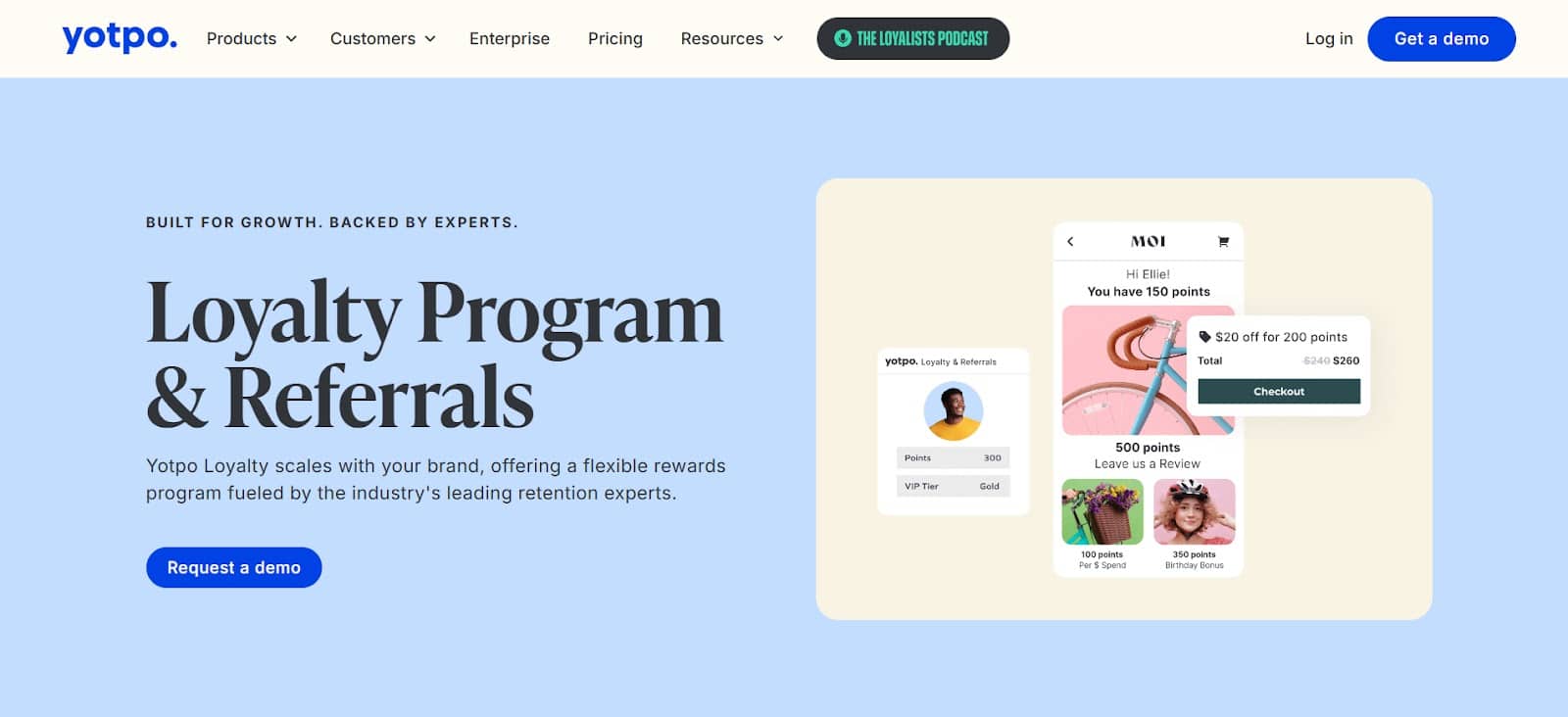
An effective referral program requires powerful technology. Yotpo serves as a strategic partner, not just a software provider. With a team of e-commerce loyalty experts, Yotpo helps you design, launch, and optimize your program for your specific goals.
It offers deep customization to create a branded experience, advanced segmentation to target your best advocates, and robust analytics to track performance. Its flexibility allows you to build everything from simple discount programs to complex tiered rewards for your superfans.
Common Pitfalls to Avoid When Launching Your Program
Many brands make avoidable mistakes that limit a program’s potential. Here are a few to watch out for.
Overly Complicated Rules
If your program isn’t easy to understand in seconds, customers will give up.
- How to Avoid It: Keep it simple. Use clear language and highlight the basic steps on your landing page.
Unattractive Incentives
The reward has to feel valuable. A tiny discount won’t motivate anyone.
- How to Avoid It: Look at your AOV and margins. The reward must be generous enough to get people to act but also sustainable for your business.
Poor Promotion and Visibility
This is the #1 reason referral programs fail. If customers don’t know about it, they can’t use it.
- How to Avoid It: Promote the program across all your channels. More importantly, make it a permanent part of your website and marketing.
Ignoring Program Analytics
You can’t improve what you don’t measure. You need data to understand what’s working and what isn’t.
- How to Avoid It: Choose a platform with clear, robust reporting. Schedule regular check-ins to review the data and make informed decisions.
Conclusion: Turn Your Customers into Your Best Marketers
In today’s e-commerce world, a great referral program is a powerful engine for growth. It helps you move beyond a reliance on paid ads by tapping into the trust you’ve already built with your best customers.
A successful program is a mix of smart strategy, great incentives, and continuous optimization. By making it easy and rewarding to share, you can turn happy customers into a community of brand evangelists. Ultimately, a referral program is about building deeper relationships and creating a cycle where great experiences bring in new customers, who then have great experiences of their own.
Frequently Asked Questions
What is the difference between a loyalty program and a referral program?
Think of a referral program as one important part of a complete loyalty strategy. A broad loyalty program rewards many different actions, like making purchases or writing reviews. A referral program focuses specifically on one action: rewarding existing customers for bringing in new ones. Platforms like Yotpo Loyalty let you manage both in one place, creating a single program where customers earn rewards for all their positive actions.
How much should I offer as a referral reward?
The best reward depends on your brand’s numbers. A good rule is to make sure your total referral cost is lower than your average Customer Acquisition Cost (CAC) from other channels like paid ads. The offer should also feel substantial compared to your Average Order Value (AOV). Start with a compelling offer that fits your margins, then use A/B testing to find the sweet spot.
How do I prevent referral fraud?
Referral fraud, like people referring themselves, is a real concern. A good referral platform will have built-in protections. For instance, Yotpo Loyalty can check for duplicate accounts and can be set to only grant rewards after a new customer completes a real purchase. This ensures you’re only rewarding genuine, valuable referrals.
How long does it take to see results from a referral program?
You might see some activity right after a big launch, but building real momentum takes time. It’s important to be patient. You are teaching your customers a new behavior. Generally, give it at least three months to gather enough data to see how it’s really performing. Consistent promotion is key.
Should the reward be the same for the referrer and the friend?
Not necessarily, but it’s often the simplest and most effective approach. A “Give $20, Get $20” model is easy to understand and feels fair to everyone. However, you can experiment. Some brands offer a larger reward to the new customer to encourage that first purchase, while others give more to the referrer to motivate more sharing.
Can I run a referral program without a full loyalty program?
Yes, absolutely. You can launch a standalone referral program that only rewards customers for bringing in new business. This can be a great way to start if you’re not ready for a more complex points-based system. The key is to make the reward compelling on its own, like a discount or store credit.
Where are the best places to promote my referral program?
Promote it everywhere! Key places include a dedicated landing page on your site, your website’s header or footer, post-purchase confirmation emails, and regular email newsletters. You should also promote it on your social media channels and consider a pop-up on your site for highly engaged shoppers.
What’s more effective: points, discounts, or store credit?
It depends on your goal. Points are great for encouraging repeat purchases and long-term engagement with a loyalty program. Discounts are simple, direct, and highly effective at motivating immediate action. Store credit is a smart choice because it guarantees the reward value is spent back at your store.
How do I get my first referrers?
Start with your most loyal customers. Send a targeted email to customers who have made multiple purchases, left positive reviews, or have a high lifetime value. Invite them to be the first members of your new referral program. They are the ones most likely to share and can help you build early momentum.
What if my referral program isn’t working?
Don’t panic! Use your analytics to diagnose the problem. Is the share rate low? Your program might not be visible enough, or the referrer reward isn’t compelling. Is the conversion rate low? The offer for the friend might need to be stronger. Test different elements one at a time to see what makes a difference.
Do referral programs work for subscription businesses?
Yes, they work very well. For subscription models, you can offer rewards like a discount on the next month’s box, a free month of service, or exclusive add-on products. Because the business model is already built on long-term relationships, a referral program is a natural way to encourage growth.
Can I offer non-monetary rewards?
Definitely. Non-monetary rewards can be very effective, especially for brands with a strong community. Consider offering things like early access to new products, exclusive content, free entry into a contest, or a special piece of branded merchandise. These types of rewards can make your biggest fans feel special and valued beyond just a discount.
How do I communicate the referral program to my customers?
Use clear, exciting, and benefit-driven language. Instead of “Check out our referral program,” try “Give your friends 20% off and get $20!” Focus on what they get out of it. Use visuals, keep the instructions simple (3 steps max), and make the call-to-action button big and bold.




 Join a free demo, personalized to fit your needs