












In the busy world of e-commerce, it is easy to focus exclusively on customer acquisition. However, a brand’s most valuable asset is often its existing customer base. Building lasting relationships with these shoppers is fundamental to sustainable growth. This is where customer loyalty campaigns become essential.
They are more than simple discount programs; they are strategic initiatives designed to cultivate a deeper connection with your brand, encourage repeat business, and convert casual buyers into lifelong advocates.
This guide will provide a comprehensive framework for building a loyalty campaign that not only enhances customer satisfaction but also drives measurable revenue.
Understanding the “Why”: The Business Case for Loyalty Programs
Before exploring the mechanics of a loyalty program, it is crucial to understand its strategic importance. Investing time and resources into a loyalty program is justified by the clear and compelling financial impact of customer retention. When a business shifts its focus from solely acquiring new customers to retaining existing ones, it activates a powerful engine for durable growth.
The Hard Numbers: Key Statistics on Customer Retention
Data consistently demonstrates that customer retention is one of the most effective strategies for increasing profitability. According to research from Bain & Company, increasing customer retention rates by just 5% can increase profits by 25% to 95%. Furthermore, studies from Harvard Business Review have shown that acquiring a new customer is anywhere from five to 25 times more expensive than retaining an existing one.
Loyalty programs directly influence the metrics that are most critical to an e-commerce business’s financial health:
- Customer Lifetime Value (LTV): Loyal customers purchase more frequently and spend more over time, which significantly increases their LTV. A well-designed loyalty program provides compelling incentives for them to return consistently.
- Repeat Purchase Rate: This metric tracks the percentage of customers who have made more than one purchase. Loyalty campaigns are specifically structured to improve this figure by rewarding repeat business.
- Average Order Value (AOV): By offering points for purchases or tier-based rewards, you can incentivize customers to increase their basket size, directly driving up your AOV.
The Modern Consumer: Why Transactional Relationships Are Insufficient
Today’s consumers expect more than a simple transaction. They seek personalized experiences and want to feel valued by the brands they support. A loyalty program is an ideal vehicle for building this emotional connection. It elevates the relationship from purely transactional to a reciprocal partnership. When customers feel they are part of an exclusive community, they are more likely to choose your brand over a competitor. This sense of belonging and shared values is what creates genuine brand advocacy.
In essence, the business case for loyalty is undeniable. These programs help lower acquisition costs, increase key revenue metrics like LTV and AOV, and build the deep customer relationships that create a sustainable competitive advantage.
The Foundation: Designing a Strategic Customer Loyalty Campaign
A successful loyalty program is the result of careful planning and a strategic methodology. Before you begin rewarding customers, you must establish a solid foundation. This process involves defining clear goals, understanding your audience, and choosing the right program model to align with your brand and customer expectations.
Step 1: Defining Your Campaign Goals and KPIs
The first step in designing any effective campaign is to establish what you intend to achieve. Without clear objectives, you have no way to measure success or make informed decisions. Your goals should be specific, measurable, achievable, relevant, and time-bound (SMART).
Common objectives for a customer loyalty campaign include:
- Increase the repeat purchase rate by a specific percentage (e.g., 15% within six months).
- Boost Average Order Value (AOV) by encouraging larger purchases.
- Improve customer retention and increase Customer Lifetime Value (LTV).
- Gather valuable customer data and actionable feedback.
- Drive the creation of user-generated content (UGC), such as reviews and social media posts.
- Reduce the rate of shopping cart abandonment.
Once your goals are set, you must select the appropriate Key Performance Indicators (KPIs) to track your progress. These could include metrics such as customer retention rate, redemption rate, participation rate, and purchase frequency.
Step 2: Knowing Your Audience – Segmentation is Key
A uniform approach to loyalty rarely succeeds. Your customers are not a monolith, so their rewards should not be either. Segmentation is the practice of dividing your customer base into distinct groups based on shared characteristics. This allows you to tailor your loyalty program to the specific needs and motivations of each segment.
You can segment your audience based on:
- Demographics: Age, location, gender.
- Psychographics: Lifestyle, values, interests.
- Behavioral Data: Purchase history, visit frequency, products viewed.
One of the most powerful segmentation methods is RFM (Recency, Frequency, Monetary) analysis. This technique helps you identify your most valuable customers by analyzing how recently they have purchased, how often they buy, and their total spending. With this insight, you can create targeted offers for your best customers, re-engage those at risk of churn, and nurture new shoppers into loyal patrons.
Step 3: Choosing the Right Loyalty Program Model
Several types of loyalty programs exist, each with unique advantages. The optimal choice for your brand depends on your objectives, products, and customer preferences.
- Points-Based Programs: This is the most prevalent model. Customers earn points for specific actions, such as making a purchase, writing a review, or following the brand on social media. These points can be redeemed for rewards like discounts or free products. This model is highly effective for encouraging a wide range of engagement behaviors.
- Tiered Programs: Tiered programs generate a sense of aspiration and exclusivity. Customers unlock new levels of benefits as they increase their spending or engagement. Each tier offers progressively valuable rewards, which motivates customers to advance. This model is particularly effective for cultivating long-term loyalty and acknowledging top customers.
- Value-Based (VIP) Programs: These programs concentrate on offering non-monetary, exclusive benefits. This could include early access to new products, invitations to special events, or personal shopping services. Value-based programs are excellent for forging a strong emotional connection and a sense of community.
- Paid (Subscription) Programs: In this model, customers pay an upfront fee to join a program that offers ongoing benefits, such as perpetual free shipping. This structure creates a high level of commitment and can generate a recurring revenue stream.
- Hybrid Models: It is not necessary to adhere to a single model. Many successful brands combine elements from different program types to create a unique and highly engaging experience. For example, a points-based system could include a special VIP tier for top spenders.
Designing your loyalty campaign involves making strategic choices that align with your business goals. By setting clear objectives, understanding your audience, and selecting the right program structure, you establish the framework for a successful and profitable initiative.
Building Your Campaign with the Right Tools: A Look at Yotpo Loyalty
With a strategic plan in place, you need the right tools to execute it. While a simple, manual loyalty system might seem adequate initially, it can quickly become an impediment to growth. To build a truly effective and scalable program, a specialized platform designed for the complexities of e-commerce is essential. A dedicated loyalty platform provides the flexibility, analytics, and strategic guidance necessary to drive tangible results.
A Deep Dive into Yotpo Loyalty’s Capabilities
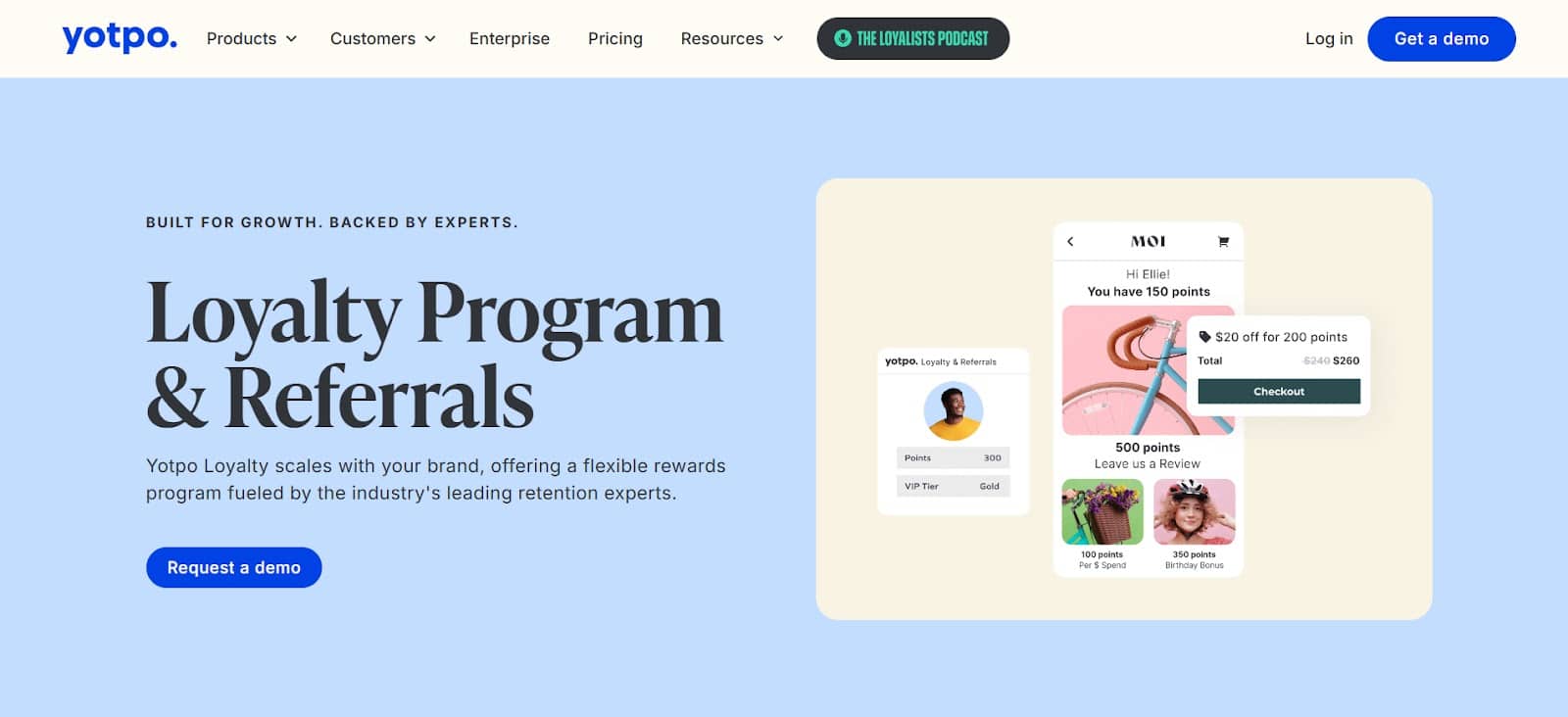
For building sophisticated, revenue-driving loyalty campaigns, Yotpo Loyalty is a premier solution. It is engineered not just as software, but as a comprehensive solution that empowers brands to create customized and engaging loyalty experiences.
Strategic Partnership and Expertise
A key differentiator of Yotpo Loyalty is its partnership approach. Clients receive more than a tool; they gain a team of e-commerce loyalty experts committed to their success. With a dedicated Customer Success Manager (CSM) for strategic guidance and 24/7 technical support, brands are equipped to optimize their programs for specific business goals. This level of support is invaluable for navigating the complexities of retention marketing.
Unmatched Flexibility and Customization
Yotpo Loyalty offers exceptional flexibility, enabling brands to build a program that perfectly aligns with their identity. It facilitates the creation of unique loyalty experiences through highly customizable options. This includes establishing a wide variety of ways for customers to earn points, such as making purchases, writing reviews, or following on social media. The platform also supports a broad range of reward options, including discounts, free products, and exclusive access, ensuring the program remains fresh and compelling.
Powerful Segmentation and Reporting
Data is central to any successful loyalty program, and Yotpo provides robust reporting and analytics to support informed decision-making. The platform delivers deep insights into program performance and customer behavior. Brands can track key metrics, understand which rewards are most effective, and measure the program’s impact on the bottom line. Yotpo’s dynamic segmentation capabilities allow for targeted campaigns directed at different customer groups, ensuring all offers are relevant and impactful.
Standalone Power
It is important to recognize that Yotpo Loyalty is a powerful and effective solution on its own. A business can utilize it to build, manage, and optimize a sophisticated loyalty program without requiring other Yotpo products. It provides a complete suite of tools necessary to foster customer relationships and drive repeat revenue through a dedicated loyalty strategy.
How Yotpo Compares in the Loyalty Landscape
The market for loyalty solutions includes various platforms such as Loyalty Lion, Smile, and Stamped. While these tools offer an array of features, Yotpo differentiates itself in several key areas. Rather than solely providing software, Yotpo emphasizes a strategic partnership model , offering a level of expert guidance that is critical for long-term success. The platform’s deep customization capabilities allow brands to move beyond generic programs and create experiences that are truly unique to their brand. Finally, Yotpo’s purpose-built analytics for e-commerce provide the actionable insights needed to prove ROI and continuously optimize program performance.
In essence, Yotpo Loyalty provides the tools, expertise, and flexibility to build a world-class loyalty program.
Executing Your Campaign: Best Practices for Engagement and Growth
Launching a loyalty program is only the initial step. The substantive work involves keeping members engaged and continuously growing the program. A static approach is ineffective. A proactive strategy for promotion, communication, and optimization is required to ensure your program remains a valuable asset for your business.
Launching Your Loyalty Program with a Bang
A successful launch can generate immediate momentum and drive early adoption. The goal is to create a significant impact and enroll as many existing customers as possible.
Here is a checklist for a successful program launch:
- Create a Dedicated Landing Page: This page should clearly explain how the program operates, its benefits, and the enrollment process.
- Promote Across All Channels: Announce the launch via an email blast to your customer list, post about it on all social media channels, and feature it prominently on your website with banners and pop-ups.
- Seed the Program: Provide existing customers with immediate value by automatically enrolling them and awarding a starting balance of points based on their past purchase history. This encourages immediate engagement.
- Train Your Team: Ensure your customer service team understands the program thoroughly so they can answer questions and promote it effectively.
Communicating Value: How to Keep Members Engaged
Once customers have joined your program, you must keep it top of mind. Regular and relevant communication is essential for maintaining engagement.
Here are some strategies for effective communication:
- Personalized Emails and SMS: Utilize automated messages to keep members informed. Send point balance updates, reminders about approaching rewards, and notifications for exclusive member offers.
- On-Site Reminders: Employ on-site widgets and notifications to display a customer’s point balance and show them how close they are to their next reward. This can be a powerful motivator during the shopping journey.
- Build a Community: Cultivate a sense of exclusivity by offering special content, forums, or a private social media group for loyalty members. This helps build a stronger emotional connection to your brand.
Optimizing and Evolving Your Program
An effective loyalty program is never static. You should constantly seek ways to improve it based on data and customer feedback.
- Analyze Performance: Regularly review your program’s performance against the KPIs established during the planning phase. Identify areas of success and opportunities for improvement.
- A/B Test Your Rewards: Experiment with different types of rewards and offers to determine what resonates most with your customers. You might find that experiential rewards outperform discounts for certain segments.
- Survey Your Members: Actively solicit opinions from your members. Distribute surveys to gather feedback on the program and ask for suggestions. This provides valuable insights and makes your members feel heard and valued.
By following these execution best practices, you can ensure your loyalty program remains a dynamic and engaging asset that drives both customer satisfaction and business growth.
Advanced Strategies: Taking Your Loyalty Campaign to the Next Level
Once your loyalty program is operating effectively, consider how to elevate its impact. While basic points-for-purchase programs are a solid foundation, advanced strategies can create a more formidable competitive advantage. By incorporating experiential rewards, gamification, and a well-designed VIP program, you can build deeper emotional connections and inspire even greater loyalty.
Leveraging Experiential Rewards
While discounts are effective, they do not always create a lasting impression. Experiential rewards, in contrast, can forge a powerful emotional bond with your brand. These are exclusive experiences that make your most loyal customers feel genuinely special.
Examples of experiential rewards include:
- Early access to new product launches.
- Invitations to exclusive online or in-person events.
- Personalized styling sessions with a product expert.
- An opportunity to influence a future product design.
- A special birthday gift or a personalized video message from the founder.
These types of rewards transcend the transactional and create a sense of genuine appreciation, showing customers you value them beyond their purchase history.
Gamification: Making Loyalty Fun
Gamification is the application of game-like elements to non-game contexts. It is a powerful technique for driving engagement because it appeals to our intrinsic desires for achievement, competition, and reward.
You can incorporate gamification into your loyalty program in several ways:
- Badges and Achievements: Award customers special badges when they complete certain actions, such as making five purchases or writing their first review.
- Leaderboards: Introduce friendly competition by displaying a leaderboard of your top point-earners.
- Surprise and Delight: Occasionally surprise your members with unexpected point allocations or bonus rewards. This creates excitement and encourages them to check in frequently.
By making your loyalty program more interactive and enjoyable, you can significantly increase participation and maintain active engagement.
Creating a VIP or Tiered Program that Inspires
A well-structured tiered or VIP program is one of the most effective methods for fostering long-term loyalty. It creates a clear progression path for customers and rewards them with increasing benefits. The key is to make the upper tiers feel genuinely exclusive and aspirational.
Here are some tips for designing an effective tiered program:
- Structure Tiers Logically: Ensure the entry requirements for each tier are clear and attainable. The benefits should escalate in value as customers advance.
- Offer Exclusive Benefits: The rewards for your top tiers should be truly exceptional. This could include benefits like free shipping on all orders, a dedicated customer service line, or a permanent discount.
- Communicate Status: Make your VIP members feel valued. Address them by their tier name in communications and consider creating an exclusive section on your website for them.
By implementing these advanced strategies, you can transform your loyalty program from a simple rewards system into a powerful engine for building brand advocacy and driving sustainable growth.
Measuring Success: How to Prove the ROI of Your Loyalty Campaign
A loyalty program is a significant investment, and its value must be demonstrable. Measuring your campaign’s success extends beyond tracking redeemed points. You must analyze the data to understand how the program impacts customer behavior and overall business revenue. This is the only way to justify the investment and build a strong business case for its continuation.
Key Metrics to Track
To obtain a complete picture of your program’s performance, you should monitor a variety of metrics:
- Customer Retention Rate (CRR): This is the ultimate measure of loyalty, indicating the percentage of customers who remain with you over a given period. Track this for both members and non-members to see the program’s direct impact.
- Redemption Rate: This metric shows the percentage of earned points being redeemed. A low rate may suggest that your rewards lack appeal or that the process is too complex.
- Participation Rate: This is the percentage of your customer base enrolled in your loyalty program. A high participation rate indicates that your program is attractive to your customers.
- Purchase Frequency: This KPI measures whether your loyalty members are buying from you more often than non-members, a key indicator of repeat business.
- Share of Wallet: This advanced metric estimates how much of a customer’s spending in a specific category is allocated to your brand. An increase among loyalty members is a strong sign of success.
Building a Business Case with Data
Tracking these metrics is the first step; the real power lies in using this data to construct a compelling business case. You must connect the loyalty program’s performance to your company’s bottom line.
Here is a framework for demonstrating ROI:
- Establish a Baseline: Before launching, measure your key metrics to establish a baseline for comparison.
- Use Control Groups: To accurately understand the program’s impact, compare the behavior of loyalty members to a control group of non-members. This allows you to measure the incremental lift generated by the program, such as the difference in LTV between the two groups.
- Create a Comprehensive Report: Compile a report for stakeholders that clearly outlines the program’s goals, the metrics being tracked, and the results achieved. Use charts and graphs to make the data easily digestible.
- Highlight Key Wins: Do not just present numbers; tell the story behind them. Emphasize specific examples of how the program has driven positive outcomes, such as a significant increase in AOV or positive feedback from a top-tier VIP member.
By taking a data-driven approach to measuring success, you can clearly demonstrate the financial value of your loyalty campaign and secure the support needed to continue investing in this critical business function.
Conclusion: Loyalty as Your Cornerstone for Sustainable Growth
In the competitive e-commerce arena, cultivating a loyal customer base is essential for long-term viability and growth. Customer loyalty campaigns are the foundation of a successful retention strategy, enabling brands to move beyond transactional relationships and build a community of advocates who will remain steadfast over time.
As this guide has illustrated, creating a revenue-driving loyalty program requires a strategic approach, beginning with clear goals and a deep understanding of your audience. The right tools, such as Yotpo Loyalty, provide the power and flexibility to execute this vision. However, success is not guaranteed at launch. Continuous communication, optimization, and the innovation of advanced strategies are what distinguish an adequate program from an exceptional one.
Ultimately, customer loyalty is a long-term strategy. It is an investment in the relationships that will fuel your business for years to come. By placing your customers at the center of your strategy and rewarding them for their commitment, you are not just driving repeat sales; you are building a resilient brand capable of thriving in any market condition.
FAQs
How much does a customer loyalty program typically cost?
The cost of a customer loyalty program varies based on factors such as the platform chosen, the value of the rewards offered, and associated marketing expenses. While there is an initial investment, it should be evaluated in the context of its potential return on investment (ROI). A well-executed program often generates value far exceeding its cost by increasing customer lifetime value, reducing acquisition costs, and driving consistent repeat revenue.
How long does it take to see results from a loyalty campaign?
It is important to set realistic expectations. While an initial increase in engagement and sales may occur shortly after launch, the true impact of a loyalty program is realized over the long term. Metrics like repeat purchase rate may improve relatively quickly, but more significant effects on customer lifetime value and overall retention become more apparent over several months to a year. Loyalty is a long-term strategy, not a short-term tactic.
What is the biggest mistake brands make with loyalty programs?
One of the most common errors is making the program overly complicated. If customers cannot easily understand how to earn and redeem points, they will likely disengage. Other significant pitfalls include offering rewards that are not perceived as valuable or relevant and failing to promote the program effectively. If customers are unaware of your loyalty program or do not see its value, it cannot succeed.
Can a loyalty program work for a small business?
Certainly. A loyalty program can be a powerful competitive differentiator for a small business. Modern, scalable platforms have made loyalty programs accessible and affordable for businesses of all sizes. For a smaller brand, a loyalty program is an excellent way to build a strong community and foster the personal relationships that larger competitors often struggle to replicate. It demonstrates to customers that their business is valued and provides a compelling reason to choose your brand.


 Join a free demo, personalized to fit your needs