














Customer churn presents a significant challenge to e-commerce growth. Brands work tirelessly to acquire new customers, yet often see revenue diminish as existing ones disengage. This process can feel like an uphill battle. However, by leveraging customer churn analysis, brands can shift from a reactive to a proactive retention strategy.
This guide provides a comprehensive framework for understanding, predicting, and reducing customer churn, transforming it from a business threat into a strategic growth opportunity.
Key Takeaways
- Define and Measure: Start by establishing a clear, data-driven definition of a “churned” customer for your business. Consistently calculate your churn rate to track the effectiveness of your retention efforts over time.
- Analyze the “Why”: Consolidate transactional, engagement, and feedback data to understand the root causes of churn. Use segmentation techniques like RFM analysis to identify which customer groups are most at-risk.
- Identify Warning Signs: Look for predictive churn indicators like a drop in purchase frequency, decreased marketing engagement, or an increase in negative feedback. These signals allow for proactive intervention.
- Build Lasting Loyalty: The most effective long-term churn reduction strategy is to create an environment customers don’t want to leave. A well-designed loyalty program is a powerful tool for building these lasting relationships.
- Leverage Feedback: Treat customer reviews as a vital source of intelligence. Analyzing feedback helps you identify product or service gaps that cause churn, allowing you to address them systematically.
Why Customer Churn Analysis Is Critical for E-commerce Growth
The impact of customer churn on profitability is substantial. Did you know that acquiring a new customer costs significantly more than retaining an existing one? It’s true. Furthermore, even a modest increase in customer retention rates can lead to a disproportionately large increase in profitability. This shows that churn analysis isn’t merely about minimizing losses. It’s a foundational component of a sustainable and profitable business model.
When you understand the root causes of churn, you can address systemic issues within the customer experience. This not only improves satisfaction among your current customer base but also strengthens your brand’s value proposition for prospective buyers.
By prioritizing churn analysis, you directly enhance key performance indicators like Customer Lifetime Value (LTV) and reduce dependence on costly Customer Acquisition Costs (CAC). This strategic focus fosters long-term growth built on strong customer relationships.
The Anatomy of Customer Churn
Before you can mitigate churn, you must develop a deep understanding of its components, calculations, and underlying causes.
Defining Customer Churn in E-commerce
In an e-commerce context, customer churn occurs when a customer stops purchasing and disengages from the brand over a defined period. Unlike subscription models where customers actively cancel, e-commerce churn is often silent. The customer doesn’t formally announce their departure; they simply stop interacting. This passive nature makes precise identification and measurement essential for effective analysis.
How to Calculate Your Customer Churn Rate
To manage churn, you must first measure it accurately. The Customer Churn Rate calculates the percentage of customers lost during a specific period.
The standard formula is:
- Customer Churn Rate = (Number of Customers Lost in Period / Total Customers at Start of Period) x 100
A Step-by-Step Calculation Example:
- Define the Period: Select a relevant time frame, such as a fiscal quarter (90 days).
- Count Starting Customers: Assume your business had 10,000 active customers at the beginning of the quarter.
- Count Lost Customers: By the end of the quarter, you determine that 500 of the initial 10,000 customers have not made a purchase within your defined churn threshold (e.g., 90 days of inactivity).
- Calculate the Rate: (500 / 10,000) * 100 = 5%
Your customer churn rate for this quarter is 5%. Tracking this metric over time provides a clear indicator of the effectiveness of your retention strategies.
The Common Causes of Customer Churn
Customer churn is rarely random. It is typically a symptom of a deeper friction point in the customer journey. Understanding these drivers is the first step toward building a solution.
Common causes include:
- Subpar Customer Service: Slow response times, unresolved issues, or impersonal support interactions can quickly erode customer trust and loyalty.
- Product Dissatisfaction: The product failed to meet expectations, exhibited poor quality, or didn’t deliver on its promise. This cause is often visible in negative reviews and high return rates.
- Pricing and Value Perception: Customers will seek alternatives if they believe your product’s price isn’t justified by its value. Hidden fees or a complicated pricing structure also contribute to a negative experience.
- Lack of Proactive Engagement: A customer relationship requires ongoing cultivation. Failure to engage customers with relevant content, personalized communications, or community-building initiatives leads to brand apathy.
- Superior Competitive Offerings: The market is dynamic. A competitor may introduce a better product, a more attractive price point, or a more compelling overall customer experience.
A Step-by-Step Guide to Customer Churn Analysis
A successful churn analysis is a systematic process. It involves defining your parameters, gathering relevant data, identifying patterns, and drawing actionable insights to inform your retention strategy.
Step 1: Establish a Clear Definition of “Churn”
Your first task is to create an objective, data-driven definition of a churned customer. Because e-commerce customers don’t have a formal cancellation process, this definition must be based on purchase inactivity.
To do this, analyze your sales data to determine the average time between purchases for a loyal customer. If your data shows that top customers typically buy every 60 days, you might set your churn threshold at 90 or 120 days of inactivity. Any customer who crosses this threshold is officially classified as “churned.” This definition provides the consistency needed for accurate analysis.
Step 2: Consolidate Relevant Customer Data
To understand why customers disengage, you must analyze the complete customer journey. This requires aggregating data from multiple business systems into a unified view.
A comprehensive data checklist includes:
- Transactional Data: Customer ID, order dates, purchase frequency, average order value (AOV), products purchased, and discounts used.
- Website Engagement Data: Last seen date, pages visited, time on site, and cart abandonment history.
- Marketing Engagement Data: Email and SMS open rates, click-through rates, and social media interactions.
- Customer Service Data: Volume of support tickets, response and resolution times, and satisfaction scores.
- Qualitative Customer Feedback: Product reviews, site reviews, Net Promoter Score (NPS) responses, and reasons cited for product returns.
Step 3: Segment Customers to Identify At-Risk Groups
A one-size-fits-all retention strategy is inefficient. Segmentation allows you to group customers with similar characteristics to identify which cohorts are most vulnerable to churn.
A highly effective segmentation methodology is RFM Analysis (Recency, Frequency, Monetary):
- Recency: How much time has passed since the customer’s last purchase? Recent buyers are typically more engaged.
- Frequency: How often does the customer make a purchase? Repeat buyers are generally more loyal than one-time purchasers.
- Monetary Value: What is the total monetary value of the customer’s purchases? High-value customers are your most critical segment to retain.
Using RFM analysis, you can create actionable segments such as “High-Value, At-Risk Champions,” “New Customers Fading Fast,” or “Low-Value, Low-Frequency.” This allows for the precise targeting of retention campaigns.
Step 4: Identify Predictive Churn Indicators
By analyzing the behavioral data of customers who have already churned, you can identify the early warning signs that predict future churn. These leading indicators act as a vital early-warning system.
Key predictive behaviors to monitor include:
- A measurable decline in purchase frequency.
- Decreased engagement with marketing communications (lower email/SMS open rates).
- Ignoring promotional offers that were previously effective.
- Increased website browse sessions that don’t result in a purchase.
- The submission of a negative product or site review.
- A recent history of multiple customer support inquiries.
When an active customer begins to display these behaviors, it’s a clear signal to trigger a proactive intervention campaign.
Tools for Customer Churn Analysis
While manual analysis in spreadsheets is possible, dedicated tools can automate data collection, segmentation, and insight generation, saving you time and improving accuracy. A comprehensive approach to churn analysis typically involves several types of platforms working together.
- Analytics and Business Intelligence (BI) Platforms: These tools are the foundation for understanding quantitative data. They help you track key metrics like purchase frequency and engagement over time, allowing you to spot the declining trends that often precede churn.
- Customer Feedback Platforms: To understand the “why” behind the numbers, you need qualitative insights. Solutions like Yotpo Reviews are essential for systematically collecting and analyzing customer feedback. This allows you to pinpoint specific issues with products or services that are causing dissatisfaction and leading to churn.
- Loyalty and Retention Platforms: Once you’ve identified at-risk customers, these platforms provide the tools to proactively retain them. With a solution like Yotpo Loyalty, you can build customized rewards and VIP programs that give customers a compelling reason to stay, fostering long-term relationships that prevent churn.
- Customer Service Software: Help desk and customer support platforms provide a rich source of data. Analyzing ticket volume, issue types, and resolution times can reveal friction points in the customer experience that need to be addressed.
Putting Theory into Practice: Reducing Churn with a Proactive Strategy
Understanding churn drivers is the diagnostic phase; reducing churn is the prescriptive phase. A successful retention strategy requires tools designed to create superior customer experiences that foster loyalty.
Cultivate Lasting Loyalty with Yotpo Loyalty & Referrals
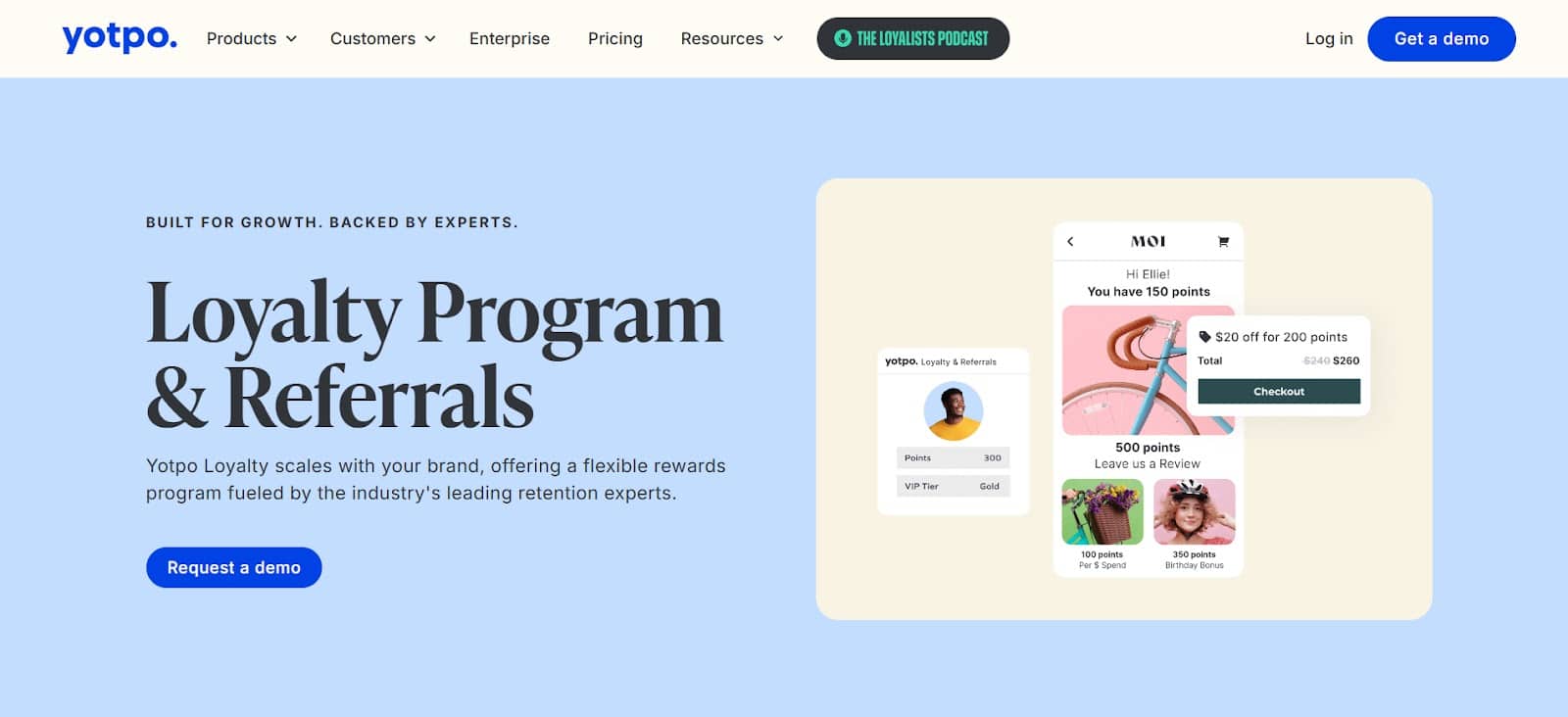
What’s the most durable method for churn reduction? Building an environment that customers don’t want to leave. A strategic loyalty program achieves this by rewarding repeat business and making customers feel valued. Yotpo Loyalty enables you to design and manage a customized program that serves as a key competitive differentiator.
Brands can move beyond simple points-based systems to create tiered VIP programs with exclusive perks, flexible rewards, and personalized incentives. Yotpo also provides strategic guidance from loyalty experts to help you design a program that aligns with your financial goals and brand identity. This transforms the customer relationship from transactional to relational, creating a powerful defense against churn.
Leverage Customer Feedback as a Retention Tool with Yotpo Reviews
Customer reviews are a rich source of intelligence for churn prevention. Yotpo Reviews provides the tools to systematically collect, analyze, and act on this feedback. When a customer leaves a negative review, it is a critical churn signal. Yotpo enables you to respond directly and publicly, showing your commitment to customer satisfaction and giving you an opportunity to resolve the issue.
Beyond individual interactions, you can analyze review data in aggregate to identify trends related to product defects, shipping issues, or other service gaps that cause churn. By proactively addressing these root causes, you not only salvage at-risk customers but also enhance the experience for your entire customer base.

Actionable Best Practices for Churn Reduction
Begin implementing these strategic best practices today to strengthen your customer retention efforts.
- Deploy a Comprehensive Personalization Strategy: Leverage customer data to personalize every touchpoint, from on-site product recommendations to marketing messages.
- Establish a Customer Feedback Loop: Actively solicit feedback through reviews and surveys, and demonstrate that you’re acting on it by making visible improvements.
- Implement a Strategic VIP Program: Use RFM analysis to identify your most valuable customers and provide them with exclusive rewards, early access, and priority service.
- Invest in Superior Customer Service: Ensure your support team is accessible, responsive, and empowered to resolve issues effectively. A positive service interaction can be a powerful retention event.
- Communicate Value Beyond the Transaction: Build a community around your brand by sharing valuable content, telling your brand story, and engaging with customers on social media.
Conclusion
While customer churn is a persistent challenge in e-commerce, it is manageable with a strategic, data-driven approach. By implementing a rigorous process of customer churn analysis, brands can move from speculation to certainty, identifying the precise drivers of customer attrition. This analysis provides a clear roadmap for action.
The process begins with defining and measuring churn, followed by consolidating data and segmenting your audience to uncover at-risk customers. From there, leveraging the capabilities of best-in-class solutions enables the execution of targeted strategies. By focusing on building genuine loyalty and listening intently to customer feedback, you can effectively mitigate churn and build a more profitable, resilient e-commerce business.
FAQs
What is a good customer churn rate for e-commerce?
A “good” churn rate varies significantly by industry, product category, and business maturity. While a commonly cited annual benchmark for well-performing brands is in the range of 5-7%, the most critical practice is to track your own churn rate consistently and focus on achieving incremental improvements over time.
How can I predict which customers are about to churn?
Churn prediction relies on identifying behavioral warning signs in your customer data. Key indicators include declining purchase frequency, reduced engagement with marketing channels, increased customer support tickets, or recent negative reviews. Using a tool to track these signals helps automate the process of flagging at-risk customers.
What is the most effective strategy for reducing churn?
The optimal strategy depends on your specific churn drivers. However, implementing a well-structured loyalty program is one of the most powerful and proactive long-term strategies. It builds an emotional connection and gives customers compelling reasons to remain loyal.
How can I collect feedback from customers who have already churned?
The most direct method is an automated exit survey sent via email after a customer is classified as churned. To maximize response rates, keep the survey short, asking one or two key questions like, “What was the primary reason you chose to stop shopping with us?” Providing a small incentive can also improve participation.
Can I reduce churn without a large budget?
Yes. Many high-impact retention activities are low-cost. Focus on improving customer service response times, personally responding to every product review, and sending personalized follow-up communications. These efforts require more time than money but are highly effective at building customer trust.
What is RFM analysis?
RFM stands for Recency, Frequency, and Monetary value. It’s a segmentation method used to group customers based on their transaction history: how recently they purchased, how often they purchase, and how much they’ve spent. It’s highly effective for identifying your most valuable customers as well as those who are at risk of churning.
How often should I calculate my churn rate?
It’s best practice to calculate your churn rate on a consistent schedule, such as monthly or quarterly. This allows you to monitor trends effectively and measure the impact of your retention initiatives. Annual calculations are useful for a high-level view, but more frequent tracking enables you to be more agile in your response.
Is all churn bad?
Not necessarily. Some churn is natural and expected. For instance, you may lose customers who were never a good fit for your brand in the first place (e.g., they were solely seeking a one-time deep discount). The goal is to reduce preventable churn, which is the loss of valuable customers who you could have retained with a better experience.
What’s the difference between voluntary and involuntary churn?
Voluntary churn happens when a customer actively chooses to stop doing business with you (e.g., due to dissatisfaction or finding a competitor). Involuntary churn occurs when a customer leaves for reasons outside their direct control, such as a recurring payment failure. For most e-commerce brands, voluntary churn is the primary concern.
How do customer reviews connect to churn analysis?
Customer reviews are a direct line to the voice of your customer. Analyzing review content, especially negative reviews, can reveal patterns and root causes of dissatisfaction. A sudden increase in negative reviews for a specific product can be an early warning sign of a quality issue that could drive widespread churn if not addressed.
Can a loyalty program really prevent customers from leaving?
Absolutely. A strategic loyalty program increases switching costs. When customers have earned points or achieved a certain VIP status, they have a tangible incentive to stick with your brand rather than start from scratch with a competitor. It creates a sense of value and belonging that goes beyond just the products you sell.
Where should I start if I’m new to churn analysis?
Start simple. Your first step should be to clearly define what “churn” means for your business based on purchase inactivity. Then, calculate your current churn rate. This initial benchmark is the most important metric you’ll need to begin tracking your progress.
How does Customer Lifetime Value (LTV) relate to churn?
LTV and churn are inversely related. When your churn rate is high, your average customer lifetime is shorter, which directly leads to a lower LTV. By reducing churn, you extend the customer relationship, allowing for more repeat purchases and a higher overall LTV. Improving LTV is one of the primary financial benefits of effective churn reduction.




 Join a free demo, personalized to fit your needs