











High customer acquisition costs present a major challenge for e-commerce brands. Many find themselves in a costly cycle, securing a first purchase only to lose the customer. The most sustainable solution is not a constant search for new buyers, but a strategic focus on nurturing existing relationships. This is where a custom loyalty program becomes essential, turning one-time shoppers into valuable brand advocates.
This guide explores the architecture of a truly custom loyalty strategy, defining what makes a program bespoke, why it’s critical for growth, and how you can implement one to drive repeat purchases..
Why a Custom Loyalty Program is Critical for E-commerce Growth
A well-designed custom loyalty program is not merely a marketing tactic; it is a fundamental business strategy. It directly influences your most important e-commerce metrics by shifting your operational focus from individual transactions to long-term customer relationships.
Generic, one-size-fits-all programs often fail because they feel impersonal, offering the same incentives to every customer regardless of their loyalty or value. A custom program, by contrast, demonstrates to your best customers that they are seen, understood, and valued. This cultivation of an emotional connection is a primary driver of sustainable growth.
Here is how this approach translates into tangible business outcomes:
- Increased Customer Lifetime Value (LTV): Loyal customers purchase more frequently and consistently. By providing personalized incentives and exclusive rewards, you give them compelling reasons to choose your brand repeatedly. Industry data consistently shows that a minor increase in customer retention can yield a significant increase in profitability.
- Higher Average Order Value (AOV): Strategic loyalty programs encourage shoppers to increase their basket size to reach a new reward tier or unlock a specific perk. A customer is more likely to purchase a recommended accessory or upgrade to a premium product if it advances them toward a valuable, personalized reward.
- Reduced Customer Acquisition Cost (CAC): A strong loyalty base lessens the reliance on expensive advertising campaigns. Your most loyal customers evolve into brand advocates, driving organic growth through word-of-mouth and integrated referral programs. This creates a cost-effective and highly credible acquisition channel.
- Valuable Zero-Party Data: A custom loyalty program is an effective mechanism for collecting zero-party data. Customers willingly provide their preferences, birthdays, and other interests in exchange for a more personalized experience. This data allows you to refine marketing campaigns, enhance personalization, and make more informed product development decisions.
Ultimately, a custom loyalty program establishes a powerful feedback loop. You reward your customers, they feel valued and increase their spending, and you acquire the data necessary to continuously improve their experience.
What Defines a “Custom” Loyalty Program?
The term “custom” is often applied broadly. In the context of loyalty programs, it signifies a strategic departure from the basic “spend-to-get” model. A genuinely custom program is tailored to your brand’s identity and your customers’ unique behaviors. It functions as an integrated brand experience, not a generic add-on.
While points for purchases are still a core component, the emphasis on rewarding other actions (reviews, social engagement, referrals) is crucial for a truly custom and engaging program.
Let’s analyze the essential pillars that constitute a truly custom loyalty program.
Beyond Points-for-Purchases: The Foundational Shift
The first principle is to expand the definition of a valuable customer action. While purchases remain the ultimate goal, numerous other engagements signal a strong customer relationship. A custom program is designed to recognize and reward these interactions, making customers feel appreciated for their overall engagement with the brand.
When a customer writes a detailed product review, that is a valuable action. When they follow your brand on social media and share your content, that is also valuable. When they refer a friend who makes a purchase, that is exceptionally valuable. A custom program builds a framework to reward this entire ecosystem of brand advocacy.
Key Pillars of a Custom Loyalty Program
To construct a program that truly resonates with customers, you must integrate several layers of customization. These pillars work in concert to create an experience that feels both exclusive and personally relevant.
1. Personalized Rewards and Offers
This is the core of customization. Instead of offering a standard 10% discount to all customers, you tailor incentives to specific segments based on data. This personalization can be based on:
- Purchase History: Provide a special offer on a product category a customer frequently browses but has not yet purchased.
- Loyalty Status: Grant top-tier members exclusive early access to new products or a more substantial discount.
- Key Milestones: An automated birthday or customer anniversary reward can create a moment of genuine delight.
- Customer Choice: Allow members to select their own reward from a curated menu, providing a sense of autonomy and control.
2. Strategic VIP Tiers
Tiers transform a rewards program into a structured journey with clear, aspirational goals. Customers are motivated to increase their spending or engagement to unlock the elevated status and benefits of the next level. A well-designed tier system should be:
- Clearly Defined: Customers must easily understand the requirements for advancement (e.g., “Achieve an annual spend of $500” or “Earn 1,000 points”).
- Increasingly Valuable: The perks of each successive tier must be significantly better than the last to incentivize progression. Early tiers might offer modest point multipliers, while top tiers could unlock benefits like free shipping for life, dedicated support channels, or exclusive event invitations.
- Branded and Aspirational: Use creative, on-brand names for your tiers. Whether your customers are “Insiders,” “All-Stars,” or “MVPs,” the status should feel like a badge of honor.
3. Experiential Benefits
Often, the most impactful rewards are not monetary discounts. Experiential benefits are non-financial perks that deepen a customer’s connection to your brand and its community. These unique rewards are difficult for competitors to replicate and can become a significant differentiator.
Examples include:
- Early access to sales and new product collections.
- Invitations to exclusive online or in-person brand events.
- Access to a private community forum or social media group.
- Complimentary personal styling consultations or product tutorials.
- The opportunity to vote on new product designs or contribute to brand decisions.
4. Flexible Earning Rules
As previously noted, a custom program should reward more than just transactions. By establishing multiple ways to earn points, you encourage a wider spectrum of brand-building behaviors. Consider offering points for activities such as:
- Creating a customer account
- Celebrating a birthday
- Following the brand on Instagram, TikTok, or Facebook
- Submitting a product review
- Including a photo or video with a review
- Referring a new customer
- Completing a customer profile
This multi-faceted strategy keeps customers engaged with your brand between purchases, strengthening the relationship over time.
5. A Deeply Branded Experience
Finally, a custom loyalty program must look and feel like a natural extension of your brand. The design, messaging, and user experience must be seamless and consistent with your brand identity. From the on-site widgets to the reward notification emails, every touchpoint should be cohesive. Avoid generic interfaces that position your loyalty program as a disconnected third-party tool. The objective is to make customers feel they are part of an exclusive club that is unique to your brand.
Building Your Program with Yotpo
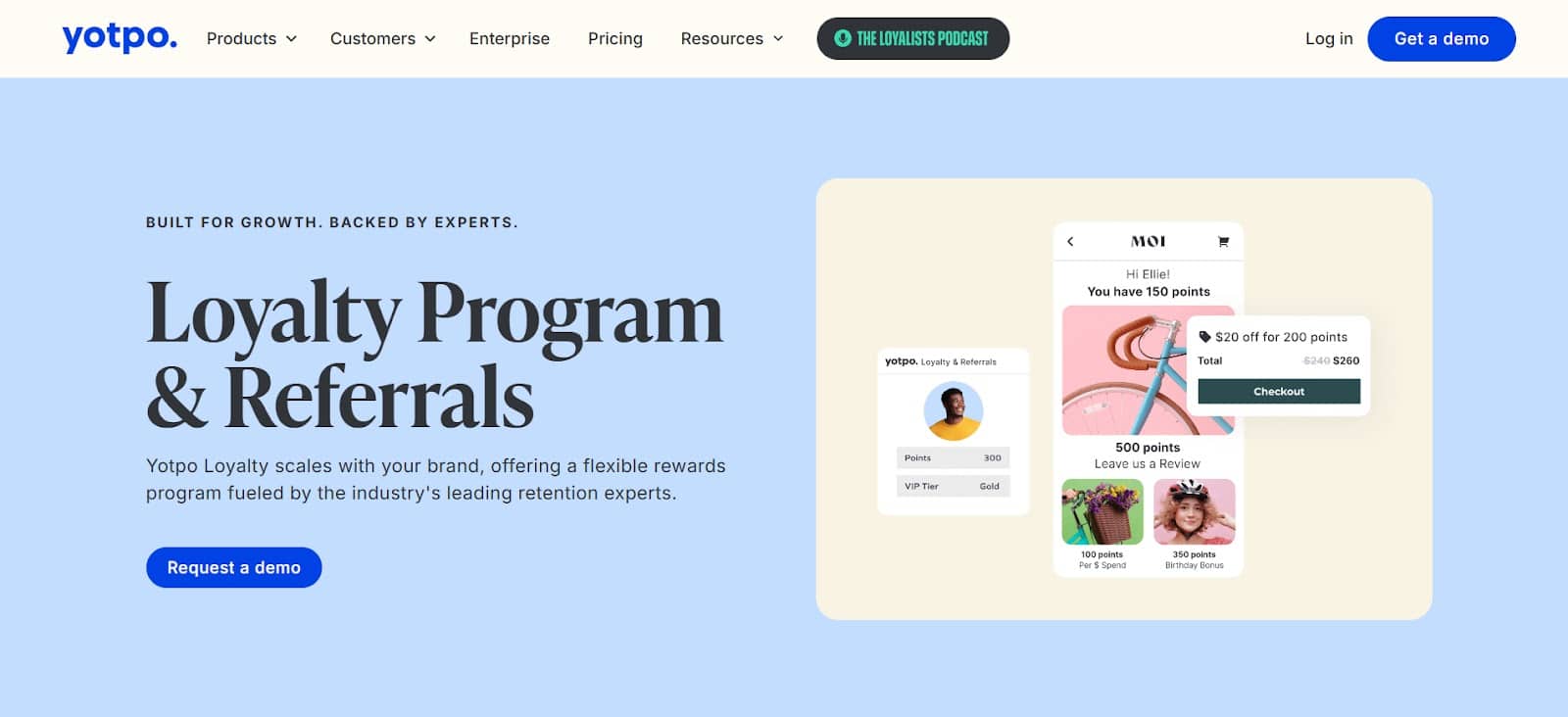
Understanding the theory behind a custom loyalty program is the first step. The next is implementing the right technology to execute that vision. A powerful, flexible platform is essential for bringing this strategy to life. Yotpo Loyalty is engineered specifically to help e-commerce brands build the sophisticated, personalized, and deeply branded programs required for today’s market.
Let’s explore how Yotpo provides the features and strategic support needed to translate theory into measurable results.
The Yotpo Difference: A Strategic Partnership
Crucially, Yotpo approaches loyalty as a strategic partnership. Rather than simply providing software, Yotpo offers access to e-commerce loyalty experts who provide dedicated strategic guidance. This is a critical distinction from other platforms. Building a program that drives results involves more than activating features; it requires a strategy tailored to your specific business goals and customer base.
This hands-on support—from structuring VIP tiers for maximum impact to brainstorming unique earning campaigns—ensures your program is optimized for success from its inception.
Unmatched Flexibility and Customization
Yotpo Loyalty is built upon a foundation of flexibility, granting you the control to create a program that is genuinely your own.
- Custom Earning Campaigns: You can reward customers for a wide array of actions. Yotpo offers over 15 pre-built, one-click earning campaigns, including points for social media engagement, birthdays, account creation, and submitting reviews. This allows you to immediately incentivize valuable, brand-building behaviors.
- Highly Customizable VIP Tiers: You retain complete control over your tier architecture. Tiers can be configured based on customer spending, points accumulation, or even manual assignment. You can fully customize tier names, entry criteria, and the unique perks for each level, ensuring the program aligns perfectly with your brand’s aspirational goals.
- Flexible Redemption Options: Empower your customers with choice. Yotpo supports a variety of redemption options, including fixed-amount discounts, percentage-based coupons, free shipping vouchers, and even specific free products. This versatility ensures your rewards remain compelling and valuable to your audience.
- Integrated Referral Program: A high-performance referral program is seamlessly integrated within Yotpo Loyalty. You can reward your advocates for spreading the word, effectively transforming your most loyal customers into a powerful and credible customer acquisition channel.
Leveraging Data for Deep Personalization
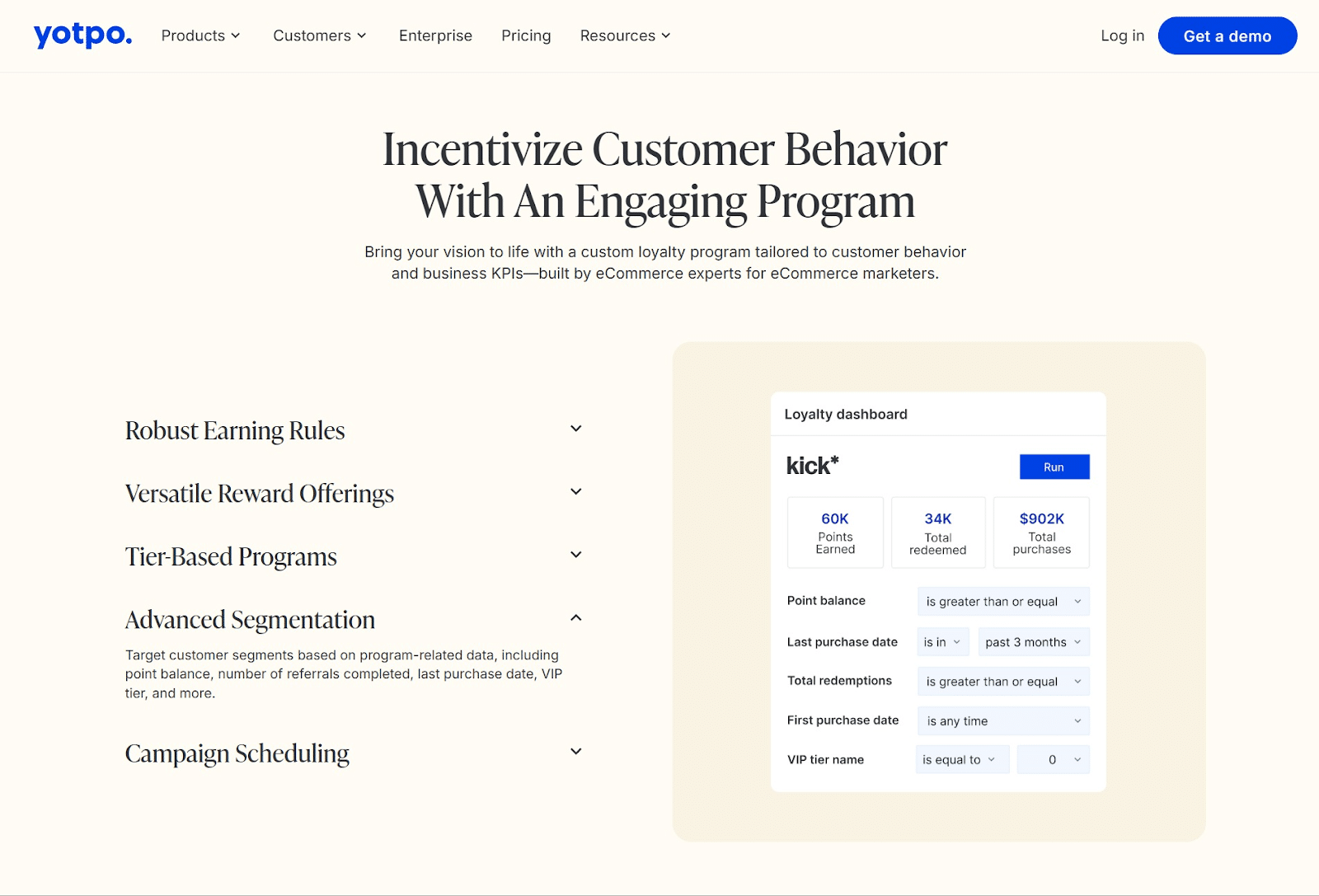
An effective loyalty program is powered by data. Yotpo provides robust segmentation and reporting tools to help you understand your customers at a deeper level. You can easily create customer segments based on loyalty data—such as VIP tier, points balance, or birthday—and then use that information to execute highly targeted, personalized marketing campaigns.
This capability allows you to send an exclusive “double points” offer to your top-tier members or a “we miss you” incentive to customers who have become inactive. This level of data-driven personalization increases marketing effectiveness and makes customers feel uniquely valued.
Best Strategies for Your Custom Loyalty Program
Launching a custom loyalty program is a significant strategic initiative. To ensure a successful implementation and long-term performance, adhere to these best practices:
- Establish Clear Objectives. Define what you intend to achieve. Are your primary goals to increase purchase frequency, raise AOV, or generate more user-generated content? Establish key performance indicators (KPIs) at the outset to enable accurate measurement of success.
- Prioritize Simplicity and Accessibility. The program’s mechanics and benefits must be easy to understand. Develop a dedicated landing page that clearly explains how to enroll, earn points, and redeem rewards. Ensure customers can easily access their points balance and tier status.
- Ensure Comprehensive Promotion. Your loyalty program should be highly visible. Promote it prominently on your homepage, in email footers, across social media channels, and within post-purchase communications. Greater visibility directly correlates with higher enrollment rates.
- Commit to Listening and Iteration. A loyalty program should not be a static initiative. Utilize platform analytics to monitor performance and identify areas for improvement. Solicit direct feedback from members through surveys to understand which rewards they find most valuable. Be prepared to test new offers and refine your strategy based on data.
- Train Your Customer Service Team. Your support team should be thoroughly educated on all aspects of your loyalty program. As a frontline resource, they must be equipped to answer questions about points, tiers, and rewards confidently, ensuring a consistently positive customer experience.
Conclusion
Transitioning from generic discounts to a custom loyalty program is one of the most impactful investments an e-commerce brand can make. It represents a strategic decision to prioritize relationships over transactions, fostering the brand affinity that creates customers for life. By leveraging personalized rewards, aspirational tiers, and an experience that is deeply integrated with your brand, you can build a powerful engine for sustainable and profitable growth.
Executing this strategy effectively requires a platform engineered for flexibility, data-driven personalization, and strategic support. A solution like Yotpo Loyalty provides the necessary tools to not only build a world-class program but also to integrate it seamlessly with your other marketing channels, creating a truly cohesive and effective retention marketing machine.
FAQs
How do I measure the ROI of a custom loyalty program?
To measure the return on investment (ROI), you should track and compare the behavior of loyalty program members against that of non-members. Key metrics to monitor include:
- Repeat Purchase Rate: The frequency at which members make repeat purchases.
- Customer Lifetime Value (LTV): The total revenue generated from a member over their entire relationship with your brand.
- Average Order Value (AOV): The average amount spent per transaction by members.
- Program Engagement Rate: The frequency of point earning and redemption. A high redemption rate indicates that members find the program valuable.
What are some common mistakes to avoid when launching a loyalty program?
Common pitfalls include designing a program that is too complex for customers to understand, offering rewards that lack sufficient value or relevance, failing to promote the program adequately across all channels, and neglecting to use program data to personalize the experience and make iterative improvements.
Can a small business create a successful custom loyalty program?
Yes. Success depends on a clear strategy that aligns with the brand and its resources, not the size of the business. Scalable platforms like Yotpo allow a small business to launch a foundational program and then introduce more sophisticated features, tiers, and integrations as the business grows. The core principle of making your best customers feel valued is universally effective.
What is the difference between a loyalty program and a referral program?
A loyalty program is a comprehensive strategy designed to increase retention and LTV across your customer base by rewarding a wide range of engagements and repeat purchases. A referral program is a more specific acquisition tactic that focuses on incentivizing existing customers to bring in new customers. The most effective strategies fully integrate the referral program within the broader loyalty framework, positioning it as one of several ways a member can earn rewards.
How long does it take to see results from a loyalty program?
Initial engagement metrics, such as enrollment rates and interaction with earning campaigns, can be observed almost immediately. However, the program’s more significant impact on core business metrics like LTV and repeat purchase rate typically becomes evident over a period of 3-6 months. This timeframe allows members to fully engage with the program, accumulate points, and demonstrate changes in their purchasing behavior.


 Join a free demo, personalized to fit your needs