














You’ve likely noticed a growing gap in your weekly reports. Your dashboard might say you are ranking #1 for a high-value keyword, yet your traffic analytics tell a completely different story. This usually isn’t a glitch in your software; it’s often a sign that the definition of “visibility” has evolved. With search results now crowded by AI summaries, product carousels, and zero-click answers, simply “ranking” is rarely enough to guarantee traffic.
To get a true picture of your performance in 2026, you need tools that look beyond the list and measure how your brand appears to customers across the entire web—from Google to ChatGPT.
Key Takeaways: 15 Best Keyword Tracking Tools for 2026
- The “Pixel Rank” Reality: Traditional rankings can be misleading; being #1 organically often means sitting 1,200 pixels down the page due to AI Overviews pushing content below the fold.
- The “Great Decoupling”: Many budget trackers became less reliable after Google disabled the num=100 parameter in late 2025, making verified data infrastructure essential.
- Zero-Click Dominance: With over 60% of searches ending without a click, success is increasingly measured by visibility and citations rather than just traffic volume.
- The Hybrid Stack: No single tool covers the entire landscape; brands often need a combination of “Intelligence” (e.g., Semrush), “Optimization” (e.g., Rankability), and “Performance” (e.g., AccuRanker).
- AI Visibility: Monitoring brand mentions in LLMs like ChatGPT, Claude, and Perplexity is now as critical as tracking Google SERPs.
The “Search Everywhere” Paradigm: Why Tracking Changed in 2026
If your keyword reports felt disconnected from your actual revenue throughout 2025, you weren’t alone. The fundamental mechanics of how search engines report data and how users consume it underwent a structural shift that industry experts often refer to as “The Great Decoupling.”
The Deprecation of num=100 (The Great Decoupling)
In September 2025, Google deprecated the num=100 search parameter—a technical setting that allowed SEO tools to scrape 100 results in a single request. This change forced rank trackers to make significantly more queries to gather the same data, complicating the business model for some budget-friendly tracking tools.
More importantly, this technical update eliminated a large volume of bot traffic that had previously inflated impression data in Google Search Console (GSC). While some brands were concerned when they saw their impressions drop, this was actually a correction. This shift “right-sized” reporting, leaving brands with cleaner, human-centric data, albeit with lower vanity metrics.
The AI Overview (AIO) Volatility
The second major disruptor has been the fluctuation of AI Overviews (AIOs). Unlike the stable featured snippets of the past, AIOs are dynamic. Recent findings suggest that when an AI Overview is present, the organic Click-Through Rate (CTR) for traditional results can drop by 61%.
Furthermore, these results are not static. AI Overviews change frequently, with 70% of AIO results shifting completely within a 2-3 month period. This volatility means that “checking your rankings” once a week may no longer be sufficient; visibility is now a fluid state that benefits from more frequent monitoring.
From “Rank” to “Pixel Depth”
In this new environment, an ordinal rank (e.g., “Position 1”) provides limited context. If an AI Overview, a carousel of products, and a “People Also Ask” box occupy the top of the screen, the “Position 1” organic result might actually be 1,200 pixels down the page—well below the fold on most devices. Modern tracking focuses on “Pixel Depth” or absolute visibility to understand what the user actually sees.
The Enterprise Intelligence Suites
These platforms function as the “Central Nervous System” for your SEO data. They are designed not just to track keywords, but to provide total market intelligence, analyzing competitors, backlink profiles, and now, Generative AI visibility.
1. Semrush
Best For: Comprehensive Market Intelligence & AI Visibility
Semrush has long been a staple for digital marketers, and its updates in late 2025 have kept it relevant for mid-to-large SaaS and e-commerce brands. Recognizing the shift away from traditional search, Semrush has expanded its focus toward “Online Visibility Management.”
- The 2026 Evolution: The platform launched the AI Visibility Index, a dedicated toolkit that tracks brand mentions across ChatGPT, Google Gemini, and Perplexity. This allows you to see not just where you rank, but how you are perceived by answer engines.
- Key Feature: Position Tracking AI Integration: The tool now flags potential “Cannibalization Risks” where an AI Overview summary might be satisfying the user’s intent so thoroughly that your organic link—even if ranked #1—receives fewer clicks.
- Key Feature: Share of Voice (SoV) 2.0: Unlike legacy metrics, Semrush’s updated SoV calculation now accounts for “pixels occupied,” giving you a realistic view of how much screen real estate you actually own compared to ads and AI features.
Verdict: If you need a single source of truth that covers both traditional Google links and newer AI answers, Semrush is a robust, albeit premium, choice.
2. Ahrefs
Best For: Data Depth & Backlink Correlation
While Semrush broadened its scope, Ahrefs doubled down on data purity and enterprise-grade infrastructure. Known for having a highly active crawler, Ahrefs remains a strong choice for the “Data Purist” who demands granular detail on why a ranking shifted.
- The 2026 Evolution: Ahrefs introduced sophisticated “Enterprise” capabilities, specifically focusing on historical data analysis. Their “Historical SERP Replay” feature allows teams to visualize exactly what the search results looked like during a specific drop in traffic—vital for diagnosing if a loss was due to a ranking drop or an AI Overview insertion.
- Key Feature: Keywords Explorer with Clickstream: Ahrefs continues to refine its volume data with clickstream analysis, helping you identify “Zero-Click” keywords where search volume is high but traffic potential is low.
- Key Feature: Portfolio Traffic Value: For e-commerce brands, Ahrefs allows you to assign specific dollar values to keyword clusters, effectively reporting on “Potential Revenue at Risk” rather than just traffic dips.
Verdict: Essential for technical SEO teams and large catalogs that need to correlate ranking changes with backlink activity and SERP feature volatility.
3. SE Ranking
Best For: High-Frequency Tracking & Value
SE Ranking offers a significant portion of the features found in larger suites at a more accessible price point. In 2026, they are particularly valuable for brands that need to track thousands of SKUs efficiently.
- The 2026 Evolution: They were among the first to launch a dedicated AI Overviews Tracker that doesn’t just check for presence, but analyzes the sources cited within the AI answer. This helps brands understand which third-party sites (like Reddit or Quora) are feeding the AI’s opinion of their products.
- Key Feature: Real-Time Updates: During busy periods like holidays or flash sales, SE Ranking allows for on-demand ranking checks, ensuring you aren’t looking at yesterday’s data when making today’s bid adjustments.
- Key Feature: 100% Data Accuracy Guarantee: In response to the industry-wide changes in data collection, SE Ranking invested in their own infrastructure to bypass verification issues, offering a stability guarantee that is valuable in the current market.
Verdict: A smart choice for agencies and e-commerce brands that need accurate, high-volume tracking but may not require the full breadth of a larger marketing suite.
4. SEO PowerSuite (Rank Tracker)
Best For: Unlimited Keywords & Desktop Power Users
SEO PowerSuite remains unique as a desktop-based application (with cloud reporting). While this might seem retro, it offers a distinct advantage: control. Because the software runs from your own IP (or proxies you control), it is less susceptible to some of the API limitations that cloud-based SaaS tools face.
- The 2026 Evolution: The suite has updated its protocols to allow users to mimic human browsing behavior precisely, which helps in capturing hyper-local rankings (e.g., street-level visibility) without triggering captchas.
- Key Feature: Unlimited Projects: For agencies or enterprise brands with massive keyword lists, the structure effectively lowers the “cost per keyword” after the license fee. This makes it economically feasible to track many long-tail variations of a product name.
- Key Feature: Visual SERP History: It stores actual screenshots of the SERP for every check, providing proof of exactly how an AI Overview appeared to a user at a specific moment in time.
Verdict: A strong option for advanced technical SEOs who want to own their data infrastructure and track unlimited keywords without monthly API limits.
AI-First & Generative Visibility Specialists
While the “Category A” tools are excellent generalists, this next group represents a new breed of software developed specifically for the LLM era. These “Generative Visibility Specialists” don’t just track links; they track how your brand is understood, cited, and recommended by AI models.
5. Rankability
Best For: Content Optimization for the “New Era”
Rankability acts as a bridge between traditional SEO and Generative Engine Optimization (GEO). While most tools focus on reporting what happened, Rankability focuses on engineering the result by ensuring your site structure is legible to AI agents.
- The 2026 Evolution: Rankability is one of the platforms popularizing the llms.txt Generator. This feature helps brands create a specialized “sitemap for robots”—a markdown file that explicitly guides AI crawlers like GPTBot to your most important content, ensuring your products are ingested correctly.
- Key Feature: Entity-First Tracking: Instead of just tracking keywords, Rankability tracks “Entity Association.” It measures how strongly an AI model links your brand name with specific concepts (e.g., “sustainable denim” or “durable luggage”), which is a foundational metric for winning zero-click citations.
- Verdict: An essential “Visibility Engineer” for teams that want to proactively shape how AI models perceive their brand, rather than just reacting to rankings.
6. Surfer (AI Tracker)
Best For: Content-Driven Visibility
Surfer, originally known for its content editor, has pivoted into a visibility suite. Their “AI Tracker” connects the dots between the content you write and the AI citations you earn.
- The 2026 Evolution: Surfer shifted its focus from static keyword analysis to dynamic “Prompt Monitoring.” This allows you to track specific questions users ask AI (e.g., “What is the best moisturizer for dry skin?”) and see if your brand is mentioned in the answer.
- Key Feature: Source Transparency: The tool identifies exactly which URL is feeding the AI answer. If ChatGPT recommends your product because it read a review on a third-party blog, Surfer will flag that blog post as a “High-Value Asset” that you may want to monitor.
- Key Feature: AI Visibility Score: This proprietary metric quantifies your presence in zero-click environments. If your visibility score is low for a prompt, it suggests your brand is not part of the AI conversation, prompting content action.
- Verdict: A strong tool for content teams who need to close the loop between writing a blog post and seeing it influence AI answers.
7. Keyword.com (AI Tracker)
Best For: Agency-Grade Reporting & “Truth” Verification
In a complex data environment, Keyword.com focuses on verifiable truth. It is a utilitarian choice for agencies that need to provide clients with hard numbers across multiple AI models.
- The 2026 Evolution: Keyword.com expanded its tracking beyond Google to include Claude, DeepSeek, and OpenAI. Its “AI Visibility” module is designed for rigorous data integrity, distinguishing between a casual mention and a top-tier recommendation.
- Key Feature: Citation & Sentiment Monitoring: It’s not enough to be mentioned; you ideally want to be recommended. Keyword.com analyzes the sentiment of the AI’s response, flagging if a brand mention is positive (“highly recommended”) or neutral (“also available”).
- Key Feature: API-First Design: Recognizing that enterprise brands have complex data stacks, their API allows you to pipe ranking and AI visibility data directly into Looker Studio or Tableau, enabling advanced correlation analysis with sales data.
- Verdict: A solid choice for agencies that need a verified data stream to support their reporting.
8. Nightwatch
Best For: Multi-Engine Tracking & Privacy Focus
Nightwatch is known for its ability to track visibility in places other tools sometimes overlook. As privacy-focused search engines gain market share, Nightwatch’s ability to track non-Google platforms becomes a significant advantage.
- The 2026 Evolution: Nightwatch unified classic rank tracking with SGE/AIO visibility in a single dashboard, but its standout feature is its cross-platform capability. It is one of the few tools that reliably tracks DuckDuckGo, Bing, and YouTube alongside Google, offering a holistic view of the web.
- Key Feature: Local Precision: For brands with physical stores, Nightwatch offers granular tracking down to the zip code level. This is critical for capturing “near me” searches, which are increasingly handled by AI assistants on mobile devices.
- Verdict: Valuable for brands that have a diverse audience spread across alternative search engines or rely heavily on local foot traffic.
Speed, Scale, & E-commerce Specialists
For high-velocity e-commerce brands, “daily” updates can sometimes be too slow. These tools are built for speed, scale, and the specific needs of large product catalogs where inventory and rankings change frequently.
9. AccuRanker
Best For: Enterprise E-commerce & Real-Time Decisions
AccuRanker is a high-performance tracker built for speed. It is a top choice for large e-commerce sites that manage tens of thousands of SKUs and need immediate data on ranking drops.
- The 2026 Evolution: AccuRanker pioneered “Pixel Tracking” metrics, moving the industry away from simple rank numbers. Their dashboard visualizes exactly how far down the page a user must scroll to find your product, adjusting for the varying size of AI Overviews and ads.
- Key Feature: Dynamic CTR Modeling: Recognizing that a “Rank 1” result below an AI Overview gets fewer clicks than a “Rank 1” result without one, AccuRanker uses AI to adjust your estimated traffic in real-time based on the actual SERP layout.
- Key Feature: On-Demand Updates: Unlike tools that update once every 24 hours, AccuRanker allows you to refresh your data instantly. This is crucial for monitoring the immediate impact of a price change or a new product launch.
- Verdict: If speed and accuracy are priorities, AccuRanker is a market leader for enterprise e-commerce.
10. Wincher
Best For: Lean Teams & Budget Efficiency
Wincher proves that you don’t need an enterprise budget to get useful data. It is a champion of “lean SEO,” offering a streamlined toolset that focuses on what actually matters without feature bloat.
- The 2026 Evolution: While some competitors raised prices, Wincher maintained its commitment to transparent, accessible pricing. Their 2026 updates focused on efficiency, adding “Daily SERP Previews” that let you see exactly who you are competing against without needing to leave the dashboard.
- Key Feature: Competitor Tracking: Wincher makes it incredibly easy to monitor the competition. You can set alerts to be notified the moment a competitor overtakes you for a high-value keyword, allowing for rapid tactical responses.
- Key Feature: Simple “No-Lock” Data: Unlike complex credit systems, Wincher’s model is straightforward—you get daily updates for all your keywords, ensuring you never have to “ration” your data during critical periods.
- Verdict: A “No-Nonsense” tracker for growth teams and startups that need reliable daily data without a steep learning curve.
11. Nozzle
Best For: Data-Heavy Analysis & “Share of SERP”
Nozzle is designed for data analysis. It scrapes everything on the search result page, not just the top 10 links. This allows for deep analysis of your “Share of SERP,” including ads, video carousels, and “People Also Ask” boxes.
- The 2026 Evolution: Nozzle refined its “Share of Voice” metric to be highly granular. It can calculate your visibility down to the pixel, distinguishing between brand visibility in a Knowledge Panel versus a standard organic link.
- Key Feature: BigQuery Integration: Nozzle’s true power lies in its ability to export raw data directly into Google BigQuery. This allows advanced teams to merge SEO data with inventory and sales data to build custom predictive models.
- Key Feature: Retrospective Data: Because Nozzle stores the entire HTML of the SERP, you can perform “time travel” analysis. If you realize today that a specific competitor is a threat, you can go back and see exactly when they first appeared in the SERPs, even if you weren’t tracking them at the time.
- Verdict: An excellent tool for data science teams that want to build their own internal dashboards and proprietary attribution models.
12. Serpstat
Best For: Growth Hacking & Competitive Intelligence
Serpstat started as a keyword research tool but has grown into a versatile platform. It offers a broad set of tools that are particularly useful for auditing large sites and finding quick wins.
- The 2026 Evolution: Serpstat focused on enhancing its audit capabilities for Programmatic SEO. As more brands use AI to generate thousands of landing pages, Serpstat’s audit tool helps identify technical issues at scale, ensuring these pages are indexed correctly.
- Key Feature: URL in SERP: This feature helps identify “Cannibalization” instantly by showing you if multiple pages from your site are competing for the same keyword—a common issue when scaling content production rapidly.
- Key Feature: SERP Feature Tracking: Serpstat excels at tracking “Rich Snippets.” It can tell you exactly which keywords trigger a “Featured Snippet” or an “Image Pack,” helping you optimize your content specifically to capture those high-visibility features.
Verdict: A versatile, cost-effective alternative to larger suites, ideal for technical marketers who need to audit large sites and track competitive gaps quickly.
Local & Specialty Focus
While generalist tools cover the broad strokes of global e-commerce, certain businesses require a sharper lens. Whether you are managing a brick-and-mortar chain or need gamified data to engage a non-technical team, these specialty tools offer features the giants often overlook.
13. BrightLocal (and Localo)
Best For: Local Visibility & “Near Me” Optimization
For brands with a physical footprint, “global” search volume is less relevant. BrightLocal remains a standard for tracking visibility where it matters most: the neighborhood level. In 2026, they pivoted to address the “Agentic Web,” recognizing that AI assistants (like Gemini on Android) are increasingly handling local searches.
- The 2026 Evolution: BrightLocal now emphasizes “Agent-Readiness.” Their updated trackers don’t just look for your Google Maps pin; they assess if your booking forms and inventory data are structured correctly for AI agents to “take action” without a human ever visiting your site.
- Key Feature: Local Rank Checker: This tool goes beyond city-level tracking to offer “Grid Tracking.” It shows your ranking on a street-by-street basis, visualizing exactly where your visibility drops off—critical for hyper-local dominance.
- Key Feature: Review Integration: It directly correlates your Star Rating with your Map Pack Ranking. This feature proves the ROI of reputation management, showing stakeholders how generating more reviews directly impacts local visibility.
Verdict: Essential for multi-location brands and service businesses that need to win the “near me” battle in an AI-first world.
14. Advanced Web Ranking (AWR)
Best For: White-Label Reporting & Historical Proof
In an era of volatile AI results, “proof” has become a valuable commodity. Advanced Web Ranking (AWR) has doubled down on its reputation as a reliable, transparent reporting engine. It is a top choice for agencies that need to show clients exactly what happened, pixel by pixel.
- The 2026 Evolution: AWR has enhanced its “Market Share” capabilities, allowing users to track visibility across their entire industry sector, not just specific keywords. This answers the C-suite question: “Are we gaining or losing ground overall?” rather than “Did we rank for ‘blue shoes’?”
- Key Feature: HTML Snapshots: Unlike tools that just give you a number, AWR archives the full HTML of the SERP for every single check. This allows you to “time travel” and prove that a drop in traffic was due to a layout change (like a massive Ads block) rather than an SEO failure.
- Key Feature: Unlimited Competitor Tracking: You can track up to 50 competitors per project without extra fees, providing a comprehensive view of the competitive landscape.
Verdict: A professional standard for agencies and in-house teams that need indisputable, audit-ready data for client reporting.
15. Morningscore
Best For: Gamification & Team Alignment
SEO data is often dry, technical, and intimidating for non-experts. Morningscore takes a different approach by gamifying SEO. It is the only tool on this list specifically designed to democratize data, making it accessible for C-suite executives, developers, and junior marketers alike.
- The 2026 Evolution: Morningscore introduced “AI Missions,” a feature that translates complex technical SEO audits into simple, actionable “quests” (e.g., “Fix 3 broken links to gain 50 XP”). This gamification aligns disparate teams around a shared “Health Score” rather than abstract metrics.
- Key Feature: SEO Revenue Metric: It translates “Rank” into “Currency.” By assigning a monetary value to organic traffic (based on what you would have paid for it in Google Ads), it allows marketers to report ROI in dollars, the language of the boardroom.
- Key Feature: “Refresh Keywords” on Demand: Recognizing the need for speed, they optimized their infrastructure to allow instant data refreshes, a feature that reportedly increased user conversion rates by 5% as teams could react to changes in real-time.
Verdict: A great tool for specialized teams or startups where you need to get non-SEO stakeholders excited about fixing technical debt.
Strategic Implementation: Building the “Hybrid Stack”
The most critical takeaway for 2026 is that the “all-in-one” dream is fading. The search landscape has become too complex for any single tool to master every discipline perfectly. The most successful e-commerce brands are now building a “Hybrid Stack”—a carefully selected combination of tools that cover the three pillars of modern visibility: Intelligence, Optimization, and Performance.
1. The Intelligence Core (The “What”)
- Purpose: To understand the market, spy on competitors, and identify high-value opportunities.
- Tools: Semrush or Ahrefs.
- Why: You need massive, historical data lakes to spot macro trends. These tools tell you what to write about and who you are fighting against. They are your strategic compass.
2. The Optimization Layer (The “How”)
- Purpose: To engineer your content and technical infrastructure for both humans and AI agents.
- Tools: Rankability or Surfer.
- Why: Knowing the keyword isn’t enough; you need to know how to structure the answer. These tools ensure your content is “agent-ready,” generating the llms.txt files and entity associations required to be cited by ChatGPT and Gemini.
3. The Performance Monitor (The “Score”)
- Purpose: To track the actual results with precision, speed, and granularity.
- Tools: AccuRanker (for Enterprise) or Wincher (for Growth).
- Why: Intelligence suites are often slow or use estimated data for rankings. Dedicated trackers give you the “pixel-perfect” truth daily (or hourly), allowing you to react to volatility instantly.
The “Budget Trap” to Avoid
In 2026, many tools are adding generic “AI Writing Assistants” to justify price hikes. Consider avoiding paying for these add-ons inside your tracking software. Dedicated AI writing tools (or direct access to LLMs) are almost always superior and cheaper. Spend your software budget on unique data—like pixel tracking, historical SERP archives, or proprietary visibility scores—not on generic text generation features you can get elsewhere for free.
Data Deep Dive: The State of AI Visibility
If you feel like your “Rank 1” positions aren’t delivering the traffic they did two years ago, the data supports your suspicion. In 2026, we are seeing a divergence between “Ranking” and “Being Clicked.” Understanding the specific mechanics of AI Overviews (AIO) is the only way to adjust your forecasting models.
Commercial Protectionism: Where AI Fears to Tread
Contrary to earlier concerns, AI Overviews have not “eaten” everything. Google has established a clear “Intent Hierarchy” to protect its core ad revenue. Recent data reveals that while AIOs now cover a staggering 85.2% of Education and Healthcare queries, they appear on only 18.5% of transactional E-commerce searches.
The Strategic Implication: High-intent keywords (e.g., “buy noise-canceling headphones”) are still dominated by Shopping Ads and traditional product grids. Your “Intelligence” tools (Category A) are vital here. However, for informational queries (e.g., “how do noise-canceling headphones work?”), AI has taken over. If your blog strategy relies on high-volume “how-to” traffic to feed your funnel, you are likely seeing a 34.5% drop in organic CTR on those specific pages.
The “Zero-Click” Majority
A sobering statistic of 2026 is that 58% of all Google searches now result in zero clicks. This is not a failure of SEO; it is a change in user behavior. Users are reading the AI summary and leaving.
However, this doesn’t mean “zero value.” It means the metric of success has shifted from Traffic to Share of Mind. Brands that appear as “Cited Sources” in these zero-click summaries see a massive boost in branded search volume later in the journey. The goal is no longer just to get the click immediately, but to be the “Expert Source” the AI recommends, leading to a high-intent direct visit later.
Why Fresh Content is the Fuel for 2026 Visibility
In this new ecosystem, “Freshness” is a critical signal you can control. AI models (LLMs) like ChatGPT and Perplexity are voracious consumers of new data. A 2026 study analyzing millions of citations found that AI engines cite content that is, on average, 25.7% fresher than the content found in standard Google organic results.
The “Staleness” Challenge
Static content often struggles to gain traction in AI-driven results. If your product page hasn’t been updated in six months, an AI model is less likely to trust it as a current source of truth, especially for queries involving price or availability. But rewriting product descriptions every week is impossible. This is where User-Generated Content (UGC) becomes your secret weapon for Generative Engine Optimization (GEO).
How Yotpo Feeds the AI Ecosystem
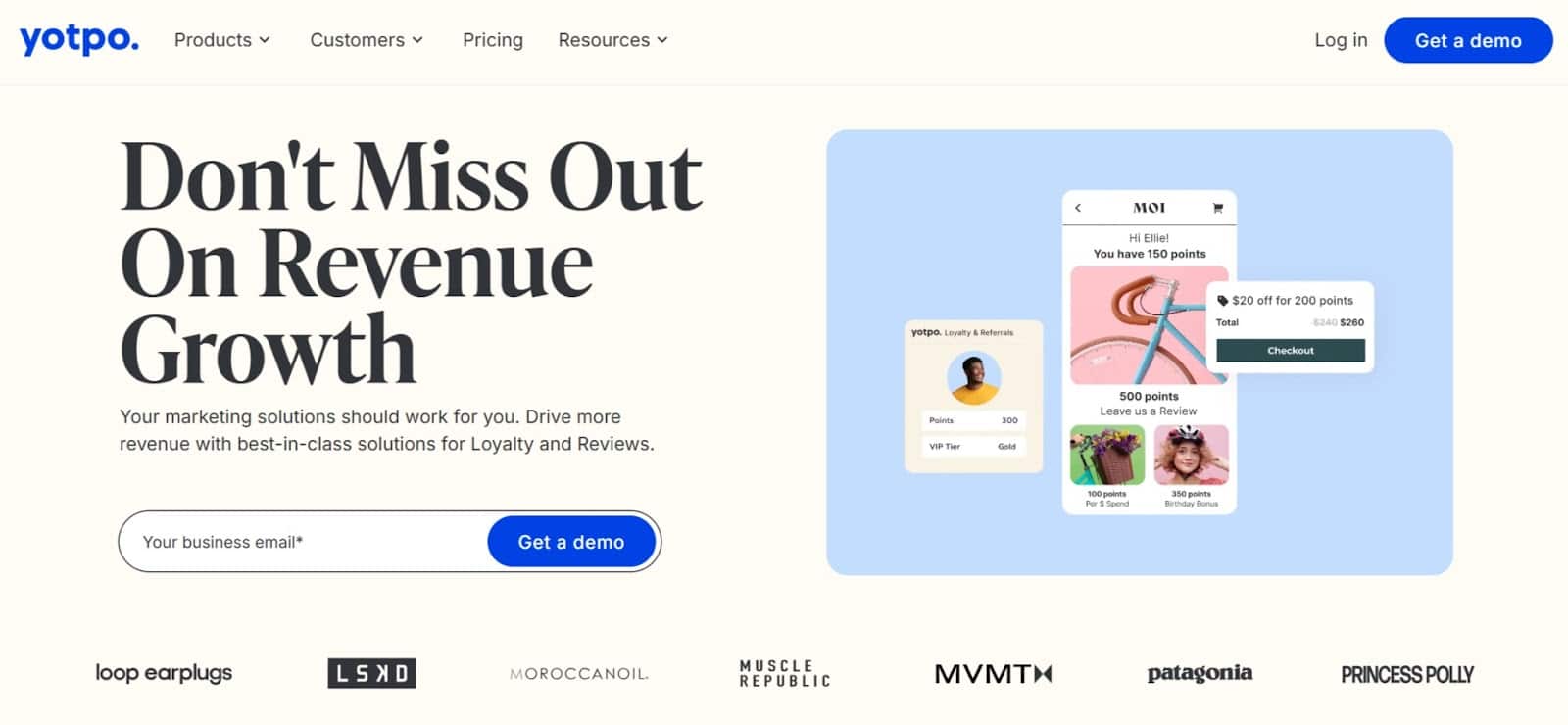
Yotpo Reviews acts as a direct pipeline of fresh content for these AI engines. By utilizing AI-powered Smart Prompts, which are 4x more likely to capture high-value topic keywords, you aren’t just getting “great product” comments—you are getting detailed, keyword-rich data that trains AI models to associate your brand with specific attributes (e.g., “true to size,” “durable material”).
Furthermore, through Google partnerships, these reviews feed directly into Seller Ratings, which can lift ad click-through rates by 17%, creating a virtuous cycle of visibility across both paid and organic channels.
Conclusion
The “Search Everywhere” revolution of 2026 has permanently altered the SEO landscape. The goal is no longer to simply rank #1 on a static list, but to secure “Pixel Visibility” across a fluid ecosystem of AI Overviews, answer engines, and traditional results. The tools highlighted here have successfully adapted to this volatility, offering the intelligence needed to navigate the current search environment.
Whether you choose an enterprise suite like Semrush or a specialized tracker like AccuRanker, the strategy remains the same: measure what users actually see, optimize for entities, and feed the AI engines with fresh, verified content.
FAQs: 15 Best Keyword Tracking Tools for 2026
What is the difference between rank tracking and pixel tracking?
Rank tracking reports your ordinal position (e.g., “Rank 1”), which can be misleading in 2026. “Pixel tracking” measures the absolute pixel depth of your link from the top of the screen. Because AI Overviews and ads push organic results down, a “Rank 1” result might actually sit 1,200 pixels down the page—below the fold on most devices. Pixel tracking gives you the true measure of your visibility.
Why did my Google Search Console impressions drop in late 2025?
This was likely due to the deprecation of the num=100 search parameter. In September 2025, Google disabled this setting, which broke many scraping tools. This change eliminated a massive amount of bot traffic that was previously inflating impression data. As noted by industry analysts, this “right-sized” reporting left brands with cleaner, albeit lower, data.
Can I track my brand’s visibility in ChatGPT?
Yes. Modern tools like Semrush (via their AI Visibility Index) and Keyword.com now offer dedicated tracking for Large Language Models (LLMs). These tools monitor whether your brand is mentioned in answers generated by ChatGPT, Claude, and Perplexity, and can often analyze the sentiment of those citations.
Is llms.txt necessary for SEO in 2026?
Yes, it is becoming a standard best practice. An llms.txt file acts as a sitemap specifically for AI agents, guiding crawlers like GPTBot to your most important content. Creating this file ensures that AI models ingest your verified product data rather than “hallucinating” incorrect details, effectively safeguarding your brand equity in the Agentic Web.
Which keyword tracking tool is best for small businesses?
For small businesses or lean teams, Wincher and SE Ranking are the top recommendations. Wincher offers a “no-lock” data model with daily updates at a very accessible price point, while SE Ranking provides about 90% of the enterprise features found in larger suites for roughly 60% of the cost, making them ideal for budget-conscious growth.
How do AI Overviews affect organic click-through rates?
The impact is significant. Findings indicate that when an AI Overview is present on a SERP, the Click-Through Rate (CTR) for the top organic result drops by approximately 61%. This shift forces brands to focus on “Zero-Click” optimization—optimizing to be cited in the answer rather than just clicked.
What is the “Great Decoupling” in SEO?
The “Great Decoupling” refers to the divergence between traditional ranking signals and actual visibility, largely triggered by Google’s removal of the num=100 parameter and the rise of AI Overviews. It marks the point where “Rank” and “Traffic” stopped correlating perfectly, requiring marketers to use “Intelligence” and “Performance” tools separately to get the full picture.
Do I need a separate tool for local SEO tracking?
If you have a physical location, yes. Generalist tools often lack the hyper-local precision required for “near me” searches. Tools like BrightLocal or Nightwatch offer grid-tracking technology that can show how your ranking changes from street to street, which is critical for capturing foot traffic in competitive local markets.
How often should I check my keyword rankings in 2026?
Weekly reporting is no longer sufficient due to the high volatility of AI results. With 70% of AI Overviews changing within a 3-month window, e-commerce brands should aim for daily updates. Tools like AccuRanker even offer on-demand refreshes, allowing you to check rankings instantly after a product update or price change.
What is Generative Engine Optimization (GEO)?
GEO is the practice of optimizing content specifically to be understood and cited by AI engines (like Google Gemini and ChatGPT). Unlike traditional SEO, which focuses on keywords and links, GEO focuses on “Entity Authority,” structured data, and direct answers, ensuring that your brand is recommended when an AI synthesizes a response for a user.




 Join a free demo, personalized to fit your needs