














Think about how you search today versus five years ago. You likely want an immediate answer, not a list of websites to sift through. That subtle shift in behavior is why Google’s market share dropped below 90% over the past year. We have moved into the “Answer Economy,” where shoppers ask complex questions and expect synthesized, verified results instantly.
For e-commerce brands, this change is critical. Visibility now means being the direct answer to a consumer’s problem. This guide explores the best AI search engines shaping this new landscape and provides actionable strategies to ensure your brand remains trusted and chosen.
Key Takeaways
- The Shift to Answers: We have transitioned from a “Link Economy” (traffic referral) to an “Answer Economy,” where AI synthesizes value directly on the results page.
- Quality Over Quantity: While organic click-through rates may drop, AI-referred traffic converts at approx. 14.2% compared to 2.8% for traditional search.
- Trust is the New SEO: “Citation Authority”—being verified by trusted sources—is the primary ranking factor for engines like Perplexity and Google’s AI Overviews.
- The “Big Three”: Google, Perplexity, and ChatGPT Search now dominate discovery, each serving distinct user intents from quick facts to deep research.
- Actionable Strategy: Success now requires “Generative Engine Optimization” (GEO), focusing on structured data, direct answers, and verified reviews.
The New Information Architecture
The current AI search landscape is defined by “Deep Research.” The friction of typing a keyword, scanning results, and refining your search is being replaced by agentic workflows. Engines now use “Chain of Thought” reasoning to break down complex intent—like “Find me a sustainable running shoe under $150 with good arch support”—and execute multiple parallel searches to provide a single, cited answer.
For e-commerce, this means your product page isn’t just competing with other product pages; it’s competing to be the source of truth for an AI’s synthesized recommendation.
Expert Insight: As e-commerce expert Ben Salomon notes,
“The shift to AI search isn’t just about technology; it’s about trust. In an era of infinite AI-generated content, the only thing that stands out is verified human experience. Your brand needs to be the answer, not just a link.”
The 10 Best AI Search Engines of 2026
To navigate this fractured terrain, you must understand where your customers are searching. Here are the top 10 engines and interfaces driving discovery today.
1. Google (AI Overviews & Core)
Despite the market shift, Google remains the hegemon. Its strategy over the past year centered on AI Overviews (AIO), which now appear for over 18% of commercial queries.
- Best For: Mainstream discovery and “Zero-Click” answers.
- E-commerce Impact: AIOs push organic links down but offer “Sponsored” product carousels within the answer.
2. Perplexity AI
Positioned as the “Truth Engine,” Perplexity focuses aggressively on citation. It processes over 780 million queries monthly and appeals to high-intent researchers who want verifiable facts, not ads.
- Best For: Deep research, complex product comparisons, and tech-savvy users.
- E-commerce Impact: High-value referral traffic. Users here are looking to buy, not just browse.
3. ChatGPT Search
Fully integrated into the massive ChatGPT ecosystem (700M+ weekly users), this engine offers a conversational, “answer-first” experience. It cites sources in a sidebar, keeping the chat fluid.
- Best For: Conversational discovery and “doing” tasks (coding, planning).
- E-commerce Impact: Acts as a knowledgeable assistant recommending products naturally in conversation.
4. Google “AI Mode” (Gemini 3)
Distinct from the standard search bar, this agentic interface uses Gemini 3 to perform multi-step reasoning. It can plan entire itineraries or solve complex diagnostic problems by analyzing video and text simultaneously.
- Best For: Complex, multi-variable planning (e.g., travel, events).
5. Microsoft Copilot
The “Enterprise Fortress.” Copilot integrates web search with internal business data (SharePoint, Teams).
- Best For: B2B buyers and enterprise research.
- E-commerce Impact: Critical for B2B SaaS brands; if you aren’t visible here, corporate buyers won’t find you.
6. DuckDuckGo AI Chat
For the privacy-conscious, this acts as an anonymous proxy to models like GPT-4o and Claude. It strips personal data before querying, offering AI power without the surveillance.
- Best For: Privacy-focused consumers.
7. Brave Leo
Integrated directly into the Brave browser, Leo offers on-device summarization and answers, ensuring sensitive query data never leaves the user’s machine.
- Best For: Tech-forward, ad-blocking demographics.
8. Andi Search
A visual, Gen-Z focused engine that avoids “walls of text.” It presents answers in a feed-like format with rich visual cards, positioning itself as “Search for the Next Generation”.
- Best For: Visual discovery and younger demographics.
9. Komo
An ad-free, subscription-based engine powered by “Sunshine AI.” It offers distinct modes like “Explore” for social trends and “Ask” for deep answers.
- Best For: Users suffering from “ad fatigue” who want unbiased answers.
10. Grok (X/Twitter Integration)
While primarily a social tool, Grok’s real-time access to the X platform makes it a unique engine for breaking news and trending product sentiment.
- Best For: Real-time trends and sentiment analysis.
From SEO to GEO (Generative Engine Optimization)
The rules of engagement have changed. Traditional SEO optimized for keywords; GEO optimizes for citation and entity authority. If an AI cannot “read” your brand as a trusted entity, it is difficult for it to recommend you.
Strategy 1: Build “Citation Authority”
AI engines function like journalists—they look for credible sources to back up their claims. You need to be cited in the places they trust:
- Digital PR: Get featured in authoritative industry publications (e.g., TechCrunch, Vogue, major trade journals).
- Seed Sources: Ensure your brand is listed in foundational databases like Crunchbase, G2, and Wikipedia (if eligible).
- The “Fake Brand” Experiment: Recent industry experiments have shown that AI engines can “hallucinate” brands if they appear in authoritative contexts, proving that where you are mentioned matters more than how often.
Strategy 2: Structured Data is King
LLMs are powerful, but they struggle to parse unstructured visual content. If your pricing or specs are trapped in an image, the AI may miss them.
- Schema Markup: Use JSON-LD to explicitly tell the AI: “This is a product,” “This is the price,” “This is the availability.”
- Semantic HTML: Use clear headings (H2, H3) and lists. AIs utilize structure to organize answers.
Strategy 3: Optimize for the “Value” Traffic
The “HubSpot Shift” of early 2025 showed us that top-of-funnel informational traffic is declining as users get answers directly on the SERP. However, the traffic that remains is high-intent.
- Focus on Conversion: A user clicking a citation in Perplexity converts at ~14.2%. Tailor your landing pages for these “ready-to-buy” visitors, not casual browsers.
The Economic Reality: Navigating the “HubSpot Effect” and the Trust Vacuum
As we move deeper into 2026, the economic model of the web is undergoing a structural correction. The “HubSpot Shift”—a term coined by industry analysts after the marketing giant saw a reduction in organic traffic from 13.5 million to 8.6 million in early 2025—serves as a critical case study. This shift wasn’t a penalty; it was a redistribution of utility.
The Shift from Volume to Value
The data demonstrates that “informational” queries (e.g., “how to write a cover letter” or “best CRM for startups”) are now the primary domain of AI Overviews. The AI synthesizes the answer, removing the need for the user to click through to a blog post. While this impacts top-of-funnel metrics, the data reveals a silver lining: Efficiency.
- Traffic Reduction: Studies from late 2025 indicate a 47% reduction in organic click-through rates (CTR) when an AI Overview is present.
- Conversion Spike: However, the traffic that does click through is highly qualified. Visitors originating from AI platforms like Perplexity and Claude are “decision-ready,” boasting a conversion rate of 14.2% compared to just 2.8% for traditional Google organic traffic.
Strategic Pivot: Consider shifting focus from “vanity traffic” (eyeballs) to “value traffic” (wallets). A user asking Perplexity for a “detailed comparison of hydration serums for sensitive skin” and clicking your citation is often ready to purchase.
The “AI Slop” Crisis and the Trust Vacuum
Parallel to this traffic shift is the rise of “AI Slop”—low-quality, derivative content generated by early LLMs that flooded the web in 2024-2025. This created a “Trust Vacuum.” Users are increasingly skeptical of generic search results, fearing affiliate spam and synthetic hallucinations.
This is where the “Truth Engine” model of Perplexity and the citation-heavy approach of ChatGPT Search gain traction. They act as curators, filtering out the noise.
- The Opportunity for Brands: In a world of synthetic content, verified human experience becomes a premium asset. This is why “Citation Authority” is replacing “Domain Authority.” AI engines are actively seeking “grounding” data—real-world evidence that a product does what it claims.
The Agentic Future: Preparing for the Web of 2026
If the past year marked the rise of the “Answer Engine,” 2026 will be the year of the “Agentic Web.” The distinction between a search engine and a personal assistant is vanishing, driven by three key technological advancements.
1. Deep Reasoning and “Chain of Thought”
New frontier models, such as Google’s Gemini 3 and OpenAI’s GPT-5 series, have introduced “Deep Research” capabilities. Unlike standard search, which retrieves matches, these models employ “Chain of Thought” reasoning.
How it works: If a user asks, “Plan a camping trip for a family of four with a toddler, focusing on safety and proximity to hospitals,” the AI does not just search for “family camping.”
- Reasoning: It identifies sub-tasks: Weather safety, terrain suitability for toddlers, hospital locations, gear checklist.
- Parallel Execution: It runs simultaneous queries for each sub-task.
- Synthesis: It compiles a custom itinerary with specific product recommendations (e.g., “Use this specific child-safe tent”).
The Strategy: Your product content should answer these specific sub-questions. A generic product page is insufficient. You need detailed attributes (e.g., “Safety Rating,” “Age Suitability”) clearly marked up in your Schema so the AI can pull your product into its reasoning chain.
2. The Rise of “Share of Model”
In the agentic era, “Share of Voice” is being replaced by “Share of Model.” This metric tracks how often a specific Large Language Model (LLM) recommends your brand for categorical queries.
- The Challenge: You cannot buy this space with traditional PPC. You earn it by being part of the model’s training data or live retrieval set.
- The Fix: Ensure your brand is pervasive in the “Seed Sources” that models trust (major publications, verified review platforms, and structured databases like Wikidata).
3. Voice and “Agent-to-Agent” Commerce
With the global rollout of Advanced Voice Mode in ChatGPT and Gemini Live, the interface of search is becoming spoken. Voice queries tend to be longer, more conversational, and more intent-driven.
- The Future State: We are moving toward “Agent-to-Agent” commerce, where a user’s personal AI negotiates with a brand’s sales AI. A user might say, “Find me the best deal on a standing desk,” and their AI agent will scan the web, read reviews, check pricing, and present a single option for approval.
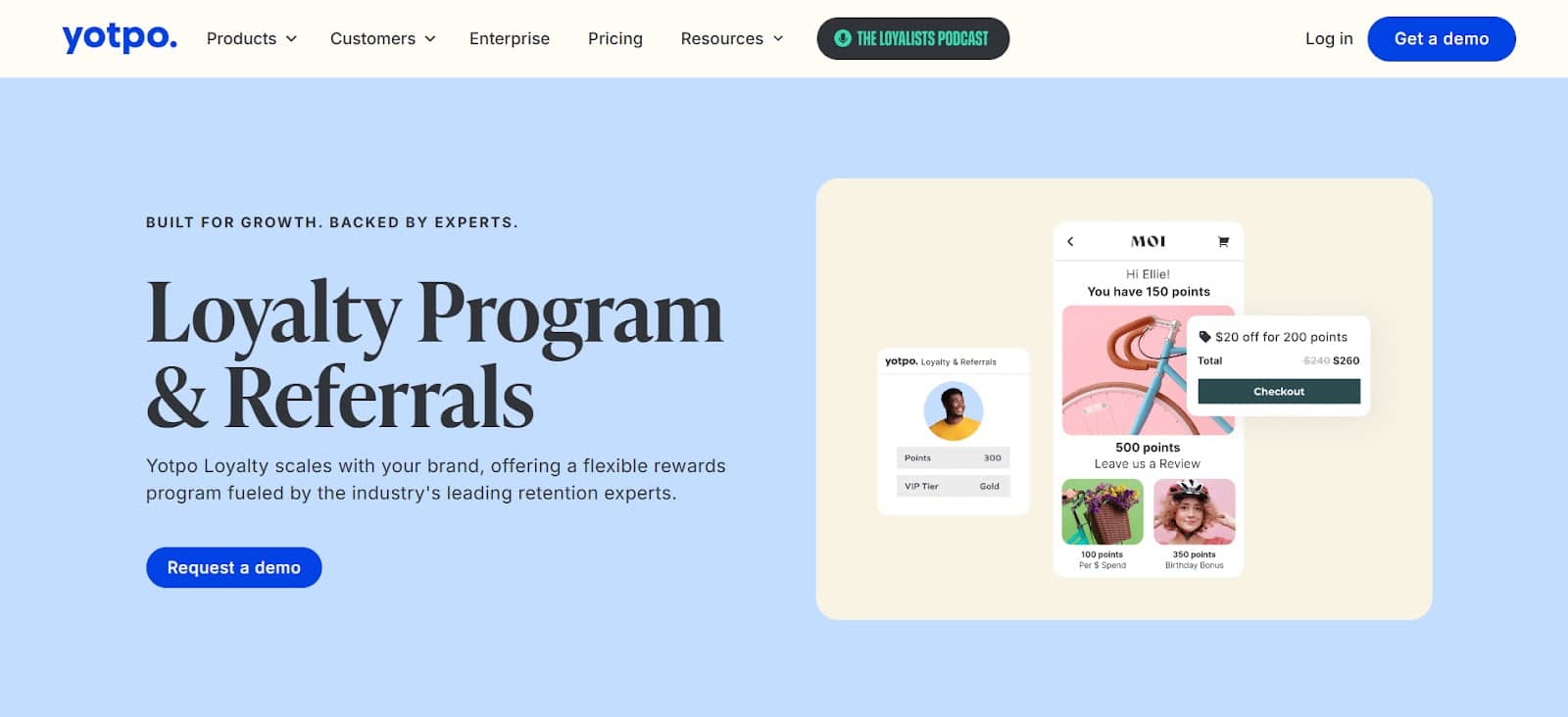
In this environment, your Yotpo Reviews and Loyalty data serve as the “API of Trust” that allows these agents to verify your reputation instantly.
Comparative Analysis: Speed vs. Depth
For e-commerce decision-makers, choosing where to prioritize visibility requires understanding the technical philosophy of each engine. The key trade-off in 2026 is between Speed (Latency) and Depth (Research Quality).
The Feature Matrix
To help you choose the right platform for your goals, here is a breakdown of the technical capabilities of the “Big Three”:
- Google AI Mode:
- Primary Model: Gemini 3 / 2.5
- Search Paradigm: Hybrid (Combines traditional links with Agentic answers)
- Citation Style: Inline links + Product Carousels
- Real-Time Web: Excellent (Live Index)
- Commercial Intent: High (Leverages Google Shopping Graph)
- Perplexity Pro:
- Primary Model: Sonar / GPT-5
- Search Paradigm: Research / Synthesis (Focus on “Truth”)
- Citation Style: Footnotes + Sidebar sources
- Real-Time Web: Excellent (Live Crawl)
- Commercial Intent: Growing (Developing a “Shopping Hub”)
- ChatGPT Search:
- Primary Model: GPT-5 / 5.1
- Search Paradigm: Conversational (Chat-first interface)
- Citation Style: Sidebar + Inline hover-states
- Real-Time Web: Very Good (Direct Web Access)
- Commercial Intent: Moderate (Best for discovery, not direct purchase)
Latency as a Feature
Data from late 2025 reveals a distinct divergence in performance characteristics:
- Google AI Overviews: Optimize for speed, typically loading in 0.3–0.6 seconds. Google aims to retain the “instant” feel of traditional search.
- Perplexity Pro: Takes significantly longer (1.0–1.8 seconds for initial tokens) but provides deeper analysis. Its “Pro Search” agent may take several seconds to “think,” iteratively refining queries to ensure exhaustiveness.
Strategic Implication: For quick fact-checking (“Does this shirt run true to size?”), Google remains superior. However, for complex research (“Compare the long-term ROI of these three SaaS tools”), Perplexity provides a superior “first draft” result. E-commerce content must cater to both: concise summaries for Google, and deep, data-rich guides for Perplexity.
Strategic Action Plan for 2026
To thrive in this new ecosystem, brands must move beyond passive SEO and adopt active “Visibility Strategies.”
1. Diversify Visibility Beyond Google
While Google is still king, 10-15% of high-value tech traffic now originates from challengers like Perplexity and ChatGPT.
- Action: Ensure your documentation and product pages are accessible to the specific bots of these engines (e.g., GPTBot, PerplexityBot). Blocking these bots limits your potential reach in these growing channels.
2. Create “Source” Content
AI engines crave raw data to synthesize. Thin content is losing impact; “Deep” content is the new currency.
- Action: Publish original data, whitepapers, and deep-dive technical content. Being the primary source of a statistic guarantees a citation. If you release a report on “Fashion Trends 2026,” every AI answering a question about trends will cite you.
3. Internal Search Integration
Consider adopting “AI Search” for your own internal documentation. Tools like Perplexity Enterprise or specialized SaaS search bars can improve user retention by helping customers find answers instantly on your site, preventing them from returning to Google.
4. Agentic Readiness
Prepare for a future where users don’t visit your site, but their AI agents do.
- Action: Audit your pricing pages and technical specs. Are they readable by a bot? Is your API documentation clear enough for an LLM to write code against it? The “customer” of 2026 is partially synthetic, and your site needs to be machine-readable to sell to them.
Measuring Success: From “Share of Voice” to “Share of Model”
As the “ten blue links” disappear, so too does the utility of traditional rank tracking. You cannot simply track if you are “Rank 1” when the result is a dynamic, synthesized paragraph that changes based on the user’s chat history. In 2026, e-commerce teams must pivot to a new set of KPIs.
The Evolution of Rank Tracking
Traditional SEO tools measure static positions. AI search is fluid. A user asking “best running shoes for bad knees” might get a different answer than a user asking “shoes for joint pain,” even though the intent is identical. The concept of a static “Page 1” is becoming obsolete.
The New Metric: “Share of Model” (SoM)
The most critical new metric is Share of Model. This measures the frequency with which a specific Large Language Model (LLM)—like GPT-5, Gemini 3, or Claude—mentions your brand as a solution for categorical queries.
- How it works: Tools like “SGE Ranking” trackers ingest thousands of variations of prompts (e.g., “top CRM,” “best CRM for small biz,” “CRM with good support”) and calculate the percentage of times your brand is cited in the generated answer.
- Why it matters: If you have a 40% Share of Model, you are effectively the “top of mind” recommendation for the AI. This is the digital equivalent of being the first product a salesperson recommends in a physical store.
Tracking “Value Traffic” vs. “Vanity Traffic”
As noted in the “HubSpot Effect” analysis, traffic volume is dropping, but conversion is rising.
- The Old KPI: Organic Sessions. (Often inflated by low-quality bounces).
- The New KPI: AI Referral Revenue. You must set up specific segments in your analytics to track referrals from perplexity.ai, chatgpt.com, and copilot.microsoft.com. Data shows these users convert at 12-16%, compared to the 2.8% industry average for search.
- Action: If your “Perplexity” referral traffic drops, it’s a more urgent red flag than if your general “Google” traffic drops, because you are losing high-intent buyers.
The Monetization of Answers: Ads in the AI Era
A major concern over the past year was how search giants would protect their ad revenue if users stopped clicking links. The answer has arrived, and it is aggressive. The “Answer Economy” is rapidly becoming a paid media channel, meaning your GEO strategy must be paired with a Paid AI strategy.
Ads in AI Overviews (AIO)
Google has successfully transitioned its ad model to the generative interface. By November 2025, data showed that ads appeared in approximately 40% of AI Overviews for commercial queries.
- The Format: These aren’t just text links. They are “Sponsored Product Carousels” embedded within the generated answer. If the AI suggests “You should look for a noise-canceling headphone with 30-hour battery life,” a carousel of headphones matching those exact specs appears immediately below the sentence.
- The Strategy: Your Google Shopping feed must be impeccable. The AI matches your product data to the context of the generated answer. If your product data is missing attributes (like “battery life”), you won’t appear in the contextually relevant ad slot.
Sponsored Questions & Publisher Revenue
Perplexity and other challengers are pioneering “Sponsored Questions.” Instead of bidding on keywords, brands can bid to be the suggested “Follow-Up Question.”
- Example: A user asks about “best winter coats.” A brand like Patagonia could sponsor a follow-up chip that says, “How does Patagonia’s sustainability compare?”
- The Publisher Ecosystem: Perplexity’s “Publisher Program” shares revenue with media partners (like Time and Fortune) when their content is used to generate an answer. This creates a closed loop where high-quality content is financially rewarded, further incentivizing brands to get coverage in these specific partner publications.
The Privacy Paradox: Reaching the “Hidden” Consumer
While most marketers focus on the public web, a significant portion of high-value search activity has migrated to “Dark Search” environments—encrypted, private, and enterprise-grade ecosystems where traditional analytics cannot follow.
The “Enterprise Fortress”: Microsoft Copilot
For B2B e-commerce and SaaS, the most important search engine is often not Google, but Microsoft Copilot. In 2025, Microsoft pivoted aggressively to the “Enterprise Fortress” model.
- How it works: Copilot searches inside a company’s firewall (indexing SharePoint, Outlook, Teams) alongside the public web. A procurement manager might ask, “Compare our internal Q3 budget requirements with the pricing of the top 3 CRM vendors.”
- The “Vision” Upgrade: With the rollout of Copilot Vision in 2025, the AI can “see” what is on the user’s screen. If a decision-maker is viewing your PDF pricing sheet, they can ask Copilot to “Summarize this and compare it to Competitor X”.
- The Strategy: You must optimize your “Downloadable Assets.” Since you cannot track the user inside their firewall, your PDFs, whitepapers, and pricing decks must be standalone “Sales Agents.” They need clear branding, embedded links, and “AI-Ready” summaries at the top of the document so Copilot can parse them easily.
The “Privacy Shield”: DuckDuckGo & Brave
For consumer brands, the rise of privacy-first engines like DuckDuckGo AI Chat and Brave Leo represents a segment of users who actively reject tracking.
- The Tech: DuckDuckGo acts as an anonymous proxy to models like GPT-4o, stripping all IP addresses before the query reaches OpenAI.
- The Implication: These users are invisible to your retargeting pixels. The only way to reach them is through organic authority. If your brand is not the “default answer” generated by the LLM based on public trust signals (reviews, PR), you have no second chance to retarget them.
Multimodal GEO: When Search Engines Have Eyes
The most futuristic shift of the past year was the move from text-based search to Multimodal Search, driven primarily by Google’s Gemini 3 model. The search bar is no longer just for typing; it is for uploading video, audio, and images.
Diagnostic Search
Users are increasingly using video to ask questions. A user can upload a 10-second clip of their car engine making a noise and ask, “What is this sound and how much is the part to fix it?”.
- The E-commerce Application: If you sell auto parts, DIY tools, or beauty products, your content strategy must evolve. Text blogs are insufficient for diagnostic queries.
- Strategy: Create “Answer-Ready Media.”
- Video: Upload clear, high-definition videos titled with the problem (e.g., “Rattling Sound Fan Belt”).
- Transcription: Ensure every video has a full transcript and captions so the AI can “read” the audio.
- Visual Schema: Use VideoObject Schema to tag key moments in the video (e.g., “0:45 – The Sound of a Loose Belt”), allowing the AI to direct the user to the exact second that solves their problem.
The “Comet” Context
Perplexity’s Comet browser allows users to perform research over a webpage. A user can be on a generic Amazon listing and ask the browser, “Find me a Reddit thread discussing the durability of this specific model”.
- The Threat: Your product page is no longer a walled garden. Users can overlay external sentiment instantly.
- The Defense: This reinforces the need for Consolidated Reputation. You cannot hide negative reviews on external forums. You must actively manage your presence on “Seed” platforms (Reddit, Quora, Trustpilot) because the browser itself will bring that data to the user, overlaying it on your store.
The “Human Moat”: Combating Model Collapse with Verified UGC
As we enter 2026, the digital ecosystem faces a new existential threat: Model Collapse. This occurs when AI models inadvertently train on synthetic data generated by other AIs, leading to a degradation of quality and “hallucinated” reality. In this environment, the only resource that retains premium value is Verified Human Experience.
The “AI Slop” Crisis
The term “AI Slop” peaked in usage in 2025, describing the flood of low-quality, derivative content clogging search results.
- The User Reaction: Shoppers have developed “synthetic blindness.” They scan past perfectly grammatically correct (but soulless) product descriptions.
- The Search Engine Reaction: Google and Perplexity are aggressively up-weighting content that demonstrates “Information Gain”—new facts or perspectives that are not already in the training set.
Reviews as Training Data
This is where User-Generated Content (UGC) shifts from “Social Proof” to “Training Data.” A generic product description is static. A review that says, “This hiking boot held up great on the sharp rocks of the Appalachian Trail but felt tight around the toes after mile 10,” contains net-new information that the AI cannot hallucinate.
- The Stat: Shoppers who interact with verified reviews convert 161% higher than those who don’t. In the AI era, this is because the review is the only part of the page the user trusts is real.
- AI-Driven Collection: Using tools like Smart Prompts helps you collect this high-fidelity data. Smart Prompts are 4x more likely to capture high-value topics (like fit, durability, or use-case) than generic requests. This specific, attribute-rich data is exactly what LLMs need to answer complex queries like “boots good for rocky terrain.”
Strategy: The “Review-to-Answer” Pipeline
You must ensure your review data is accessible to search agents.
- Indexable Widgets: Ensure your reviews are rendered in the HTML (server-side), not just injected via JavaScript.
- Attribute Tagging: When customers leave structured feedback (e.g., “Runs Small”), mark this up with Schema. This allows an AI to confidently answer, “Does this dress fit true to size?” with “No, 70% of verified buyers say it runs small.”
Sector-Specific Strategies: B2B vs. Retail
The impact of AI search is not uniform. The strategy for a SaaS company differs radically from that of a Fashion brand. Below are the tailored playbooks for 2026.
The B2B SaaS Playbook (Focus: Copilot & Perplexity)
For B2B, the purchase journey is long, collaborative, and research-heavy.
- Primary Engines: Microsoft Copilot (Enterprise), Perplexity (Research).
- The Challenge: Decision-makers are searching inside their walled gardens (Teams/SharePoint) or conducting deep comparative analysis.
- The Strategy: “Asset Optimization.”
- PDFs are Pages: Optimize your whitepapers and case studies. Copilot Vision reads PDFs. Ensure your value proposition is summarized in the first 100 words of every document.
- Data Density: B2B AIs look for specs. Publish comparison tables, API documentation, and security protocols directly on your site. Avoid “marketing fluff.”
- Citation PR: Get mentioned in “Gartner Magic Quadrant” style reports and trusted tech news (TechCrunch, VentureBeat), as these are the “Seed Sources” for B2B queries.
The Retail & DTC Playbook (Focus: Google & Multimodal)
For retail, the journey is visual, impulsive, and intent-driven.
- Primary Engines: Google (AI Overviews), Instagram/TikTok (Visual Search), ChatGPT (Lifestyle).
- The Challenge: Competing with “Sponsored” carousels and visual noise.
- The Strategy: “Visual Verification.”
- Photo Reviews: Customer photos increase purchase likelihood by 137%. In AI search, these images validate that the product exists and looks as advertised.
- Video Schema: As mentioned in Part 11, optimize for “Diagnostic Search.” If you sell makeup, create “How to apply” videos. If you sell tools, create “How to fix” videos.
- Trend Agility: Monitor real-time trends on Grok and Perplexity “Discover.” If a specific aesthetic (e.g., “Mob Wife Aesthetic”) trends, instantly update your product descriptions and ad copy to match that entity keyword, signaling relevance to the AI.
The Role of Reviews in the Answer Economy
In an environment flooded with “AI Slop” and synthetic content, authentic user-generated content (UGC) is your most valuable asset. AI engines prioritize freshness and human verification. By utilizing Yotpo Reviews, you are effectively feeding these engines a steady stream of fresh, structured, and verified content that validates your brand entity.
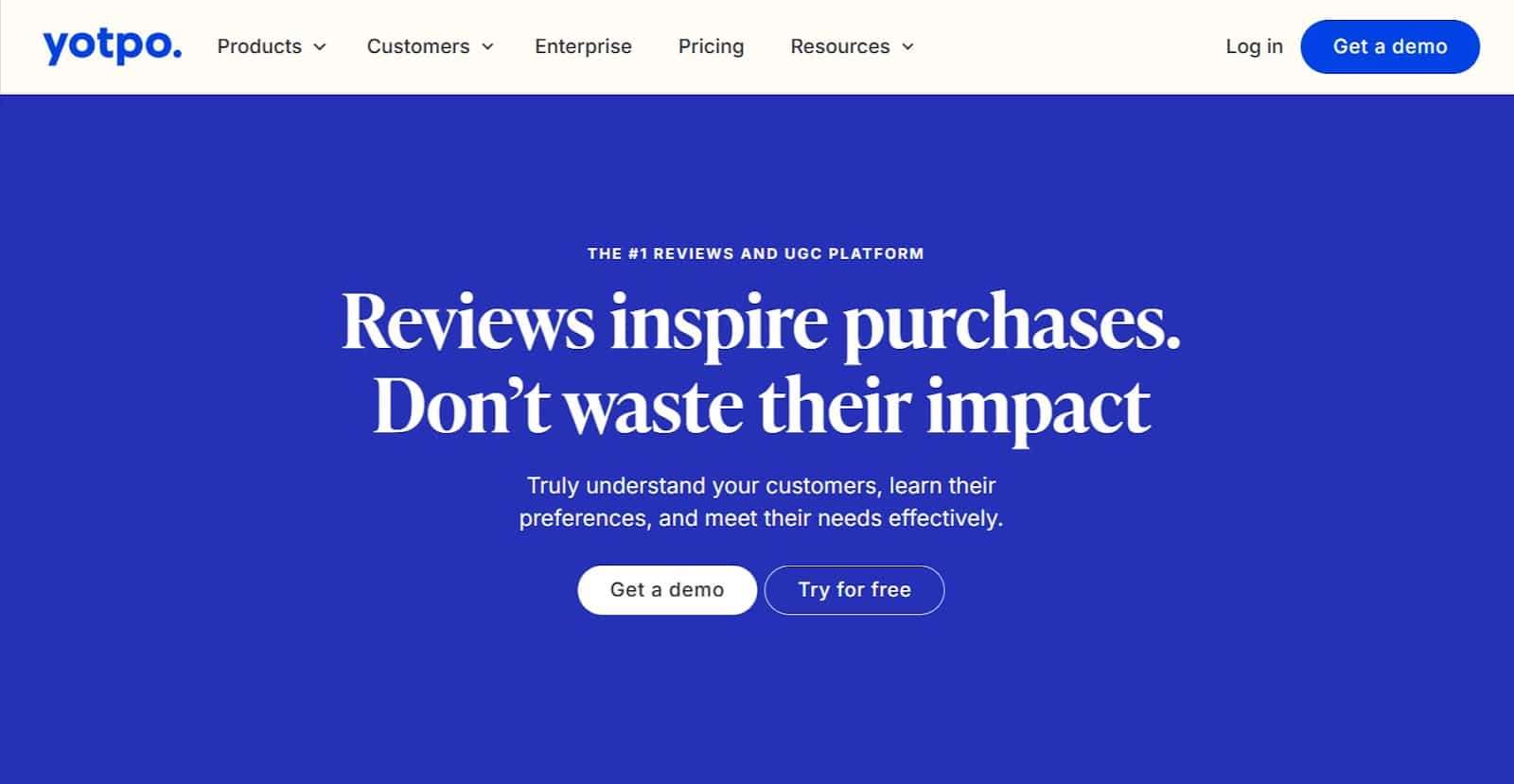
When an AI searches for “best reliable coffee maker,” it scans for recurring positive sentiment in real reviews. Furthermore, integrating Yotpo Loyalty data can signal strong brand retention and community engagement—metrics that help establish the “Entity Authority” required to rank in AI Overviews.
Conclusion
The transition to the Answer Economy is not a death knell for e-commerce; it is a purification. The “vanity metrics” of high-volume, low-intent traffic are gone. In their place is a system that rewards genuine authority, technical clarity, and verified customer trust. By diversifying your presence across these top 10 engines and embracing GEO principles, you can position your brand not just to be found, but to be the answer.
Frequently Asked Questions
Will AI Overviews kill my organic traffic?
Likely yes for top-of-funnel queries (e.g., “how to tie a tie”), but deep-funnel product traffic should see higher conversion rates. Data suggests a drop in volume but a spike in value.
How do I track my performance in AI search engines?
Traditional tools like Google Search Console are insufficient. Look for “Share of Model” trackers and monitor referral traffic from sources like perplexity.ai and chatgpt.com in your analytics.
Is “GEO” just a buzzword?
No. Generative Engine Optimization is a distinct discipline focusing on structured data and entity management, whereas SEO focuses on keywords and backlinks.
Should I block AI bots from crawling my site?
Generally, no. Blocking bots like GPTBot or PerplexityBot removes your content from their knowledge base, effectively making your brand invisible to their users.
Can I pay to rank in ChatGPT or Perplexity?
Currently, the primary model is organic citation. However, Perplexity has introduced a publisher program, and Google includes “Sponsored” slots within AI Overviews.
Expansion Q&A: Deep Dive into AI Search Strategy
1. What is the “Trust Vacuum” and how does it affect my brand?
The “Trust Vacuum” refers to the user skepticism caused by the flood of low-quality, AI-generated content (“AI Slop”). Users are migrating to engines like Perplexity because they cite sources. For brands, this means your content must be rigorously fact-checked and authoritative to be cited.
- How does “Agentic Search” differ from traditional search?
Agentic search (like Google’s AI Mode) doesn’t just retrieve information; it executes tasks. It breaks a query into sub-steps (planning, reasoning, comparing). Your content needs to answer specific sub-questions (e.g., “battery life specs”) to be picked up during this reasoning process.
3. Why is “Zero-Click” behavior actually good for some brands?
If a user gets their answer from an AI Overview and sees your brand mentioned as the solution, they may visit your site directly or search for your brand specifically later. This builds “Mental Availability” even without an immediate click.
4. How does Yotpo help with “Entity Authority”?
Yotpo collects verified reviews. When Google scans your product page and sees 500 verified reviews discussing specific features, it reinforces your “Entity” as a legitimate, high-quality provider, increasing the likelihood of being cited.
5. What is the “HubSpot Shift” mentioned in 2025 reports?
It refers to a significant drop in organic traffic for major inbound marketing hubs as AI engines began answering basic “how-to” questions directly. It serves as a warning: if your content just summarizes known facts, AI will replace it. You need original data and unique viewpoints.
6. Should I focus on Google or the challengers?
Google still holds ~90% of the market. However, the 10% held by challengers represents early adopters and tech-savvy buyers with higher disposable income. A balanced strategy covers both.
7. How do I optimize images for AI search?
AIs can “see,” but they need help. Use descriptive alt text, high-resolution files, and Schema markup to define what the image represents (e.g., Context: Product, Color: Blue).
8. What is “Share of Model”?
It’s a metric tracking how often a specific LLM (like GPT-5 or Gemini) mentions your brand when asked category questions. It is the AI era’s equivalent of “Share of Voice.”
9. Can small brands compete in the Answer Economy?
Yes. AI engines prioritize relevance and specific data over domain age. A small brand with highly specific, well-structured product data can outrank a generic giant in a specific niche query.
10. What is the most critical first step for GEO?
Audit your Structured Data (Schema). Ensure every product, review, and article on your site is wrapped in the correct JSON-LD tags so the AI bots can digest your catalog without guessing.



 Join a free demo, personalized to fit your needs